
Safety
General information, not medical advice
Your prescriber and the leaflet in your pack know your situation. This page does not.
- Follow your prescriber and the leaflet
- Don't start, stop, or change a dose on your own
- Doses and warnings differ by country and product
Etrasimod Tablet: Uses, Dosage, Side Effects, Precautions and Alternates
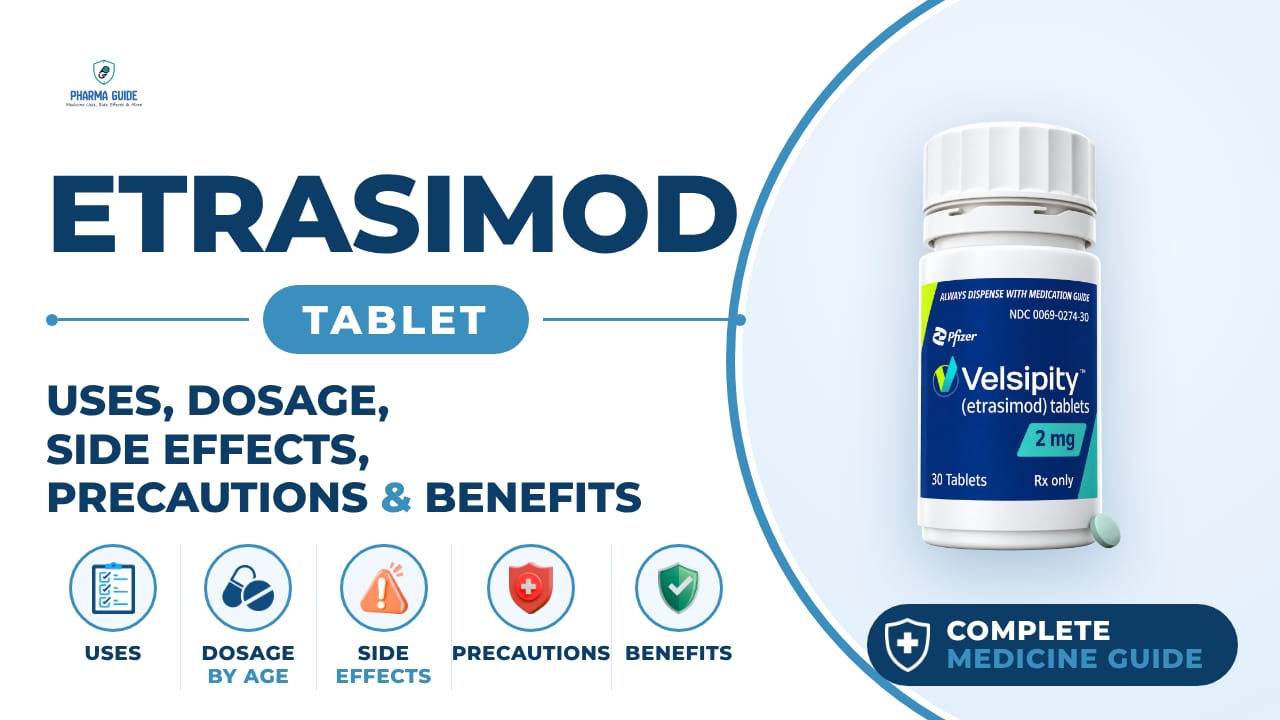
| Generic name | etrasimod |
|---|---|
| Drug class | Selective immunosuppressants (sphingosine 1-phosphate receptor modulator) |
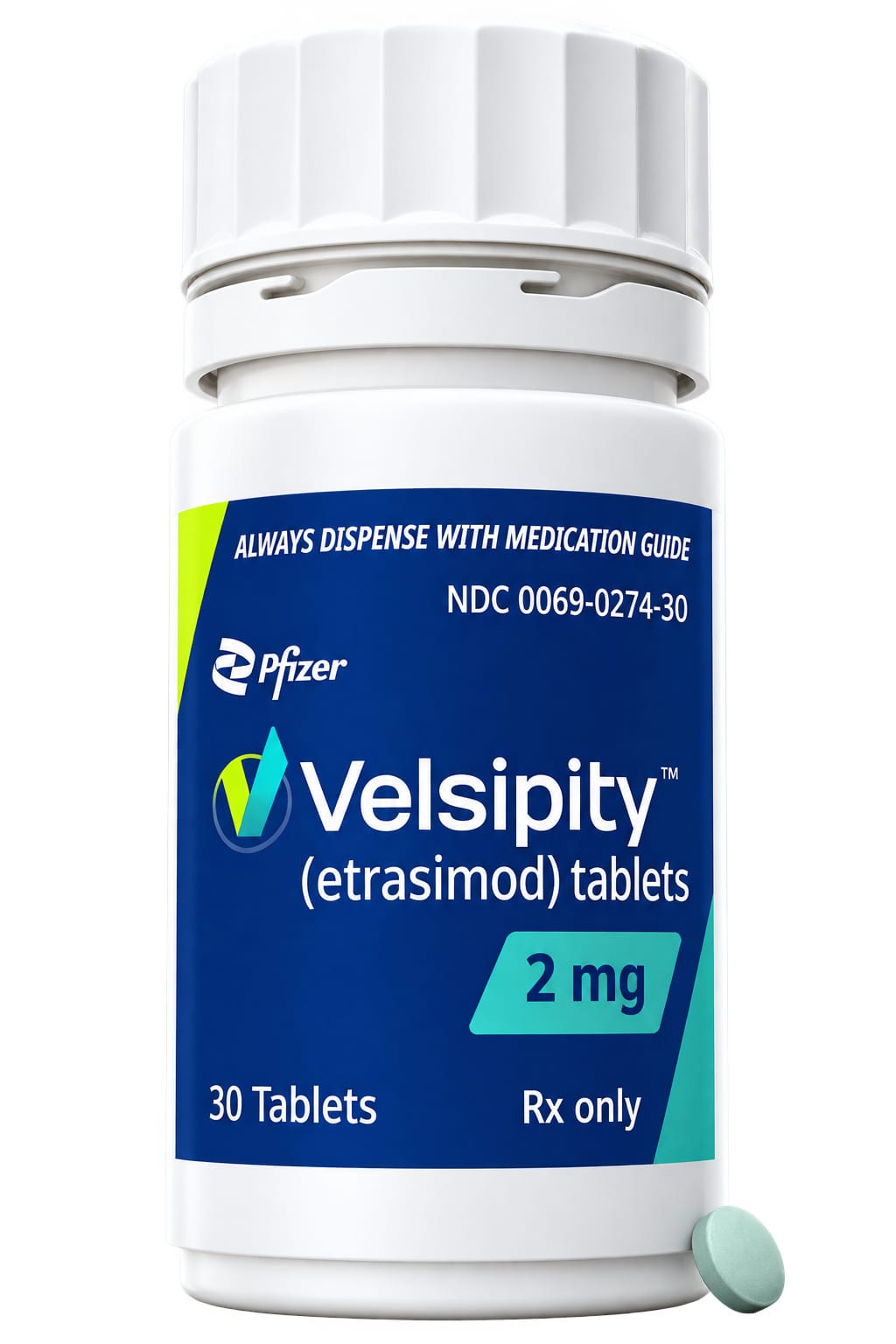
| Forms | Oral tablet (2 mg) |
Quick overview
Etrasimod Tablet (generic name etrasimod) is a prescription medicine from the selective immunosuppressant class known as sphingosine 1-phosphate (S1P) receptor modulators. It is taken by mouth once a day to treat moderately to severely active ulcerative colitis by calming immune-related inflammation in the colon. It works by keeping certain white blood cells inside the lymph nodes so they cannot reach and inflame the gut.
What is Etrasimod Tablet
Etrasimod is a prescription tablet taken by mouth once a day. It belongs to a group of medicines called sphingosine 1-phosphate (S1P) receptor modulators, which work on the immune system to calm down inflammation.
Etrasimod Tablet uses
- Treats moderately to severely active ulcerative colitis.
- Helps reduce inflammation affecting the lining of the colon.
- Helps control symptoms such as diarrhea and rectal bleeding.
- Supports induction of clinical remission in selected patients.
Benefits of Etrasimod Tablet
- Helps reduce immune-mediated inflammation in the colon.
- May improve ulcerative colitis symptoms.
- Can reduce rectal bleeding and stool frequency.
- May help achieve clinical remission.
- Supports maintenance of disease control.
How Etrasimod Tablet works
Etrasimod attaches to S1P receptors and temporarily keeps certain white blood cells (lymphocytes) inside the lymph nodes. This stops them from reaching the gut and causing the inflammation seen in ulcerative colitis.
Etrasimod Tablet dosage
Take it by mouth at around the same time every day. It can be taken with or without food; if it upsets your stomach, take it with food. Swallow the tablet whole; do not cut, crush, or chew it. Keep taking it even if you feel well, unless your doctor tells you to stop. Your doctor will check your heart, blood, and vaccination status before you start, and may check your blood pressure, liver, and eyes during treatment. Dosing and use in children must be determined by a doctor, since safety and effectiveness have not been established in children. No special dietary changes are needed unless your doctor tells you otherwise.
| Age group | Dose |
|---|---|
| Under 16 years | Safety and effectiveness not established; no approved pediatric dosage |
| 16–64 years | 2 mg once daily under UK/European and certain other national labels; not FDA-approved for this age group |
| 65–74 years | Standard dose: 2 mg once daily; maximum 2 mg daily, with closer monitoring |
| 75 years and older | Standard reference dose: 2 mg once daily, with careful monitoring because clinical experience is limited |
Available forms and strengths
- Oral tablet (2 mg)
Side effects of Etrasimod Tablet
Common
- Headache
- Dizziness
- Abnormal liver function tests
- Nausea
- High cholesterol levels
- Blurred vision
Serious
- Low white blood cell counts (lymphocytes or neutrophils)
- Respiratory tract or lung infections, and urinary tract infections
- Slow heart rate (bradycardia) or elevated blood pressure (hypertension)
- Elevated liver enzymes (signs of liver stress)
- Signs of serious infection such as fever, cough, night sweats, flu-like symptoms
- Signs of meningitis such as headache, neck stiffness, sensitivity to light, nausea, vomiting, confusion, drowsiness
- Chest pain, shortness of breath, or feeling like your heart is skipping beats
- Sudden confusion, severe headache, vision loss, or a seizure
- Signs of high blood pressure such as pounding in the neck or ears
- Liver problems such as loss of appetite, nausea, vomiting, stomach pain, tiredness, itching, dark urine, or yellowing of skin or eyes
- Severe vision problems such as blurred vision, sensitivity to light, seeing an unusual color, or a blind spot
- Skin changes or a mole that has changed in color or size
- Painful blisters on the trunk of the body (shingles)
- Signs of an allergic reaction such as hives, difficulty breathing, or swelling of the face, lips, tongue, or throat
Warnings and precautions
- Do not use this medicine if you have had certain serious heart problems recently, such as a heart attack, severe heart failure needing hospital care, a stroke or mini-stroke, chest pain, or certain irregular heart rhythms, unless you have a pacemaker.
- This medicine can slow your heart rate, especially after your first dose, and can cause heart rhythm problems.
- This medicine increases your risk of serious or life-threatening infections, including shingles, fungal infections, and a rare brain infection called PML. Avoid live vaccines while taking it.
- This medicine can cause liver inflammation, so your doctor will monitor your liver with blood tests.
- This medicine can cause swelling in the back of the eye that affects vision, so you'll need eye exams before and during treatment.
- This medicine may raise your risk of skin cancer, so use sunscreen and watch for new or changing skin spots.
- This medicine can rarely cause a serious brain condition (PRES) or new or worsening breathing problems.
- Your risk of getting an infection can last for several weeks after you stop taking this medicine.
- This medicine may harm an unborn baby. You may need a pregnancy test before starting, and should use effective birth control during treatment and for about a week after your last dose. Tell your doctor right away if you become pregnant.
- There isn't enough research to know if this medicine is safe during breastfeeding. Talk with your doctor about the benefits and risks before breastfeeding while taking it.
- No routine dose adjustment is required for renal impairment, including severe renal impairment.
- This medicine should not be used in people with severe liver disease, and it should be used carefully in people with a history of liver problems, since it can cause liver inflammation that is checked with blood tests.
- No major direct interaction with alcohol has been established, but alcohol may worsen underlying gastrointestinal symptoms or liver problems.
- Dizziness or headache may affect concentration. Avoid driving or operating machinery if alertness is impaired.
Storage
- Store the medicine in a closed container at room temperature, away from heat, moisture, and direct light.
- Keep from freezing.
- Keep out of the reach of children.
- Do not keep outdated medicine or medicine no longer needed.
- Ask your healthcare professional how you should dispose of any medicine you do not use.
- Store at room temperature between 20 and 25 degrees C (68 and 77 degrees F). Get rid of any unused medication after the expiration date.
- Do not flush this medication down the toilet. Use a medicine take-back program.
When to see a doctor
- Get emergency help right away for signs of a severe allergic reaction, like hives, trouble breathing, or swelling of the face, lips, tongue, or throat.
- Call your doctor right away if you notice signs of infection like fever, cough, night sweats, tiredness, flu-like symptoms, or pain when urinating.
- Call your doctor at once for signs of meningitis, like headache, stiff neck, sensitivity to light, nausea, vomiting, confusion, or drowsiness.
- Call your doctor right away for a slow or irregular heartbeat, chest pain, shortness of breath, dizziness, or lightheadedness.
- Seek help right away for sudden confusion, severe headache, loss of vision, or a seizure.
- Contact your doctor right away for signs of liver problems, such as loss of appetite, nausea, vomiting, stomach pain, tiredness, itching, dark urine, or yellowing of skin or eyes.
- Get medical advice right away if you have severe vision changes, such as blurred vision, sensitivity to light, seeing unusual colors, or a blind spot.
- Tell your doctor about any skin changes or a mole that has changed in color or size.
- If you cannot reach your care team and have trouble seeing, thinking, speaking, walking, or standing, seek emergency medical care right away, since this could signal a serious brain infection.
- If you think you have taken too much of this medicine, contact a poison control center or go to an emergency room right away.
Alternatives
- Ustekinumab
- Vedolizumab
- Sulfasalazine
Watch the video
FAQs
What is Etrasimod Tablet used for?
It is used to treat moderately to severely active ulcerative colitis by reducing immune-related inflammation in the colon, helping control symptoms like diarrhea and rectal bleeding, and supporting clinical remission.
How does Etrasimod Tablet work?
It attaches to S1P receptors and temporarily keeps certain white blood cells (lymphocytes) inside the lymph nodes, preventing them from reaching the gut and causing inflammation seen in ulcerative colitis.
How should I take Etrasimod Tablet?
Take it by mouth once a day at around the same time, with or without food. Swallow the tablet whole without cutting, crushing, or chewing it, and continue taking it even if you feel well unless your doctor says to stop.
What are the serious side effects of Etrasimod Tablet?
Serious side effects include low white blood cell counts, respiratory or urinary tract infections, slow heart rate or high blood pressure, elevated liver enzymes, signs of meningitis, chest pain or shortness of breath, confusion or vision loss, liver problems, severe vision changes, and skin changes.
What precautions should I know before taking Etrasimod Tablet?
Avoid it if you have had certain recent serious heart problems. It can slow your heart rate, increase infection risk, cause liver inflammation, affect vision, and raise skin cancer risk, so regular monitoring and eye exams are needed, and live vaccines should be avoided.
General information, not medical advice
Your prescriber and the leaflet in your pack know your situation. This page does not.
- Follow your prescriber and the leaflet
- Don't start, stop, or change a dose on your own
- Doses and warnings differ by country and product
Sources
Video
Related medicines
Mayzent Tablet: Uses, Dosage, Side Effects, Precautions and Alternates
Selective immunosuppressants (sphingosine 1-phosphate receptor modulator)
Mayzent Tablet (siponimod) treats relapsing forms of multiple sclerosis in adults. Learn uses, dosage, side effects, and warnings before starting treatment.

Injectafer Injection: Uses, Dosage, Side Effects, Precautions and Alternates
Iron products
Injectafer (ferric carboxymaltose) treats iron deficiency anemia and heart failure-related iron deficiency via IV. Learn uses, dosage, side effects, and