
Safety
General information, not medical advice
Your prescriber and the leaflet in your pack know your situation. This page does not.
- Follow your prescriber and the leaflet
- Don't start, stop, or change a dose on your own
- Doses and warnings differ by country and product
Mayzent Tablet: Uses, Dosage, Side Effects, Precautions and Alternates
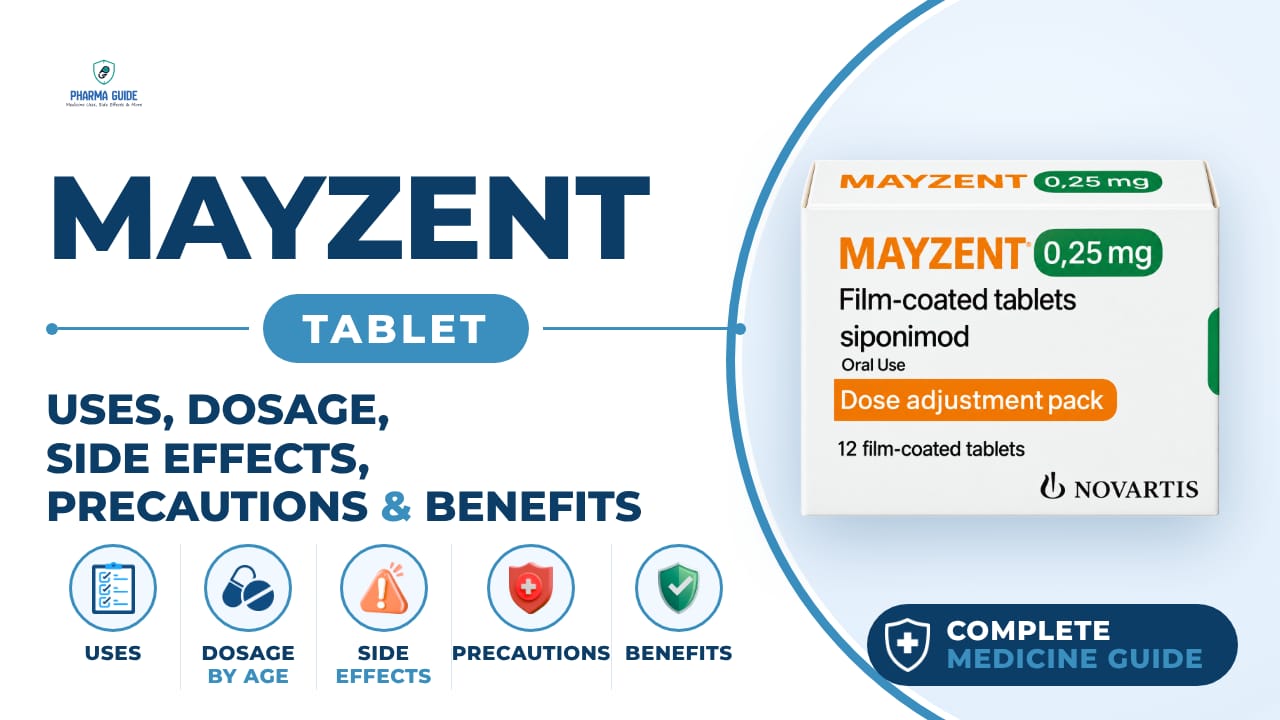
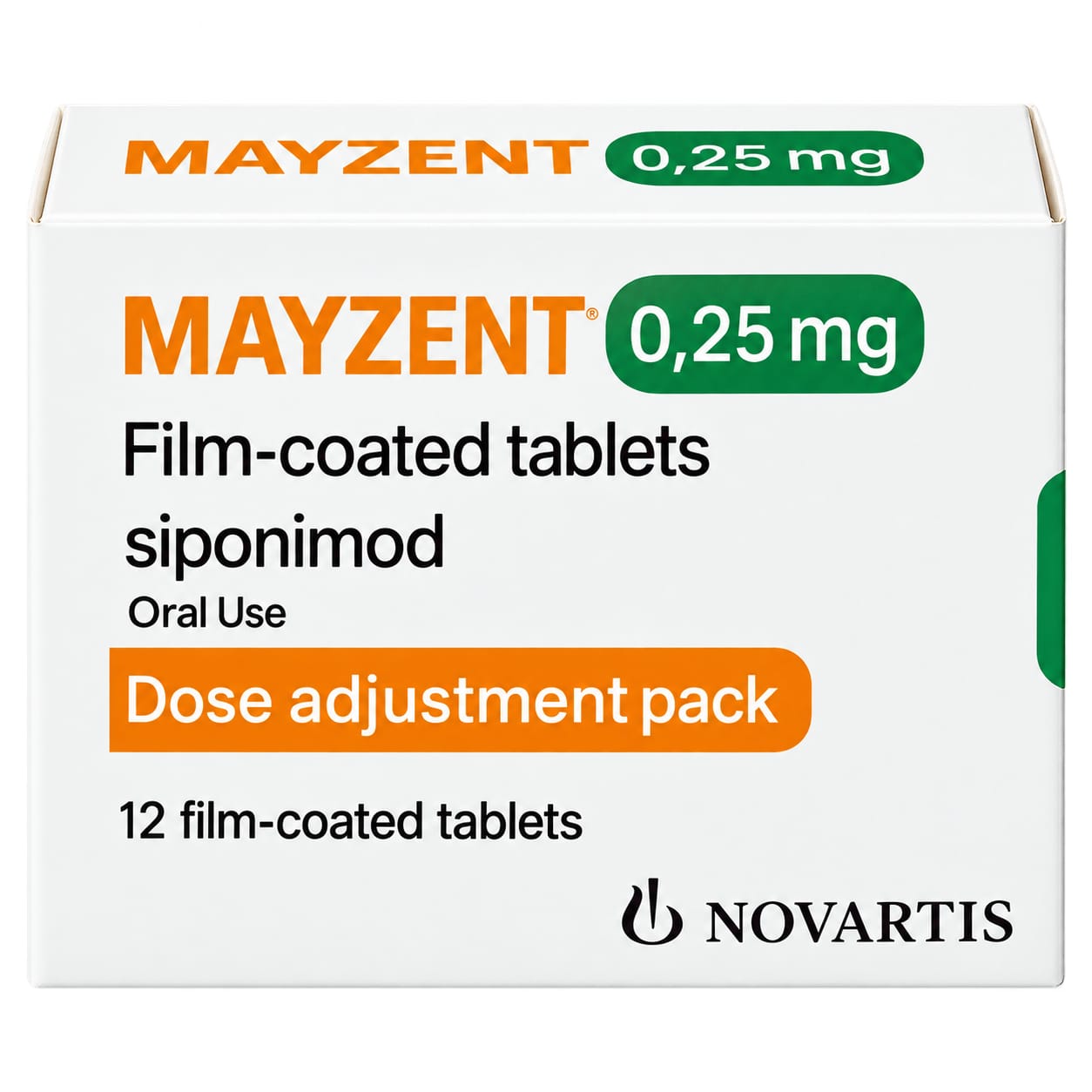
| Generic name | siponimod |
|---|---|
| Drug class | Selective immunosuppressants (sphingosine 1-phosphate receptor modulator) |
| Forms | Oral tablets (0.25 mg, 1 mg, 2 mg) |
Quick overview
Mayzent Tablet (siponimod) is a prescription selective immunosuppressant used to treat certain relapsing forms of multiple sclerosis in adults. It is taken once a day by mouth and works by trapping certain immune cells in the lymph nodes to reduce inflammation in the brain and spinal cord. Treatment starts with a gradual dose increase before reaching the regular daily dose.
What is Mayzent Tablet
Mayzent is a prescription tablet used to treat certain relapsing forms of multiple sclerosis (MS) in adults. It is taken once a day by mouth. Its generic name is siponimod, and it belongs to the drug class of selective immunosuppressants, specifically a sphingosine 1-phosphate receptor modulator.
Mayzent Tablet uses
- Relapsing forms of multiple sclerosis (MS) in adults, including clinically isolated syndrome
- Relapsing-remitting MS
- Active secondary progressive MS
Benefits of Mayzent Tablet
- Prevents MS symptoms and slows worsening disability
- Reduces the frequency of multiple sclerosis relapses
- Treats certain relapsing forms of multiple sclerosis
- Used for active secondary progressive multiple sclerosis
- Helps reduce MS relapses
- May slow accumulation of neurological disability
- Helps reduce new inflammatory MS lesions
- Provides a once-daily oral treatment
How Mayzent Tablet works
Mayzent attaches to specific receptors on certain immune cells called lymphocytes, trapping them in the lymph nodes so fewer reach the brain and spinal cord, where they can cause inflammation and damage linked to MS.
Mayzent Tablet dosage
Swallow the tablet whole; do not split, crush, or chew it. Take it one time each day, with or without food. Treatment starts with a gradual dose increase (titration) over several days before reaching the regular daily dose.
If you miss one or more doses during the initial titration period, you need to restart the titration schedule from the beginning. If you miss a dose after the titration period is finished, take it as soon as you remember. If treatment is stopped for four or more days in a row after titration, you must restart the titration schedule; contact your healthcare provider if this happens. Do not stop taking this medicine without talking to your healthcare provider first, since MS symptoms can return and worsen.
| Age group | Dose |
|---|---|
| Under 18 years | Safety and effectiveness have not been established |
| 18–64 years | After the required titration, usual maintenance dose is 2 mg once daily |
Available forms and strengths
- Oral tablets: 0.25 mg, 1 mg, 2 mg
Side effects of Mayzent Tablet
Common
- Headache
- High blood pressure (hypertension)
- Abnormal liver tests / increase in liver enzymes
- Falls
- Swelling in hands, feet, joints, or face
- Decreased heart rate
- Nausea
- Dizziness
- Diarrhea
- Pain in arms or legs
Serious
- Serious infections, including meningitis or encephalitis
- Progressive multifocal leukoencephalopathy (PML), a rare brain infection
- Macular edema (a vision problem)
- Slow heart rate (bradycardia), especially after the first dose
- Breathing problems (shortness of breath)
- Liver problems
- Skin cancers, including basal cell carcinoma, melanoma, and squamous cell carcinoma
- Allergic reactions
- Increased blood pressure
- Posterior Reversible Encephalopathy Syndrome (PRES), swelling and narrowing of blood vessels in the brain
- Severe worsening of MS symptoms after stopping the medicine
- Reactivation of chickenpox or shingles virus
Warnings and precautions
- Mayzent can increase the risk of serious, life-threatening infections. Your white blood cell count should be checked before starting treatment, and watched for 3 to 4 weeks after stopping.
- Mayzent can increase the risk of a rare, serious brain infection called PML, which usually leads to death or severe disability.
- Mayzent can cause a vision problem called macular edema, which may start in the first 1 to 4 months of treatment but can happen anytime. Risk is higher with diabetes or a history of eye inflammation called uveitis.
- Mayzent can slow your heart rate, especially after the first dose. An ECG heart test is needed before starting, and missing doses during the initial dose increase period means you must restart the schedule.
- Stopping Mayzent can cause MS symptoms to return and become worse than before treatment. Always talk to your doctor before stopping.
- Do not take Mayzent if you have a specific genetic type (CYP2C9*3/*3); your doctor will test for this before starting treatment.
- Do not take Mayzent if you have had a heart attack, unstable angina, stroke or mini-stroke, or certain types of heart failure within the last 6 months, or have certain heart rhythm problems without a pacemaker.
- Mayzent may increase the risk of skin cancers, including basal cell carcinoma, melanoma, and squamous cell carcinoma. Limit sun exposure and use sunscreen; your doctor will check your skin regularly.
- Avoid live vaccines during treatment; Mayzent should be stopped 1 week before and for 4 weeks after a live vaccine, as it may cause the infection the vaccine was meant to prevent and vaccines may not work as well.
- Mayzent may harm an unborn baby. Women who can become pregnant should use effective birth control during treatment and for at least 10 days after stopping. Tell your doctor right away if you become pregnant.
- It is not known if Mayzent passes into breast milk. Talk to your healthcare provider about the best way to feed your baby if you are taking this medicine.
- No routine dose adjustment is generally required solely for kidney impairment.
- Tell your doctor if you have liver problems. Mayzent may cause liver problems, and blood tests to check your liver will be done before you start treatment.
- It isn't known for certain if alcohol affects Mayzent, but both alcohol and Mayzent can cause liver damage, so it's best to limit alcohol while taking this medicine.
- Dizziness or visual problems may affect driving; avoid driving if affected.
Storage
- Mayzent 0.25 mg, 1 mg, and 2 mg tablets may be stored at room temperature between 68°F and 77°F (20°C and 25°C) for up to 3 months.
- If you need to store Mayzent tablets for more than 3 months, containers should remain unopened and stored in a refrigerator between 36°F and 46°F (2°C and 8°C) until use.
- Do not refrigerate after opening.
- Mayzent 0.25 mg tablets should be stored in the original calendarized blister-wallet container.
- Keep Mayzent and all medicines out of the reach of children.
When to see a doctor
- Call your healthcare provider right away if you notice signs of infection such as fever, tiredness, body aches, chills, nausea, vomiting, or headache with fever, neck stiffness, light sensitivity, nausea, or confusion.
- Call your healthcare provider right away if you have new or worsening neurologic symptoms lasting several days, such as weakness on one side of the body, loss of coordination, decreased strength, balance problems, vision changes, or changes in thinking, memory, or personality — these may be signs of PML.
- Call your healthcare provider right away if you notice vision changes such as blurriness or shadows in the center of your vision, a blind spot, light sensitivity, or unusually colored vision.
- Call your healthcare provider right away if you have new or worsening breathing problems.
- Call your healthcare provider right away if you have signs of liver problems such as nausea, vomiting, stomach pain, tiredness, loss of appetite, yellowing of skin or eyes, or dark urine.
- Call your healthcare provider right away if you have symptoms suggesting PRES, such as sudden severe headache, sudden confusion, sudden vision loss or changes, or seizure.
- Call your healthcare provider if you have symptoms of an allergic reaction, including rash, itchy hives, or swelling of the lips, tongue, or face.
- Get medical help right away or contact a poison control center if you or someone else has taken too much Mayzent.
Alternatives
- Fingolimod
- Ozanimod
- Ponesimod
- Dimethyl fumarate
Watch the video
FAQs
What is Mayzent Tablet used for?
Mayzent is used to treat certain relapsing forms of multiple sclerosis in adults, including clinically isolated syndrome, relapsing-remitting MS, and active secondary progressive MS.
How is Mayzent Tablet taken?
Mayzent is swallowed whole once a day, with or without food, and should not be split, crushed, or chewed. Treatment starts with a gradual dose increase over several days before reaching the regular maintenance dose.
What happens if I miss a dose of Mayzent?
If you miss one or more doses during the initial titration period, you must restart the titration schedule from the beginning. If you miss a dose after titration is complete, take it as soon as you remember. Stopping for four or more days in a row after titration also requires restarting the titration schedule.
What are the common side effects of Mayzent?
Common side effects include headache, high blood pressure, abnormal liver tests, falls, swelling in hands, feet, joints, or face, decreased heart rate, nausea, dizziness, diarrhea, and pain in arms or legs.
Can I stop taking Mayzent suddenly?
No, you should not stop taking Mayzent without talking to your healthcare provider first, as MS symptoms can return and become worse than before treatment.
General information, not medical advice
Your prescriber and the leaflet in your pack know your situation. This page does not.
- Follow your prescriber and the leaflet
- Don't start, stop, or change a dose on your own
- Doses and warnings differ by country and product
Sources
Video
Related medicines
Etrasimod Tablet: Uses, Dosage, Side Effects, Precautions and Alternates
Selective immunosuppressants (sphingosine 1-phosphate receptor modulator)
Etrasimod Tablet is a once-daily prescription medicine for moderately to severely active ulcerative colitis. Learn about its uses, dosage, side effects, and

Injectafer Injection: Uses, Dosage, Side Effects, Precautions and Alternates
Iron products
Injectafer (ferric carboxymaltose) treats iron deficiency anemia and heart failure-related iron deficiency via IV. Learn uses, dosage, side effects, and