
Safety
General information, not medical advice
Your prescriber and the leaflet in your pack know your situation. This page does not.
- Follow your prescriber and the leaflet
- Don't start, stop, or change a dose on your own
- Doses and warnings differ by country and product
Eucrisa Ointment: Uses, Dosage, Side Effects, Precautions and Alternates
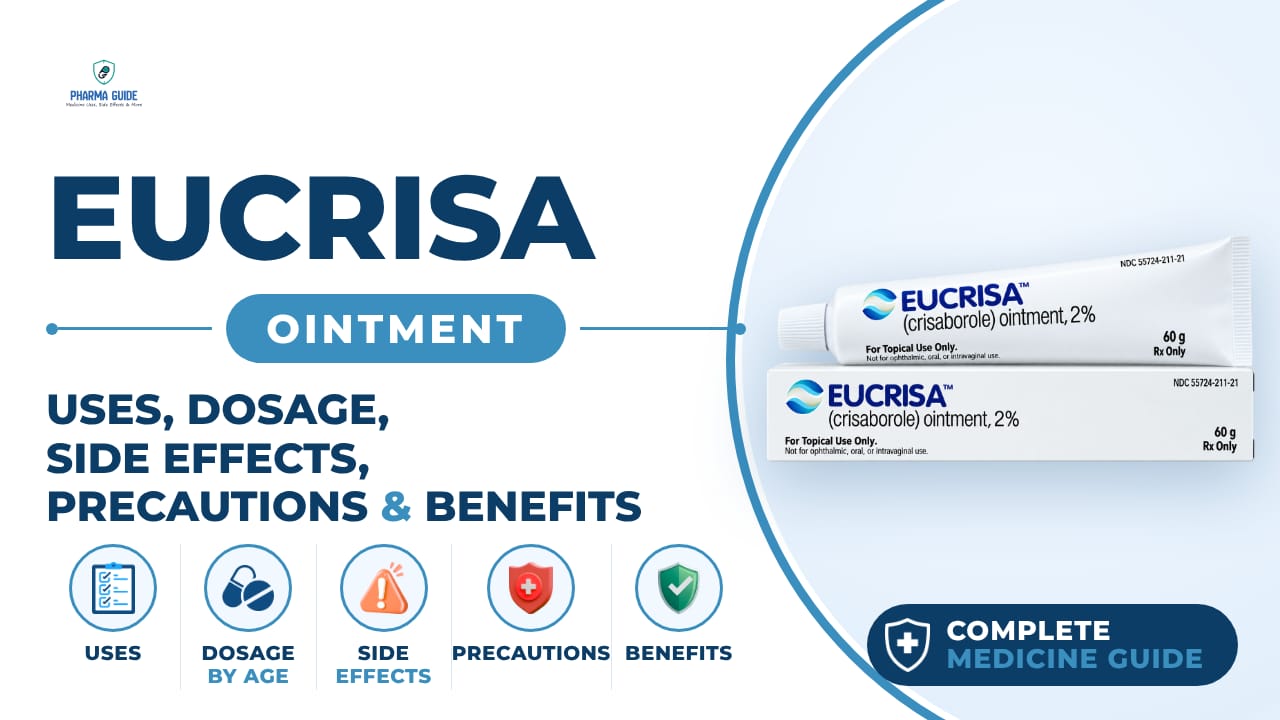
| Generic name | crisaborole |
|---|---|
| Drug class | Phosphodiesterase-4 (PDE-4) inhibitor |
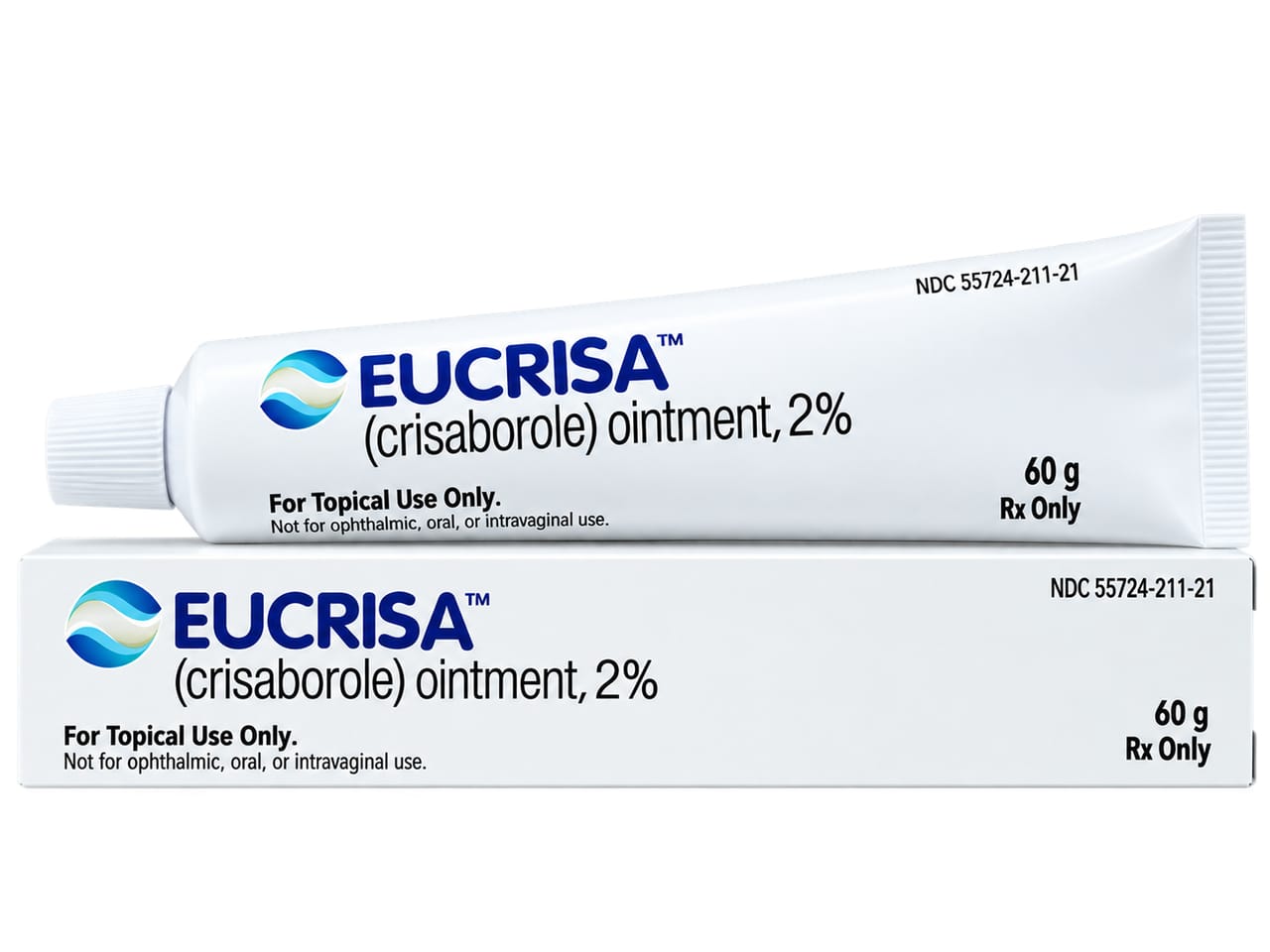
| Forms | Ointment, 2% w/w (20 mg crisaborole per gram) |
Quick overview
Eucrisa Ointment (crisaborole) is a non-steroid prescription ointment belonging to the phosphodiesterase-4 (PDE-4) inhibitor drug class. It is used to treat mild to moderate atopic dermatitis (eczema) on the skin in adults and children 3 months of age and older. It is applied directly to the affected skin and works by reducing inflammation in the skin.
What is Eucrisa Ointment
Eucrisa is a non-steroid prescription ointment used to treat mild to moderate eczema (atopic dermatitis) on the skin. Its generic name is crisaborole, and it belongs to the phosphodiesterase-4 (PDE-4) inhibitor drug class.
Eucrisa Ointment uses
- Topical treatment of mild to moderate atopic dermatitis (eczema) in adults and children 3 months of age and older
Benefits of Eucrisa Ointment
- Treats mild-to-moderate atopic dermatitis
- Helps reduce itching
- Reduces skin inflammation
- Helps improve redness and irritation
- Provides a non-steroid topical treatment
- Approved for patients 3 months and older
How Eucrisa Ointment works
Eucrisa blocks an enzyme called PDE-4 that is overactive in eczema. This increases a substance in skin cells that helps calm inflammation, which can reduce the redness, swelling, and itching of eczema, although exactly how this leads to improvement isn't fully understood.
Eucrisa Ointment dosage
Apply only to the affected area(s) of skin as directed by your healthcare professional. Do not use in the eyes, mouth, or vagina; rinse with water if it gets into these areas by accident.
Wash your hands after applying, unless you are treating eczema on your hands; caregivers who apply it for someone else should also wash their hands afterward. Apply a thin layer to affected areas; once skin is clear or almost clear, your healthcare professional may reduce use to once daily, but if eczema worsens they may increase back to twice daily.
If you miss an application, apply it as soon as you remember, then go back to your regular schedule; do not apply extra to make up for a missed one. Do not apply more than directed or more often than directed, as this will not improve results and could be harmful. If too much ointment is applied, wipe off the excess.
| Age group | Dose |
|---|---|
| 3 months–2 years | Apply a thin layer to affected areas twice daily |
| 2–11 years | Apply a thin layer twice daily |
| 12–17 years | Apply a thin layer twice daily |
Available forms and strengths
- Ointment, 2% w/w (20 mg crisaborole per gram)
Side effects of Eucrisa Ointment
Common
- Application site reactions such as burning, stinging, itching, or inflamed skin
Serious
- Allergic reactions at or near the application site, such as hives, itching, swelling, or redness
- Severe itching, swelling, or more skin redness than usual
Warnings and precautions
- Allergic reactions, including hives at the application site, have happened in people using Eucrisa. If severe itching, swelling, or redness occurs at the application site or elsewhere on the body, stop using Eucrisa and get medical help right away.
- Do not use Eucrisa if you or your child are allergic to crisaborole or any other ingredient in the product.
- Eucrisa is for use on the skin only. Do not use it in the eyes, mouth, or vagina.
- Pregnancy: It is not known if Eucrisa can harm an unborn baby. Tell your doctor if you are pregnant or planning to become pregnant.
- Breastfeeding: It is not known if Eucrisa passes into breast milk. Talk with your healthcare professional about the best way to feed your baby if you are using Eucrisa.
- Alcohol: Drinking alcohol doesn't affect how Eucrisa works, but alcohol may trigger eczema flare-ups in some people.
Storage
- Store below 25°C
- Store at room temperature (20°C to 25°C / 68°F to 77°F)
- Keep the tube tightly closed and away from heat or moisture
- Keep out of reach and sight of children
When to see a doctor
- Get emergency medical help if you have signs of an allergic reaction, such as hives, itching, skin redness or swelling, difficulty breathing, or swelling of the face, lips, tongue, or throat.
- Stop using Eucrisa and call your doctor right away if you have severe itching, redness, or swelling of the skin where the medicine was applied.
- If you think you or a person you are caring for has applied too much Eucrisa, contact a healthcare professional, hospital emergency department, or poison control immediately, even without symptoms.
Alternatives
- Pimecrolimus cream
- Tacrolimus ointment
- Hydrocortisone cream
Watch the video
FAQs
What is Eucrisa Ointment used for?
Eucrisa is used for the topical treatment of mild to moderate atopic dermatitis (eczema) in adults and children 3 months of age and older.
How does Eucrisa Ointment work?
Eucrisa blocks an enzyme called PDE-4 that is overactive in eczema. This increases a substance in skin cells that helps calm inflammation, which can reduce redness, swelling, and itching.
How do you apply Eucrisa Ointment?
Apply a thin layer to affected areas of skin as directed, typically twice daily, avoiding the eyes, mouth, and vagina. Wash your hands after applying unless treating eczema on the hands.
What are the common side effects of Eucrisa Ointment?
Common side effects include application site reactions such as burning, stinging, itching, or inflamed skin.
What are alternatives to Eucrisa Ointment?
Alternatives mentioned include pimecrolimus cream, tacrolimus ointment, and hydrocortisone cream.
General information, not medical advice
Your prescriber and the leaflet in your pack know your situation. This page does not.
- Follow your prescriber and the leaflet
- Don't start, stop, or change a dose on your own
- Doses and warnings differ by country and product
Sources
Video
Related medicines

Injectafer Injection: Uses, Dosage, Side Effects, Precautions and Alternates
Iron products
Injectafer (ferric carboxymaltose) treats iron deficiency anemia and heart failure-related iron deficiency via IV. Learn uses, dosage, side effects, and

Gliclazide Tablet: Uses, Dosage, Side Effects, Precautions and Alternates
Sulfonylurea (hypoglycemic/antidiabetic agent)
Gliclazide Tablet is a sulfonylurea for type 2 diabetes that boosts insulin release. Learn about dosage, side effects, warnings, and precautions.