
Safety
General information, not medical advice
Your prescriber and the leaflet in your pack know your situation. This page does not.
- Follow your prescriber and the leaflet
- Don't start, stop, or change a dose on your own
- Doses and warnings differ by country and product
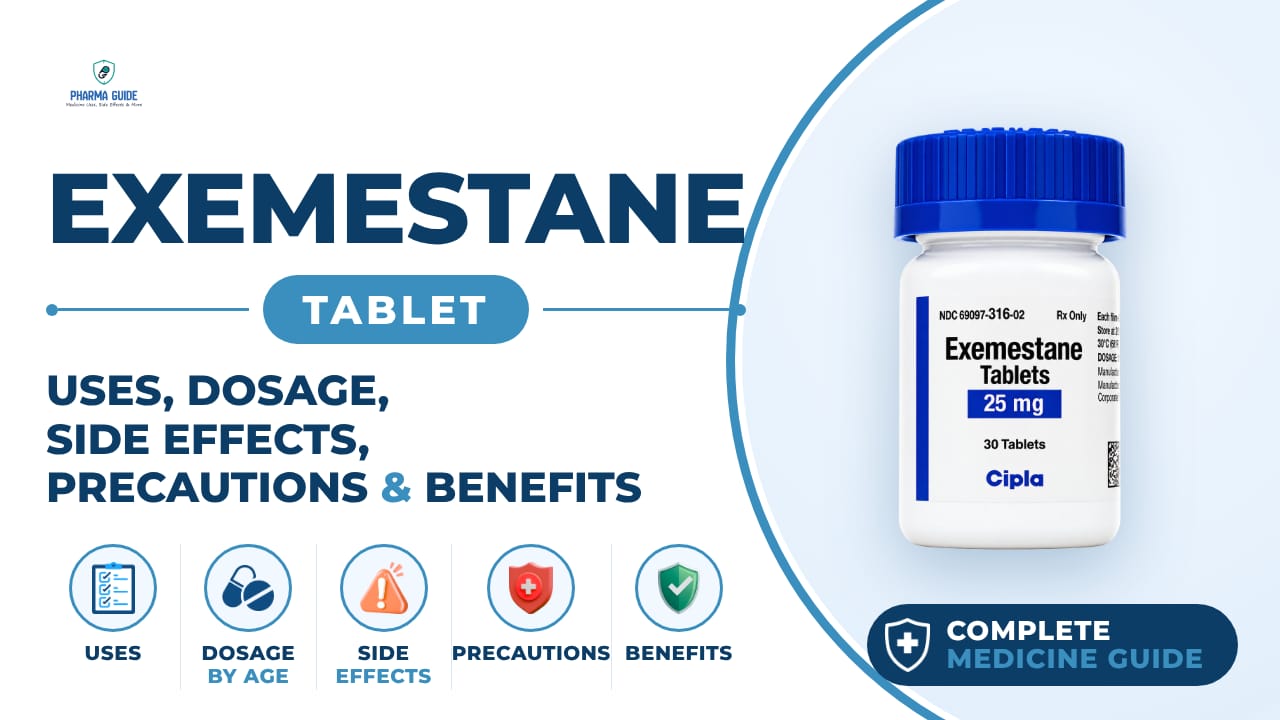
Exemestane Tablet: Uses, Dosage, Side Effects, Precautions and Alternates
| Generic name | Exemestane |
|---|---|
| Drug class | Aromatase inhibitor (steroidal aromatase inactivator); anti-neoplastic agent |
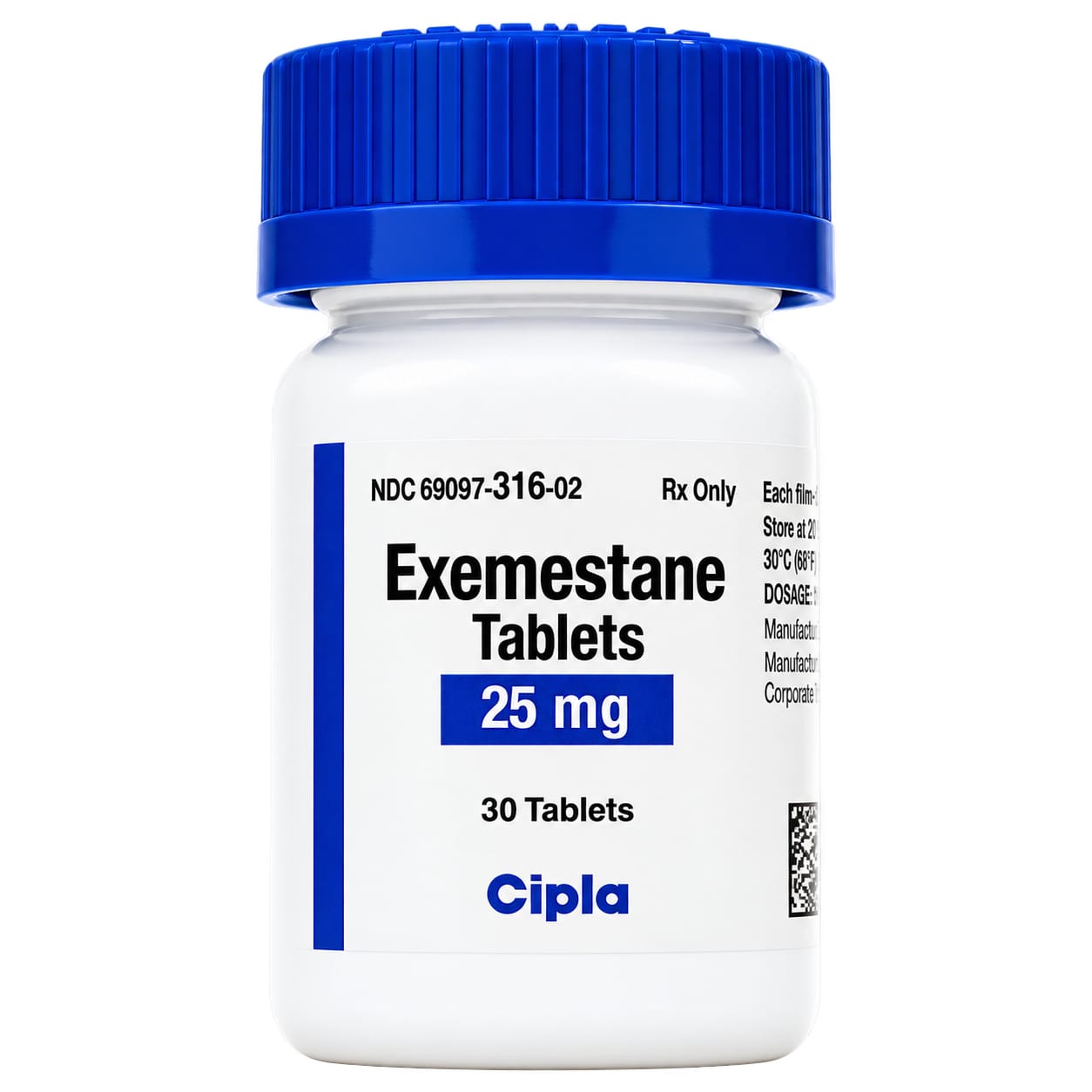
| Forms | Tablet (25 mg, round, biconvex, film-coated or sugar-coated) |
Quick overview
Exemestane Tablet (generic name: Exemestane) is an aromatase inhibitor used to treat certain types of breast cancer in postmenopausal women. It works by lowering estrogen levels in the body, which can help slow or stop the growth of estrogen-dependent breast cancer cells. It is used both as additional treatment after tamoxifen therapy and for advanced breast cancer that has progressed after other hormone treatments.
What is Exemestane Tablet
Exemestane is a cancer medicine that lowers estrogen levels in the body. It belongs to a group of medicines called aromatase inhibitors and is used to treat certain types of breast cancer in women who have gone through menopause.
Exemestane Tablet uses
- Adjuvant (additional) treatment of early breast cancer in postmenopausal women who have already had 2 to 3 years of tamoxifen treatment
- Treatment of advanced breast cancer in postmenopausal women whose disease has progressed after treatment with tamoxifen or other antiestrogen therapy
Benefits of Exemestane Tablet
- Can reduce the risk of breast cancer coming back after surgery when used after tamoxifen
- May help control advanced breast cancer and slow disease progression
- May improve some disease-related symptoms such as pain
How Exemestane Tablet works
Exemestane blocks an enzyme called aromatase, which the body uses to make estrogen. By lowering estrogen levels, it can help slow or stop the growth of breast cancer cells that need estrogen to grow.
Exemestane Tablet dosage
Take by mouth, once a day, preferably after a meal. Try to take it at the same time each day. If a dose is missed, take it as soon as remembered unless it is almost time for the next dose; in that case skip the missed dose and do not double up. This medicine is only for women who have gone through menopause; it is not for use in women who are still having periods or in children.
| Age group | Dose |
|---|---|
| Under 18 years | Safety and effectiveness have not been established |
| 18–64 years | 25 mg once daily after a meal |
| 65–74 years | Usually 25 mg once daily after a meal |
Available forms and strengths
- Tablet (25 mg, round, biconvex, film-coated or sugar-coated)
Side effects of Exemestane Tablet
Common
- Hot flushes
- Nausea
- Fatigue
- Dizziness
- Joint and muscle pain (arthralgia)
- Depression
- Increased sweating
- Headache
- Abdominal pain
- Insomnia (sleeplessness)
- Rash
- Increased appetite
- Constipation
- Weight gain
- Hair loss (alopecia)
- Diarrhea
- Indigestion (dyspepsia)
- High cholesterol
- Carpal tunnel syndrome (pain or burning in hands/wrists)
- Hives (urticaria)
- Itchiness (pruritus)
- Urinary tract infection
- Abnormal liver function blood test results
Serious
- High blood pressure (hypertension): shortness of breath, fatigue, dizziness or fainting, chest pain, swelling in ankles/legs, racing heartbeat
- Osteoporosis and bone fractures: broken bones, bone pain, back pain worse when standing or walking
- Swelling of legs or hands (peripheral edema)
- Vaginal bleeding
- Chest pain with shortness of breath or heaviness
- Gastric ulcer: burning stomach pain, heartburn, vomiting blood, black tarry stools
- Hypersensitivity reactions including anaphylaxis
- Nerve damage (neuropathy): pain, burning, or numbness
- Tendon problems (tendonitis, tenosynovitis, tendon tears): pain, swelling, tenderness near a joint, or a snap/pop sensation
- Serious allergic reaction: skin rash, swelling, difficulty breathing
- Hepatitis (liver inflammation): yellowing of skin or eyes, nausea, loss of appetite, dark urine
- Severe skin reactions (erythema multiforme, acute generalized exanthematous pustulosis)
Warnings and precautions
- This medicine should only be used under the care of a doctor experienced in treating cancer.
- This medicine is not recommended for women who have not yet gone through menopause.
- This medicine is not recommended for women who have been diagnosed with osteoporosis, because it can cause further bone thinning.
- This medicine may increase the risk of heart and blood vessel problems, including heart attack and high blood pressure.
- This medicine may raise cholesterol levels, so cholesterol should be monitored during treatment.
- This medicine may increase the risk of stomach ulcers, especially if taken with anti-inflammatory painkillers.
- This medicine can cause bone thinning over time, increasing the risk of fractures.
- Severe skin reactions have occurred and require stopping the medicine right away.
- Do not take estrogen-containing medicines while on this treatment, as they can stop it from working properly.
- If switching from tamoxifen to this medicine while also taking warfarin, your warfarin dose may need to be changed.
- This medicine should not be used during pregnancy because it may harm the unborn baby. It is only meant for women who have already gone through menopause.
- It is not known if this medicine passes into human breast milk, but because of possible harm to a nursing baby, breastfeeding should be stopped during treatment.
- People with kidney problems can usually take this medicine at the normal dose, but exposure to the drug is higher in those with severe kidney impairment, so caution is advised.
- People with moderate or severe liver problems have higher levels of this medicine in their blood, but no dose change is usually needed since the drug was well tolerated at much higher doses in studies.
- Alcohol is best limited, particularly if liver problems are present.
- This medicine can cause drowsiness, dizziness, or weakness, so you should be careful driving or using machines until you know how it affects you.
Storage
- Store between 15°C and 30°C
- Store in the original package
- Keep out of reach and sight of children
- Check the expiry date before use and do not use after this date
- Return any unused medication to your pharmacist
When to see a doctor
- Get immediate medical help if you have signs of a serious allergic reaction such as rash, swelling, or difficulty breathing.
- Get medical help right away if you have symptoms of a stomach ulcer such as burning stomach pain, vomiting blood, or black tarry stools.
- Seek urgent care if you have chest pain along with shortness of breath or a feeling of heaviness or fullness.
- Seek medical help right away if you notice yellowing of the skin or eyes, nausea, loss of appetite, or dark urine, which could be signs of liver inflammation.
- Contact a healthcare professional or emergency services right away if you think you or someone else has taken too much of this medicine, even without symptoms.
- Get medical attention if you notice signs of high blood pressure such as chest pain, swelling in your legs, severe shortness of breath, or irregular heartbeat.
Alternatives
- Anastrozole
- Letrozole
- Tamoxifen
Watch the video
FAQs
What is Exemestane Tablet used for?
It is used as additional treatment after tamoxifen therapy for early breast cancer, and for advanced breast cancer that has progressed after other hormone treatments, in postmenopausal women.
How does Exemestane Tablet work?
It blocks an enzyme called aromatase, which the body uses to make estrogen, lowering estrogen levels and helping slow or stop the growth of breast cancer cells that need estrogen to grow.
What is the usual dose of Exemestane Tablet?
The usual dose is 25 mg taken by mouth once daily, preferably after a meal, at the same time each day.
What are the common side effects of Exemestane Tablet?
Common side effects include hot flushes, nausea, fatigue, dizziness, joint and muscle pain, depression, increased sweating, headache, and insomnia.
Can Exemestane Tablet be used during pregnancy?
No, it should not be used during pregnancy because it may harm the unborn baby, and it is only meant for women who have already gone through menopause.
General information, not medical advice
Your prescriber and the leaflet in your pack know your situation. This page does not.
- Follow your prescriber and the leaflet
- Don't start, stop, or change a dose on your own
- Doses and warnings differ by country and product
Sources
Video
Related medicines

Injectafer Injection: Uses, Dosage, Side Effects, Precautions and Alternates
Iron products
Injectafer (ferric carboxymaltose) treats iron deficiency anemia and heart failure-related iron deficiency via IV. Learn uses, dosage, side effects, and

Gliclazide Tablet: Uses, Dosage, Side Effects, Precautions and Alternates
Sulfonylurea (hypoglycemic/antidiabetic agent)
Gliclazide Tablet is a sulfonylurea for type 2 diabetes that boosts insulin release. Learn about dosage, side effects, warnings, and precautions.