
Safety
General information, not medical advice
Your prescriber and the leaflet in your pack know your situation. This page does not.
- Follow your prescriber and the leaflet
- Don't start, stop, or change a dose on your own
- Doses and warnings differ by country and product
Exenatide Injection: Uses, Dosage, Side Effects, Precautions and Alternates
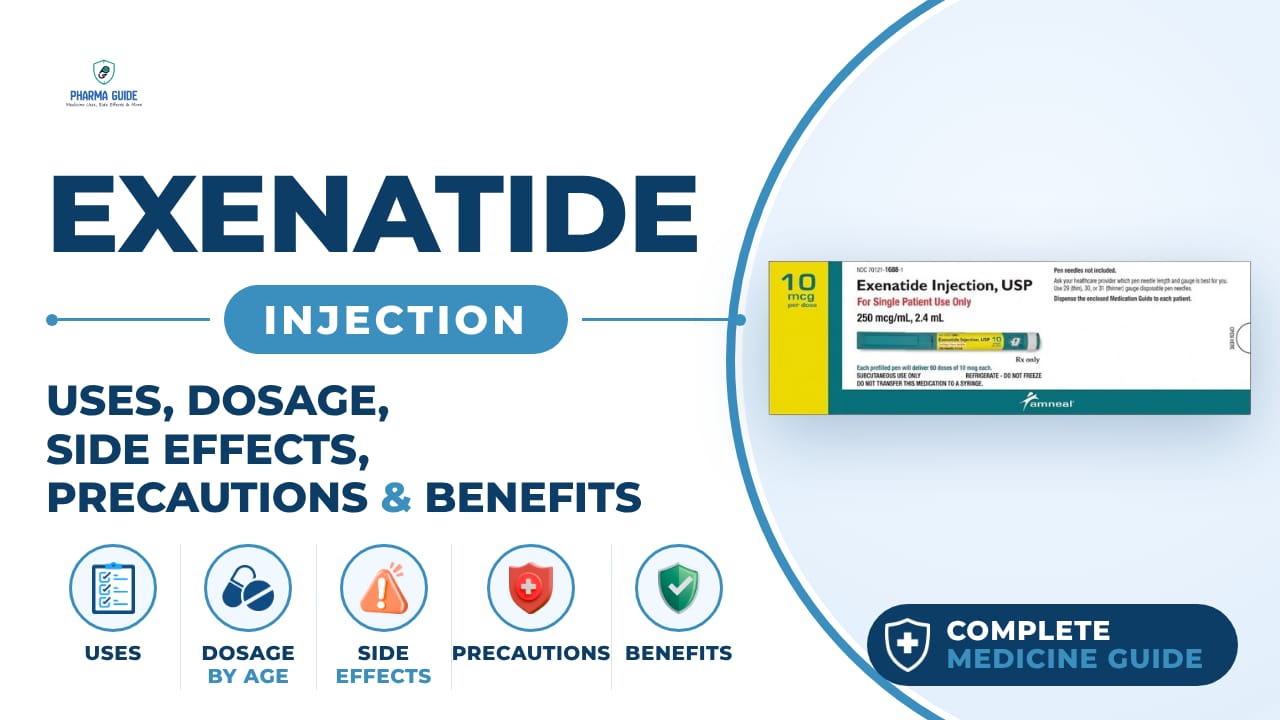
| Generic name | exenatide |
|---|---|
| Drug class | GLP-1 Drugs (glucagon-like peptide-1 receptor agonist) |
| Forms | Injection |
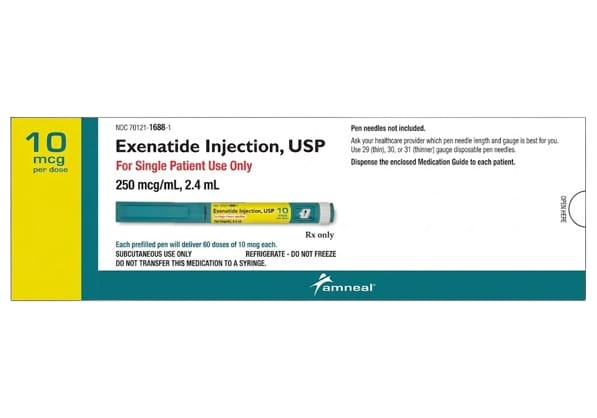
Quick overview
Exenatide Injection (exenatide) is a prescription GLP-1 receptor agonist used by adults with type 2 diabetes. It is given as an injection under the skin alongside diet and exercise to help control blood sugar. It works by boosting insulin release, reducing liver sugar output, and slowing stomach emptying. It carries both common and serious potential side effects, so it should be used exactly as directed.
What is Exenatide Injection
Exenatide injection is a prescription medicine for adults with type 2 diabetes. It is given as an injection under the skin and is used along with diet and exercise to help control blood sugar.
Exenatide Injection uses
- Type 2 diabetes.
- Improving blood sugar control.
- Supporting glucose management with diet and exercise.
- Additional diabetes control when other treatments are insufficient.
- Managing high blood sugar in adults with type 2 diabetes.
Benefits of Exenatide Injection
- Helps lower blood sugar.
- Improves glucose control.
- Supports diabetes management.
- May reduce appetite.
- May support weight reduction.
How Exenatide Injection works
Exenatide copies the action of a natural gut hormone called GLP-1. It helps your pancreas release more insulin when blood sugar is high, lowers the amount of sugar your liver releases, and slows down how quickly food leaves your stomach. Together these effects help lower blood sugar.
Exenatide Injection dosage
Inject under the skin of the thigh, abdomen, or upper arm; do not inject into a vein or muscle. Give two injections each day, any time within the 60 minutes before your morning and evening meals, or before the two main meals of the day, about 6 hours or more apart. Do not inject after a meal.
Change (rotate) your injection site with each dose; do not use the same spot each time. If you use insulin too, give it as a separate injection and never mix it with exenatide in the same syringe; you may inject both in the same body area but not right next to each other.
If you miss a dose, skip it and take your next dose at the next scheduled time; do not take an extra or larger dose to make up for a missed one. Check that the liquid is clear, colorless, and free of particles before each use; do not use it if it looks cloudy, discolored, or contains particles.
Your doctor will usually start you on a low dose and may increase it after about one month based on how you respond.
| Age group | Dose |
|---|---|
| Under 18 years | Not recommended |
| 18–64 years | 5 mcg, twice/day |
| 65+ years | 5 mcg, twice/day |
Available forms and strengths
- Injection
Side effects of Exenatide Injection
Common
- Nausea
- Vomiting
- Diarrhea
- Feeling jittery
- Dizziness
- Headache
- Indigestion (dyspepsia)
- Constipation
- Weakness (asthenia)
- Decreased appetite
Serious
- Acute pancreatitis (severe, persistent stomach pain, sometimes spreading to the back, with or without nausea or vomiting)
- Severe allergic reactions (swelling of face, lips, tongue or throat; trouble breathing or swallowing; severe rash or itching; fainting or dizziness; very rapid heartbeat)
- Low blood platelet count (drug-induced thrombocytopenia) causing unusual bleeding or bruising
- Kidney problems, including kidney failure, often related to dehydration from vomiting or diarrhea
- Gallbladder problems (gallstones or inflammation), including upper stomach pain, fever, yellowing of skin or eyes, clay-colored stools
- Severe or persistent gastrointestinal symptoms
- Risk of food or liquid entering the lungs during surgery or procedures using anesthesia or deep sedation
- Low blood sugar (hypoglycemia), especially when used with insulin or a sulfonylurea
Warnings and precautions
- Exenatide can cause inflammation of the pancreas (pancreatitis), which can be serious or fatal. Stop using it and get medical help right away for severe stomach pain that doesn't go away, with or without vomiting.
- Never share an exenatide injection pen with another person, even if you change the needle, because this can spread blood-borne infections.
- Using exenatide together with insulin or a sulfonylurea increases the risk of low blood sugar, which can be severe. Exenatide can cause kidney injury due to dehydration, particularly if you have vomiting, diarrhea, or nausea that leads to fluid loss.
- Exenatide can cause severe digestive side effects and is not recommended for people with severe gastroparesis (slow stomach emptying). Your body may develop antibodies to exenatide, which can reduce how well it controls blood sugar; alternative treatment may be needed.
- Serious allergic reactions, including anaphylaxis and swelling of the face or throat, have occurred with exenatide. Exenatide can cause a drop in blood platelets due to an immune reaction, which can lead to serious, even fatal, bleeding. Exenatide may increase the risk of gallbladder problems such as gallstones or gallbladder inflammation.
- Exenatide slows stomach emptying, which may increase the risk of food or liquid entering the lungs during surgery that uses general anesthesia or deep sedation. Tell your healthcare providers you are taking exenatide before any planned procedure.
- Exenatide may change how some oral medicines are absorbed because it slows stomach emptying; take oral contraceptives and antibiotics at least 1 hour before your exenatide injection. Exenatide can increase the effect of warfarin, sometimes leading to bleeding; your doctor may need to check your blood clotting more often.
- Exenatide should only be used during pregnancy if the benefit to the mother clearly outweighs the potential risk to the baby. Tell your doctor if you are pregnant, planning to become pregnant, or become pregnant while using this medicine.
- It is not known if exenatide passes into breast milk or how it might affect a nursing baby. Talk with your healthcare provider about the best way to feed your baby if you are breastfeeding.
- Exenatide is not recommended for people with severe kidney problems or end-stage kidney disease, and should be used carefully in people who have had a kidney transplant. Kidney function should be monitored, especially if you have side effects that could cause dehydration.
- No studies have been done in people with liver problems, but because exenatide is cleared mainly by the kidneys, liver problems are not expected to change how much of the drug is in your blood.
- Alcohol can affect blood sugar control, so check with your doctor about whether it's safe for you to drink alcohol while using this medicine.
- If your diabetes is not well controlled, your ability to concentrate while driving may be affected. Check your blood sugar before driving and take a snack on long trips.
Storage
- Store new, unused exenatide injection pens in the original carton in a refrigerator at 36° to 46°F (2° to 8°C)
- After first use, keep the pen at a temperature cooler than 77°F (25°C)
- Do not freeze; do not use exenatide injection if it has been frozen
- Protect exenatide injection from light
- Use a pen for only 30 days after first use, then throw it away even if some medicine remains
- Do not use after the expiration date printed on the label
- Keep the pen, needles, and all medicines out of the reach of children
- Do not store the pen with the needle attached
- Use a puncture-resistant (sharps) container to dispose of needles; do not reuse or share needles
- Do not flush medication down the toilet; use a medicine take-back program when disposing of unneeded medication
When to see a doctor
- Get medical help right away for ongoing, severe stomach pain (possibly spreading to the back), with or without nausea or vomiting — this may be pancreatitis.
- Seek emergency care for signs of a severe allergic reaction: swelling of the face, lips, tongue, or throat; trouble breathing or swallowing; severe rash or itching; fainting or dizziness; or a very fast heartbeat.
- Call your healthcare provider right away if you notice unusual bleeding or bruising, which could be a sign of a low platelet count.
- Tell your healthcare provider right away if you have nausea, vomiting, or diarrhea that does not go away, or if you cannot drink fluids, as this increases the risk of kidney problems.
- Contact your healthcare provider right away if you get symptoms of gallbladder problems, such as upper stomach pain, fever, yellowing of the skin or eyes, or clay-colored stools.
- If you think you have taken too much exenatide, contact your healthcare provider or your local poison control center, or go to the nearest hospital emergency room right away.
- Tell your healthcare providers you are taking exenatide before any planned surgery or procedure that uses anesthesia or deep sedation.
Alternatives
- Mounjaro
- Ozempic
- Bydureon BCise
Watch the video
FAQs
What is Exenatide Injection used for?
It is a prescription medicine for adults with type 2 diabetes, used along with diet and exercise to help control blood sugar.
How is Exenatide Injection given?
It is injected under the skin of the thigh, abdomen, or upper arm, twice daily within 60 minutes before two main meals, about 6 hours or more apart, rotating injection sites each time.
What should I do if I miss a dose of Exenatide Injection?
Skip the missed dose and take your next dose at the next scheduled time; do not take an extra or larger dose to make up for it.
What are the serious side effects of Exenatide Injection?
Serious risks include acute pancreatitis, severe allergic reactions, low blood platelet count, kidney problems, gallbladder problems, and low blood sugar, especially when combined with insulin or a sulfonylurea.
How should Exenatide Injection pens be stored?
Store unused pens in the refrigerator at 36° to 46°F, keep in-use pens below 77°F, protect from light and freezing, and discard 30 days after first use.
General information, not medical advice
Your prescriber and the leaflet in your pack know your situation. This page does not.
- Follow your prescriber and the leaflet
- Don't start, stop, or change a dose on your own
- Doses and warnings differ by country and product
Sources
Video
Related medicines

Ozempic Injection: Uses, Dosage, Side Effects, Precautions and Alternates
GLP-1 Drugs (glucagon-like peptide-1 receptor agonist)
Ozempic Injection (semaglutide) is a weekly shot for type 2 diabetes that improves blood sugar, lowers cardiovascular risk, and may slow kidney decline.
Victoza Injection: Uses, Dosage, Side Effects, Precautions and Alternates
GLP-1 Drugs (glucagon-like peptide-1 receptor agonist)
Victoza Injection (liraglutide) controls blood sugar in type 2 diabetes and lowers heart attack/stroke risk. Learn dosage, side effects, and warnings.