
Safety
General information, not medical advice
Your prescriber and the leaflet in your pack know your situation. This page does not.
- Follow your prescriber and the leaflet
- Don't start, stop, or change a dose on your own
- Doses and warnings differ by country and product
Victoza Injection: Uses, Dosage, Side Effects, Precautions and Alternates
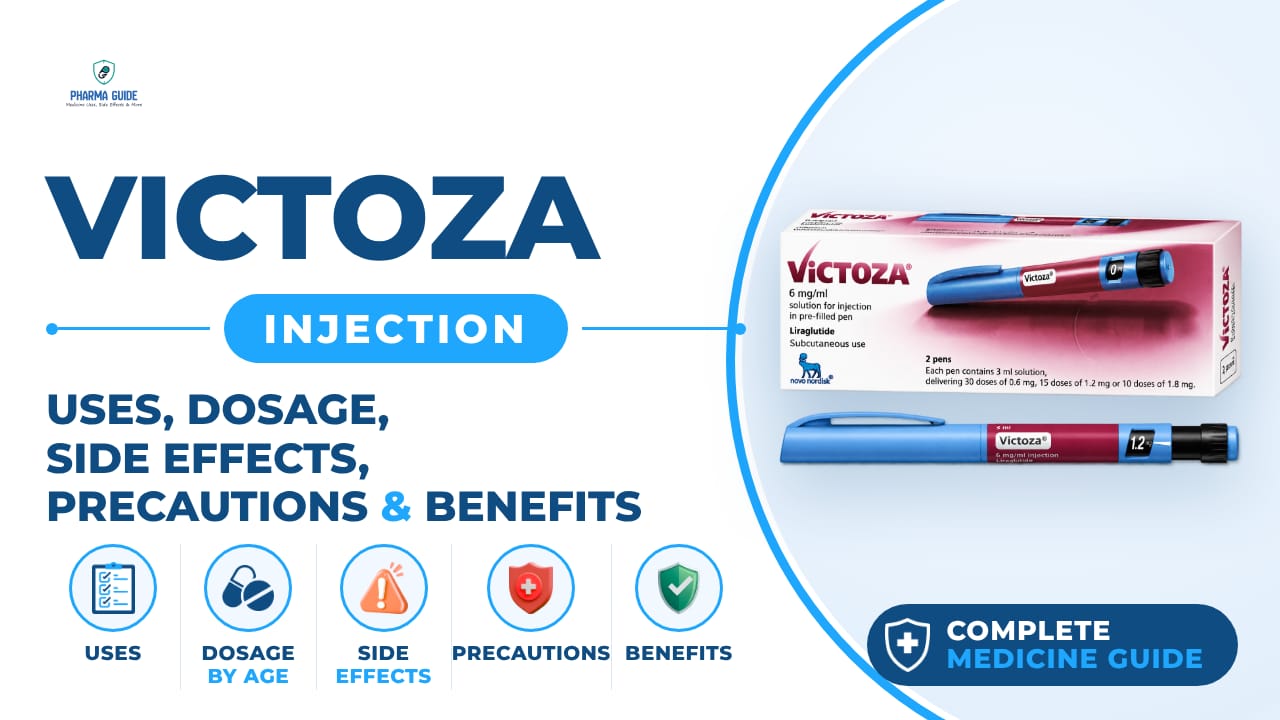
| Generic name | liraglutide |
|---|---|
| Drug class | GLP-1 Drugs (glucagon-like peptide-1 receptor agonist) |
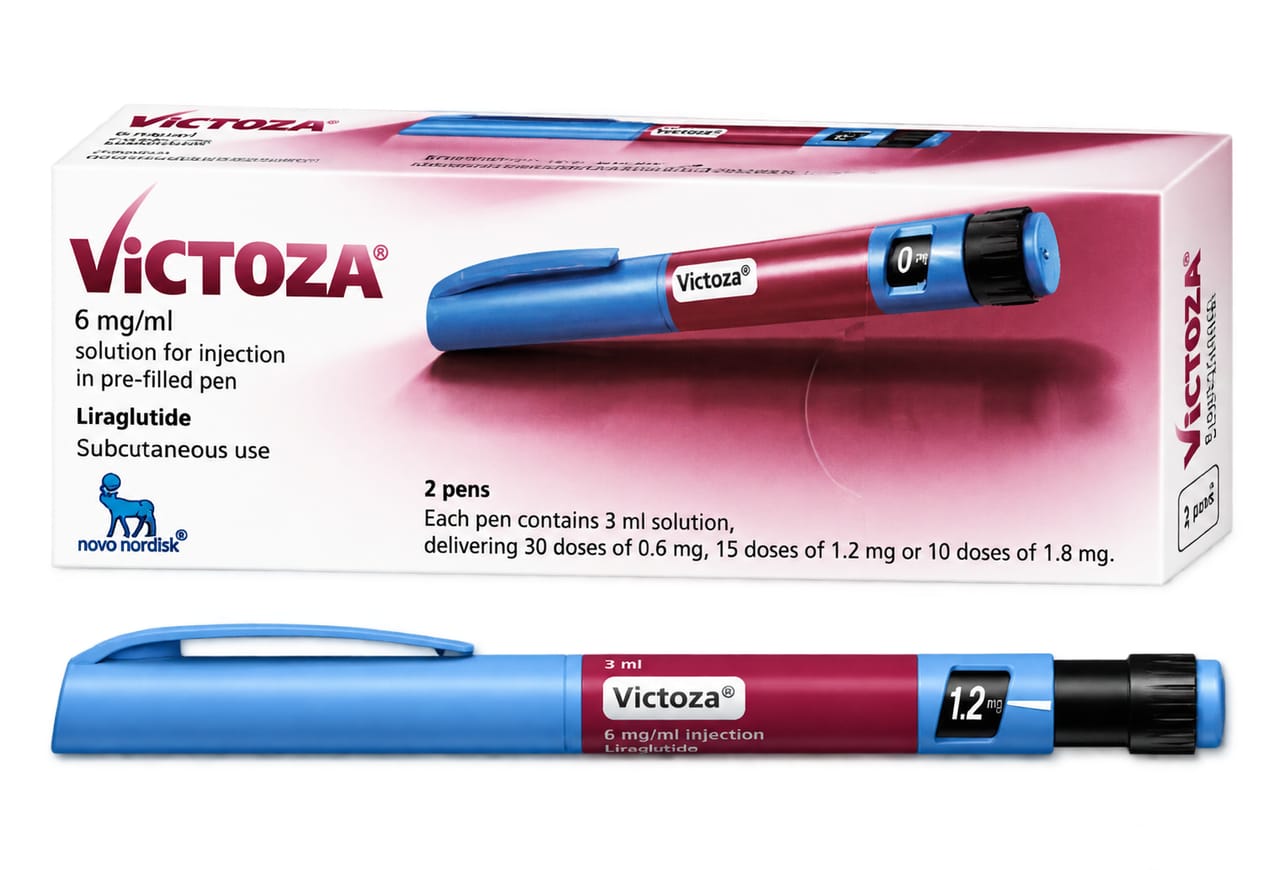
| Forms | Solution for injection in a pre-filled, single-patient-use pen (6 mg/mL) delivering doses of 0.6 mg, 1.2 mg, or 1.8 mg |
Quick overview
Victoza Injection (liraglutide) is a GLP-1 receptor agonist used along with diet and exercise to help control blood sugar in adults and children 10 years and older with type 2 diabetes. It is also used to lower the risk of serious heart problems, such as heart attack or stroke, in adults with type 2 diabetes who already have heart disease. It is injected once daily and carries a boxed warning regarding thyroid tumors.
What is Victoza Injection
Victoza is an injectable prescription medicine used along with diet and exercise to help control blood sugar in adults and children 10 years and older with type 2 diabetes. It is also used to lower the risk of serious heart problems like heart attack or stroke in adults with type 2 diabetes who already have heart disease.
Victoza Injection uses
- Improve blood sugar control in adults and children 10 years and older with type 2 diabetes, along with diet and exercise
- Reduce the risk of major cardiovascular events such as heart attack, stroke, or death in adults with type 2 diabetes who have known heart disease
Benefits of Victoza Injection
- Lowers blood sugar (A1C) and keeps it down
- May reduce the risk of heart attack, stroke, or death in adults with type 2 diabetes and heart disease
- Only needs to be injected once a day
- May help some adults lose a modest amount of weight
How Victoza Injection works
Victoza acts like a natural gut hormone called GLP-1. It helps the pancreas release more insulin when blood sugar is high, stops the liver from making too much sugar, and slows down how fast food leaves the stomach, which helps control blood sugar after meals.
Victoza Injection dosage
Inject Victoza once a day, at any time of the day, with or without food. Try to pick one time of day and use it every day so it becomes a routine. Inject under the skin of your stomach (abdomen), thigh, or upper arm — never into a muscle or a vein. Change (rotate) the injection site each time you inject; do not use the exact same spot every time.
Do not mix insulin and Victoza together in the same injection, though they can be given in the same body area if not right next to each other. If you miss a dose, take it at your next scheduled time — do not take two doses at once. Never share your injection pen with another person, even if the needle has been changed. Attach a new needle before each injection and remove and throw away the needle after use.
| Age group | Dose |
|---|---|
| Under 10 years | Not recommended |
| 10 Years and Above | Starting dose: 0.6 mg once daily |
| Adults | 0.6 mg → 1.2 mg → 1.8 mg once daily (as prescribed) |
| Older Adults (65+ years) | Same adult dosage; adjustment based on individual health needs |
Available forms and strengths
- Solution for injection in a pre-filled, single-patient-use pen (6 mg/mL) delivering doses of 0.6 mg, 1.2 mg, or 1.8 mg
Side effects of Victoza Injection
Common
- Nausea
- Diarrhea
- Vomiting
- Decreased appetite
- Indigestion
- Constipation
- Headache
Serious
- Possible thyroid tumors, including thyroid cancer
- Inflammation of the pancreas (pancreatitis)
- Low blood sugar (hypoglycemia), especially when used with insulin or a sulfonylurea
- Serious allergic reactions
- Kidney problems, often from dehydration caused by vomiting, diarrhea, or nausea
- Gallbladder problems
- Food or liquid getting into the lungs during surgery or procedures using anesthesia or deep sedation
- Increased heart rate
- Severe stomach problems
- Severe constipation, including intestinal blockage
- Liver problems, including inflammation of the liver
Warnings and precautions
- Victoza has a boxed warning because it caused thyroid tumors, including a type of thyroid cancer, in animal studies. It is not known if it causes this in people. Do not use Victoza if you or a family member has had medullary thyroid carcinoma or if you have Multiple Endocrine Neoplasia syndrome type 2.
- Stop using Victoza and call your doctor right away if you get severe stomach pain that doesn't go away, with or without nausea or vomiting — this could be pancreatitis. Victoza is not for treating type 1 diabetes. Do not use Victoza together with other medicines containing liraglutide, such as Saxenda, or other GLP-1 receptor agonist medicines. Never share your injection pen with anyone else, even if you change the needle, because this can spread infections.
- Pregnancy: It is not known if Victoza will harm an unborn baby. Tell your doctor if you become pregnant while using Victoza.
- Breastfeeding: It is not known if Victoza passes into breast milk. Talk with your doctor to decide whether you should breastfeed while using Victoza.
- Kidney: If you have kidney problems, vomiting, nausea, or diarrhea can cause dehydration that may make kidney problems worse. Drink enough fluids and tell your doctor right away if these symptoms don't go away.
- Liver: Tell your doctor if you have had liver problems before starting Victoza.
- Alcohol: Drinking alcohol while using Victoza can raise your risk of low blood sugar because alcohol can stop your liver from releasing sugar when your levels are low. Ask your doctor how much alcohol is safe for you.
Storage
- Store unopened Victoza in a refrigerator between 36-46°F (2-8°C), away from the cooling element, and do not freeze
- After opening, you can store the pen for 30 days either at room temperature (59-86°F/15-30°C) or in the fridge
- Always keep the cap on and protect it from heat and sunlight
- Use a fresh needle each time, removing and discarding it after use
- Store the pen without an injection needle attached to prevent contamination, leakage, or infection
- Throw away used needles in a sharps container or other heavy-duty plastic container, kept closed and out of reach of children and pets
- If you no longer need Victoza and have leftover medicine, dispose of it safely so children, pets, and others cannot access it
When to see a doctor
- Call your doctor right away if you notice a lump or swelling in your neck, trouble swallowing, a hoarse voice, or shortness of breath — these could be signs of a thyroid tumor.
- Get medical help immediately if you have signs of a serious allergic reaction, such as swelling of the face, lips, tongue, or throat, trouble breathing or swallowing, severe rash or itching, fainting, or a very fast heartbeat.
- Tell your doctor right away if you have symptoms of gallbladder problems, such as pain in your upper stomach, fever, yellowing of your skin or eyes, or clay-colored stools.
- Tell your doctor right away if you have nausea, vomiting, or diarrhea that does not go away, since this can lead to dehydration and kidney problems.
- If you think you've taken too much Victoza, contact your doctor or local poison control center, or go to the nearest emergency room right away, since overdose can cause severe nausea, severe vomiting, and low blood sugar.
- Tell all your healthcare providers you are taking Victoza before any surgery or procedure that uses anesthesia or deep sedation.
Alternatives
- Ozempic
- Trulicity
- Mounjaro
Watch the video
FAQs
What is Victoza Injection used for?
Victoza is used along with diet and exercise to help control blood sugar in adults and children 10 years and older with type 2 diabetes. It is also used to lower the risk of serious heart problems like heart attack or stroke in adults with type 2 diabetes who already have heart disease.
How often should Victoza be injected?
Victoza is injected once a day, at any time of day, with or without food. It should be injected under the skin of the stomach, thigh, or upper arm, with the injection site rotated each time.
What is the boxed warning for Victoza?
Victoza has a boxed warning because it caused thyroid tumors, including a type of thyroid cancer, in animal studies. It is not known if it causes this in people. It should not be used by those with a personal or family history of medullary thyroid carcinoma or Multiple Endocrine Neoplasia syndrome type 2.
What are the common side effects of Victoza?
Common side effects include nausea, diarrhea, vomiting, decreased appetite, indigestion, constipation, and headache.
Can Victoza help with weight loss?
Victoza may help some adults lose a modest amount of weight, in addition to lowering and maintaining blood sugar (A1C) levels.
General information, not medical advice
Your prescriber and the leaflet in your pack know your situation. This page does not.
- Follow your prescriber and the leaflet
- Don't start, stop, or change a dose on your own
- Doses and warnings differ by country and product
Sources
Video
Related medicines
Exenatide Injection: Uses, Dosage, Side Effects, Precautions and Alternates
GLP-1 Drugs (glucagon-like peptide-1 receptor agonist)
Exenatide Injection is a GLP-1 therapy for type 2 diabetes that boosts insulin and controls blood sugar. Learn dosage, side effects, and precautions.

Ozempic Injection: Uses, Dosage, Side Effects, Precautions and Alternates
GLP-1 Drugs (glucagon-like peptide-1 receptor agonist)
Ozempic Injection (semaglutide) is a weekly shot for type 2 diabetes that improves blood sugar, lowers cardiovascular risk, and may slow kidney decline.