
Safety
General information, not medical advice
Your prescriber and the leaflet in your pack know your situation. This page does not.
- Follow your prescriber and the leaflet
- Don't start, stop, or change a dose on your own
- Doses and warnings differ by country and product
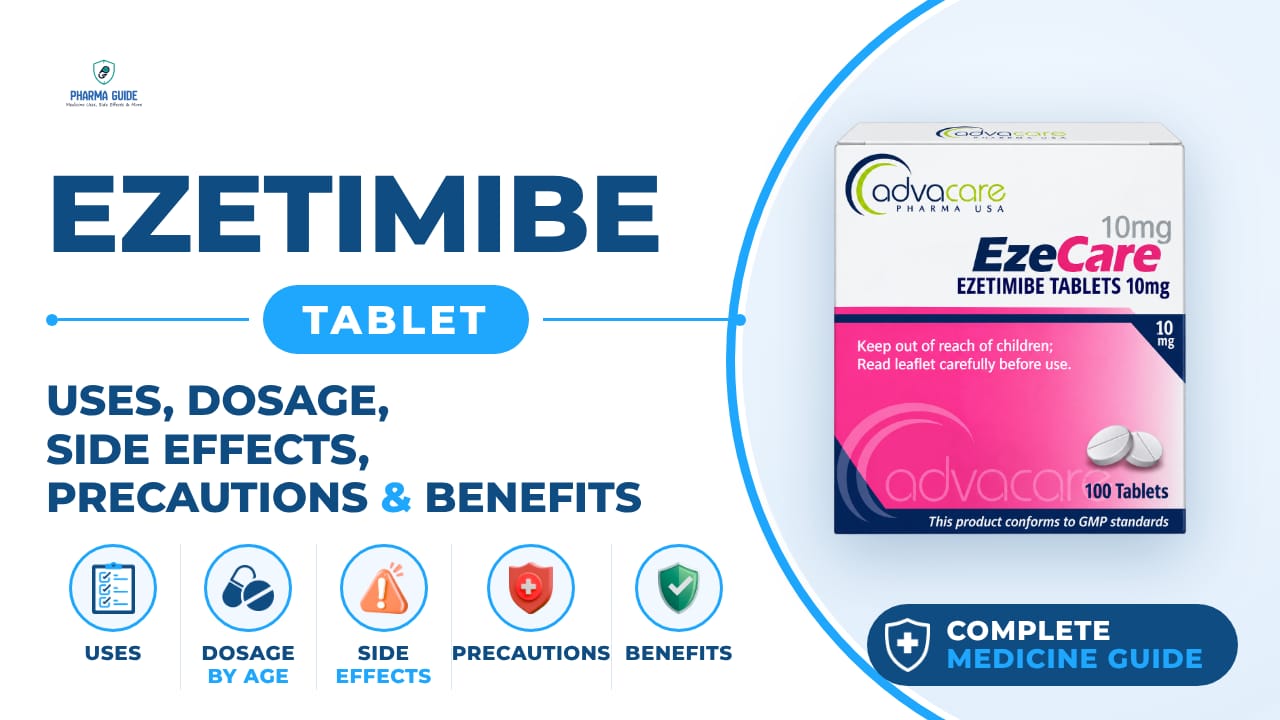
Ezetimibe Tablet: Uses, Dosage, Side Effects, Precautions and Alternates
| Generic name | Ezetimibe |
|---|---|
| Drug class | Cholesterol absorption inhibitor |
| Forms | Tablet |
Quick overview
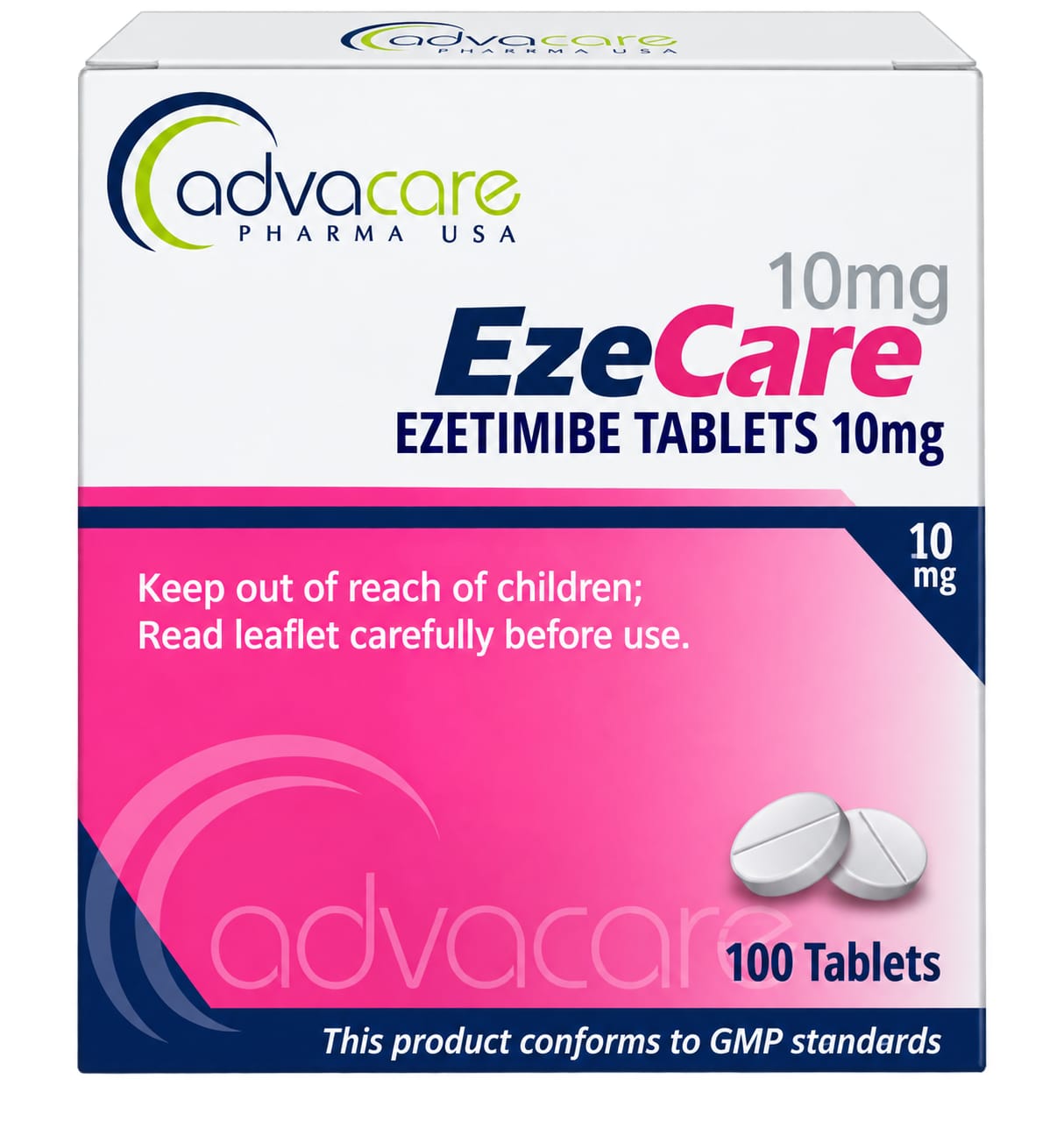
Ezetimibe Tablet is a prescription medicine used to lower cholesterol by reducing the amount absorbed from food, which lowers bad cholesterol (LDL) in the blood. It is often used along with diet changes and exercise, and may be combined with other cholesterol-lowering medicines such as statins or fenofibrate. A common dose is 10 mg once daily, taken as prescribed by a doctor.
What is Ezetimibe Tablet
Ezetimibe is a prescription medicine belonging to the cholesterol absorption inhibitor class. It is used to lower cholesterol and works by reducing the amount of cholesterol your body absorbs from food, which lowers the amount of bad cholesterol (LDL) in your blood. It is often used along with diet changes and exercise, and may be combined with other cholesterol-lowering medicines such as statins or fenofibrate.
Ezetimibe Tablet uses
- Lowers total cholesterol, LDL (bad) cholesterol, and other fats in people with high cholesterol (primary hyperlipidemia), alone or combined with a statin
- Used with fenofibrate to lower cholesterol and fats in people with mixed hyperlipidemia
- Used with atorvastatin or simvastatin to lower cholesterol in people with homozygous familial hypercholesterolemia (HoFH)
- Used to lower plant sterol levels (sitosterol and campesterol) in people with a rare condition called homozygous sitosterolemia
Benefits of Ezetimibe Tablet
- Helps lower LDL (“bad”) cholesterol
- Reduces the amount of cholesterol absorbed from the intestine
- Can help lower total cholesterol and certain other blood fats
- May be used alone or together with a statin when additional cholesterol lowering is needed
- Helps manage primary hypercholesterolemia and some inherited cholesterol disorders
- By lowering LDL cholesterol, it can help reduce the risk of cardiovascular events in appropriate patients, especially when combined with statin therapy
How Ezetimibe Tablet works
Ezetimibe works by blocking cholesterol from being absorbed in the small intestine. This reduces the amount of cholesterol that reaches the liver, which lowers cholesterol stores in the liver and helps clear more cholesterol from the blood. It works differently from statins, so it can be used together with them for added effect.
Ezetimibe Tablet dosage
Take this medicine by mouth at the same time every day. You can take it with or without food; if it upsets your stomach, take it with food. Keep taking it unless your care team tells you to stop. If you also take a bile acid sequestrant, take this medicine at least 2 hours before or 4 hours after that medicine. Stay on a cholesterol-lowering diet while taking this medicine.
If you miss a dose, take it as soon as you remember, but do not take more than one dose in a day. Do not take double or extra doses. This medicine is only for you; do not share it with others. Use in children under 10 years old has not been studied.
| Age group | Dose |
|---|---|
| Under 10 years | Routine use not established; specialist guidance required |
| 10–17 years | 10 mg once daily |
| 18–64 years | 10 mg once daily |
| 65+ years | 10 mg once daily; routine age-based adjustment generally not required |
Available forms and strengths
- Tablet
Side effects of Ezetimibe Tablet
Common
- Diarrhea
- Joint pain (arthralgia)
- Muscle aches and pains
- Feeling tired (fatigue)
- Headache
- Cough, sore throat, stuffy or runny nose
- Sinus infection
- Back pain
- Pain in arms or legs
- Nausea
- Trouble sleeping
Serious
- Allergic reactions: skin rash, itching or hives, swelling of the face, lips, tongue, or throat, or trouble breathing or swallowing
- Signs of a serious liver problem: pain or tenderness in the upper stomach, pale stools, dark urine, loss of appetite, nausea, vomiting, or yellow eyes or skin
- Signs of a serious muscle problem (myopathy or rhabdomyolysis): unexplained muscle pain, tenderness, cramps, spasms, stiffness, weakness, or wasting, along with dark urine, fever, or unusual tiredness
- Inflammation of the pancreas or gallbladder, or gallstones
- Unusual bleeding or bruising
Warnings and precautions
- This medicine can cause muscle problems, including a rare but serious condition called rhabdomyolysis, which can lead to kidney damage. The risk is higher with higher statin doses, older age, low thyroid function, kidney problems, and use with certain other medicines.
- Liver enzyme levels can rise when this medicine is taken with a statin. Your doctor should check your liver function before and during treatment.
- Do not take this medicine with certain other cholesterol medicines called fibrates (other than fenofibrate) unless discussed with your doctor, since safety has not been studied.
- If you are also taking fenofibrate and develop symptoms of gallstones, tell your doctor, as gallbladder studies may be needed.
- This medicine is not recommended for people with moderate to severe liver impairment.
- When combined with a statin, this medicine should not be used by women who are pregnant, may become pregnant, or are breastfeeding.
- Pregnancy: This medicine should only be used during pregnancy if the benefit clearly outweighs the risk to the unborn baby.
- When combined with a statin, it should not be used during pregnancy because it may cause serious birth defects.
- Breastfeeding: It is not known if this medicine passes into breast milk. Talk to your doctor before breastfeeding, since your treatment plan may need to change. It should not be used together with a statin while breastfeeding.
- Kidney: People with kidney disease should tell their care team, though no dose change is usually needed for mild to severe kidney problems when used alone.
- Liver: This medicine is not recommended for people with moderate to severe liver problems. When combined with a statin, it should not be used in people with active liver disease.
Storage
- Store at 20–25°C (68–77°F)
- Protect from moisture
- Keep in a cool, dry place
- Keep in the original, tightly closed container
- Keep out of reach of children
- Get rid of any unused medication after the expiration date
- Do not keep outdated medicine or medicine no longer needed
- Ask your healthcare professional how you should dispose of any medicine you do not use
When to see a doctor
- Get medical help right away if you have signs of an allergic reaction, such as rash, itching, hives, or swelling of the face, lips, tongue, or throat
- Contact your doctor immediately if you notice unexplained muscle pain, tenderness, or weakness, as this could signal a serious muscle problem
- Check with your doctor right away if you have pain in the upper stomach, pale stools, dark urine, loss of appetite, nausea, vomiting, or yellow eyes or skin, which could mean a liver problem
- If you think you have taken too much of this medicine, contact a poison control center or emergency room right away
Alternatives
- Bempedoic Acid
- Pravastatin
- Simvastatin
- Rosuvastatin
- Atorvastatin
Watch the video
FAQs
What is Ezetimibe Tablet used for?
It is used to lower total cholesterol, LDL (bad) cholesterol, and other fats in people with high cholesterol, either alone or combined with a statin or fenofibrate. It's also used for homozygous familial hypercholesterolemia and homozygous sitosterolemia.
How does Ezetimibe Tablet work?
It works by blocking cholesterol from being absorbed in the small intestine, which reduces the amount reaching the liver, lowers liver cholesterol stores, and helps clear more cholesterol from the blood. It works differently from statins, so it can be used together with them.
What is the usual dose of Ezetimibe Tablet?
A common dose is 10 mg once daily, taken as prescribed by a doctor, for ages 10 and above. Use in children under 10 years old has not been studied.
What are the common side effects of Ezetimibe Tablet?
Common side effects include diarrhea, joint pain, muscle aches, fatigue, headache, cough, sore throat, stuffy or runny nose, sinus infection, back pain, pain in arms or legs, nausea, and trouble sleeping.
Can Ezetimibe Tablet be used during pregnancy?
It should only be used during pregnancy if the benefit clearly outweighs the risk to the unborn baby. When combined with a statin, it should not be used during pregnancy because it may cause serious birth defects.
General information, not medical advice
Your prescriber and the leaflet in your pack know your situation. This page does not.
- Follow your prescriber and the leaflet
- Don't start, stop, or change a dose on your own
- Doses and warnings differ by country and product
Sources
- https://my.clevelandclinic.org/health/treatments/ezetimibe-tablets
- https://pmc.ncbi.nlm.nih.gov/articles/PMC1200795/
- file:///C:/Users/thede/Downloads/20230922_9a04678f-e961-45aa-b3bb-e38e66856edc.pdf
Video
Related medicines

Injectafer Injection: Uses, Dosage, Side Effects, Precautions and Alternates
Iron products
Injectafer (ferric carboxymaltose) treats iron deficiency anemia and heart failure-related iron deficiency via IV. Learn uses, dosage, side effects, and

Gliclazide Tablet: Uses, Dosage, Side Effects, Precautions and Alternates
Sulfonylurea (hypoglycemic/antidiabetic agent)
Gliclazide Tablet is a sulfonylurea for type 2 diabetes that boosts insulin release. Learn about dosage, side effects, warnings, and precautions.