
Safety
General information, not medical advice
Your prescriber and the leaflet in your pack know your situation. This page does not.
- Follow your prescriber and the leaflet
- Don't start, stop, or change a dose on your own
- Doses and warnings differ by country and product
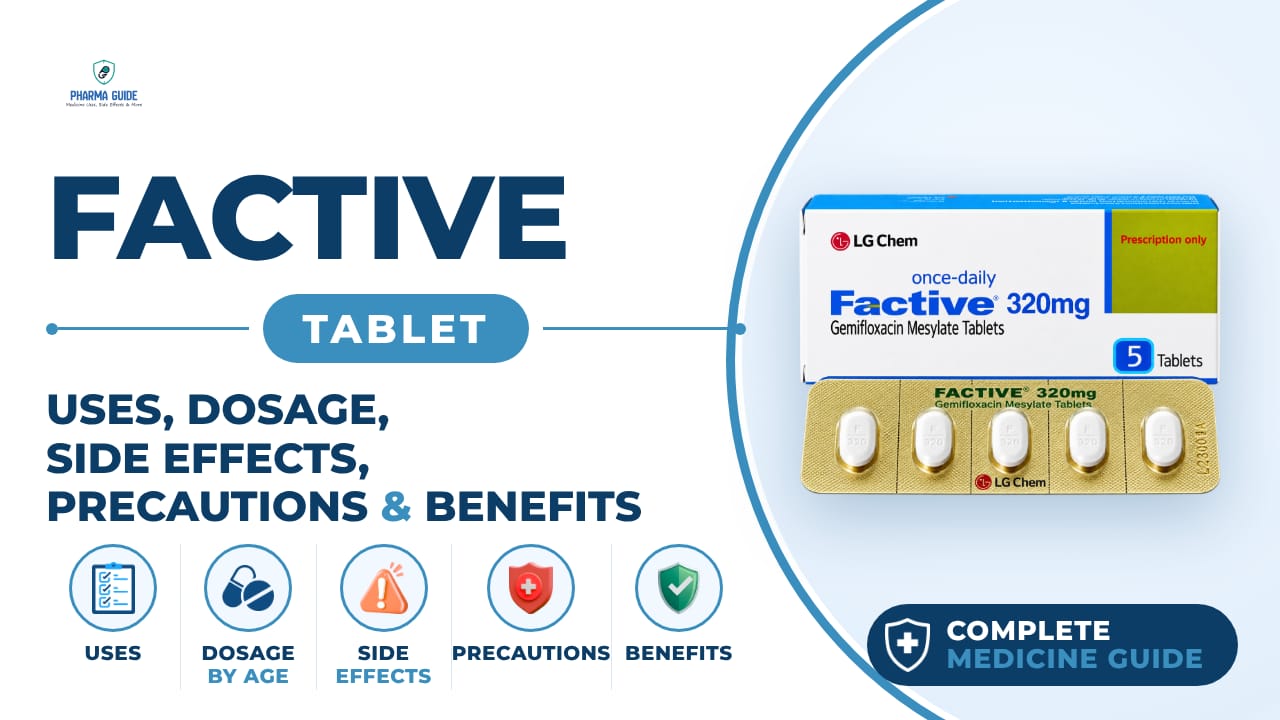
Factive Tablet: Uses, Dosage, Side Effects, Precautions and Alternates
| Generic name | gemifloxacin mesylate |
|---|---|
| Drug class | fluoroquinolone antibiotic |
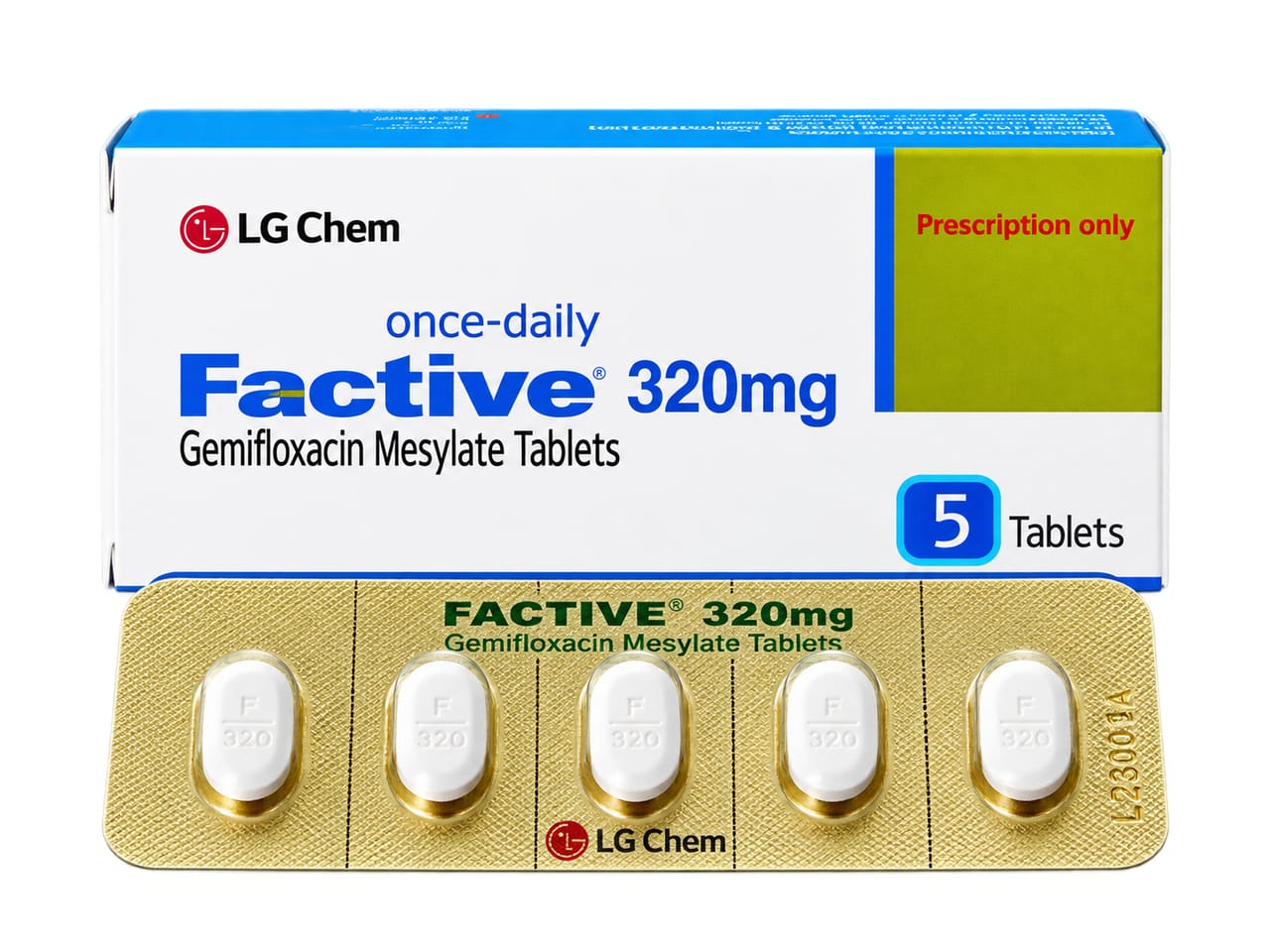
| Forms | Tablet (320 mg, film-coated, oval, white to off-white) |
Quick overview
Factive Tablet contains gemifloxacin mesylate, a fluoroquinolone antibiotic. It is used in adults 18 years or older to treat bronchitis flare-ups and pneumonia caused by certain bacteria, and it does not work against viral infections such as the common cold. It is typically taken once daily for a short course of 5 or 7 days, as prescribed by a doctor.
What is Factive Tablet
Factive is a fluoroquinolone antibiotic tablet used to treat adults 18 years or older with bronchitis or pneumonia (lung infections) caused by certain bacteria. It does not treat infections caused by viruses, such as the common cold.
Factive Tablet uses
- Acute bacterial exacerbation of chronic bronchitis caused by Streptococcus pneumoniae, Haemophilus influenzae, Haemophilus parainfluenzae, or Moraxella catarrhalis
- Community-acquired pneumonia of mild to moderate severity caused by Streptococcus pneumoniae (including multi-drug resistant strains), Haemophilus influenzae, Moraxella catarrhalis, Mycoplasma pneumoniae, Chlamydia pneumoniae, or Klebsiella pneumoniae
Benefits of Factive Tablet
- Effective against many bacteria causing chronic bronchitis flare-ups and pneumonia
- Can be taken once daily for a short course of 5 or 7 days
- Effective even against some drug-resistant strains of Streptococcus pneumoniae
- Provides once-daily dosing
- Active against several susceptible respiratory bacteria
- Available as an oral antibiotic tablet
How Factive Tablet works
Factive works by stopping bacteria from copying their DNA, which they need to grow and multiply. It blocks two enzymes bacteria need for this process, which kills the bacteria.
Factive Tablet dosage
Take one tablet a day for 5 or 7 days, exactly as prescribed. Take it at about the same time each day. It can be taken with or without food. Swallow the tablet whole; do not chew it, and drink plenty of fluids with it.
This medicine should not be taken with dairy products (like milk or yogurt) or calcium-fortified juices alone, but it may be taken with a meal that contains these products. Do not take antacids containing magnesium or aluminum, iron supplements, multivitamins with zinc or other metals, or didanosine within 3 hours before or 2 hours after taking this medicine. Take this medicine at least 2 hours before sucralfate.
If you miss a dose, take it as soon as you remember, but do not take more than one dose in a day. Finish the full course of treatment even if you begin to feel better, unless your doctor tells you to stop or you develop tendon problems or a serious allergic reaction. Drink fluids liberally while taking this medicine.
| Age group | Dose |
|---|---|
| Under 18 years | Safety and effectiveness have not been established |
| 18–64 years | 320 mg once daily for 5–7 days, depending on the bacterial infection |
| 65–74 years | 320 mg once daily; no age-based adjustment is normally required |
Available forms and strengths
- Tablet (320 mg, film-coated, oval, white to off-white)
Side effects of Factive Tablet
Common
- Diarrhea
- Rash
- Nausea
- Headache
- Stomach pain
- Vomiting
- Dizziness
- Change in taste
Serious
- Tendon swelling or rupture
- Worsening of myasthenia gravis symptoms (muscle weakness, breathing problems)
- Serious allergic reactions including anaphylaxis (hives, trouble breathing or swallowing, swelling of lips/tongue/face)
- Prolongation of the QT interval (irregular heartbeat, fainting)
- Severe diarrhea or colitis (Clostridium difficile-associated diarrhea)
- Liver problems including hepatitis (yellowing of skin or eyes, dark urine)
- Peripheral neuropathy (nerve damage causing numbness, tingling, burning, weakness)
- Central nervous system effects (seizures, hallucinations, confusion, depression, suicidal thoughts)
- Severe skin reactions
- Photosensitivity (severe sunburn-like reactions)
- Low blood sugar in diabetic patients taking oral diabetes medicines
Warnings and precautions
- This medicine can cause tendon swelling or rupture, which can happen during treatment or even months after stopping it. The risk is higher in people over 60, those taking steroids, and organ transplant recipients.
- This medicine may worsen symptoms of myasthenia gravis, a disease that causes muscle weakness, including breathing problems.
- Serious and sometimes fatal allergic reactions can happen, even after just one dose.
- This medicine may cause a rare heart rhythm problem called QT prolongation, which can lead to a dangerous irregular heartbeat.
- This medicine has not been studied in children and adolescents under 18, and may cause joint problems in this age group.
- This medicine can rarely cause nerve damage in the arms, hands, legs, or feet, which may be permanent.
- This medicine can cause a severe form of diarrhea caused by bacterial overgrowth in the colon, which can occur even up to two months after stopping treatment.
- This medicine may make your skin more sensitive to sunlight, increasing the risk of severe sunburn.
- Rash is more common with this medicine in women, people under 40, and those taking it for longer than 5 to 7 days.
- Factive has not been shown to be safe for use during pregnancy and should only be used if the benefit to the mother outweighs the risk to the unborn baby.
- It is not known whether Factive passes into human breast milk, so it should only be used while breastfeeding if the benefit to the mother outweighs the risk to the infant.
- People with reduced kidney function may need a lower dose of this medicine. No dose change is needed for people with mild, moderate, or severe liver problems, based on studies showing the increase in drug levels was not significant.
- No major direct interaction with alcohol is established, but avoiding alcohol while significantly ill is sensible.
- This medicine can cause dizziness, so you should not drive or operate machinery until you know how it affects you.
Storage
- Store at room temperature between 59° and 86°F (15° to 30°C)
- Protect from light
- Keep out of the reach of children
When to see a doctor
- Get emergency help right away if you develop hives, trouble breathing or swallowing, swelling of the lips, tongue, or face, throat tightness, a rapid heartbeat, or fainting.
- Call your healthcare provider right away if you feel pain, swelling, or hear a snap or pop in a tendon, such as at the back of the ankle, shoulder, or hand.
- Stop the medicine and call your doctor right away if you notice yellowing of your skin or eyes, or dark urine, which may be signs of a liver problem.
- Call your healthcare provider right away if you develop a skin rash while taking this medicine.
- Contact your doctor as soon as possible if you develop watery or bloody diarrhea, with or without stomach cramps and fever, even up to two months after finishing treatment.
- Call your healthcare provider right away if you have a change in your heartbeat, such as palpitations, or if you faint.
- Stop the medicine and talk with your doctor right away if you experience pain, burning, tingling, numbness, or weakness in your arms, hands, legs, or feet.
- Talk to your healthcare provider right away if you have worsening muscle weakness or breathing problems.
Alternatives
- Amoxicillin/clavulanate
- Doxycycline
- Azithromycin
Watch the video
FAQs
What is Factive Tablet used for?
Factive is used in adults 18 years or older to treat acute bacterial exacerbation of chronic bronchitis and community-acquired pneumonia of mild to moderate severity caused by certain bacteria. It does not treat viral infections like the common cold.
How should I take Factive Tablet?
Take one tablet a day for 5 or 7 days, exactly as prescribed, at about the same time each day. It can be taken with or without food. Swallow the tablet whole without chewing it, and drink plenty of fluids with it.
Can I take Factive Tablet with dairy products or supplements?
Factive should not be taken with dairy products or calcium-fortified juices alone, though it may be taken with a meal containing these. Avoid antacids with magnesium or aluminum, iron supplements, multivitamins with zinc or other metals, or didanosine within 3 hours before or 2 hours after taking it, and take it at least 2 hours before sucralfate.
What are the serious side effects of Factive Tablet?
Serious side effects include tendon swelling or rupture, worsening of myasthenia gravis symptoms, serious allergic reactions, QT interval prolongation, severe diarrhea or colitis, liver problems, peripheral neuropathy, central nervous system effects, severe skin reactions, and photosensitivity.
Is Factive Tablet safe during pregnancy?
Factive has not been shown to be safe for use during pregnancy and should only be used if the benefit to the mother outweighs the risk to the unborn baby.
General information, not medical advice
Your prescriber and the leaflet in your pack know your situation. This page does not.
- Follow your prescriber and the leaflet
- Don't start, stop, or change a dose on your own
- Doses and warnings differ by country and product
Sources
Video
Related medicines
Norfloxacin Tablet: Uses, Dosage, Side Effects, Precautions and Alternates
fluoroquinolone antibiotic
Norfloxacin Tablet treats UTIs, kidney, prostate, and certain gut or reproductive infections. Learn uses, dosage, side effects, and key warnings.

Gemifloxacin Tablet: Uses, Dosage, Side Effects, Precautions and Alternates
Fluoroquinolone antibiotic
Gemifloxacin Tablet is a fluoroquinolone antibiotic for pneumonia, bronchitis, and other infections. Learn its uses, dosage, side effects, and precautions.