
Safety
General information, not medical advice
Your prescriber and the leaflet in your pack know your situation. This page does not.
- Follow your prescriber and the leaflet
- Don't start, stop, or change a dose on your own
- Doses and warnings differ by country and product
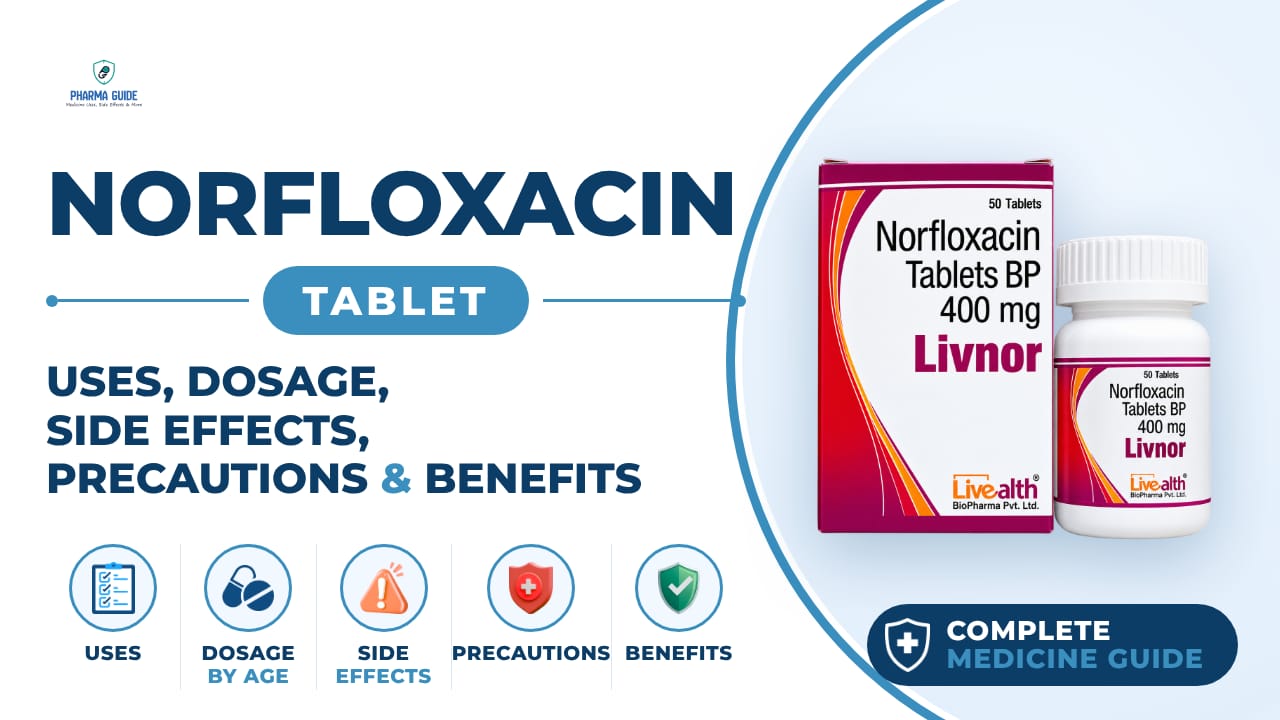
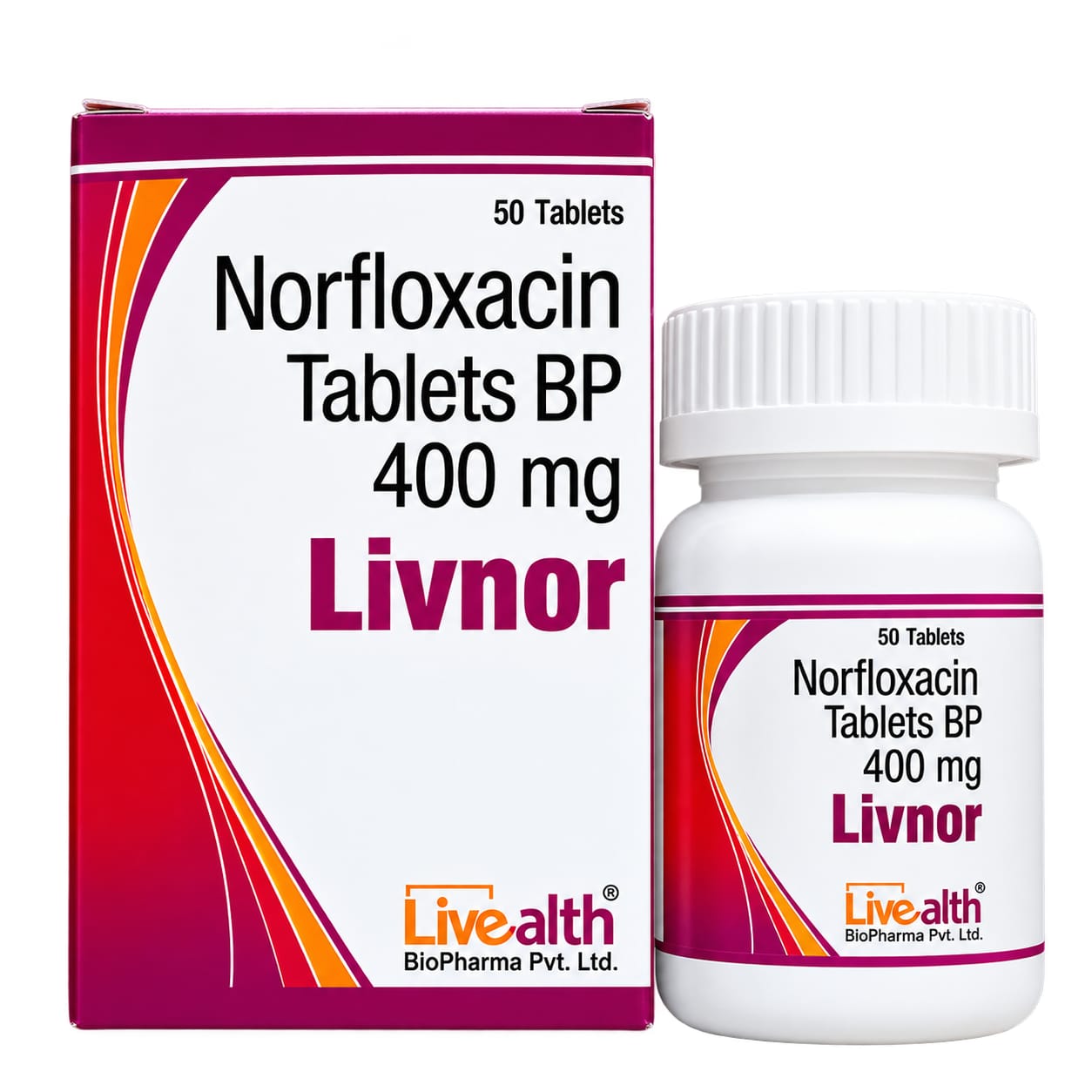
Norfloxacin Tablet: Uses, Dosage, Side Effects, Precautions and Alternates
| Generic name | norfloxacin |
|---|---|
| Drug class | fluoroquinolone antibiotic |
| Forms | tablet, syrup, suspension |
Quick overview
Norfloxacin Tablet is a fluoroquinolone antibiotic used to treat certain bacterial infections, including urinary tract infections, kidney and prostate infections, gonorrhoea, certain stomach or gut infections, and select reproductive tract infections. It does not work against viral illnesses like colds, flu, or coronavirus. It works by blocking enzymes bacteria need to copy their DNA, which kills them or stops them from growing. The tablet should be taken exactly as directed, with attention to food and supplement timing, and it carries certain warnings, including risks to tendons and nerves.
What is Norfloxacin Tablet
Norfloxacin is a fluoroquinolone antibiotic used to treat certain bacterial infections in different parts of the body. It does not work against viral illnesses like colds, flu, or coronavirus.
Norfloxacin Tablet uses
- Urinary tract infections, including bladder infections (cystitis)
- Kidney or lower urinary tract infections (pyelonephritis)
- Prostate infections (prostatitis)
- Gonorrhoea
- Certain stomach or gut infections, such as traveler's diarrhea
- Select reproductive tract (gynaecological) infections
Benefits of Norfloxacin Tablet
- Treats bladder and kidney infections caused by bacteria
- Treats acute and chronic bacterial prostatitis
- Used for certain intestinal and reproductive tract infections caused by bacteria
How Norfloxacin Tablet works
Norfloxacin stops bacteria from multiplying by blocking enzymes (DNA gyrase and topoisomerase IV) that bacteria need to copy their DNA. This kills the bacteria or stops them from growing.
Norfloxacin Tablet dosage
Take this medicine only as directed by your doctor; do not take more, more often, or for longer than prescribed. Swallow the tablet with a full glass of water and drink plenty of fluids during treatment. Take on an empty stomach, at least 1 hour before or 2 hours after a meal, milk, or other dairy products.
Do not take aluminum or magnesium antacids, iron supplements, multivitamins, sucralfate, or zinc at the same time as this medicine; space them at least 2 hours apart. Avoid caffeine-containing products such as coffee, soda, or chocolate while using this medicine.
Keep taking this medicine for the full treatment time, even if you feel better after the first few doses. Take it at around the same time each day to help you remember. If you miss a dose, take it as soon as you remember, but skip it if it is almost time for your next dose; do not double doses.
Use and dosing in children must be determined by a doctor; safety and effectiveness have not been established in those under 18.
| Age group | Dose |
|---|---|
| Under 18 years | Safety and effectiveness not established; no standard approved pediatric tablet dosage |
| 18–64 years | Historical UTI regimen: 400 mg twice daily; total 800 mg daily |
| 65–74 years | 400 mg twice daily if kidney function is adequate; 400 mg once daily when CrCl is 30 mL/min or less |
| 75 years and older | Same renal-function-based reference regimen; requires careful monitoring and consideration of safer alternatives |
Available forms and strengths
- Tablet
- Syrup
- Suspension
Side effects of Norfloxacin Tablet
Common
- Nausea
- Stomach pain
- Diarrhea
- Heartburn
- Headache
- Dizziness
- Restlessness or insomnia
- Increased sensitivity to sunlight (photosensitivity)
- Weakness or tiredness
- Change in taste
- Muscle or joint pain
- Constipation
- Back pain
- Excessive gas
- Dry mouth
- Change in liver function tests
Serious
- Tendon inflammation or rupture, especially the Achilles tendon
- Peripheral neuropathy (nerve pain, tingling, numbness, or weakness in arms, hands, legs, or feet)
- Severe allergic reactions including anaphylaxis (rash, hives, swelling of face/mouth, trouble breathing or swallowing)
- Serious skin reactions such as Stevens-Johnson syndrome or toxic epidermal necrolysis (blistering, peeling skin, red skin lesions)
- Liver damage (dark urine, clay-colored stools, yellowing of skin or eyes, stomach pain)
- Severe or watery/bloody diarrhea (possible antibiotic-associated diarrhea / C. diff infection)
- Confusion, anxiety, hallucinations, or psychotic-like behavior
- Seizures
- Increased pressure around the brain (severe headache, vision changes, nausea, vomiting)
- Heart rhythm changes (QT prolongation), fast or irregular heartbeat, fainting
- Suicidal thoughts or actions
Warnings and precautions
- Norfloxacin can cause tendon inflammation or even tendon rupture, most often affecting the Achilles tendon, at any age. The risk is higher in people over 60, those taking steroid medicines, those with severe kidney problems, a history of tendon problems, or an organ transplant.
- This medicine should not be used by people with a history of tendon problems from this or a similar antibiotic, myasthenia gravis, or known allergy to fluoroquinolones.
- Norfloxacin can cause nerve damage called peripheral neuropathy, which may not go away even after stopping the medicine.
- This medicine can make your skin much more sensitive to sunlight, leading to severe sunburn or skin reactions, even after short sun exposure.
- Severe diarrhea, including watery or bloody diarrhea, can occur during treatment or even two months or more after stopping the medicine. Do not take anti-diarrhea medicine without checking with your doctor first.
- Taking dairy products, caffeine, antacids, or supplements containing aluminum, magnesium, calcium, iron, or zinc too close to your dose can stop norfloxacin from working properly.
- Norfloxacin should generally be avoided during pregnancy because of possible risks to the baby's developing joints. It should only be used if your doctor recommends it.
- Norfloxacin passes into breast milk in small amounts. It is generally considered acceptable for breastfeeding mothers if recommended by a doctor, but the baby should be watched for diarrhea or yeast infection.
- People with kidney disease need special care when taking norfloxacin because of the risk of kidney damage, and the dose may need to be adjusted.
- Tell your doctor if you have liver disease, including hepatitis, since norfloxacin should be used with caution and may make liver problems worse.
- It isn't clear exactly how alcohol interacts with norfloxacin, so check with your doctor before drinking. Heavy drinking can weaken your immune response and may increase dizziness.
- This medicine can cause dizziness, lightheadedness, or reduced alertness. Do not drive or operate machinery until you know how it affects you.
Storage
- Store the medicine in a closed container at room temperature, away from heat, moisture, and direct light. Keep from freezing. Keep out of the reach of children.
- Do not keep outdated medicine or medicine no longer needed. Ask your healthcare professional how you should dispose of any medicine you do not use.
When to see a doctor
- Get medical help right away if you notice signs of a serious allergic reaction, such as rash, itching, hives, hoarseness, trouble breathing or swallowing, or swelling of your hands, face, or mouth.
- Contact your doctor immediately if you develop blistering, peeling, or loosening skin, red skin lesions, severe acne or rash, skin sores or ulcers, or fever/chills.
- Seek medical care right away if you notice dark urine, clay-colored stools, stomach pain, or yellowing of your eyes or skin, as these can signal a serious liver problem.
- Tell your doctor right away if you develop numbness, tingling, or burning pain in your hands, arms, legs, or feet, as this may be nerve damage.
- If you get sudden pain or swelling in a tendon, such as the ankle, back of the knee, shoulder, elbow, or wrist, stop exercising and check with your doctor right away.
- Tell your doctor right away if you have seizures, feel anxious, confused, or depressed, see or hear things that aren't there, have a severe headache, trouble sleeping, or unusual thoughts or behavior.
- Get emergency help if you faint, or notice a fast, irregular, or skipping heartbeat, as this may be a sign of a dangerous heart rhythm change.
- If you have thoughts of harming yourself, seek help immediately by contacting a crisis helpline or going to emergency care.
Alternatives
- Cephalexin
- Fosfomycin
- Nitrofurantoin
Watch the video
FAQs
What is Norfloxacin Tablet used for?
It treats bacterial infections such as urinary tract infections, kidney and prostate infections, gonorrhoea, certain stomach or gut infections like traveler's diarrhea, and select reproductive tract infections. It does not work against viral illnesses like colds or flu.
How should Norfloxacin Tablet be taken?
Take it exactly as directed, swallowed with a full glass of water, on an empty stomach at least 1 hour before or 2 hours after meals, milk, or dairy products. Keep taking it for the full treatment time even if you feel better early.
Can I take antacids or supplements with Norfloxacin Tablet?
No, you should avoid taking aluminum or magnesium antacids, iron supplements, multivitamins, sucralfate, or zinc at the same time; space them at least 2 hours apart, and avoid caffeine-containing products as well.
What are the serious side effects of Norfloxacin Tablet?
Serious effects include tendon inflammation or rupture (especially the Achilles tendon), peripheral neuropathy, severe allergic reactions, serious skin reactions, liver damage, severe diarrhea, confusion or hallucinations, seizures, heart rhythm changes, and suicidal thoughts.
Is Norfloxacin Tablet safe during pregnancy?
It should generally be avoided during pregnancy due to possible risks to the baby's developing joints, and should only be used if a doctor recommends it.
General information, not medical advice
Your prescriber and the leaflet in your pack know your situation. This page does not.
- Follow your prescriber and the leaflet
- Don't start, stop, or change a dose on your own
- Doses and warnings differ by country and product
Sources
Video
Related medicines
Gemifloxacin Tablet: Uses, Dosage, Side Effects, Precautions and Alternates
Fluoroquinolone antibiotic
Gemifloxacin Tablet is a fluoroquinolone antibiotic for pneumonia, bronchitis, and other infections. Learn its uses, dosage, side effects, and precautions.
Moxifloxacin Eye Drops: Uses, Dosage, Side Effects, Precautions and Alternates
Fluoroquinolone antibiotic
Moxifloxacin Eye Drops treat bacterial conjunctivitis, corneal ulcers, and post-surgery infections. Learn dosage, side effects, and precautions before use.