
Safety
General information, not medical advice
Your prescriber and the leaflet in your pack know your situation. This page does not.
- Follow your prescriber and the leaflet
- Don't start, stop, or change a dose on your own
- Doses and warnings differ by country and product
Moxifloxacin Eye Drops: Uses, Dosage, Side Effects, Precautions and Alternates
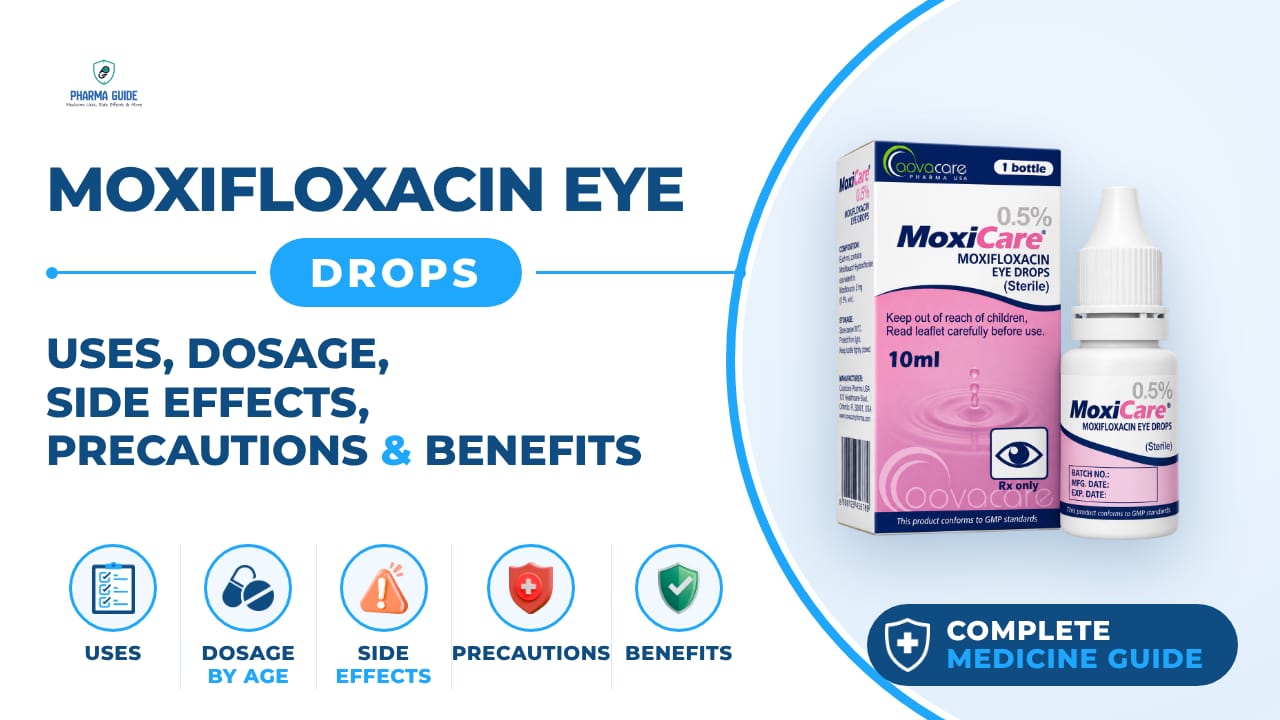
| Generic name | Moxifloxacin |
|---|---|
| Drug class | Fluoroquinolone antibiotic |
| Forms | Solution (eye drops) |
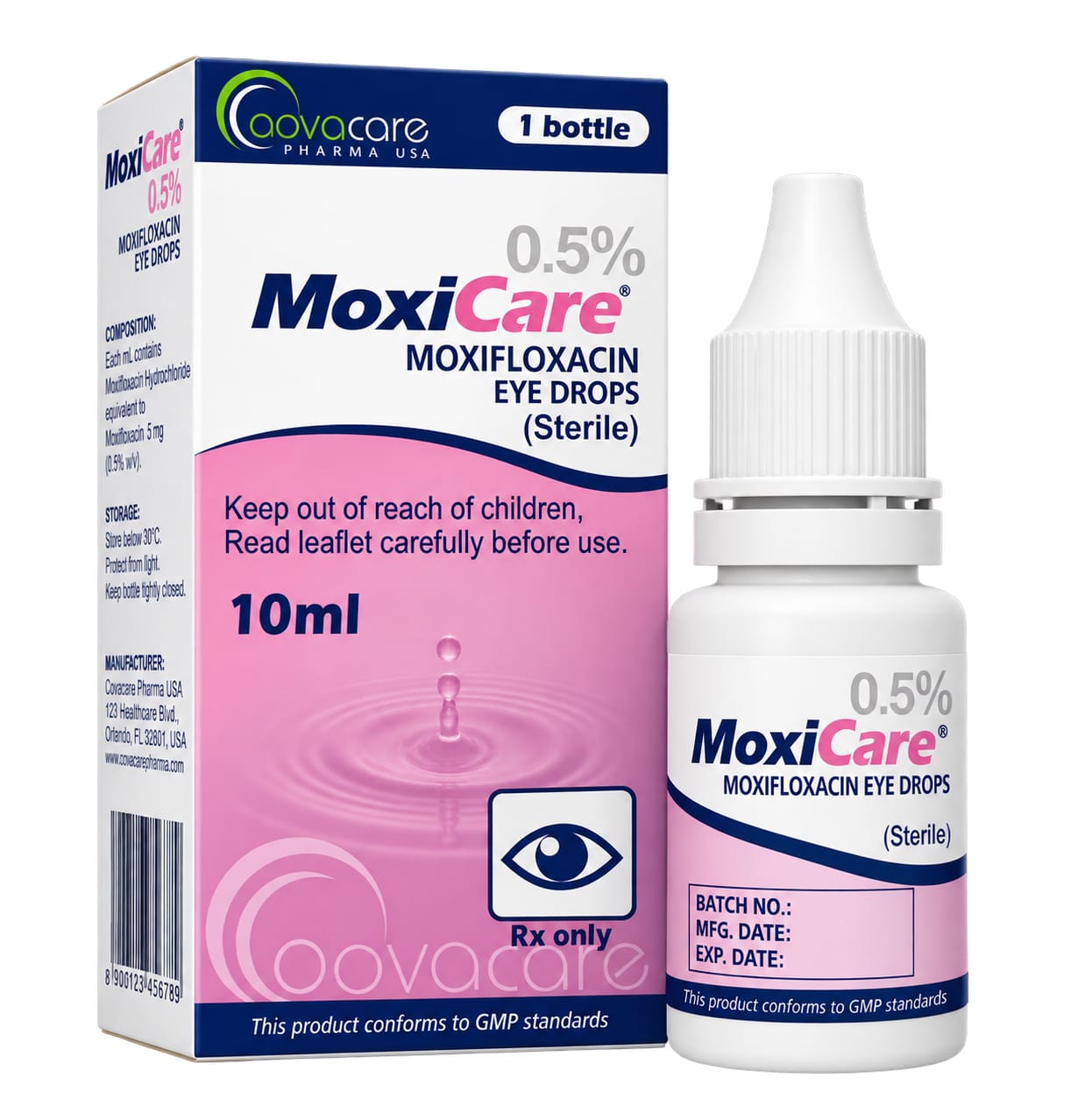
Quick overview
Moxifloxacin Eye Drops are a prescription antibiotic solution belonging to the fluoroquinolone antibiotic class. They are used to treat bacterial eye infections, including bacterial conjunctivitis (pink eye), corneal ulcers, and infections related to eye surgery. The drops work by stopping bacteria from multiplying, allowing the infection to clear.
What is Moxifloxacin Eye Drops
Moxifloxacin eye drops are a prescription antibiotic solution used to treat bacterial eye infections, including bacterial conjunctivitis (pink eye). It belongs to a group of medicines called fluoroquinolone antibiotics.
Moxifloxacin Eye Drops uses
- Bacterial conjunctivitis (pink eye)
- Corneal ulcers/keratitis caused by bacteria
- Preventing or treating infection after eye surgery such as cataract surgery
- Blepharitis (eyelid inflammation)
Benefits of Moxifloxacin Eye Drops
- Reduces redness, itching, and discharge from bacterial eye infections
- Broad-spectrum action against many types of bacteria
- Penetrates eye tissue to treat deeper infections like corneal ulcers
- Convenient dosing of two to three times a day
How Moxifloxacin Eye Drops works
Moxifloxacin works by blocking two enzymes bacteria need to copy and repair their DNA. Without these enzymes, the bacteria cannot multiply and die off, clearing the infection.
Moxifloxacin Eye Drops dosage
Wash your hands with soap and water before and after using the eye drops. Tilt your head back and gently pull the lower eyelid away from the eye to make a small pocket, then drop the medicine into this space.
After applying, close your eyes gently without blinking and press a finger on the inner corner of the eye for one to two minutes to help the medicine absorb and stop it draining into the rest of the body. Do not touch the dropper tip to your eye, eyelid, or any other surface to avoid contaminating the medicine.
If using in both eyes, wash your hands between eyes to avoid spreading infection from one eye to the other. If you are using other eye drops, wait at least five minutes between this medicine and the other drops.
Keep using the medicine for the full course of treatment, even if your symptoms have gone away or you feel better after the first few doses. Do not miss doses; if you miss one, use it as soon as you remember, but skip it if it is almost time for your next dose and do not double up.
This medicine is not meant for long-term use. Do not wear contact lenses while using this medicine.
| Age group | Dose |
|---|---|
| Under 4 Months | Use only if prescribed by an eye specialist |
| 4 Months–17 Years | 1 drop in affected eye(s) 3 times daily for 7 days, depending on product |
| Adults (18–64 Years) | 1 drop in affected eye(s) 3 times daily for 7 days |
| Older Adults (65+ Years) | 1 drop in affected eye(s) 3 times daily for 7 days |
Available forms and strengths
- Solution (eye drops)
Side effects of Moxifloxacin Eye Drops
Common
- Burning, dry, or itching eyes
- Dry eye
- Discharge, excessive tearing
- Itching of the eye
- Pain in the eye
- Red, sore eyes
- Eye irritation
Serious
- Blurred or decreased vision, or change in vision
- Chest tightness
- Cough
- Difficulty or trouble swallowing
- Dizziness
- Fast heartbeat
- Hives, itching, or skin rash
- Loss of consciousness
- Pooling of whitish fluid visible on the colored part of the eye
- Puffiness or swelling of the eyelids or around the eyes, face, lips, or tongue
- Seeing floating spots before the eyes
- Swelling of the eye
- Trouble breathing
- Unusual tiredness or weakness
- Pain or swelling of the tendons (tendinitis)
- Signs of severe allergic reaction such as swelling of the hands, feet, ankles, face, lips, mouth, or throat, difficulty swallowing or breathing, rash or hives, large fluid-filled blisters, sores and ulceration
Warnings and precautions
- This medicine may cause serious allergic reactions, including a life-threatening reaction called anaphylaxis. Call your doctor right away if you get a rash, itching, trouble breathing, trouble swallowing, or swelling of your hands, face, or mouth while using this medicine.
- Do not wear contact lenses while using this medicine, as it can cause further eye irritation. If you already have signs of an eye infection, stop wearing your lenses and wear glasses instead until the infection has cleared and you have finished the medicine.
- This medicine only works against bacteria and will not treat viral or fungal eye infections.
- Using this antibiotic for a long time may lead to other infections developing.
- Tendon swelling and rupture have occurred in people taking fluoroquinolone antibiotics by mouth or injection, especially in older patients and those also using corticosteroids. Stop the eye drops if you develop tendon pain or swelling.
- There is limited information on how this medicine affects pregnancy. Ask your doctor or pharmacist before using it if you are pregnant, think you may be pregnant, or are planning a baby.
- There isn't enough research on the effects of this medicine during breastfeeding. Weigh the possible benefits against the possible risks with your doctor before using it.
- This medicine can be used in patients with kidney problems.
- This medicine can be used in patients with liver problems.
- Your vision may be blurred for a short time right after you use the drops. Do not drive or use machines until your vision clears.
Storage
- Store the medicine in a closed container at room temperature, away from heat, moisture, and direct light
- Keep from freezing
- Keep out of the reach and sight of children
- Do not keep outdated medicine or medicine no longer needed
- Ask your healthcare professional how you should dispose of any medicine you do not use
- Do not use after the expiry date on the bottle and carton
- This medicine does not need any special storage conditions
- Stop using the bottle 4 weeks after first opening to prevent infections
- Do not dispose of medicines into the water supply or household waste; ask your pharmacist how to dispose of medicines you no longer need
When to see a doctor
- Check with your doctor right away if you have blurred or decreased vision, whitish fluid pooling on the colored part of the eye, floating spots in your vision, or eye swelling. These could be signs of a rare eye problem called toxic anterior segment syndrome (TASS).
- If your or your child's eye infection does not improve within a few days, or gets worse, contact your doctor.
- Stop using the drops immediately and tell your doctor right away if you have a severe allergic reaction with swelling of the hands, feet, ankles, face, lips, mouth or throat, difficulty swallowing or breathing, rash or hives, large fluid-filled blisters, or sores and ulceration.
- If you accidentally swallow the eye drops, contact your doctor or pharmacist for advice.
Alternatives
- Ciprofloxacin Eye Drops
- Levofloxacin Eye Drops
- Tobramycin Eye Drops
Watch the video
FAQs
What is Moxifloxacin Eye Drops used for?
It treats bacterial eye infections including bacterial conjunctivitis (pink eye), corneal ulcers/keratitis, blepharitis, and infections related to eye surgery such as cataract surgery.
How do you use Moxifloxacin Eye Drops?
Wash your hands, tilt your head back, pull the lower eyelid to form a pocket, and drop the medicine in. Close your eyes gently without blinking and press the inner corner of the eye for one to two minutes. Avoid touching the dropper to your eye or any surface.
What is the dosage of Moxifloxacin Eye Drops?
For ages 4 months and older, including adults and older adults, the typical dose is 1 drop in the affected eye(s) 3 times daily for 7 days, depending on the product. Use in children under 4 months only if prescribed by an eye specialist.
Can I wear contact lenses while using Moxifloxacin Eye Drops?
No, you should not wear contact lenses while using this medicine as it can cause further eye irritation. Wear glasses instead until the infection clears and treatment is finished.
What are the serious side effects of Moxifloxacin Eye Drops?
Serious side effects include blurred or decreased vision, eye swelling, floating spots in vision, signs of severe allergic reaction, tendon pain or swelling, chest tightness, trouble breathing or swallowing, and fast heartbeat. Seek medical help right away if these occur.
General information, not medical advice
Your prescriber and the leaflet in your pack know your situation. This page does not.
- Follow your prescriber and the leaflet
- Don't start, stop, or change a dose on your own
- Doses and warnings differ by country and product
Sources
Video
Related medicines
Norfloxacin Tablet: Uses, Dosage, Side Effects, Precautions and Alternates
fluoroquinolone antibiotic
Norfloxacin Tablet treats UTIs, kidney, prostate, and certain gut or reproductive infections. Learn uses, dosage, side effects, and key warnings.

Gemifloxacin Tablet: Uses, Dosage, Side Effects, Precautions and Alternates
Fluoroquinolone antibiotic
Gemifloxacin Tablet is a fluoroquinolone antibiotic for pneumonia, bronchitis, and other infections. Learn its uses, dosage, side effects, and precautions.