
Safety
General information, not medical advice
Your prescriber and the leaflet in your pack know your situation. This page does not.
- Follow your prescriber and the leaflet
- Don't start, stop, or change a dose on your own
- Doses and warnings differ by country and product
Famotidine Tablet: Uses, Dosage, Side Effects, Precautions and Alternates
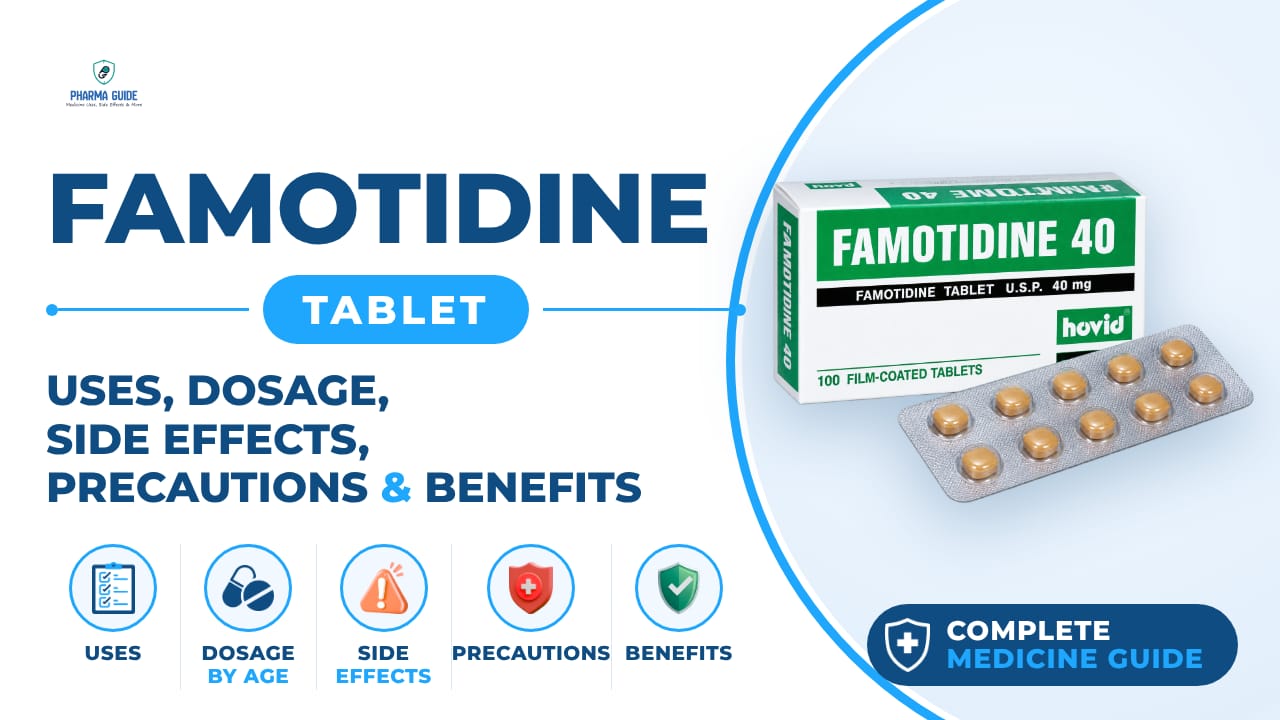
| Generic name | Famotidine |
|---|---|
| Drug class | Histamine H2 receptor antagonist (H2 blocker) |
| Forms | Tablets (20 mg and 40 mg), Oral suspension (liquid), Injection |
Quick overview
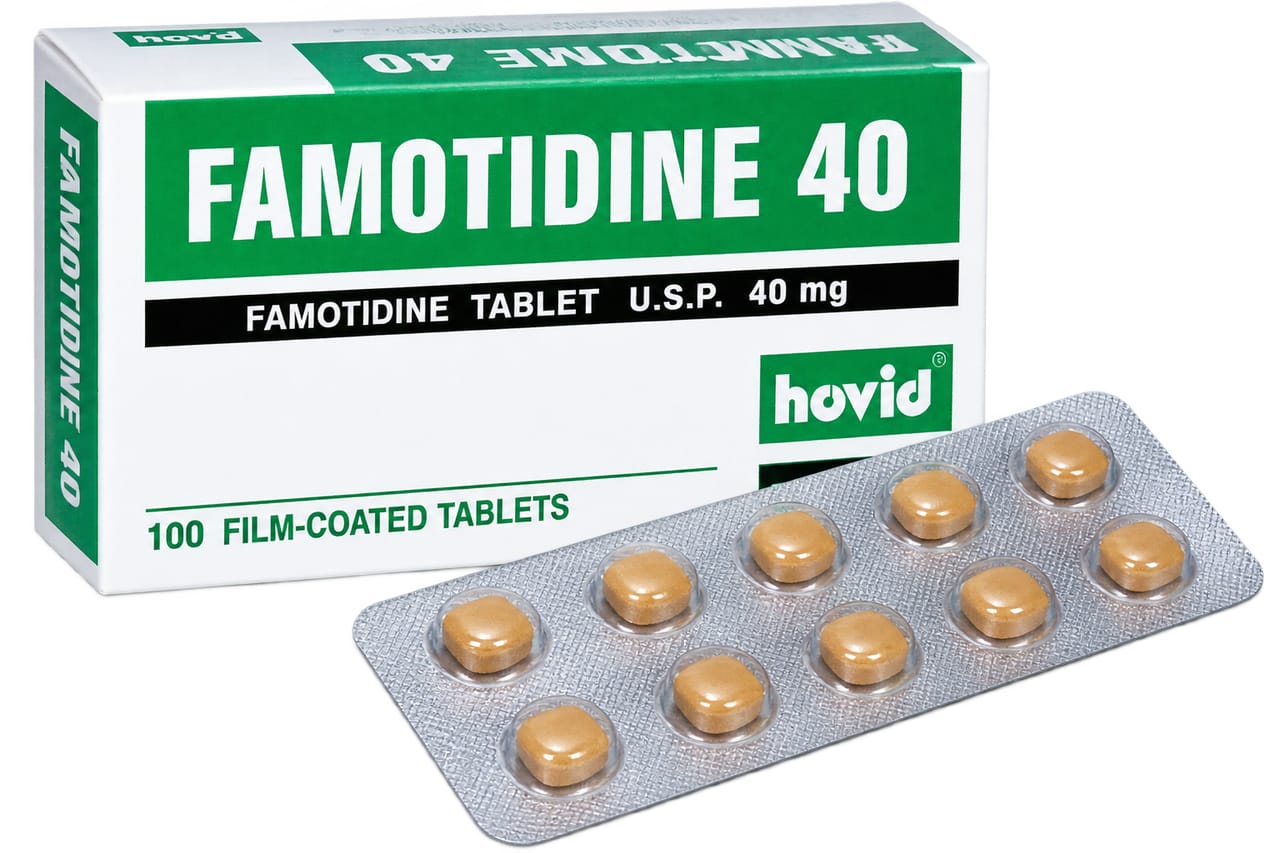
Famotidine Tablet is an H2 receptor antagonist (H2 blocker) that reduces the amount of acid the stomach makes. It is used to treat and help prevent ulcers, and to treat gastroesophageal reflux disease (GERD), erosive esophagitis, and conditions involving excess stomach acid such as Zollinger-Ellison syndrome. It works by blocking histamine H2 receptors in the stomach, lowering both the amount and acidity of stomach acid.
What is Famotidine Tablet
Famotidine is a medicine that reduces the amount of acid your stomach makes. It belongs to a group of medicines called H2 blockers.
Famotidine Tablet uses
- Treats active duodenal ulcers (ulcers in the first part of the small intestine)
- Treats active gastric (stomach) ulcers
- Helps prevent duodenal ulcers from coming back
- Treats gastroesophageal reflux disease (GERD), including heartburn from acid backing up into the esophagus
- Treats erosive esophagitis caused by GERD, confirmed by biopsy or endoscopy
- Treats conditions where the stomach makes too much acid, such as Zollinger-Ellison syndrome
Benefits of Famotidine Tablet
- Reduces stomach acid production, which helps ulcers heal
- Relieves heartburn and other symptoms caused by excess stomach acid
- Helps prevent ulcers from returning when used for maintenance
How Famotidine Tablet works
Famotidine blocks histamine H2 receptors in the stomach, which reduces the amount and acidity of the acid your stomach produces.
Famotidine Tablet dosage
Famotidine can be taken with or without food. It is usually taken once daily before bedtime, or twice daily in the morning and before bedtime, as your doctor recommends. It can be taken along with antacids if needed.
If you miss a dose, take it as soon as you remember, but skip it if it is almost time for your next dose — do not take two doses at once. Keep taking the medicine for the full length of treatment your doctor recommends, even if you start to feel better, since healing can take several weeks. Tell your doctor if your condition does not improve or gets worse while using this medicine.
| Age group | Dose |
|---|---|
| Under 1 year | Doctor's advice required |
| 1–11 years | 0.5 mg/kg once or twice daily; max 40 mg/day |
| 12 years & older | 10–20 mg once or twice daily |
| Adults | 20 mg once or twice daily |
Available forms and strengths
- Tablets (20 mg and 40 mg)
- Oral suspension (liquid)
- Injection
Side effects of Famotidine Tablet
Common
- Headache
- Dizziness
- Constipation
- Diarrhea
Serious
- Signs of an allergic reaction: hives, difficulty breathing, swelling of the face, lips, tongue, or throat
- Confusion, hallucinations, agitation, or lack of energy
- Seizures
- Fast or pounding heartbeats, or sudden dizziness like you might pass out
- Unexplained muscle pain, tenderness, or weakness, especially with fever, unusual tiredness, and dark-colored urine
- Liver problems such as abdominal pain, vomiting, fatigue, and jaundice (yellowing of the eyes or skin)
- Severe skin reactions
Warnings and precautions
- Before starting famotidine, tell your doctor if you have kidney or liver disease, a history of Long QT syndrome, stomach cancer, or breathing problems like asthma or COPD.
- Heartburn symptoms can sometimes be confused with the early signs of a heart attack. Get emergency help if you have chest pain, pain spreading to the jaw, arm, or shoulder, nausea, sweating, anxiety, light-headedness, or a general ill feeling.
- Elderly patients and those with moderate to severe kidney problems have a higher risk of confusion, hallucinations, agitation, seizures, and other nervous system effects.
- Improvement in stomach symptoms does not rule out stomach cancer. Your doctor may want to check for this if your symptoms don't improve or come back quickly after treatment.
- Do not use famotidine if you have had a serious allergic reaction to it or to similar medicines like ranitidine, cimetidine, or nizatidine.
- This medicine may reduce how well your body absorbs certain other drugs. Tell your doctor if you take cefditoren, dasatinib, delavirdine, fosamprenavir, or tizanidine.
- Ask your doctor before using famotidine if you are pregnant, since there isn't enough information to know if it's completely safe during pregnancy.
- Famotidine passes into breast milk. Talk to your doctor about whether to continue breastfeeding or continue the medicine.
- People with kidney disease may need a lower dose or longer time between doses because the medicine stays in the body longer and can cause more side effects.
- Tell your doctor if you have liver disease before taking this medicine.
- Avoid drinking alcohol while taking this medicine, since it can increase the risk of stomach damage.
- This medicine can cause dizziness, confusion, or hallucinations, so know how it affects you before driving or operating machinery.
Storage
- Store at room temperature (20°C to 25°C, with excursions permitted to 15°-30°C)
- Dispense in a tight, light-resistant container
- Store away from moisture, heat, and light
- Do not allow liquid forms of this medicine to freeze
- Throw away any unused liquid medicine that is older than 30 days
- Keep out of the reach and sight of children
When to see a doctor
Get emergency help right away if you have signs of a serious allergic reaction such as hives, trouble breathing, or swelling of the face, lips, tongue, or throat.
Stop the medicine and call your doctor right away if you have confusion, hallucinations, agitation, or lack of energy, a seizure, fast or pounding heartbeats, sudden dizziness, or unexplained muscle pain with fever and dark urine.
Seek emergency medical attention if you think you or someone else may have taken too much famotidine, even without symptoms.
Report new heart-related symptoms like palpitations, fainting, dizziness, or lightheadedness to your doctor right away, especially if you have kidney problems.
Alternatives
- Pepcid
- Zantac 360
- Maalox
- Mylanta
- Gaviscon
- Milk of Magnesia
- Rolaids
- Tums
Watch the video
FAQs
What is Famotidine Tablet used for?
It treats active duodenal and gastric ulcers, helps prevent duodenal ulcers from returning, treats GERD and erosive esophagitis, and manages conditions with excess stomach acid like Zollinger-Ellison syndrome.
How does Famotidine Tablet work?
It blocks histamine H2 receptors in the stomach, which reduces the amount and acidity of the acid your stomach produces.
What is the usual dosage for adults?
Adults usually take 20 mg once or twice daily, taken with or without food, often before bedtime or in the morning and before bedtime as directed by a doctor.
What are the common side effects of Famotidine Tablet?
Common side effects include headache, dizziness, constipation, and diarrhea.
What precautions should I know before taking Famotidine Tablet?
Tell your doctor if you have kidney or liver disease, Long QT syndrome, stomach cancer, or breathing problems. Avoid alcohol, be cautious with driving due to possible dizziness or confusion, and note that improvement in symptoms does not rule out stomach cancer.
General information, not medical advice
Your prescriber and the leaflet in your pack know your situation. This page does not.
- Follow your prescriber and the leaflet
- Don't start, stop, or change a dose on your own
- Doses and warnings differ by country and product
Sources
Video
Related medicines
Acid Reducer Tablet: Uses, Dosage, Side Effects, Precautions and Alternates
Histamine H2-receptor antagonist (H2 blocker)
Acid Reducer Tablet (ranitidine) relieves and prevents heartburn, acid indigestion, and sour stomach by reducing stomach acid for up to 12 hours.
Pepcid Tablet: Uses, Dosage, Side Effects, Precautions and Alternates
Histamine H2 Receptor Antagonist (H2 blocker)
Pepcid Tablet (famotidine) reduces stomach acid to treat and prevent heartburn, acid indigestion, ulcers, and GERD. Learn dosage, side effects, and precautions.