
Safety
General information, not medical advice
Your prescriber and the leaflet in your pack know your situation. This page does not.
- Follow your prescriber and the leaflet
- Don't start, stop, or change a dose on your own
- Doses and warnings differ by country and product
Febuxostat Tablet: Uses, Dosage, Side Effects, Precautions and Alternates
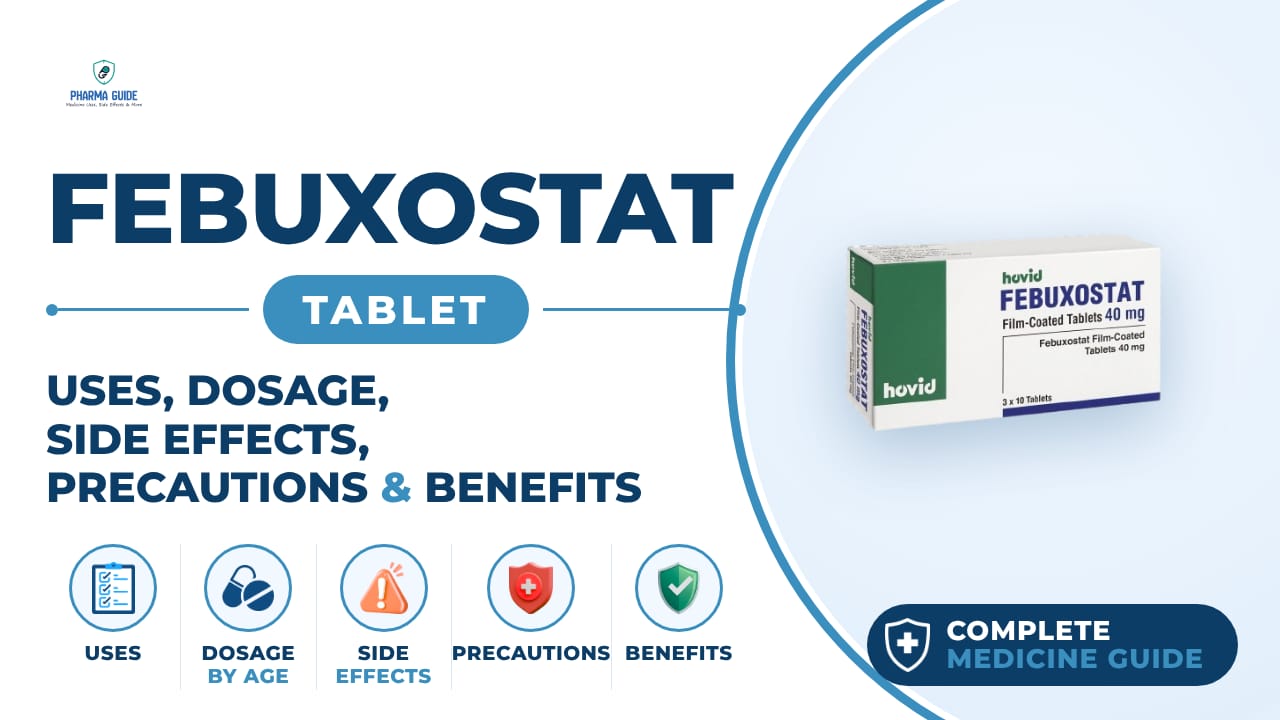
| Generic name | febuxostat |
|---|---|
| Drug class | Xanthine oxidase inhibitor (antigout agent) |
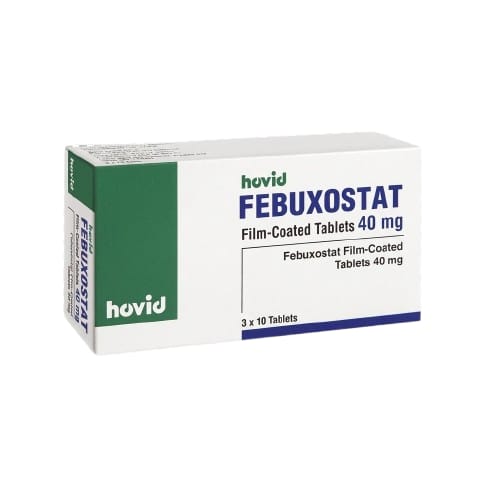
| Forms | Tablet (40 mg) |
Quick overview
Febuxostat is a prescription medicine from the xanthine oxidase inhibitor (antigout agent) class, used to lower high uric acid levels in the blood in adults with gout. It is usually tried only after another medicine called allopurinol has not worked well, caused side effects, or is not considered safe. It works by reducing the amount of uric acid the body makes, helping to prevent gout attacks over the long term.
What is Febuxostat Tablet
Febuxostat is a prescription medicine used to lower high uric acid levels in the blood in adults with gout. It is usually tried only after another medicine called allopurinol has not worked well, caused side effects, or is not considered safe for you.
Febuxostat Tablet uses
- Long-term management of high uric acid levels (hyperuricemia) in adults with gout
- Used when allopurinol has not worked well enough, caused side effects, or is not advisable
Benefits of Febuxostat Tablet
- Lowers uric acid levels so crystals can dissolve and stop forming in the joints
- Helps prevent future gout attacks
- Can reduce damage to joints and shrink gouty lumps (tophi) with regular use
How Febuxostat Tablet works
Febuxostat blocks an enzyme called xanthine oxidase, which lowers the amount of uric acid the body makes. This reduces uric acid levels in the blood so that crystals can dissolve and are less likely to form in the joints, which helps prevent gout attacks.
Febuxostat Tablet dosage
Take febuxostat exactly as your doctor tells you to. It can be taken with or without food, and it can be taken with antacids. Swallow the tablet with water; do not break, chew, or crush it. Take it at the same time every day to help you remember.
Your gout may flare up more often when you first start taking this medicine. Do not stop taking it because of a flare — treat the flare as you normally would and talk to your doctor. Your doctor may give you another medicine to help prevent gout flares during the first few months of treatment.
Keep taking it regularly, even if it does not seem to be working at first, if you have more gout attacks early on, or once your attacks have stopped, to keep your uric acid levels controlled. This medicine is not used in children because its safety and effectiveness have not been established in that age group.
| Age group | Dose |
|---|---|
| Under 18 years | Not recommended |
| 18–60 years | 40 mg, once/day |
| 60+ years | 40 mg, once/day |
Available forms and strengths
- Tablet (40 mg)
Side effects of Febuxostat Tablet
Common
- Headache
- Nausea
- Diarrhoea
- Skin rash
- Joint pain (arthralgia)
- Abnormal liver function test results
- Dizziness
- Loss of appetite
- Muscle pain
- Erectile dysfunction
- Increased thirst
- Blurred vision
- Fluid build-up, usually in the lower legs and ankles
Serious
- Heart-related death and other serious heart problems
- Increase in gout flares, especially when starting treatment or after a dose increase
- Liver problems, including liver failure (some cases fatal)
- Serious skin reactions, including Stevens-Johnson syndrome and toxic epidermal necrolysis
- Serious allergic reactions, including a reaction called DRESS (affecting the liver, kidneys, heart, or other organs), and anaphylaxis
Warnings and precautions
- Febuxostat can increase the risk of heart-related death compared with allopurinol, particularly in people who already have heart disease. Seek emergency help for chest pain, fast or irregular heartbeat, trouble breathing, sudden severe headache, weakness on one side of the body, slurred speech, or sudden blurry vision.
- Gout attacks can become more frequent when you first start febuxostat or after your dose is increased. This does not mean the medicine isn't working, and you should not stop taking it for this reason without talking to your doctor.
- Serious, sometimes fatal, liver problems have happened in people taking this medicine. Your doctor may check your liver function before you start and during treatment.
- Serious skin and allergic reactions, including Stevens-Johnson syndrome and toxic epidermal necrolysis, have occurred with this medicine. Stop taking it and get medical help right away if a serious skin reaction is suspected.
- Febuxostat must not be taken together with azathioprine or mercaptopurine, as this combination can cause severe toxicity.
- Febuxostat is not recommended in people whose high uric acid is due to conditions like cancer treatment or Lesch-Nyhan syndrome, because it has not been studied in these situations.
- Febuxostat is not recommended during pregnancy unless your doctor decides it is necessary. It is not known if it can harm an unborn baby, so talk to your doctor if you are or plan to become pregnant.
- It is not known whether febuxostat passes into breast milk. You and your doctor should decide together whether you should take it while breastfeeding.
- Use febuxostat with caution if you have severe kidney problems, since the medicine can build up in your body. Your doctor may need to limit your dose and monitor your kidney function.
- Use febuxostat with caution if you have liver problems. Your doctor will likely check your liver function with blood tests before and during treatment, since liver damage, including fatal cases, has occurred with this medicine.
- It isn't known exactly how alcohol affects febuxostat, so ask your doctor before drinking. Alcohol itself can raise uric acid levels in the blood, which may make gout attacks more likely.
- Febuxostat can cause dizziness and drowsiness in some people. Avoid driving or operating heavy machinery until you know how this medicine affects you.
Storage
- Store at 20° to 25°C (68° to 77°F)
- Protect from light
- Store in a cool, dry place and keep tightly closed
- Keep out of the reach of children
- Properly discard this product when it is expired or no longer needed; consult your pharmacist or local waste disposal company for disposal instructions
When to see a doctor
- Get emergency medical help right away for symptoms of a possible heart problem, such as chest pain, numbness or weakness on one side of the body, shortness of breath, slurred speech, dizziness or fainting, sudden blurry vision, sudden severe headache, or a rapid or irregular heartbeat.
- Tell your doctor right away if you notice signs of liver problems, such as tiredness, dark urine, loss of appetite for several days, or yellowing of the skin or eyes.
- Get emergency help immediately if you develop signs of a severe skin reaction, such as skin that looks burned and peels, blisters in the mouth or genitals, or red, painful, watery eyes.
- Seek medical advice right away if you develop a rash, facial swelling, or fever, especially within the first month of treatment.
- If you think you have taken too much febuxostat, get medical help right away.
Alternatives
- Colchicine
- Zyloric
- Allopurinol
Watch the video
FAQs
What is Febuxostat tablet used for?
It is used for the long-term management of high uric acid levels (hyperuricemia) in adults with gout, usually when allopurinol has not worked well, caused side effects, or is not advisable.
What is the usual dose of Febuxostat?
The usual dose for adults aged 18 to 60 and above is 40 mg once daily. It is not recommended for children under 18.
Can Febuxostat cause gout flares when starting treatment?
Yes, gout may flare up more often when you first start taking this medicine or after a dose increase. This doesn't mean the medicine isn't working, so don't stop taking it without talking to your doctor.
What are the serious side effects of Febuxostat?
Serious side effects include heart-related death and other heart problems, liver failure, serious skin reactions like Stevens-Johnson syndrome, and serious allergic reactions including DRESS and anaphylaxis.
Can Febuxostat be taken with azathioprine or mercaptopurine?
No, Febuxostat must not be taken together with azathioprine or mercaptopurine, as this combination can cause severe toxicity.
General information, not medical advice
Your prescriber and the leaflet in your pack know your situation. This page does not.
- Follow your prescriber and the leaflet
- Don't start, stop, or change a dose on your own
- Doses and warnings differ by country and product
Sources
- https://www.practo.com/medicine-info/febuxostat-113-api
- https://dailymed.nlm.nih.gov/dailymed/drugInfo.cfm?setid=04f80eb2-8171-4e18-93e4-514440e84b75
- https://www.webmd.com/drugs/febuxostat-uloric#interactions
- https://www.healio.com (Drug Lookup - Febuxostat)
- https://www.versusarthritis.org (Arthritis UK - Febuxostat)
Video
Related medicines

Injectafer Injection: Uses, Dosage, Side Effects, Precautions and Alternates
Iron products
Injectafer (ferric carboxymaltose) treats iron deficiency anemia and heart failure-related iron deficiency via IV. Learn uses, dosage, side effects, and

Gliclazide Tablet: Uses, Dosage, Side Effects, Precautions and Alternates
Sulfonylurea (hypoglycemic/antidiabetic agent)
Gliclazide Tablet is a sulfonylurea for type 2 diabetes that boosts insulin release. Learn about dosage, side effects, warnings, and precautions.