
Safety
General information, not medical advice
Your prescriber and the leaflet in your pack know your situation. This page does not.
- Follow your prescriber and the leaflet
- Don't start, stop, or change a dose on your own
- Doses and warnings differ by country and product
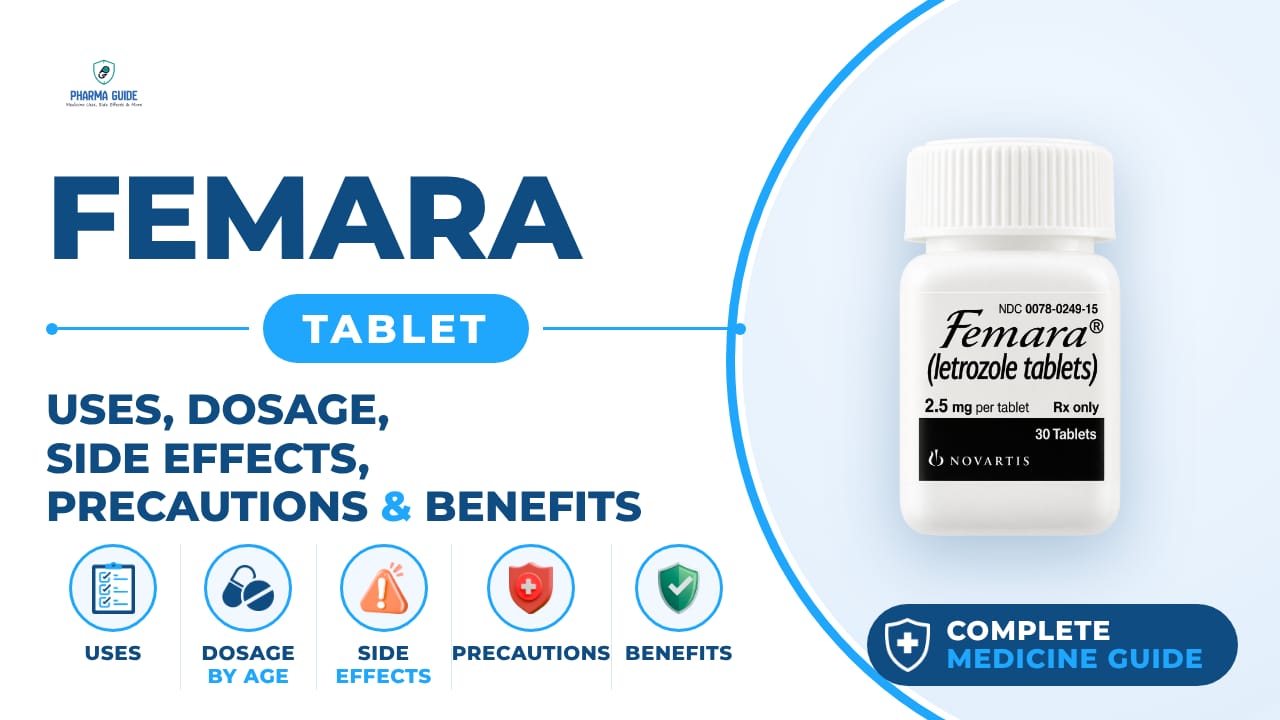
Femara Tablet: Uses, Dosage, Side Effects, Precautions and Alternates
| Generic name | letrozole |
|---|---|
| Drug class | Aromatase inhibitors |
| Forms | Tablet |
Quick overview
Femara Tablet, known generically as letrozole, is an aromatase inhibitor used to treat certain types of breast cancer in women who have gone through menopause. It works by lowering estrogen levels to slow or stop the growth of hormone-sensitive cancer cells. Femara is taken by mouth, usually once daily, and is also used off-label to treat infertility caused by ovulation problems.
What is Femara Tablet
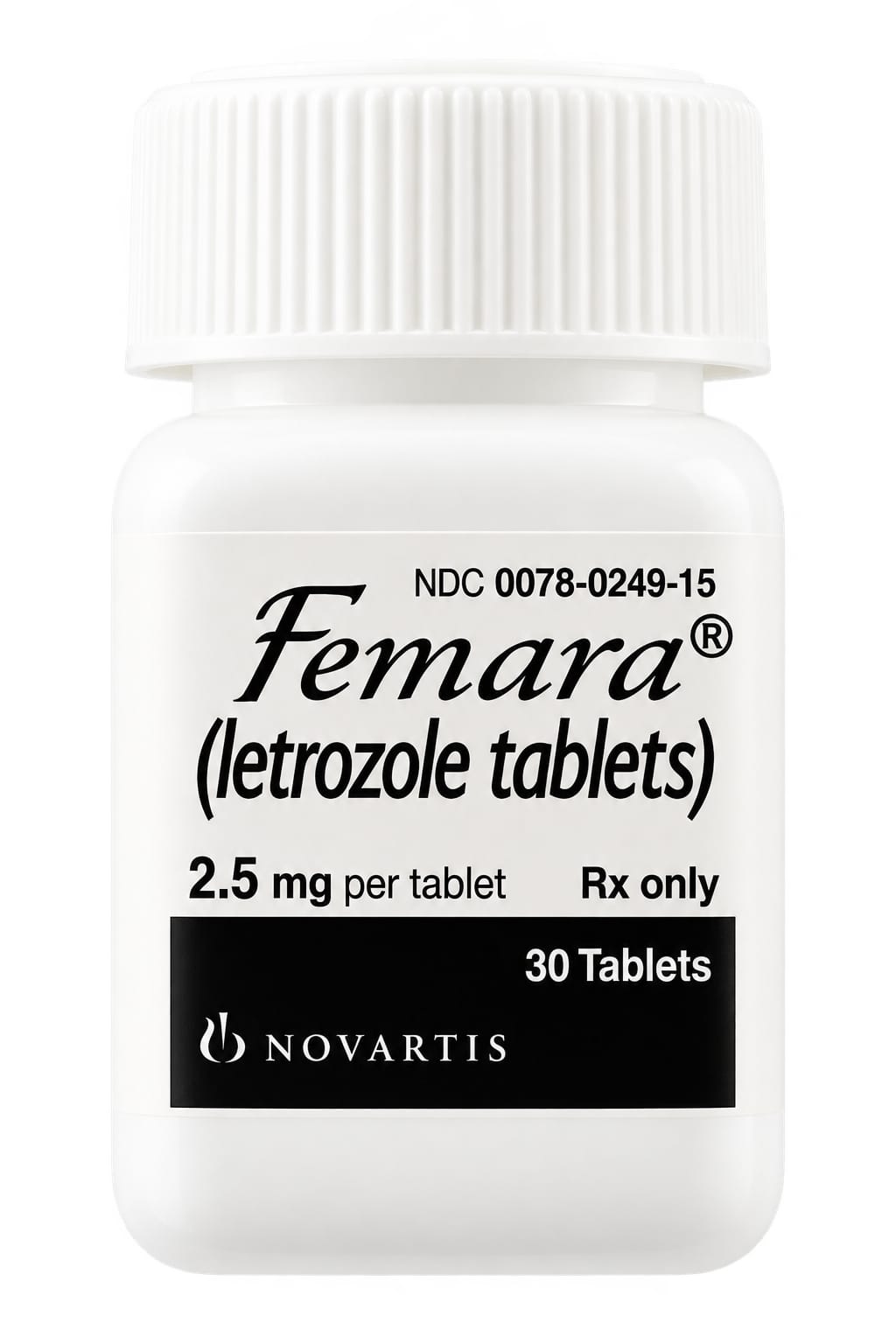
Femara is a brand-name tablet used to treat certain types of breast cancer in women who have gone through menopause. It contains the active ingredient letrozole and belongs to a group of medicines called aromatase inhibitors.
Femara Tablet uses
- Treating breast cancer in postmenopausal women
- First-line treatment of hormone receptor positive or hormone receptor unknown locally advanced or metastatic breast cancer
- Treatment of advanced breast cancer after other anti-estrogen therapy has failed
- Extended adjuvant treatment of early breast cancer after 5 years of tamoxifen therapy
- Adjuvant treatment of estrogen receptor positive invasive early breast cancer
- Neoadjuvant treatment in certain postmenopausal women before surgery
- Off-label use to treat infertility caused by ovulation problems
Benefits of Femara Tablet
- Helps treat certain hormone receptor-positive breast cancers in postmenopausal women.
- Works by lowering estrogen levels, which can slow or stop the growth of estrogen-dependent cancer cells.
- May help reduce the risk of breast cancer recurrence after initial treatment.
- Can be used as extended adjuvant therapy after other hormonal treatments such as tamoxifen.
- Is also commonly used off-label to induce ovulation in some women with infertility, especially those with polycystic ovary syndrome (PCOS).
How Femara Tablet works
Femara works by blocking an enzyme called aromatase, which the body uses to make estrogen after menopause. By stopping this enzyme from working normally, Femara lowers estrogen levels, which stops estrogen from encouraging hormone-sensitive breast cancer cells to grow.
Femara Tablet dosage
Femara is usually taken once per day, or once every other day, depending on your doctor's instructions. Follow all directions on your prescription label. Do not take this medicine in larger or smaller amounts or for longer than recommended. You may take this medicine with or without food. Femara tablets should be swallowed whole and should not be crushed, split, or chewed. Try to take your dose at the same time each day.
If you miss a dose, take it as soon as you remember unless it is almost time for your next dose. In that case, skip the missed dose. Do not take extra medicine to make up for a missed dose. While using Femara, you may need frequent medical tests, and your bone mineral density may also need to be checked.
| Age group | Dose |
|---|---|
| Under 18 years | Safety and effectiveness not established |
| Adults – Postmenopausal breast cancer | 2.5 mg orally once daily |
| Adults – Ovulation induction (off-label) | Commonly 2.5–5 mg once daily for 5 days; specialist-directed |
| 65–74 years | Usually 2.5 mg once daily for approved breast-cancer indications |
| 75+ years | Usually 2.5 mg once daily; individualize according to clinical status |
Available forms and strengths
- Tablet
Side effects of Femara Tablet
Common
- Hot flashes, warmth or redness in the face or chest
- Headache, dizziness, weakness
- Bone pain, muscle or joint pain
- Swelling, weight gain
- Increased sweating
- Increased cholesterol in the blood
- Fatigue
- Nausea
- Vaginal bleeding or spotting
- Changes in mood
- Aching or pain in joints and muscles
- Menopausal symptoms such as hot flushes and night sweats
- Low mood and depression
- Difficulty sleeping
- Diarrhea and constipation
- Loss of appetite, indigestion and heartburn
- Carpal tunnel syndrome (pain, tingling, and numbness in the arm, hand, or fingers)
- Changes to hair or facial hair
- Skin changes such as rash or dryness
Serious
- Reduced bone mineral density (weakened bones) and osteoporosis
- Increased cholesterol level
- High blood pressure
- Severe allergic reaction with hives, difficulty breathing, or swelling of the face, lips, tongue, or throat
- Fast heart rate (palpitations) and chest pain
- Blood clots such as deep vein thrombosis or pulmonary embolism
- Arterial thrombosis and pulmonary embolism
- Hepatitis and toxic epidermal necrolysis (rare)
Warnings and precautions
- This medicine can lower bone density over time, which can lead to weaker bones and a higher risk of fractures. Your doctor may check your bone strength before and during treatment.
- This medicine can raise cholesterol levels, so your doctor may want to monitor your cholesterol while you take it.
- Tell your doctor if you have liver disease, especially cirrhosis, high cholesterol, or osteoporosis before starting this medicine.
- Do not take this medicine if you have not completely gone through menopause or if you are pregnant, since it is only meant for women who cannot become pregnant.
- Do not take this medicine together with tamoxifen or any product containing estrogen, since this can make it less effective.
- Do not take Femara if you are pregnant, as it can harm an unborn baby or cause birth defects. Use effective birth control if you have not gone through menopause, and continue using it for at least 3 weeks after your last dose.
- Do not breastfeed while taking Femara, and continue to avoid breastfeeding for at least 3 weeks after your last dose.
- Caution is needed for patients with reduced kidney function, especially if creatinine clearance is very low.
- People with liver problems, especially cirrhosis, may be exposed to about twice as much of the drug, so a lower dose may be recommended, such as taking it every other day instead of daily.
- Alcohol is not known to interact directly with Femara, but drinking a lot of alcohol can raise the risk of weak bones (osteoporosis), which this medicine can already cause. Alcohol may also worsen side effects like headache, dizziness, nausea, or tiredness.
- This medicine may cause tiredness, dizziness, or drowsiness, so be careful when driving or using machinery until you know how it affects you.
Storage
- Store at 20–25°C (68–77°F) at controlled room temperature.
- Keep tablets in their original, tightly closed container until use.
- Protect from excessive heat, moisture, and direct sunlight.
- Avoid storing in bathrooms or other hot and humid areas.
- Keep out of reach and sight of children and pets.
When to see a doctor
- Get emergency medical help if you notice signs of a serious allergic reaction, such as hives, trouble breathing, or swelling of the face, lips, tongue, or throat.
- Seek emergency help right away if you notice signs of a blood clot, such as pain, redness, or swelling in an arm or leg, sudden shortness of breath, chest pain or tightness, or an unexplained cough or coughing up blood.
- If you think you may have taken too much of this medicine, contact your doctor or a poison control service right away, or go to the nearest emergency room if symptoms are severe.
- Tell your treatment team if vaginal bleeding continues for more than a few days.
Alternatives
- Fulvestrant (Faslodex)
- Tamoxifen
- Exemestane (Aromasin)
- Anastrozole (Arimidex)
Watch the video
FAQs
What is Femara Tablet used for?
Femara is used to treat certain types of breast cancer in postmenopausal women, including hormone receptor-positive or unknown locally advanced or metastatic breast cancer, advanced breast cancer after other anti-estrogen therapy, and as extended adjuvant or adjuvant treatment of early breast cancer. It is also used off-label to treat infertility caused by ovulation problems.
How does Femara Tablet work?
Femara works by blocking an enzyme called aromatase, which the body uses to make estrogen after menopause. This lowers estrogen levels, stopping estrogen from encouraging hormone-sensitive breast cancer cells to grow.
What is the usual dosage of Femara Tablet?
Femara is usually taken once per day, or once every other day, depending on your doctor's instructions. For postmenopausal breast cancer, the typical adult dose is 2.5 mg orally once daily. It can be taken with or without food and should be swallowed whole without crushing, splitting, or chewing.
What are the common side effects of Femara Tablet?
Common side effects include hot flashes, headache, dizziness, weakness, bone pain, muscle or joint pain, swelling, weight gain, increased sweating, increased cholesterol, fatigue, nausea, vaginal bleeding or spotting, mood changes, and difficulty sleeping.
Can Femara Tablet be taken during pregnancy?
No, Femara should not be taken during pregnancy as it can harm an unborn baby or cause birth defects. Effective birth control should be used if you have not gone through menopause, continuing for at least 3 weeks after your last dose.
General information, not medical advice
Your prescriber and the leaflet in your pack know your situation. This page does not.
- Follow your prescriber and the leaflet
- Don't start, stop, or change a dose on your own
- Doses and warnings differ by country and product
Sources
Video
Related medicines

Injectafer Injection: Uses, Dosage, Side Effects, Precautions and Alternates
Iron products
Injectafer (ferric carboxymaltose) treats iron deficiency anemia and heart failure-related iron deficiency via IV. Learn uses, dosage, side effects, and

Gliclazide Tablet: Uses, Dosage, Side Effects, Precautions and Alternates
Sulfonylurea (hypoglycemic/antidiabetic agent)
Gliclazide Tablet is a sulfonylurea for type 2 diabetes that boosts insulin release. Learn about dosage, side effects, warnings, and precautions.