
Safety
General information, not medical advice
Your prescriber and the leaflet in your pack know your situation. This page does not.
- Follow your prescriber and the leaflet
- Don't start, stop, or change a dose on your own
- Doses and warnings differ by country and product
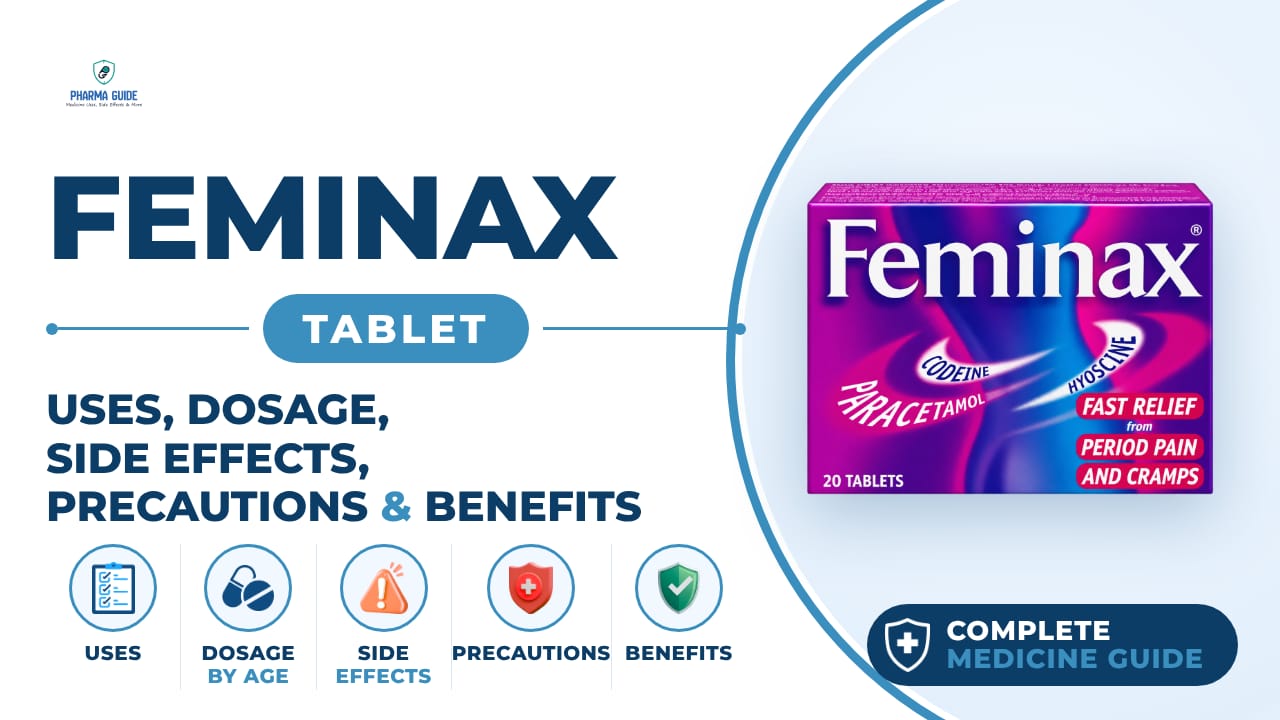
Feminax Tablet: Uses, Dosage, Side Effects, Precautions and Alternates
| Generic name | Paracetamol, Codeine Phosphate, Hyoscine Hydrobromide, Caffeine |
|---|---|
| Drug class | Opioid analgesic combination (paracetamol, codeine, hyoscine, caffeine) |
| Forms | Tablet |
Quick overview
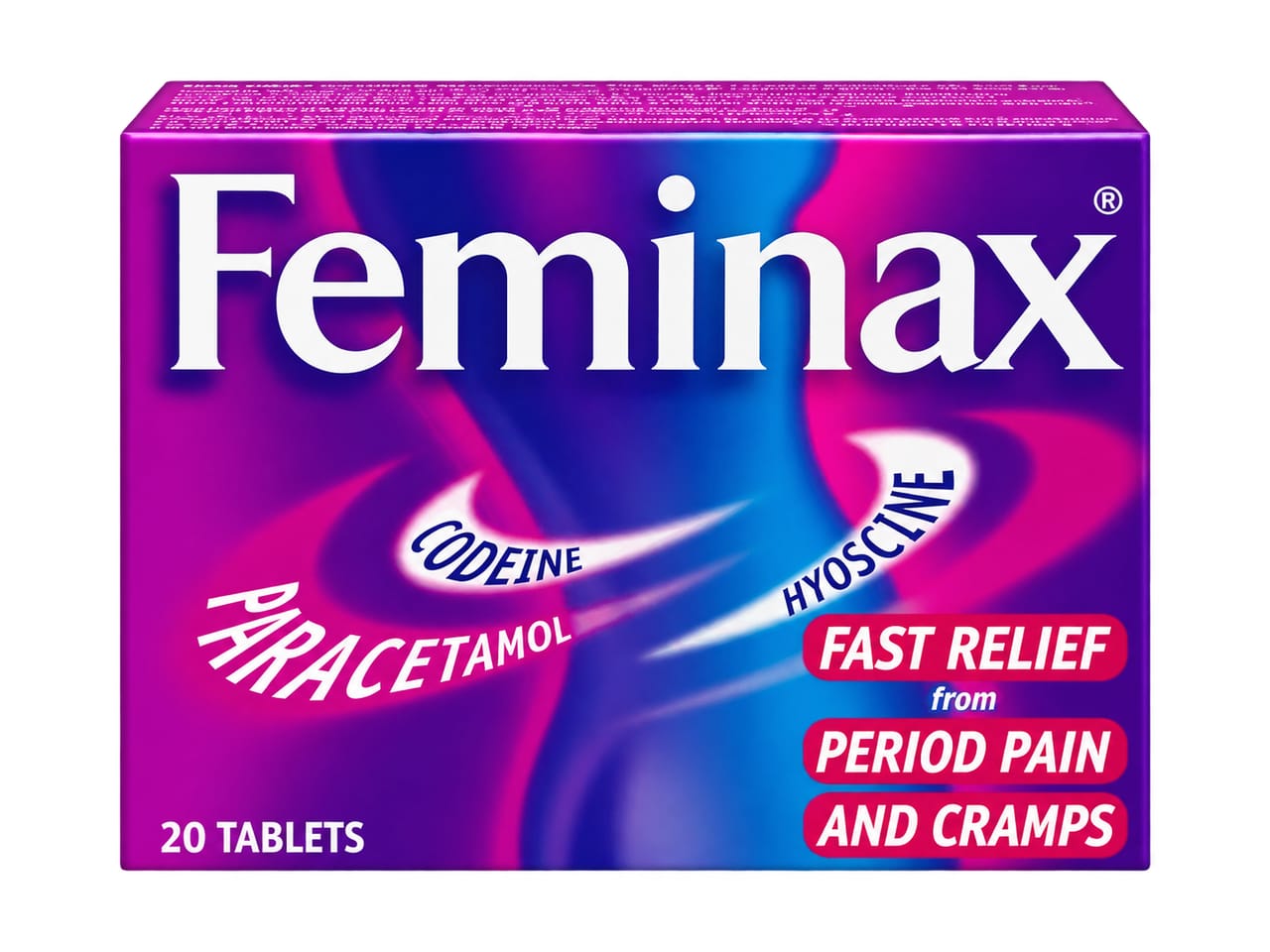
Feminax Tablet is a combination medicine containing paracetamol, codeine phosphate, hyoscine hydrobromide, and caffeine, used for the rapid relief of period pain. It helps ease cramping pain and backache linked to periods. It is not suitable for children under 12 years, and should not be used for more than 3 days in a row unless a doctor advises otherwise.
What is Feminax Tablet
Feminax Tablets are a combination medicine used to quickly relieve period pain. They contain paracetamol, codeine phosphate, hyoscine hydrobromide, and caffeine.
Feminax Tablet uses
- Rapid relief of period pain
- Relief of cramping pain and backache linked to periods
Benefits of Feminax Tablet
- Relieves cramping pain and backache from periods
- Combines codeine and paracetamol for pain relief
- Hyoscine hydrobromide may relieve muscle spasms
How Feminax Tablet works
Codeine is an opioid pain reliever that is changed into morphine in the liver to ease pain. Hyoscine hydrobromide relaxes smooth muscle and may ease spasms. It can be used alone or with other painkillers like paracetamol.
Feminax Tablet dosage
Take exactly as your doctor has told you, or check with your doctor or pharmacist if unsure. This medicine is not for children under 12 years old. Do not take a double dose if you forget a dose. Do not take with any other product containing paracetamol. Do not take for more than 3 days in a row unless your doctor tells you to. Talk to your doctor if the pain does not improve, or feels worse, after 3 days. Do not drink alcohol while taking this medicine.
| Age group | Dose |
|---|---|
| Under 12 years | Not recommended |
| 12–15 years | 1 tablet every 4–6 hours as needed; maximum 4 tablets in 24 hours |
| 16 years and older | 2 tablets initially, then 1–2 tablets every 4–6 hours as needed; maximum 8 tablets in 24 hours |
| Older adults | Same as adults, unless a doctor recommends otherwise |
Available forms and strengths
- Tablet
Side effects of Feminax Tablet
Common
- Constipation
- Nausea
- Vomiting
- Stomach discomfort
- Abdominal pain
- Diarrhoea
- Dizziness
- Light-headedness
- Confusion
- Drowsiness
- Restlessness
- Hallucination
- Tremors
- Dry mouth
- Flushing
- Rash
- Itching
- Hives
- Fluid retention
- Sedation
- Blurred vision
- Dilated pupils
- Irregular heartbeat or awareness of your heartbeat
Serious
- Allergic reactions including skin rash, anaphylactic reaction, and anaphylactic shock
- Shortness of breath
- Liver disorders including hepatitis and liver impairment
- Changes in blood cell counts, which may mean you bleed or bruise more easily and infection may be more likely
- Serious skin reactions including Stevens-Johnson syndrome
- Liver and kidney damage with prolonged use of high doses
- Hearing loss after prolonged use at higher than recommended doses
Warnings and precautions
- Do not take this medicine if you are allergic to paracetamol, codeine, hyoscine, or caffeine, or any other ingredient in it. Do not take this medicine if you have glaucoma, asthma or severe breathing problems, a head injury or raised pressure in the brain, or severe liver problems.
- Do not give this medicine to children or teenagers for pain relief after they have had their tonsils or adenoids removed because of obstructive sleep apnoea syndrome. This medicine is not suitable for children under 12 years old.
- Codeine is changed into morphine in the liver by an enzyme. Some people make little or no morphine so get little pain relief, while others make very high amounts and are more likely to get serious side effects. Do not take this medicine with any other product containing paracetamol.
- This medicine contains codeine and should only be used when necessary. Do not take more than the stated dose, and do not use it every day for more than 3 days unless your doctor tells you to.
- Using it regularly for a long time, other than under medical supervision, can lead to physical and psychological dependence (addiction) and withdrawal symptoms such as restlessness and irritability when you stop.
- Taking a painkiller for headaches too often or for too long can make them worse.
- This medicine is not suitable for use during pregnancy. Some sources say codeine medicines may be used sparingly in pregnancy only on a doctor's advice, since large doses close to delivery can cause breathing problems in the newborn, and regular use near the end of pregnancy can cause withdrawal symptoms in the baby.
- Do not take this medicine while breastfeeding, because codeine and morphine pass into breast milk.
- Talk to your doctor or pharmacist before taking this medicine if you have kidney problems.
- Do not take this medicine if you have severe liver problems, including those caused by alcoholic liver disease. Talk to your doctor before taking it if you have any liver problems. Prolonged use of high doses can damage the liver.
- Do not drink alcohol while taking this medicine. Do not take it if you have recently drunk alcohol. In people who misuse alcohol, even a normal dose of paracetamol may cause liver damage.
- This medicine may cause drowsiness. Do not drive or use machinery if you are affected.
Storage
- Keep this medicine out of the sight and reach of children.
- Do not use this medicine after the expiry date which is stated on the carton and blister foil after 'Exp. date' or 'Exp'. The expiry date refers to the last day of that month.
- Do not store above 25°C.
- Do not throw away any medicines via wastewater or household waste. Ask your pharmacist how to throw away medicines you no longer use. These measures will help protect the environment.
When to see a doctor
Stop taking this medicine and get medical help right away if you notice slow or shallow breathing, confusion, sleepiness, small pupils, feeling or being sick, constipation, or lack of appetite. If you take more of this medicine than you should, get medical advice immediately, even if you feel well, because of the risk of delayed, serious liver damage. Talk to a doctor if you do not feel better, or if you feel worse, after 3 days of taking this medicine.
Alternatives
- Paracetamol
- Mefenamic Acid
- Diclofenac
Watch the video
FAQs
What is Feminax Tablet used for?
Feminax Tablet is used for rapid relief of period pain, including cramping pain and backache linked to periods.
What are the ingredients in Feminax Tablet?
Feminax Tablet contains paracetamol, codeine phosphate, hyoscine hydrobromide, and caffeine.
How long can I take Feminax Tablet for?
Do not take it for more than 3 days in a row unless your doctor tells you to. Talk to your doctor if the pain does not improve, or feels worse, after 3 days.
Can children take Feminax Tablet?
Feminax Tablet is not suitable for children under 12 years old.
Can I drink alcohol while taking Feminax Tablet?
No, you should not drink alcohol while taking this medicine, and should not take it if you have recently drunk alcohol, as this increases the risk of liver damage.
General information, not medical advice
Your prescriber and the leaflet in your pack know your situation. This page does not.
- Follow your prescriber and the leaflet
- Don't start, stop, or change a dose on your own
- Doses and warnings differ by country and product
Sources
Video
Related medicines

Injectafer Injection: Uses, Dosage, Side Effects, Precautions and Alternates
Iron products
Injectafer (ferric carboxymaltose) treats iron deficiency anemia and heart failure-related iron deficiency via IV. Learn uses, dosage, side effects, and

Gliclazide Tablet: Uses, Dosage, Side Effects, Precautions and Alternates
Sulfonylurea (hypoglycemic/antidiabetic agent)
Gliclazide Tablet is a sulfonylurea for type 2 diabetes that boosts insulin release. Learn about dosage, side effects, warnings, and precautions.