
Safety
General information, not medical advice
Your prescriber and the leaflet in your pack know your situation. This page does not.
- Follow your prescriber and the leaflet
- Don't start, stop, or change a dose on your own
- Doses and warnings differ by country and product
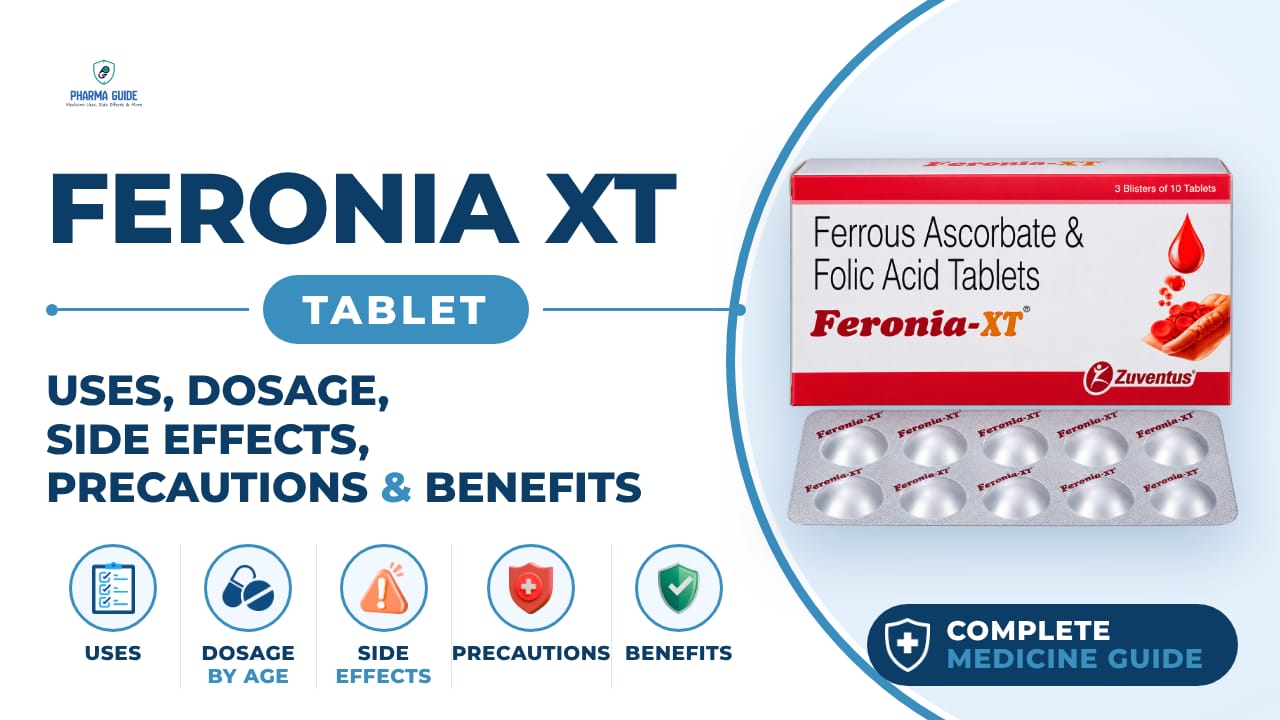
Feronia XT Tablet: Uses, Dosage, Side Effects, Precautions and Alternates
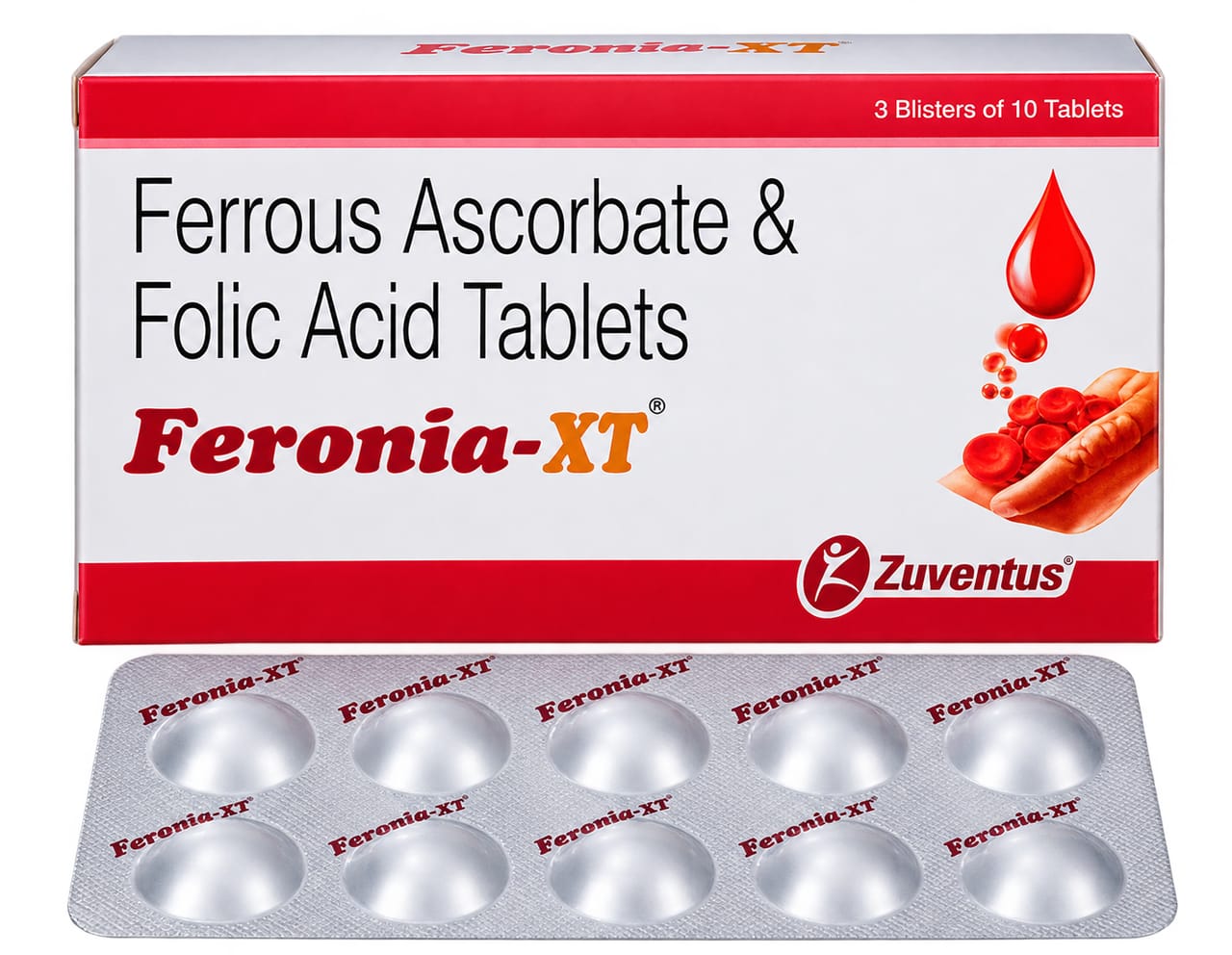
| Generic name | Ferrous Ascorbate + Folic Acid |
|---|---|
| Drug class | Iron supplement |
| Forms | Tablet |
Quick overview
Feronia XT Tablet contains Ferrous Ascorbate and Folic Acid and belongs to the iron supplement drug class. It is an oral medicine primarily suggested to treat and prevent iron deficiency anaemia. The combination works together to support the production of healthy red blood cells and improve the blood's oxygen-carrying capacity.
What is Feronia XT Tablet
Feronia XT Tablet is an oral medicine primarily suggested to treat and prevent iron deficiency anaemia. It contains Ferrous Ascorbate and Folic Acid, which work together to support the production of healthy red blood cells and improve the blood's oxygen-carrying capacity.
Feronia XT Tablet uses
- Iron-deficiency anemia
- Prevention of iron deficiency
- Folic acid supplementation
- Increased iron requirements during pregnancy when appropriate
- Iron deficiency due to inadequate dietary intake
Benefits of Feronia XT Tablet
- Helps treat and prevent iron and folate deficiency anaemia.
- Reduces tiredness, weakness, and fatigue caused by low iron levels.
- Improves energy levels, concentration, and overall daily functioning.
- Supports healthy red blood cell production and oxygen transport throughout the body.
- Promotes recovery after blood loss from surgery, injury, or heavy menstrual periods.
- Provides nutritional support during pregnancy and other periods of increased folate and iron requirements.
How Feronia XT Tablet works
This medicine combines a highly absorbable form of iron (Ferrous Ascorbate) with Folic Acid (vitamin B9). The iron is a building block of haemoglobin, the protein in red blood cells that carries oxygen from the lungs to the rest of the body. Folic acid is needed for DNA production and for red blood cells to mature properly in the bone marrow. Together, the iron increases oxygen-carrying red blood cells, while the folic acid helps the body make healthy new red blood cells.
Feronia XT Tablet dosage
Take this medicine exactly as suggested by your doctor and do not change your dose without consulting them. Swallow the tablet whole with a full glass of water. Do not crush, chew, or break the tablet, as this can interfere with how it is absorbed.
For best absorption, take it on an empty stomach, either one hour before or two hours after a meal. If it causes stomach irritation, you may take it with a light meal, but avoid taking it with dairy products, tea, coffee, or high-fibre foods, as these can reduce absorption.
Follow your healthcare provider's exact instructions regarding how long you need to continue taking this supplement. Take it consistently at the same time every day as directed by your doctor. Avoid consuming tea, coffee, milk, calcium supplements, or antacids within two hours of taking this medicine, as they block iron absorption.
| Age group | Dose |
|---|---|
| Under 18 years | Not recommended |
| 18–64 years | 1 tablet, once/day |
| 65+ years | 1 tablet, once/day |
Available forms and strengths
- Tablet
Side effects of Feronia XT Tablet
Common
- Mild stomach upset
- Nausea
- Darker stools
- Constipation
- Anorexia
- Vomiting
- Diarrhoea
- Abdominal discomfort
Serious
- Severe abdominal pain
- Persistent vomiting
- Signs of a serious allergic reaction
Warnings and precautions
- Do not take this medicine if you have iron overload disorders such as haemochromatosis or haemosiderosis, as it can cause dangerous iron buildup.
- Use caution if you have peptic ulcers or ulcerative colitis, as iron can irritate the digestive tract and potentially worsen inflammation or bleeding.
- Do not take this medicine if your anaemia is caused by red blood cell destruction rather than iron deficiency, as it can lead to iron toxicity.
- Do not take this medicine if you are allergic to ferrous ascorbate, folic acid, or any of its ingredients.
- Keep a gap of at least 2 hours between taking this medicine and taking thyroid medications, antibiotics, or calcium pills, as they can reduce absorption.
- If you have chronic kidney disease or are on dialysis, take this medicine only under your doctor's supervision, as your blood tests may need monitoring.
- Give this medicine to children only if recommended by a doctor, and keep it out of their reach, as swallowing too much iron can be very dangerous.
- Taking this medicine with phenytoin is not recommended, as it may reduce phenytoin levels in the blood and increase the risk of seizures.
- This medicine may be safe to use during pregnancy if recommended by a doctor.
- It is unknown whether this medicine passes into breast milk, so consult your doctor if you are breastfeeding. It is only given to breastfeeding mothers if the doctor feels the benefits are greater than the risks.
- Use this medicine with caution if you have a history of kidney disease. Your doctor may need to adjust your dose.
- Use this medicine with caution if you have a history of liver disease. Your doctor may need to adjust your dose.
- Avoid alcohol while taking this medicine, as it may reduce how well the medicine is absorbed. Talk to your doctor before drinking alcohol.
- This medicine usually does not affect your ability to drive or operate machinery.
Storage
- Store in a cool and dry place away from sunlight.
- Keep out of sight and reach of children.
- Non cold chain - To be stored in cool places at 10ºC to 25ºC or below 30ºC.
When to see a doctor
- If you suspect an overdose, seek immediate emergency medical attention or contact a poison control centre. Symptoms of overdose may include severe vomiting, diarrhoea, abdominal pain, or extreme drowsiness.
- Consult your doctor immediately if you experience severe abdominal pain, persistent vomiting, or signs of a serious allergic reaction.
Alternatives
- Ferium XT
- Glohest XT
- Feritone
Watch the video
FAQs
What is Feronia XT Tablet used for?
It is used to treat and prevent iron deficiency anaemia, provide folic acid supplementation, and support increased iron requirements during pregnancy or due to inadequate dietary intake.
How should I take Feronia XT Tablet?
Swallow the tablet whole with a full glass of water without crushing or chewing it. For best absorption, take it on an empty stomach, one hour before or two hours after a meal, avoiding dairy, tea, coffee, or high-fibre foods.
What are the common side effects of Feronia XT Tablet?
Common side effects include mild stomach upset, nausea, darker stools, constipation, anorexia, vomiting, diarrhoea, and abdominal discomfort.
Who should not take Feronia XT Tablet?
It should not be taken by people with iron overload disorders like haemochromatosis or haemosiderosis, those with anaemia caused by red blood cell destruction, or anyone allergic to ferrous ascorbate or folic acid.
Can Feronia XT Tablet be taken during pregnancy?
This medicine may be safe to use during pregnancy if recommended by a doctor.
General information, not medical advice
Your prescriber and the leaflet in your pack know your situation. This page does not.
- Follow your prescriber and the leaflet
- Don't start, stop, or change a dose on your own
- Doses and warnings differ by country and product
Sources
Video
Related medicines

Injectafer Injection: Uses, Dosage, Side Effects, Precautions and Alternates
Iron products
Injectafer (ferric carboxymaltose) treats iron deficiency anemia and heart failure-related iron deficiency via IV. Learn uses, dosage, side effects, and

Gliclazide Tablet: Uses, Dosage, Side Effects, Precautions and Alternates
Sulfonylurea (hypoglycemic/antidiabetic agent)
Gliclazide Tablet is a sulfonylurea for type 2 diabetes that boosts insulin release. Learn about dosage, side effects, warnings, and precautions.