
Safety
General information, not medical advice
Your prescriber and the leaflet in your pack know your situation. This page does not.
- Follow your prescriber and the leaflet
- Don't start, stop, or change a dose on your own
- Doses and warnings differ by country and product
Fesoterodine Tablet: Uses, Dosage, Side Effects, Precautions and Alternates
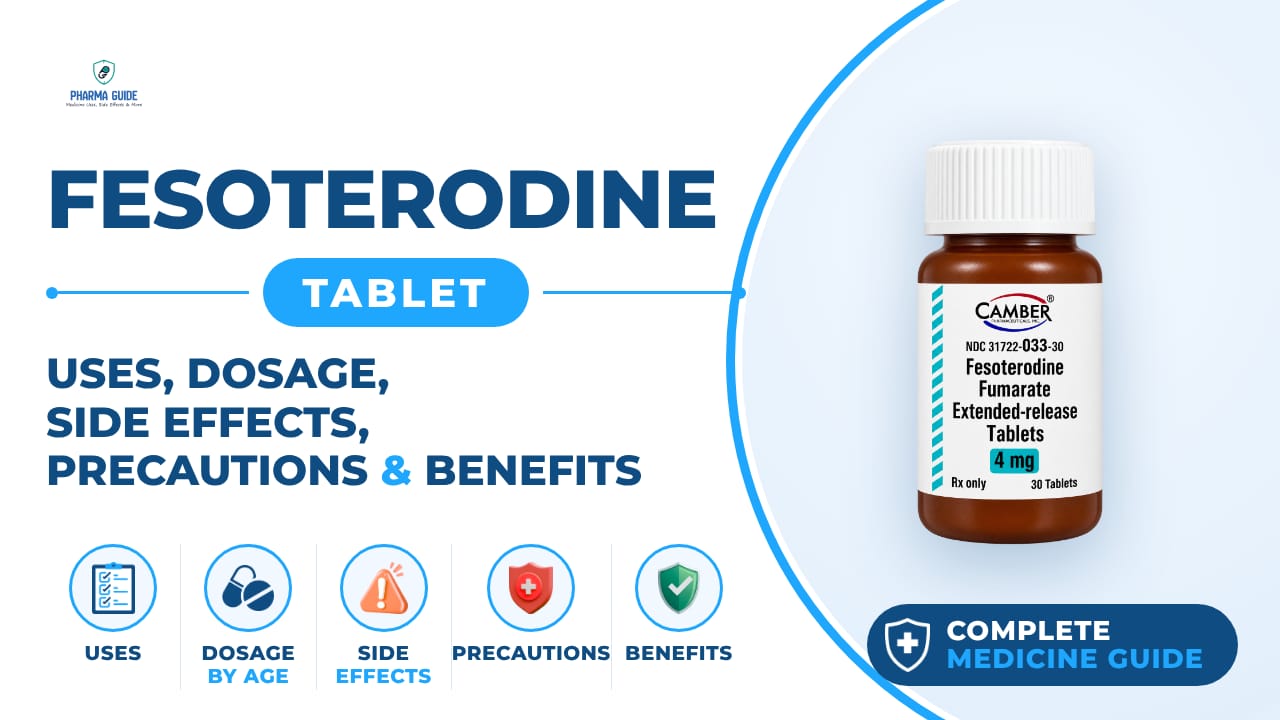
| Generic name | Fesoterodine |
|---|---|
| Drug class | Antimuscarinic (antispasmodic) |
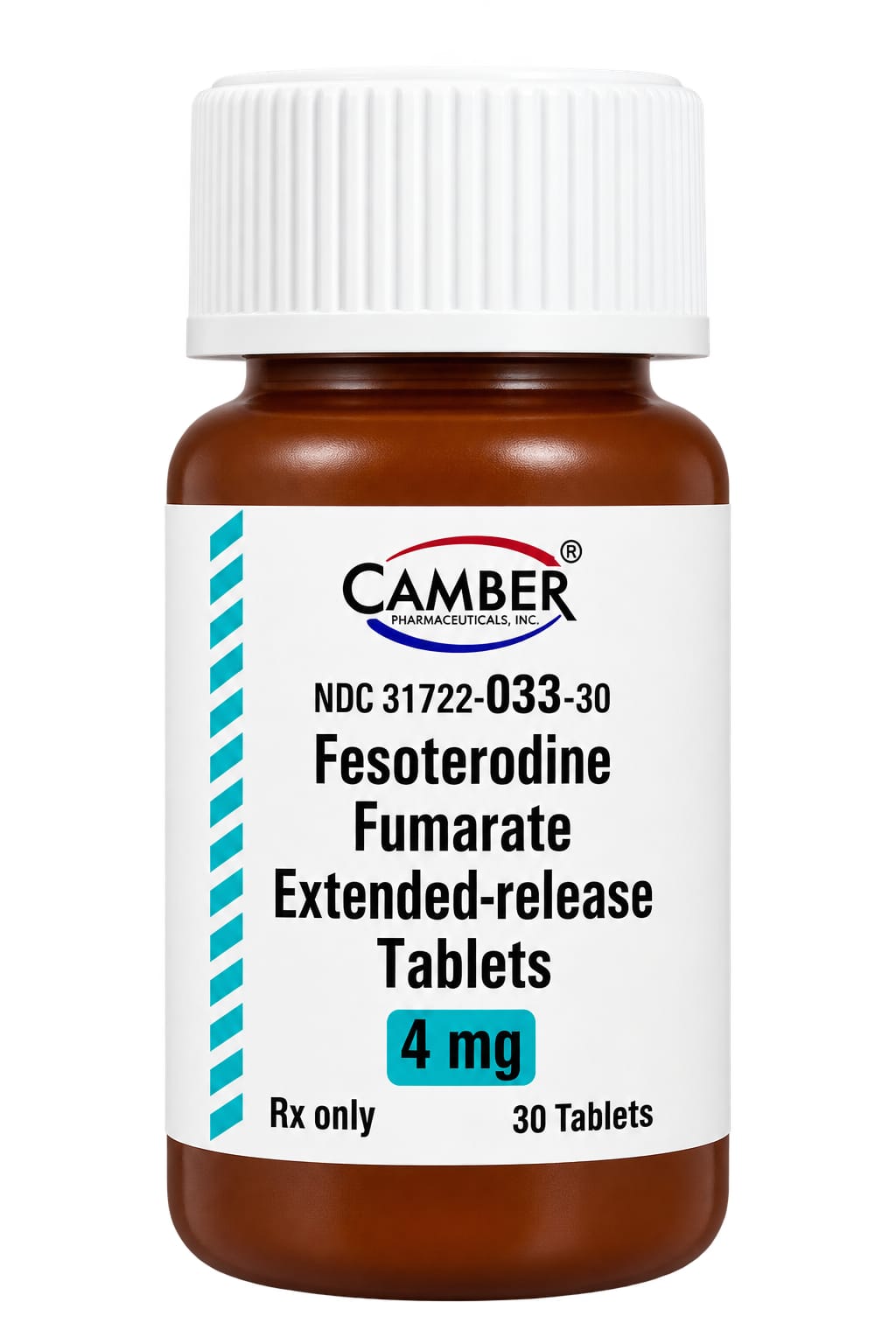
| Forms | Extended-release tablet |
Quick overview
Fesoterodine Tablet is a prescription antimuscarinic (antispasmodic) medicine used to treat overactive bladder. It comes as an extended-release tablet taken once a day and works by relaxing the bladder muscle to reduce urgency, frequency, and leakage. It should be used exactly as prescribed, with attention to kidney and liver function.
What is Fesoterodine Tablet
Fesoterodine is a prescription medicine used to treat overactive bladder. It belongs to a group of medicines called antimuscarinics (antispasmodics) that relax the bladder muscle. It comes as an extended-release tablet taken once a day.
Fesoterodine Tablet uses
- Overactive bladder symptoms such as loss of bladder control (incontinence)
- A strong, sudden need to urinate right away (urgency)
- Needing to urinate more often than usual (frequency)
- Neurogenic detrusor overactivity in certain patients
Benefits of Fesoterodine Tablet
- Helps treat overactive bladder symptoms.
- Reduces sudden and urgent need to urinate.
- Helps decrease frequent urination.
- Can reduce urge incontinence (urine leakage).
- Helps the bladder store urine for longer by relaxing involuntary bladder muscle contractions.
How Fesoterodine Tablet works
Fesoterodine works on the muscles of the bladder. It blocks certain receptors that normally trigger the bladder to contract, which helps increase how much urine the bladder can hold and reduces unwanted contractions that cause urgency and leakage.
Fesoterodine Tablet dosage
Take this medicine by mouth with a full glass of water, with or without food. If it upsets your stomach, taking it with food may help. Swallow the extended-release tablet whole. Do not split, crush, or chew it, since this can damage its extended-release action. Take it at the same time every day as directed by your doctor. Keep taking it unless your care team tells you to stop. If you miss a dose, skip it and go back to your regular schedule the next day; do not take double doses. Use in children depends on age and body weight, and the dose must be determined by a doctor.
| Age group | Dose |
|---|---|
| Under 6 years | Safety and effectiveness not established |
| 6–17 years | Pediatric dosing is indication/formulation-specific; specialist-directed |
| Adults – Overactive bladder | 4 mg once daily initially |
| Adults – If needed and tolerated | May increase to 8 mg once daily |
| Severe kidney/moderate liver impairment | Dose may need limitation to 4 mg once daily; avoid in severe hepatic impairment |
Available forms and strengths
- Extended-release tablet
Side effects of Fesoterodine Tablet
Common
- Difficulty having a bowel movement (constipation)
- Dry mouth
- Headache
- Blurred vision
- Drowsiness
- Difficulty fully emptying the bladder
- Dizziness
- Nausea
- Stomach pain
- Dry eyes
Serious
- Bladder pain
- Swelling of the face, arms, hands, lower legs, or feet
- Bloody or cloudy urine
- Burning feeling while urinating
- Difficulty in breathing
- Difficulty in passing urine (dribbling)
- Decrease in frequency or volume of urination
- Fast, irregular, pounding, or racing heartbeat
- Severe allergic reaction (angioedema) with swelling of face, lips, tongue, throat, hands, legs, or feet
- Severe abdominal pain
- Signs of liver problems
Warnings and precautions
- Tell your care team if you are pregnant or trying to get pregnant, so they can weigh the risks and benefits. There isn't enough research to know if this medicine is safe during breastfeeding. Your doctor will weigh the possible benefits against possible risks before you take it while breastfeeding.
- People with kidney disease should use this medicine with caution, since the body may remove it more slowly, increasing its effects. People with liver disease should use this medicine with caution because it may build up in the body. It should not be used in people with severe liver disease.
- Avoid drinking alcohol while taking this medicine, as it can increase dizziness and drowsiness. This medicine can cause dizziness, drowsiness, or blurred vision. Do not drive or do anything dangerous until you know how it affects you.
- This medicine can cause a serious, potentially life-threatening allergic reaction called angioedema. Get medical help right away if you notice swelling of the face, eyelids, lips, tongue, throat, hands, legs, or feet.
- This medicine can make it harder to pass urine or fully empty your bladder.
- This medicine can reduce sweating, which may cause your body to overheat. Be careful not to get overheated during exercise or in hot weather, as this could lead to heat stroke.
- This medicine should not be used by people with urinary or gastric retention, uncontrolled narrow-angle glaucoma, severe liver problems, or known allergy to fesoterodine or tolterodine.
- Do not take other medicines, including over-the-counter drugs, herbal products, or supplements, without checking with your doctor first, since this medicine interacts with many drugs.
Storage
- Store at 20–25°C (68–77°F) at controlled room temperature.
- Keep in a cool, dry place away from excessive heat and humidity.
- Protect tablets from moisture and direct sunlight.
- Keep tablets in the original, tightly closed container until use.
- Avoid storing in bathrooms or other hot and humid areas.
- Keep out of reach and sight of children and pets.
When to see a doctor
- Get medical help right away if you have large, hive-like swelling of the face, eyelids, lips, tongue, throat, hands, legs, feet, or sex organs.
- Contact your doctor if you have a decrease in urine volume, decrease in how often you urinate, difficulty passing urine, or painful urination.
- If you think you have taken too much of this medicine, contact a poison control center or emergency room right away.
- Seek prompt medical attention for signs of a severe allergic reaction, such as skin rash, hives, swelling of the face, eyes, lips, or tongue, or trouble swallowing or breathing.
- Watch for signs such as flushed face, blurry vision, dry mouth and skin, confusion, fast or irregular heartbeat, trouble passing urine, or constipation, and report these to your care team promptly.
Alternatives
- Mirabegron
- Trospium
- Oxybutynin
- Tolterodine
- Solifenacin (Vesicare)
Watch the video
FAQs
What is Fesoterodine Tablet used for?
It is used to treat overactive bladder symptoms such as urgency, frequency, incontinence, and neurogenic detrusor overactivity in certain patients.
How should I take Fesoterodine Tablet?
Take it by mouth with a full glass of water, with or without food, at the same time every day. Swallow the extended-release tablet whole without splitting, crushing, or chewing it.
What is the usual adult dose of Fesoterodine Tablet?
Adults typically start with 4 mg once daily, which may be increased to 8 mg once daily if needed and tolerated. Those with severe kidney or moderate liver impairment may need to stay at 4 mg once daily.
What are common side effects of Fesoterodine Tablet?
Common side effects include constipation, dry mouth, headache, blurred vision, drowsiness, difficulty fully emptying the bladder, dizziness, nausea, stomach pain, and dry eyes.
Who should not take Fesoterodine Tablet?
It should not be used by people with urinary or gastric retention, uncontrolled narrow-angle glaucoma, severe liver problems, or a known allergy to fesoterodine or tolterodine.
General information, not medical advice
Your prescriber and the leaflet in your pack know your situation. This page does not.
- Follow your prescriber and the leaflet
- Don't start, stop, or change a dose on your own
- Doses and warnings differ by country and product
Sources
Video
Related medicines

Injectafer Injection: Uses, Dosage, Side Effects, Precautions and Alternates
Iron products
Injectafer (ferric carboxymaltose) treats iron deficiency anemia and heart failure-related iron deficiency via IV. Learn uses, dosage, side effects, and

Gliclazide Tablet: Uses, Dosage, Side Effects, Precautions and Alternates
Sulfonylurea (hypoglycemic/antidiabetic agent)
Gliclazide Tablet is a sulfonylurea for type 2 diabetes that boosts insulin release. Learn about dosage, side effects, warnings, and precautions.