
Safety
General information, not medical advice
Your prescriber and the leaflet in your pack know your situation. This page does not.
- Follow your prescriber and the leaflet
- Don't start, stop, or change a dose on your own
- Doses and warnings differ by country and product
Fezolinetant Tablet: Uses, Dosage, Side Effects, Precautions and Alternates

| Generic name | fezolinetant |
|---|---|
| Drug class | Neurokinin 3 (NK3) receptor antagonist |
| Forms | Tablet (film-coated) |
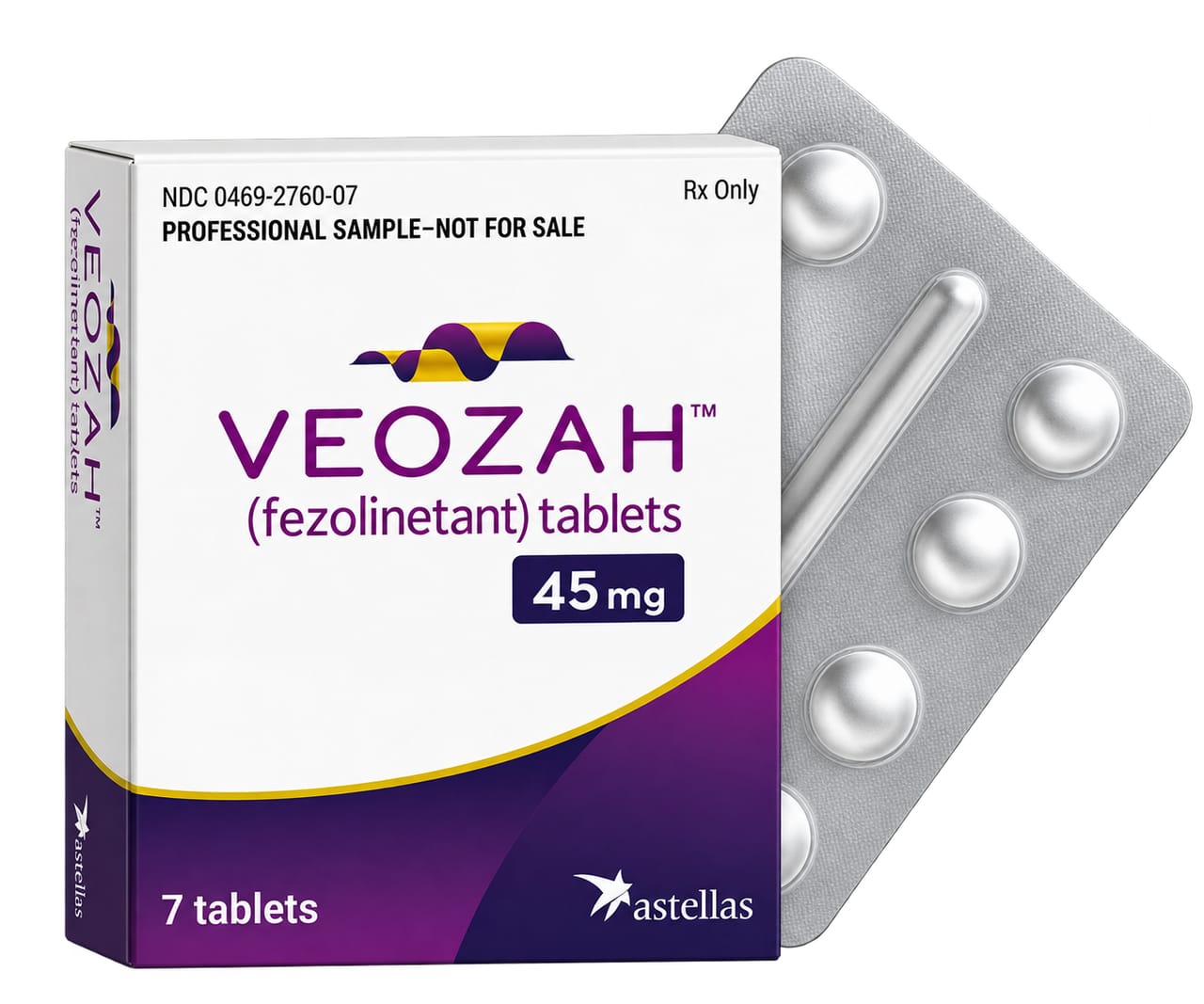
Quick overview
Fezolinetant Tablet (generic name: fezolinetant) is a non-hormonal prescription medicine belonging to the neurokinin 3 (NK3) receptor antagonist drug class. It is used by menopausal women to reduce moderate to severe hot flashes and night sweats caused by menopause. The usual dose is 45 mg taken orally once daily, and it works by blocking a brain protein pathway involved in body-temperature regulation.
What is Fezolinetant Tablet
Fezolinetant is a non-hormonal prescription medicine used by menopausal women to reduce moderate to severe hot flashes and night sweats caused by menopause.
Fezolinetant Tablet uses
- Reduces moderate to severe hot flashes (feelings of warmth in the face, neck, and chest, or sudden strong heat and sweating) caused by menopause
- Reduces night sweats associated with menopause
Benefits of Fezolinetant Tablet
- Helps reduce moderate to severe hot flashes caused by menopause
- Helps decrease the frequency and severity of night sweats
- Provides a non-hormonal treatment option for vasomotor symptoms
- May help improve sleep and daily comfort when menopausal hot flashes are disruptive
How Fezolinetant Tablet works
Before menopause, estrogen and a brain protein called neurokinin B (NKB) stay in balance to help control body temperature. When estrogen levels drop during menopause, this balance is disrupted. Fezolinetant blocks NKB from attaching to its receptor in the brain's temperature control center, which lowers the number and intensity of hot flashes and night sweats.
Fezolinetant Tablet dosage
Take this medicine by mouth, usually once a day, at about the same time each day. It can be taken with or without food. Swallow the tablet whole with liquid; do not split, crush, or chew it.
If you miss a dose, take it as soon as you remember, but if it is less than 12 hours until your next dose, skip the missed dose and continue your regular schedule. Do not take a double dose. Continue your normal diet unless your doctor tells you otherwise. This medicine is not for use in children or adolescents; it is only for menopausal women.
| Age group | Dose |
|---|---|
| Under 18 years | Safety and effectiveness not established |
| 18+ years – Premenopausal women | Not routinely indicated |
| Postmenopausal women | 45 mg orally once daily |
| 65+ years | Generally 45 mg once daily; clinical experience is limited |
| Severe kidney impairment / cirrhosis | Use is contraindicated |
Available forms and strengths
- Tablet (film-coated)
Side effects of Fezolinetant Tablet
Common
- Diarrhea
- Difficulty sleeping (insomnia)
- Increase in certain liver enzyme levels shown in blood tests
- Stomach (abdominal) pain
- Back pain
- Headache
Serious
- Signs of liver problems: dark urine, decreased appetite, nausea, pain in the upper stomach, vomiting, or yellow eyes or skin
- Light-colored stools
- Feeling of warmth, redness of the face, neck, arms, and sometimes upper chest, with sudden sweating
- Chills, dizziness, fever, itching, loss of appetite, unpleasant breath odor, unusual tiredness or weakness
- Vomiting of blood
Warnings and precautions
- This medicine may cause serious or life-threatening liver damage. If you have or have ever had liver disease or cirrhosis, tell your doctor, who may decide not to prescribe this medicine.
- Do not take this medicine together with certain other drugs, including fluvoxamine, enoxacin, mexiletine, or birth control pills containing ethinyl estradiol, because they can increase the amount of this medicine in your blood and raise the risk of side effects.
- Tell your doctor if you currently have or previously had breast cancer or another estrogen-related cancer, or if you have a history of seizures, as your doctor may decide not to prescribe this medicine.
- Your doctor will order blood tests to check that your liver is working normally before you start this medicine and periodically during treatment.
- Do not take this medicine if you are pregnant or think you might be pregnant. Women who could become pregnant should use effective non-hormonal birth control. If you become pregnant while taking this medicine, stop taking it and call your doctor right away.
- There isn't enough research to know if this medicine is safe during breastfeeding. Do not take it while breastfeeding, and talk with your doctor about the risks and benefits.
- Tell your doctor if you have kidney disease. This medicine should not be used in people with severe kidney disease, and your doctor may decide not to prescribe it depending on your kidney function.
- This medicine can cause serious liver damage. Tell your doctor if you have or have ever had liver disease or cirrhosis, since it should not be used in these cases. Your doctor will check your liver with blood tests before you start and periodically during treatment.
- Discuss use of this medicine with alcohol with your healthcare professional.
- This medicine has no known effect on your ability to drive or use machines.
Storage
- Store at 20–25°C (68–77°F) at controlled room temperature
- Keep tablets in their original, tightly closed container until needed
- Protect from excessive heat, moisture, and direct sunlight
- Avoid storing in bathrooms or other hot and humid locations
- Keep out of reach and sight of children and pets
When to see a doctor
- Stop taking this medicine and call your doctor right away if you have extreme tiredness, loss of appetite, nausea, vomiting, itching, yellowing of the skin or eyes, dark yellow or brown urine, pale stools, or pain in the upper right part of your stomach
- Check with your doctor right away if you have dark urine, decreased appetite, nausea, pain in the upper stomach, vomiting, or yellow eyes or skin, as these could be signs of a serious liver problem
- If you think you have taken too much of this medicine, contact your doctor or pharmacist right away; symptoms of overdose may include headache, nausea, or a tingling or prickling feeling
- If someone has collapsed, had a seizure, is having trouble breathing, or cannot be woken up, get emergency medical help immediately
Alternatives
- Bijuva
- Estradiol
- Gabapentin
- Paroxetine
- Elinzanetant
Watch the video
FAQs
What is Fezolinetant Tablet used for?
It is used by menopausal women to reduce moderate to severe hot flashes and night sweats caused by menopause.
What is the usual dose of Fezolinetant Tablet?
The usual dose is 45 mg taken orally once daily, with or without food, swallowed whole with liquid.
How does Fezolinetant Tablet work?
It blocks a brain protein called neurokinin B from attaching to its receptor in the brain's temperature control center, which lowers the number and intensity of hot flashes and night sweats.
What are the serious side effects of Fezolinetant Tablet?
Serious side effects include signs of liver problems such as dark urine, decreased appetite, nausea, upper stomach pain, vomiting, or yellow eyes or skin, as well as light-colored stools and vomiting of blood.
Can I take Fezolinetant Tablet if I am pregnant?
No, you should not take this medicine if you are pregnant or think you might be pregnant, and should stop and call your doctor right away if you become pregnant while taking it.
General information, not medical advice
Your prescriber and the leaflet in your pack know your situation. This page does not.
- Follow your prescriber and the leaflet
- Don't start, stop, or change a dose on your own
- Doses and warnings differ by country and product
Sources
Video
Related medicines

Veozah Tablet: Uses, Dosage, Side Effects, Precautions and Alternates
Neurokinin 3 (NK3) receptor antagonist
Veozah Tablet (fezolinetant) is a nonhormonal prescription medicine for moderate to severe menopausal hot flashes and night sweats. Learn dosage, side effects,

Injectafer Injection: Uses, Dosage, Side Effects, Precautions and Alternates
Iron products
Injectafer (ferric carboxymaltose) treats iron deficiency anemia and heart failure-related iron deficiency via IV. Learn uses, dosage, side effects, and