
Safety
General information, not medical advice
Your prescriber and the leaflet in your pack know your situation. This page does not.
- Follow your prescriber and the leaflet
- Don't start, stop, or change a dose on your own
- Doses and warnings differ by country and product
Veozah Tablet: Uses, Dosage, Side Effects, Precautions and Alternates
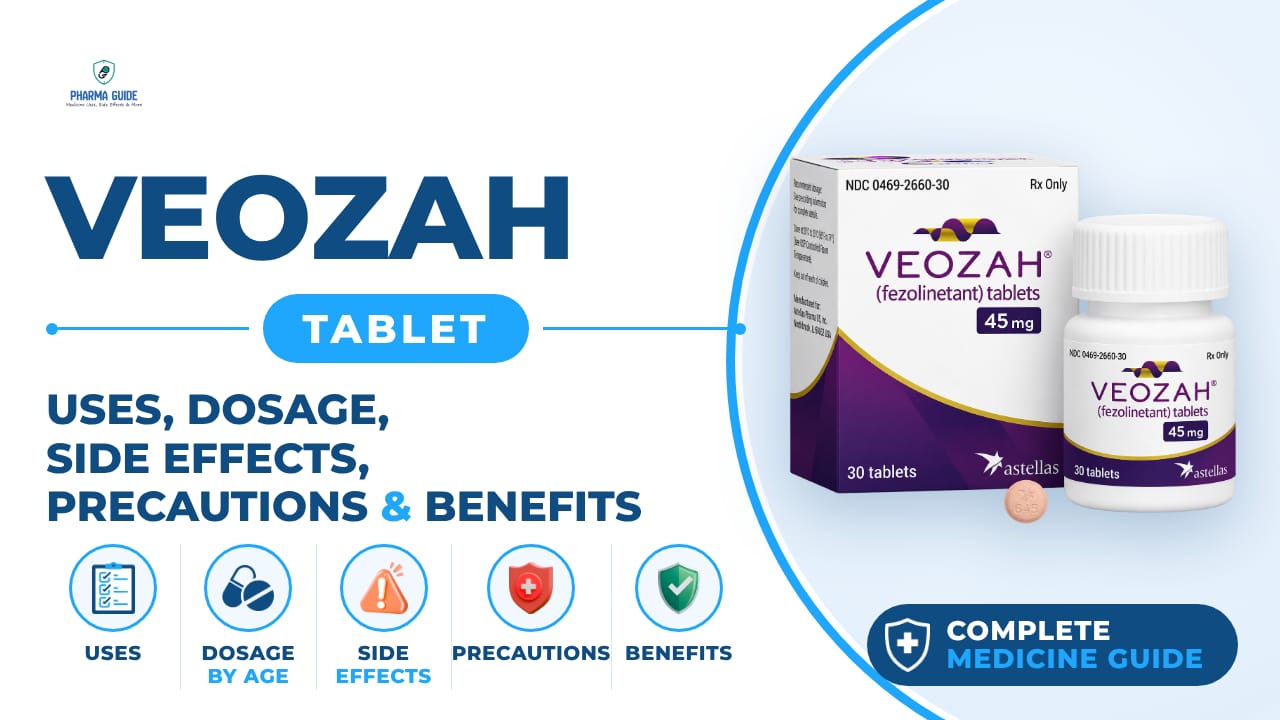
| Generic name | fezolinetant |
|---|---|
| Drug class | Neurokinin 3 (NK3) receptor antagonist |
| Forms | Oral tablet (film-coated) |
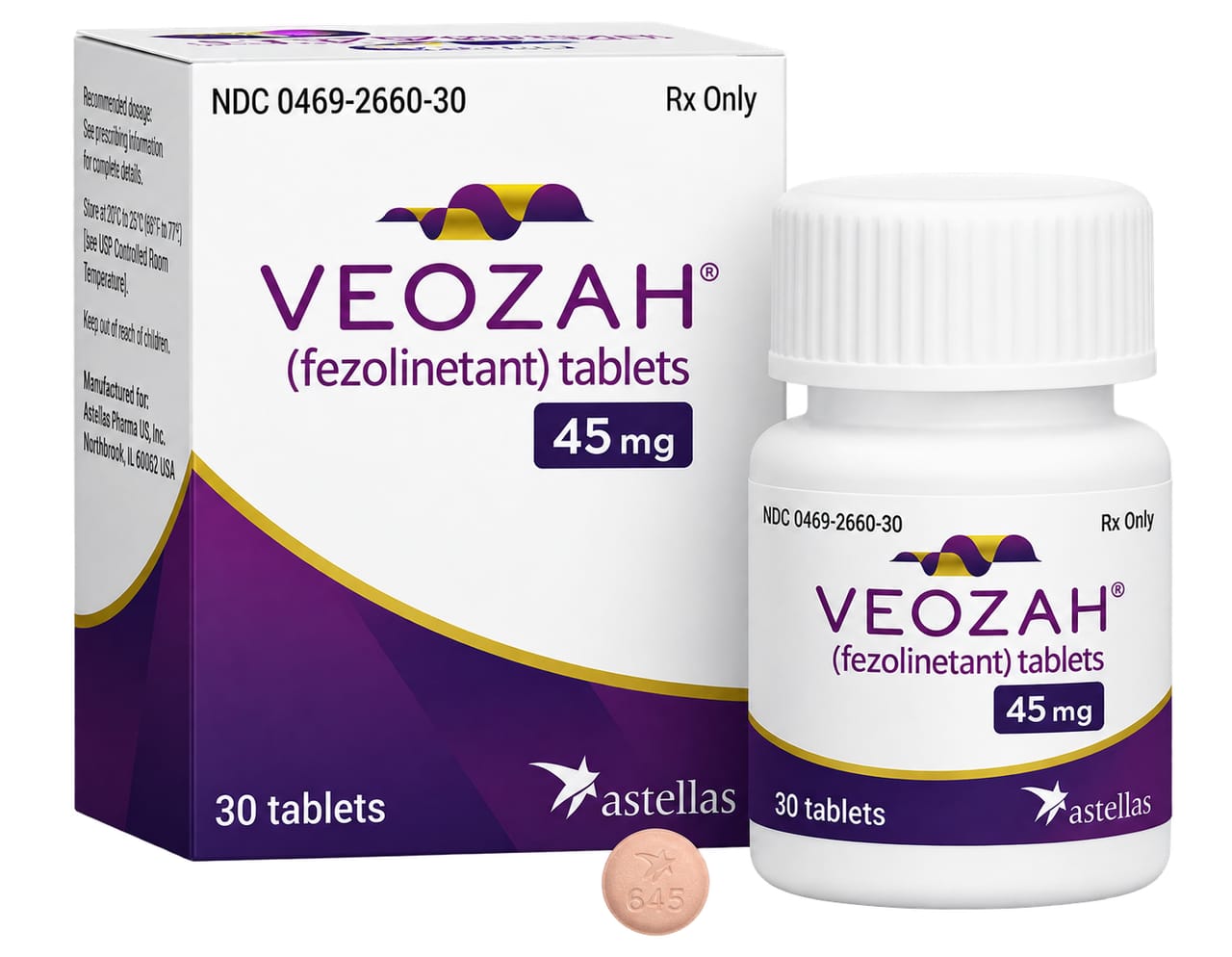
Quick overview
Veozah Tablet (fezolinetant) is a nonhormonal prescription tablet used to treat moderate to severe hot flashes and night sweats caused by menopause. It belongs to a drug class called neurokinin 3 (NK3) receptor antagonists and does not contain hormones. It is taken once daily and works by blocking a brain chemical involved in body temperature regulation.
What is Veozah Tablet
Veozah is a nonhormonal prescription tablet used to treat moderate to severe hot flashes and night sweats caused by menopause. It does not contain hormones. Its generic name is fezolinetant, and it belongs to the neurokinin 3 (NK3) receptor antagonist drug class.
Veozah Tablet uses
- Treats moderate to severe hot flashes and night sweats (vasomotor symptoms) caused by menopause
Benefits of Veozah Tablet
- Helps reduce moderate to severe hot flashes caused by menopause
- Helps decrease the frequency and severity of night sweats
- Provides a non-hormonal treatment option for menopausal vasomotor symptoms
- Can help improve sleep and daily comfort when hot flashes and night sweats are troublesome
How Veozah Tablet works
Before menopause, estrogen and a brain chemical called neurokinin B (NKB) work together to help control body temperature. During menopause, estrogen levels drop, which disrupts this balance and causes hot flashes. Veozah blocks NKB in the brain's temperature control center, which helps reduce hot flashes without using hormones.
Veozah Tablet dosage
Take one tablet by mouth at about the same time each day. It can be taken with or without food. Swallow the tablet whole with a drink; do not cut, crush, or chew it. If you miss a dose, take it as soon as possible on the same day, as long as it's at least 12 hours before your next scheduled dose; otherwise skip the missed dose and go back to your normal schedule the next day. Do not take double or extra doses. Do not share this medicine with other people, even if they have the same condition.
| Age group | Dose |
|---|---|
| Under 18 years | Safety and effectiveness not established |
| 18+ years – Premenopausal women | Not routinely indicated |
| Postmenopausal women | 45 mg orally once daily |
| 65+ years | Generally 45 mg once daily; clinical experience in older patients is limited |
| Severe kidney impairment / cirrhosis | Use is contraindicated |
Available forms and strengths
- Oral tablet (film-coated)
Side effects of Veozah Tablet
Common
- Stomach (abdominal) pain
- Diarrhea
- Back pain
- Hot flashes
- Trouble sleeping (insomnia)
- Higher liver enzyme levels
Serious
- Severe allergic reactions (breathing problems, wheezing, racing heart, swelling of face/lips/mouth/tongue/throat, trouble swallowing, hives, dizziness, fainting)
- Liver damage (nausea, vomiting, stomach pain, fever, unusual tiredness, itching, loss of appetite, light-colored stools, dark urine, yellowing of skin or eyes)
Warnings and precautions
- Veozah carries a risk of rare but serious liver damage. Your provider will test your liver before starting treatment and regularly for the first 9 months. Stop the medicine and get medical help right away if you notice signs of liver problems.
- Do not take Veozah if you have cirrhosis, severe kidney problems, or are taking certain medicines called CYP1A2 inhibitors, since this could raise the risk of side effects.
- Caffeine can increase the effect of Veozah, so it's best to limit how much caffeine you have while taking this medicine.
- It is not known if Veozah is safe during pregnancy or if it could harm an unborn baby. Tell your healthcare provider if you are or plan to become pregnant.
- It is not known if Veozah passes into breast milk. Tell your healthcare provider if you are breastfeeding or plan to breastfeed.
- Veozah should not be used if your kidneys are not working well, especially with severe kidney problems or kidney failure. Your doctor may test your kidney function first.
- Veozah should not be used if you have liver problems, especially cirrhosis, because it can cause liver damage. Your doctor will check your liver with blood tests before you start and regularly during the first 9 months of treatment.
- There is no known direct interaction between Veozah and alcohol, but alcohol can make hot flashes worse and may increase the risk of liver damage, so it's best to limit how much you drink.
Storage
- Store at 20–25°C (68–77°F) at controlled room temperature
- Keep tablets in the original container or packaging until ready to use
- Protect from excessive heat and moisture
- Avoid storing in bathrooms or other hot and humid areas
- Keep out of reach and sight of children and pets
When to see a doctor
Stop taking Veozah and call your healthcare provider right away if you notice signs of liver damage, such as nausea, vomiting, stomach pain, fever, unusual tiredness, itching, loss of appetite, light-colored stools, dark urine, or yellowing of your skin or eyes.
Get emergency medical help right away if you have signs of a severe allergic reaction, such as trouble breathing, wheezing, racing heart, swelling of the face, lips, mouth, tongue, or throat, trouble swallowing, or hives.
If you or someone else takes too much Veozah, get medical help right away or contact a poison control center.
Alternatives
- Bijuva
- Estradiol
- Gabapentin
- Paroxetine (Brisdelle)
- Lynkuet (Elinzanetant)
Watch the video
FAQs
What is Veozah Tablet used for?
Veozah is used to treat moderate to severe hot flashes and night sweats (vasomotor symptoms) caused by menopause.
How does Veozah Tablet work?
Veozah blocks a brain chemical called neurokinin B (NKB) in the brain's temperature control center, helping reduce hot flashes without using hormones.
What is the dosage of Veozah Tablet?
The typical dose for postmenopausal women is 45 mg taken orally once daily, swallowed whole with a drink, with or without food.
What are the serious side effects of Veozah Tablet?
Serious side effects include severe allergic reactions and liver damage, which can cause nausea, vomiting, stomach pain, fever, tiredness, itching, loss of appetite, light-colored stools, dark urine, or yellowing of skin or eyes.
Who should not take Veozah Tablet?
Veozah should not be used by people with cirrhosis, severe kidney problems, or those taking certain CYP1A2 inhibitor medicines, as these increase the risk of side effects.
General information, not medical advice
Your prescriber and the leaflet in your pack know your situation. This page does not.
- Follow your prescriber and the leaflet
- Don't start, stop, or change a dose on your own
- Doses and warnings differ by country and product
Sources
Video
Related medicines
Fezolinetant Tablet: Uses, Dosage, Side Effects, Precautions and Alternates
Neurokinin 3 (NK3) receptor antagonist
Fezolinetant Tablet is a non-hormonal prescription medicine that reduces moderate to severe hot flashes and night sweats caused by menopause.

Injectafer Injection: Uses, Dosage, Side Effects, Precautions and Alternates
Iron products
Injectafer (ferric carboxymaltose) treats iron deficiency anemia and heart failure-related iron deficiency via IV. Learn uses, dosage, side effects, and