
Safety
General information, not medical advice
Your prescriber and the leaflet in your pack know your situation. This page does not.
- Follow your prescriber and the leaflet
- Don't start, stop, or change a dose on your own
- Doses and warnings differ by country and product
Fiasp Injection: Uses, Dosage, Side Effects, Precautions and Alternates
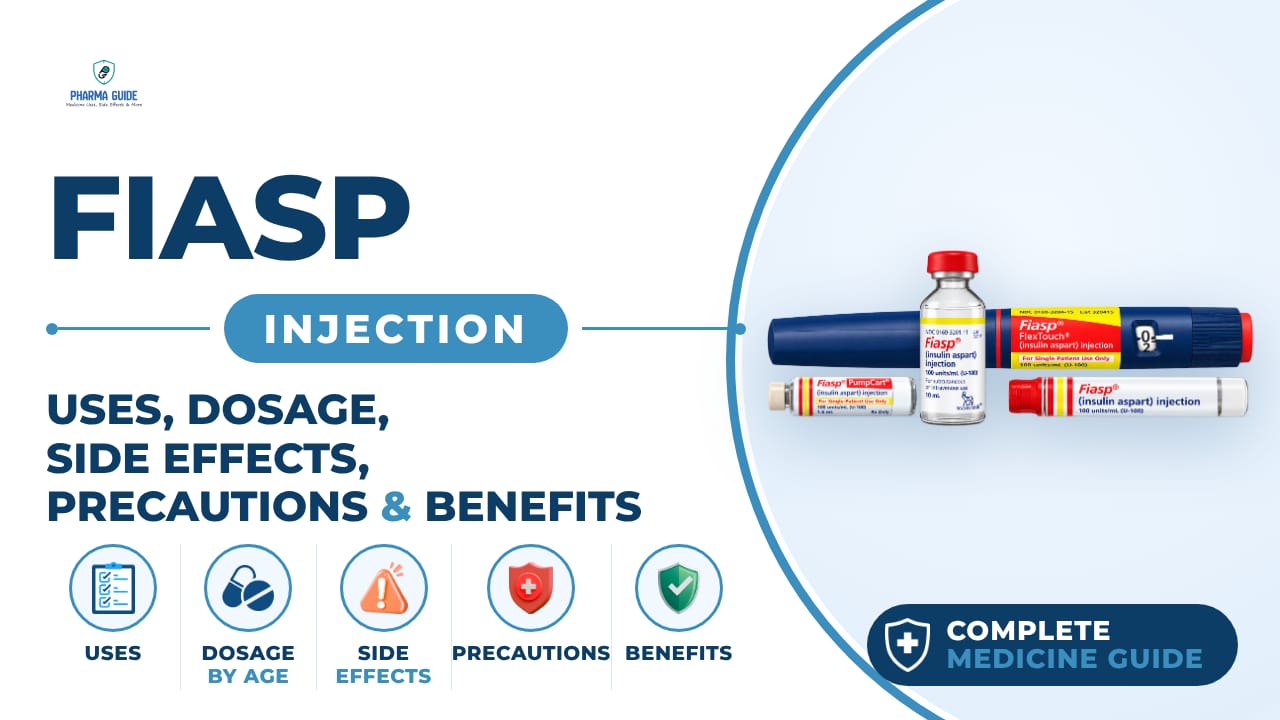
| Generic name | insulin aspart |
|---|---|
| Drug class | Insulin (rapid-acting human insulin analog) |
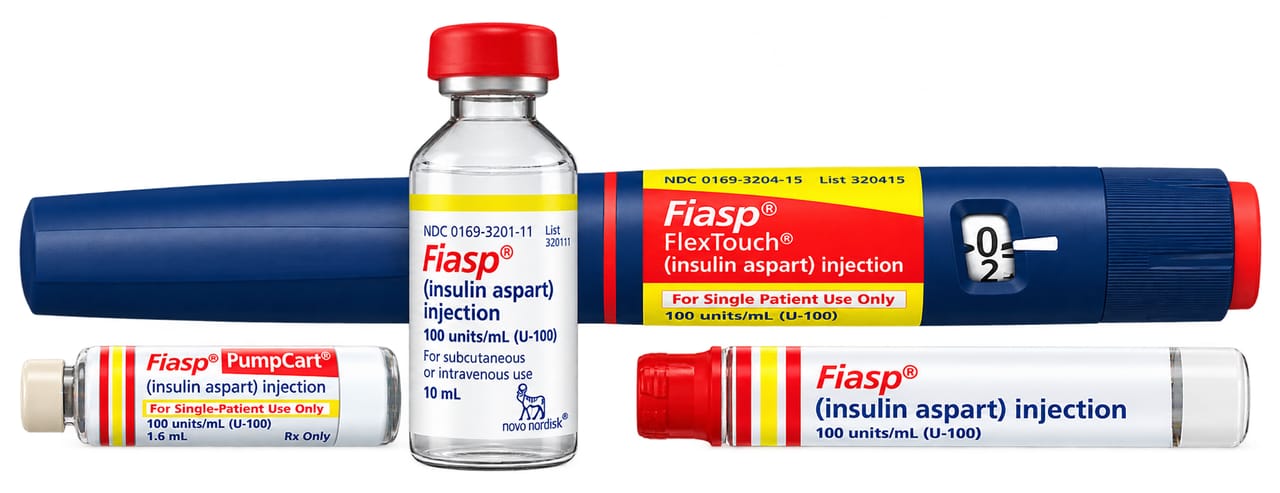
| Forms | Injection solution, 100 units/mL (U-100), 10 mL multiple-dose vial, 3 mL single-patient-use FlexTouch pen, 3 mL single-patient-use PenFill cartridges, 1.6 mL single-patient-use PumpCart cartridges |
Quick overview
Fiasp Injection (insulin aspart) is a rapid-acting human insulin analog used to control high blood sugar in adults and children with type 1 or type 2 diabetes mellitus. It is taken with meals and starts working very quickly after injection. Fiasp can be given by injection, through an insulin pump, or, under medical supervision, by IV.
What is Fiasp Injection
Fiasp is a man-made, rapid-acting insulin used to control high blood sugar in adults and children with diabetes mellitus. It starts working very quickly after injection.
Fiasp Injection uses
- Improves blood sugar control in adults and children with diabetes mellitus (type 1 or type 2)
- Helps control blood sugar after meals
- Used with mealtime insulin
- Treats selected patients with type 1 diabetes
- Treats selected insulin-treated patients with type 2 diabetes
- Helps improve overall glucose control
Benefits of Fiasp Injection
- Starts lowering blood sugar quickly after dosing
- Can be taken at the start of a meal or up to 20 minutes after starting to eat, offering flexible mealtime dosing
- Can be used in injections, insulin pumps, or (under medical supervision) by IV
How Fiasp Injection works
Fiasp works like natural insulin by attaching to insulin receptors in the body. This helps cells in the muscles and fat take in sugar from the blood and stops the liver from releasing more sugar, which lowers blood sugar levels.
Fiasp Injection dosage
Take Fiasp exactly as your healthcare provider tells you to. Inject at the start of a meal or within 20 minutes after starting a meal. It can be injected under the skin into the stomach area, upper arm, or thigh, or given by continuous infusion through an insulin pump, or by IV only under medical supervision. Do not inject into muscle.
Rotate (change) injection sites within the chosen area with each dose to reduce the risk of skin changes (lipodystrophy or localized cutaneous amyloidosis). Do not use the exact same spot for each injection, and do not inject into skin that has pits, thickening, lumps, tenderness, bruising, scaling, hardness, scars, or other damage. Do not mix Fiasp with any other type of insulin or solution.
If using an insulin pump, change the insulin in the pump reservoir at least every 6 days, or replace the PumpCart cartridge at least every 4 days, or according to the pump manual, whichever is shorter. Change infusion sets and insertion sites according to the pump manufacturer's instructions.
If you forget a mealtime dose, check your blood sugar level to decide if a dose is still needed, then continue with your regular dosing schedule at the next meal. Always check the insulin label before each injection to avoid mixing up insulin products. Know the type and strength of insulin you take, and do not change types unless your healthcare provider tells you to. Never share a pen, cartridge, syringe, or needle with another person, even if the needle is changed.
| Age group | Dose |
|---|---|
| Under 18 years | Safety and effectiveness are not established |
| 18–64 years with type 1 diabetes | Usually starts at 15 mcg subcutaneously before major meals, then titrated by the prescriber |
| 18–64 years with type 2 diabetes using mealtime insulin | Usually starts at 60 mcg subcutaneously before major meals, then may be increased to 120 mcg if tolerated |
Available forms and strengths
- Injection solution, 100 units/mL (U-100)
- 10 mL multiple-dose vial
- 3 mL single-patient-use FlexTouch pen
- 3 mL single-patient-use PenFill cartridges
- 1.6 mL single-patient-use PumpCart cartridges
Side effects of Fiasp Injection
Common
- Nasopharyngitis (cold-like symptoms)
- Upper respiratory tract infection
- Nausea
- Diarrhea
- Back pain
- Urinary tract infection
- Headache
- Vomiting
- Weight gain
- Injection or infusion site reactions (itching, rash, pain, redness, bruising)
- Lipodystrophy (pits or thickening of skin at injection sites)
- Peripheral edema (swelling in hands and feet)
- Skin problems such as eczema, rash, itching, redness, and swelling (dermatitis)
Serious
- Hypoglycemia (low blood sugar) - can be life-threatening, causing seizures or unconsciousness
- Hypokalemia (low potassium) - can be life-threatening, may cause respiratory paralysis or irregular heartbeat
- Severe, life-threatening allergic reactions including anaphylaxis
- Heart failure or worsening heart failure, especially when used with TZD diabetes pills
- Hyperglycemia and ketoacidosis from insulin pump malfunction
- Localized cutaneous amyloidosis (lumps under the skin) at injection sites
Warnings and precautions
- Never share a Fiasp pen, cartridge, syringe, or needle with another person, even if the needle is changed, because this can spread serious infections.
- Changing your insulin regimen (such as strength, brand, type, injection site, or method) can lead to high or low blood sugar, so such changes should be made under close medical supervision with more frequent blood sugar checks.
- Low blood sugar (hypoglycemia) is the most common side effect of all insulins, including Fiasp, and can be life-threatening.
- Mix-ups between insulin products can happen accidentally; always check the insulin label before injecting.
- Fiasp can cause low potassium levels (hypokalemia), which can be life-threatening; your potassium levels should be monitored if you are at risk.
- Severe, life-threatening allergic reactions, including anaphylaxis, can occur with Fiasp.
- Taking TZD diabetes pills together with Fiasp can cause fluid retention and heart failure, even in people with no previous heart problems.
- If your insulin pump malfunctions, it can quickly cause high blood sugar and ketoacidosis; you should be prepared to switch to injections if this happens.
- It is not known for certain if Fiasp is safe during pregnancy. Talk with your healthcare provider about the best way to control your blood sugar if you are pregnant or planning to become pregnant, since poorly controlled diabetes carries risks to both mother and baby.
- It is not known if Fiasp passes into breast milk. Talk with your healthcare provider about the best way to feed your baby if you are breastfeeding or plan to breastfeed.
- Tell your healthcare provider if you have kidney problems, as this can increase your risk of low blood sugar and may require more frequent dose adjustment and blood sugar monitoring.
- Tell your healthcare provider if you have liver problems, as this can increase your risk of low blood sugar and may require more frequent dose adjustment and blood sugar monitoring.
- Avoid drinking alcohol or using medicines that contain alcohol while taking Fiasp, as alcohol can affect your blood sugar levels.
- Do not drive or operate heavy machinery until you know how Fiasp affects you, since low blood sugar can impair concentration and reaction time.
Storage
- Do not freeze Fiasp. Do not use it if it has been frozen.
- Keep Fiasp away from excessive heat or light.
- Store unopened vials, FlexTouch pens, or PenFill cartridges in the refrigerator between 36°F and 46°F (2°C to 8°C), or at room temperature below 86°F (30°C).
- If stored in the refrigerator unopened, may be used until the expiration date on the label.
- If stored at room temperature unopened, should be thrown away after 28 days.
- Once opened (in-use), vials, FlexTouch pens, and vials may be kept in the refrigerator or at room temperature below 86°F (30°C) for up to 28 days, then must be thrown away even if insulin remains.
- Opened PenFill cartridges should be kept at room temperature below 86°F (30°C) for up to 28 days and should not be refrigerated once in use.
- PumpCart cartridges: unopened, refrigerate until expiration or up to 18 days below 86°F (30°C); once in use, keep below 98.6°F (37°C) for up to 4 days and do not refrigerate.
- Keep the cap on the pen to protect it from light; remove the needle after each injection and store the pen without a needle attached.
- Keep unused vials, pens, and cartridges in their original carton to stay clean and protected from light.
- Do not store FIASP in a syringe for later use.
- Dispose of used needles and syringes right away in an FDA-cleared sharps disposal container; do not throw loose needles or syringes in household trash.
- Keep FIASP, needles, and syringes out of the reach of children.
When to see a doctor
- Get emergency medical help right away if you have signs of a severe allergic reaction, such as a rash over your whole body, trouble breathing, fast heartbeat, swelling of your face, tongue, or throat, sweating, extreme drowsiness, dizziness, or confusion.
- Tell your healthcare provider if you have any new or worsening symptoms of heart failure, such as shortness of breath, swelling of your ankles or feet, or sudden weight gain.
- Contact your doctor if you experience signs of low blood sugar, such as dizziness, sweating, confusion, shakiness, fast heartbeat, or headache, so it can be managed promptly.
- Watch for signs of low potassium (hypokalemia) and tell your doctor if they occur.
Alternatives
- NovoLog / NovoRapid (insulin aspart)
- Humalog (insulin lispro)
- Admelog (insulin lispro)
Watch the video
FAQs
When should I inject Fiasp?
Inject Fiasp at the start of a meal or within 20 minutes after starting to eat, giving flexible mealtime dosing.
Where can Fiasp be injected?
It can be injected under the skin into the stomach area, upper arm, or thigh, given through an insulin pump, or administered by IV only under medical supervision. Do not inject into muscle.
What should I do if I miss a dose of Fiasp?
Check your blood sugar level to decide if a dose is still needed, then continue with your regular dosing schedule at the next meal.
What are the serious side effects of Fiasp?
Serious side effects include life-threatening hypoglycemia, hypokalemia, severe allergic reactions including anaphylaxis, heart failure (especially with TZD pills), hyperglycemia and ketoacidosis from pump malfunction, and localized cutaneous amyloidosis.
How should Fiasp be stored once opened?
Opened vials, FlexTouch pens, and PenFill cartridges can be kept in the refrigerator or at room temperature below 86°F for up to 28 days, then must be thrown away even if insulin remains.
General information, not medical advice
Your prescriber and the leaflet in your pack know your situation. This page does not.
- Follow your prescriber and the leaflet
- Don't start, stop, or change a dose on your own
- Doses and warnings differ by country and product
Sources
Video
Related medicines

Injectafer Injection: Uses, Dosage, Side Effects, Precautions and Alternates
Iron products
Injectafer (ferric carboxymaltose) treats iron deficiency anemia and heart failure-related iron deficiency via IV. Learn uses, dosage, side effects, and

Gliclazide Tablet: Uses, Dosage, Side Effects, Precautions and Alternates
Sulfonylurea (hypoglycemic/antidiabetic agent)
Gliclazide Tablet is a sulfonylurea for type 2 diabetes that boosts insulin release. Learn about dosage, side effects, warnings, and precautions.