
Safety
General information, not medical advice
Your prescriber and the leaflet in your pack know your situation. This page does not.
- Follow your prescriber and the leaflet
- Don't start, stop, or change a dose on your own
- Doses and warnings differ by country and product
Fidaxomicin Tablet: Uses, Dosage, Side Effects, Precautions and Alternates
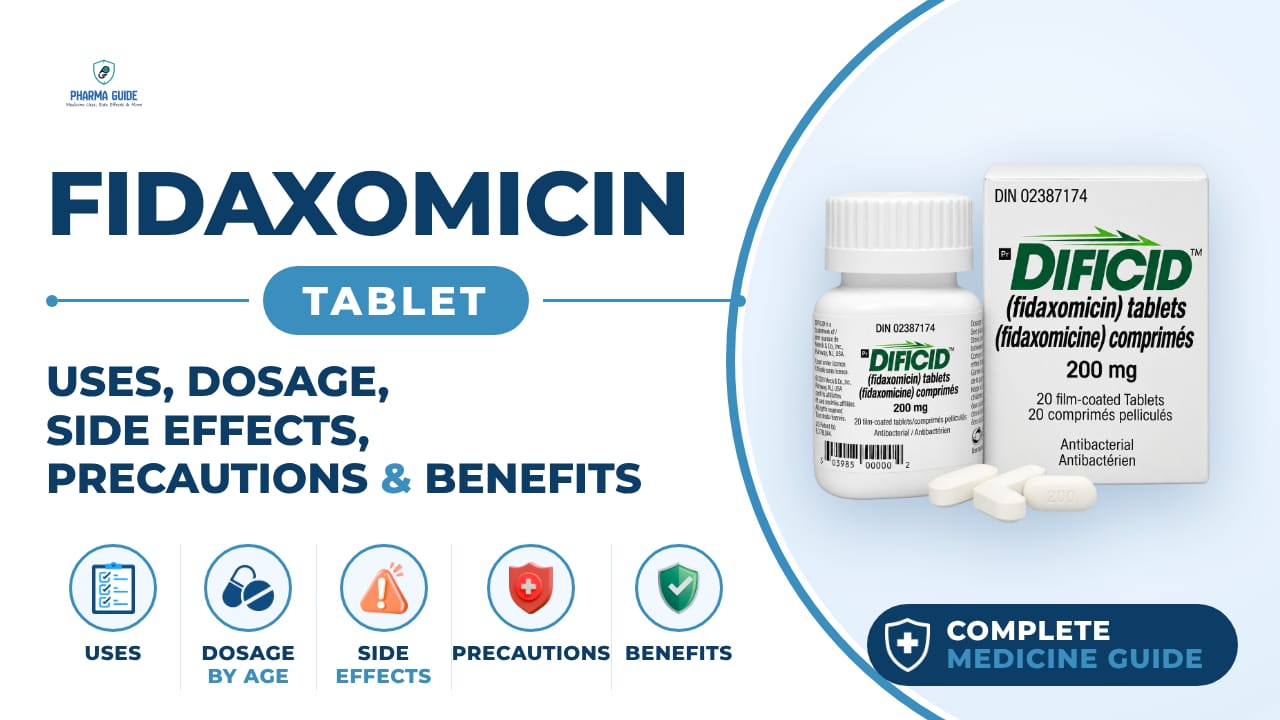
| Generic name | fidaxomicin |
|---|---|
| Drug class | Macrolide antibacterial |
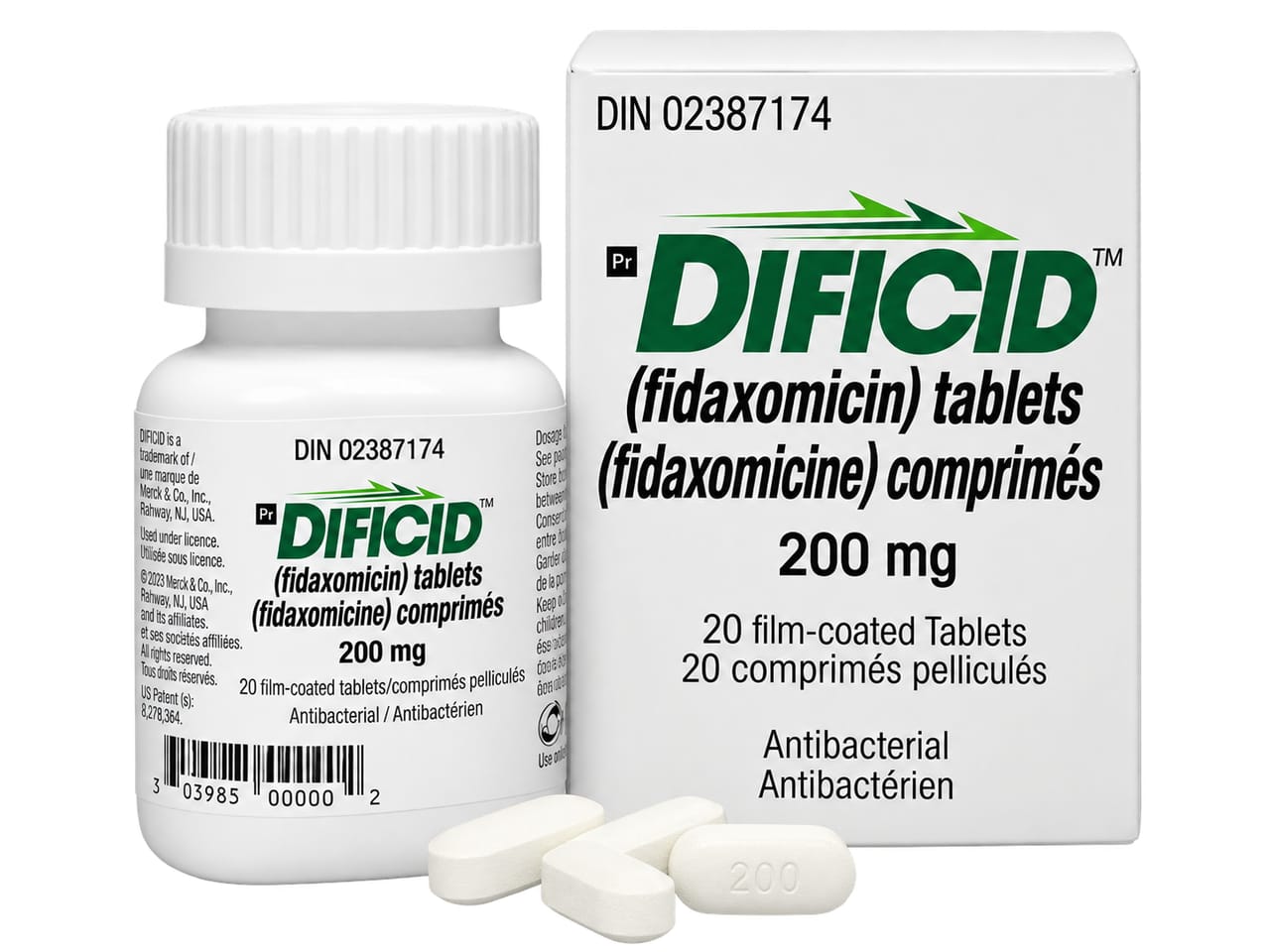
| Forms | Film-coated tablets (200 mg), Granules for oral suspension (40 mg/mL, 200 mg/5 mL when reconstituted) |
Quick overview
Fidaxomicin Tablet (generic name: fidaxomicin) is a macrolide antibacterial medicine used to treat Clostridioides difficile-associated diarrhea (CDAD), also known as C-diff, in adults and children 6 months of age and older. It works mainly inside the gut, with minimal absorption into the bloodstream. It is taken twice daily and is available as tablets or an oral suspension.
What is Fidaxomicin Tablet
Fidaxomicin Tablet is an antibiotic medicine used to treat an infection called Clostridioides difficile-associated diarrhea (CDAD) in adults and children 6 months of age and older. C-diff is a bacterium that can cause an infection that can damage the colon and cause stomach pain and severe diarrhea.
Fidaxomicin Tablet uses
- Treats diarrhea caused by infection with Clostridioides (Clostridium) difficile (C-diff) in adults and children 6 months of age and older
- Not to be used to treat other types of infections in the body
Benefits of Fidaxomicin Tablet
- Non-inferior to vancomycin for clinical response at the end of treatment in adults
- Associated with higher rates of sustained clinical response (no recurrence) compared with vancomycin in adult trials
- Has relatively targeted activity against C. difficile
- Minimal systemic absorption
- May reduce the risk of recurrence compared with some older treatments
- Provides an oral treatment option
How Fidaxomicin Tablet works
Fidaxomicin is an antibiotic that works mainly inside the gut. It stops the C. difficile bacteria from making the RNA they need to survive, and it stays mostly in the stomach and intestines rather than passing into the bloodstream.
Fidaxomicin Tablet dosage
Take the tablets or oral suspension exactly as prescribed by your doctor. The medicine is taken twice a day, about every 12 hours, and can be taken with or without food.
For the oral suspension given to a child: take the bottle out of the refrigerator 15 minutes before giving the dose, shake well before each dose, measure with the oral dosing syringe provided, and return the bottle to the refrigerator with the cap on after each dose.
Do not skip doses or stop treatment early, even if you start feeling better, unless you have a serious allergic reaction. Complete the full course of treatment to reduce the chance that bacteria become resistant to this medicine and other antibiotics in the future.
| Age group | Dose |
|---|---|
| 12–17 years | 200 mg twice daily for 10 days |
| 18–64 years | 200 mg twice daily for 10 days |
| 65 years and older | 200 mg twice daily for 10 days |
Available forms and strengths
- Film-coated tablets (200 mg)
- Granules for oral suspension (40 mg/mL, 200 mg/5 mL when reconstituted)
Side effects of Fidaxomicin Tablet
Common
- Nausea
- Vomiting
- Stomach pain
- Bleeding in the stomach or intestines
- Low red blood cell count (anemia)
- Low white blood cell count (neutropenia)
- Fever (in children)
- Diarrhea (in children)
- Constipation (in children)
- Rash (in children)
- High levels of liver enzymes (aminotransferases) in children
Serious
- Severe allergic reaction: problems breathing or shortness of breath, rash, itching or hives, or swelling of the mouth, throat, or face
- Swelling of any body part such as the face, lips, tongue, or around the eyes
- Serious bowel inflammation (toxic megacolon)
- Low platelet count (important for clotting and controlling bleeding)
- High levels of acid in the blood (metabolic acidosis)
- High blood sugar (hyperglycemia)
- Abnormal liver tests
- Intestinal blockage
- Problems swallowing
Warnings and precautions
- This medicine is not meant to treat infections other than C. difficile-associated diarrhea, because very little of it is absorbed into the bloodstream, so it would not reach other parts of the body.
- Severe allergic reactions such as swelling of the mouth, throat, or face, trouble breathing, itching, or rash have happened with this medicine. If this happens, stop the medicine and get medical care.
- If you are allergic to other macrolide antibiotics like azithromycin or clarithromycin, tell your doctor, since you may be more likely to have an allergic reaction to this medicine too.
- Using this medicine when it is not needed, or not finishing the full course, can lead to bacteria becoming resistant to it and other antibiotics in the future.
- This medicine is not approved for children younger than 6 months old because its safety and effectiveness have not been studied in that age group.
- It is not known if this medicine will harm your baby during pregnancy. Talk with your doctor to decide together whether to use it if you are pregnant or plan to become pregnant.
- It is not known if this medicine passes into breast milk. Talk with your doctor to decide together whether to use it while breastfeeding.
- No dose change is needed based on how well the kidneys are working, even in people with severe kidney impairment.
- The effect of liver problems on this medicine has not been studied, but because the drug is not expected to be significantly processed by the liver, liver impairment is not expected to significantly change how it is cleared from the body.
- No major direct interaction with alcohol is expected.
- This medicine usually does not affect driving.
Storage
- Store tablets at room temperature between 68°F to 77°F (20°C to 25°C)
- Keep tablets in their original bottle until ready to take
- Store oral suspension in the refrigerator between 36°F to 46°F (2°C to 8°C) for up to 12 days
- Throw away any unused oral suspension by the discard date written on the bottle
- Keep the oral suspension in its original child-resistant bottle with the cap on until ready to give to your child
- Keep this medicine and all medicines out of the reach of children
When to see a doctor
- Get emergency medical help right away if you have a severe allergic reaction, such as trouble breathing or shortness of breath, rash, itching or hives, or swelling of the mouth, throat, or face.
- Call your doctor right away if you have signs of bowel inflammation, such as stomach pain and bloating, painful or bloody stools, fast heartbeats, cool or clammy skin, or feeling like you might pass out.
- Call your doctor right away if you have signs of low blood cell counts, such as fever, chills, tiredness, mouth sores, skin sores, easy bruising, unusual bleeding, pale skin, cold hands and feet, or feeling light-headed or short of breath.
- Call your doctor right away if you notice signs of stomach bleeding, such as bloody or tarry stools, or coughing up blood or vomit that looks like coffee grounds.
- Tell your doctor about any side effect that bothers you or does not go away.
Alternatives
- Oral vancomycin
Watch the video
FAQs
What is Fidaxomicin Tablet used for?
It is used to treat diarrhea caused by infection with Clostridioides (Clostridium) difficile (C-diff) in adults and children 6 months of age and older. It is not used to treat other types of infections in the body.
How does Fidaxomicin Tablet work?
Fidaxomicin works mainly inside the gut by stopping C. difficile bacteria from making the RNA they need to survive. It stays mostly in the stomach and intestines rather than passing into the bloodstream.
What is the typical dosage of Fidaxomicin Tablet?
For ages 12 and older, including adults and seniors, the typical dose is 200 mg taken twice daily for 10 days, with or without food, about every 12 hours.
What are the common side effects of Fidaxomicin Tablet?
Common side effects include nausea, vomiting, stomach pain, stomach or intestinal bleeding, low red blood cell count (anemia), and low white blood cell count (neutropenia). In children, fever, diarrhea, constipation, rash, and high liver enzymes have also been reported.
What is an alternative to Fidaxomicin Tablet?
Oral vancomycin is listed as an alternative treatment option.
General information, not medical advice
Your prescriber and the leaflet in your pack know your situation. This page does not.
- Follow your prescriber and the leaflet
- Don't start, stop, or change a dose on your own
- Doses and warnings differ by country and product
Sources
Video
Related medicines

Injectafer Injection: Uses, Dosage, Side Effects, Precautions and Alternates
Iron products
Injectafer (ferric carboxymaltose) treats iron deficiency anemia and heart failure-related iron deficiency via IV. Learn uses, dosage, side effects, and

Gliclazide Tablet: Uses, Dosage, Side Effects, Precautions and Alternates
Sulfonylurea (hypoglycemic/antidiabetic agent)
Gliclazide Tablet is a sulfonylurea for type 2 diabetes that boosts insulin release. Learn about dosage, side effects, warnings, and precautions.