
Safety
General information, not medical advice
Your prescriber and the leaflet in your pack know your situation. This page does not.
- Follow your prescriber and the leaflet
- Don't start, stop, or change a dose on your own
- Doses and warnings differ by country and product
Filgrastim Injection: Uses, Dosage, Side Effects, Precautions and Alternates
| Generic name | Filgrastim |
|---|---|
| Drug class | Hematopoietic Agent / Granulocyte Colony Stimulating Factor (G-CSF) |
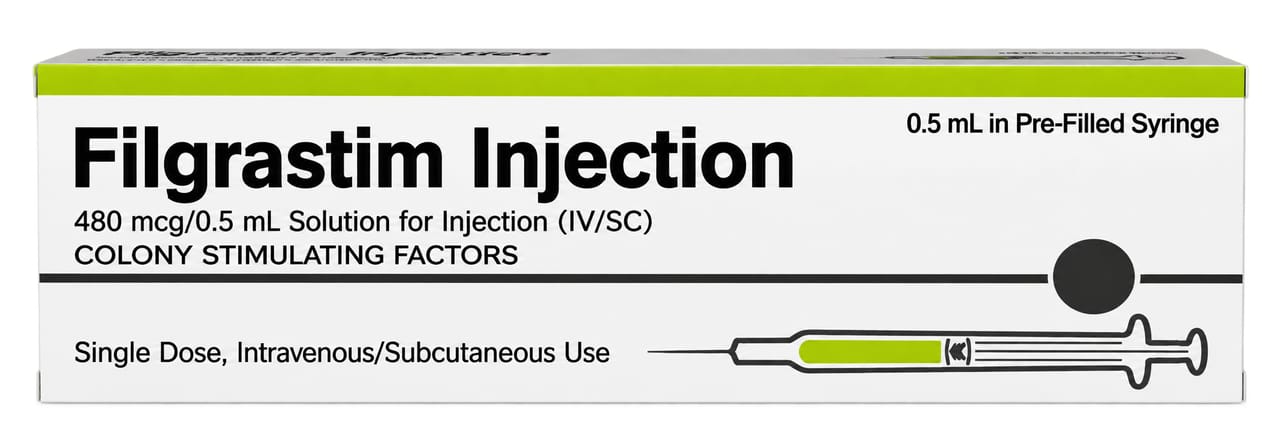
| Forms | Sterile solution for injection in single-use vials (1 mL and 1.6 mL), Sterile solution for injection in prefilled syringes (0.5 mL and 0.8 mL) with safety needle guards |
Quick overview
Filgrastim Injection is a man-made version of granulocyte colony-stimulating factor (G-CSF) that helps the body produce more white blood cells called neutrophils. It is used to lower the risk of infection during chemotherapy, support recovery after bone marrow or stem cell transplant, help collect blood stem cells, and manage chronic neutropenia or HIV-related low white blood cell counts. It is given as an injection under the skin or into a vein, usually once daily. It carries possible side effects such as bone pain and more serious risks like spleen enlargement, so it should be used exactly as directed by a doctor.
What is Filgrastim Injection
Filgrastim is a man-made version of a natural protein called granulocyte colony-stimulating factor (G-CSF). It is made using E. coli bacteria and works like the substance your body naturally produces to help make white blood cells called neutrophils.
Filgrastim Injection uses
- Decreasing the risk of infection (shown as fever with low white blood cell counts) in cancer patients receiving chemotherapy that can lower blood cell counts
- Reducing the length of low white blood cell counts, fever, antibiotic use, and hospital stays after treatment for acute myeloid leukemia
- Reducing low white blood cell counts after high-dose chemotherapy followed by bone marrow transplant
- Helping to move blood stem cells into the bloodstream so they can be collected before high-dose chemotherapy
- Long-term treatment to raise neutrophil counts and reduce infections in people with severe chronic neutropenia (congenital, cyclic, or idiopathic)
- Preventing and treating low white blood cell counts in people with HIV infection
Benefits of Filgrastim Injection
- Reduces the chance of infection from febrile neutropenia during chemotherapy
- Shortens the time with severely low white blood cell counts
- Reduces need for antibiotics and hospital stays
- Helps the body recover white blood cells faster after bone marrow or stem cell transplant
- Helps maintain normal neutrophil counts long-term in chronic neutropenia conditions
How Filgrastim Injection works
Filgrastim acts like the body's natural G-CSF protein. It signals the bone marrow to produce more neutrophils, a type of white blood cell that helps fight infection.
Filgrastim Injection dosage
This medicine is given as an injection under the skin (subcutaneous) or into a vein (intravenous), depending on your condition. It is usually given once a day, at about the same time each day.
Do not shake the vial or prefilled syringe vigorously, as this may damage the medicine. Let the medicine reach room temperature before injecting for a more comfortable injection.
If you are receiving this for chemotherapy, it should not be given in the 24 hours before your next chemotherapy dose, and should start no earlier than 24 hours after chemotherapy.
Choose a new injection site each time (upper arms, abdomen away from the navel, front of thighs, or upper outer buttocks) to avoid soreness. Do not inject into skin that is tender, red, bruised, hard, or has scars or stretch marks.
Only use a vial or prefilled syringe once; do not save unused medicine for later use. If you miss a dose, contact your doctor or nurse rather than giving a double dose.
| Age group | Dose |
|---|---|
| Under 1 month | Doctor-directed |
| 1 month–17 years | 5 mcg/kg/day |
| 18–64 years | 5 mcg/kg/day |
| 65+ years | 5 mcg/kg/day |
Available forms and strengths
- Sterile solution for injection in single-use vials (1 mL and 1.6 mL)
- Sterile solution for injection in prefilled syringes (0.5 mL and 0.8 mL) with safety needle guards
Side effects of Filgrastim Injection
Common
- Bone and muscle aching (most common side effect)
- Redness, swelling, or itching at the injection site
- Nausea or vomiting
- Diarrhea
- Constipation
- Headache
- Loss of appetite
- Fatigue or generalized weakness
- Hair loss
- Sore throat
- Cough
- Nosebleed
Serious
- Spleen enlargement or rupture (pain in left upper stomach or left shoulder tip)
- Serious allergic reactions including anaphylaxis (rash, wheezing, swelling of face/mouth, fast pulse, dizziness, low blood pressure)
- Acute respiratory distress syndrome (ARDS) - shortness of breath, cough, fever, congestion
- Alveolar hemorrhage (coughing up blood)
- Sickle cell crisis in people with sickle cell trait or disease (severe pain in bones, chest, abdomen or joints)
- Kidney injury (glomerulonephritis) - puffiness of face/ankles, blood or brown-colored urine, reduced urination
- Low platelet counts (thrombocytopenia) - easy bruising or bleeding
- Capillary leak syndrome - swelling, low blood pressure, difficulty breathing, tiredness
- Cutaneous vasculitis (inflamed blood vessels in skin)
- Sweet's syndrome (painful plum-colored skin sores with fever)
- Osteoporosis/decreased bone density with long-term use in children with severe chronic neutropenia
- Myelodysplastic syndrome (MDS) and acute myeloid leukemia (AML), particularly in breast and lung cancer patients receiving chemotherapy/radiotherapy
Warnings and precautions
- Your spleen may become enlarged and can rupture during treatment, which can be fatal. Get medical help right away for pain in the upper left stomach area or left shoulder tip.
- People with sickle cell trait or disease can have severe, sometimes fatal, sickle cell crises linked to this medicine. Tell your doctor before starting treatment if you have this condition.
- Do not use this medicine if you are allergic to filgrastim, pegfilgrastim, or other products made from E. coli bacteria.
- If you are receiving chemotherapy, the last dose of this medicine should be given at least 24 hours before your next chemotherapy dose.
- This medicine does not prevent all infections, even though it helps reduce the risk. Tell your doctor immediately if you notice signs of infection such as fever, chills, rash, sore throat, or diarrhea.
- Unusual bleeding or bruising during treatment after chemotherapy could mean a drop in platelets, which affects blood clotting.
- This medicine has not been well studied in pregnant women, and its effects on unborn babies are not fully known. It should only be used in pregnancy if clearly needed, after discussing risks and benefits with your doctor.
- It is not known whether this medicine passes into breast milk, so your doctor may advise against breastfeeding while using it.
- Kidney injury (glomerulonephritis) has been reported in some patients. Tell your doctor right away if you notice facial or ankle swelling, blood in urine, brown urine, or reduced urination.
- It is not clearly known how this medicine interacts with alcohol, so check with your doctor before drinking alcohol during treatment.
- This medicine can cause fatigue, which may affect your ability to drive or operate machinery safely. Use caution if you feel tired.
Storage
- Store in the refrigerator at 2°C to 8°C (36°F to 46°F), but not in the freezer
- Avoid shaking the medicine
- Keep the container in the outer carton to protect from light; do not leave in direct sunlight
- The medicine can be left out at room temperature for up to 14 days; discard if left out longer than this
- If accidentally frozen once, it may be used after thawing in the refrigerator; if frozen a second time, do not use it and contact your doctor or nurse
- Keep out of the reach and sight of children
- Dispose of used needles, syringes, and vials in a puncture-proof/sharps container as instructed by your doctor or pharmacist; do not put in household trash and do not recycle
When to see a doctor
- Get medical help immediately if you have pain in the left upper stomach area or left shoulder tip, which could mean an enlarged or ruptured spleen.
- Stop using the medicine and seek emergency care if you have signs of a serious allergic reaction, such as a body-wide rash, trouble breathing, wheezing, dizziness, swelling around the mouth or eyes, fast pulse, or sweating.
- Seek emergency care right away for shortness of breath, trouble breathing, or fast breathing, which could be signs of a serious lung problem (ARDS).
- Seek emergency care right away for severe pain in your bones, chest, gut, or joints, which could be a sickle cell crisis.
- If you think you or someone you are caring for has taken too much of this medicine, contact a healthcare professional, hospital emergency department, or regional poison control service right away, even if there are no symptoms.
Alternatives
- Pegfilgrastim
- Filgrastim-sndz
- Epoetin alfa
Watch the video
FAQs
What is Filgrastim Injection used for?
It lowers infection risk during chemotherapy, supports recovery after bone marrow or stem cell transplant, helps collect blood stem cells, and manages chronic neutropenia or HIV-related low white blood cell counts.
How is Filgrastim Injection given?
It is given as an injection under the skin or into a vein, usually once daily at about the same time each day, in a new injection site each time.
What is the most common side effect of Filgrastim Injection?
Bone and muscle aching is the most common side effect, along with injection site reactions, nausea, diarrhea, headache, and fatigue.
What are the serious risks of Filgrastim Injection?
Serious risks include spleen enlargement or rupture, severe allergic reactions, acute respiratory distress syndrome, sickle cell crisis, kidney injury, and low platelet counts.
When should Filgrastim Injection be given in relation to chemotherapy?
It should not be given in the 24 hours before your next chemotherapy dose and should start no earlier than 24 hours after chemotherapy.
General information, not medical advice
Your prescriber and the leaflet in your pack know your situation. This page does not.
- Follow your prescriber and the leaflet
- Don't start, stop, or change a dose on your own
- Doses and warnings differ by country and product
Sources
Video
Related medicines

Injectafer Injection: Uses, Dosage, Side Effects, Precautions and Alternates
Iron products
Injectafer (ferric carboxymaltose) treats iron deficiency anemia and heart failure-related iron deficiency via IV. Learn uses, dosage, side effects, and

Gliclazide Tablet: Uses, Dosage, Side Effects, Precautions and Alternates
Sulfonylurea (hypoglycemic/antidiabetic agent)
Gliclazide Tablet is a sulfonylurea for type 2 diabetes that boosts insulin release. Learn about dosage, side effects, warnings, and precautions.