
Safety
General information, not medical advice
Your prescriber and the leaflet in your pack know your situation. This page does not.
- Follow your prescriber and the leaflet
- Don't start, stop, or change a dose on your own
- Doses and warnings differ by country and product
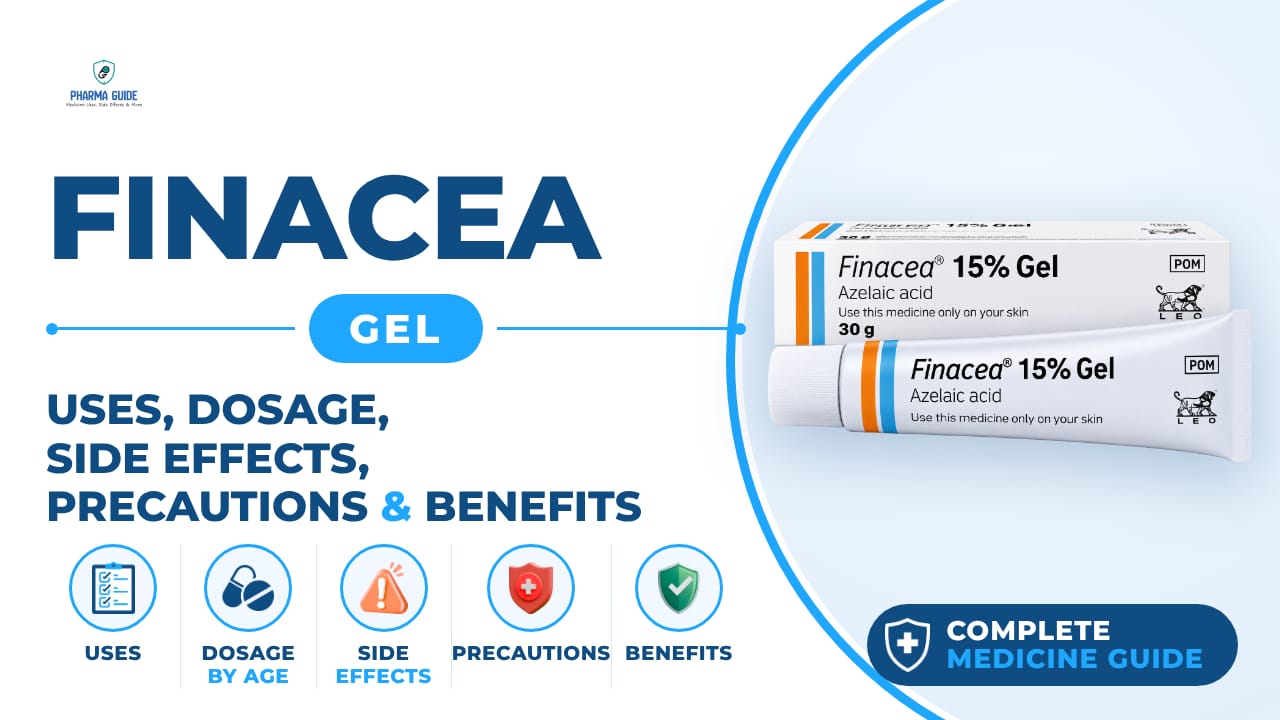
Finacea Gel: Uses, Dosage, Side Effects, Precautions and Alternates
| Generic name | azelaic acid topical |
|---|---|
| Drug class | Topical anti-acne agents / Topical anti-rosacea agents |
| Forms | Gel, Foam |
Quick overview
Finacea Gel contains azelaic acid and is a prescription topical medicine used to treat mild to moderate rosacea, specifically the inflammatory papules and pustules (red bumps and pus-filled bumps) it causes. It is available as a gel or foam and is applied to the skin twice daily. It may not be effective for treating skin redness alone, and common side effects include burning, stinging, dryness, and irritation of the skin.
What is Finacea Gel
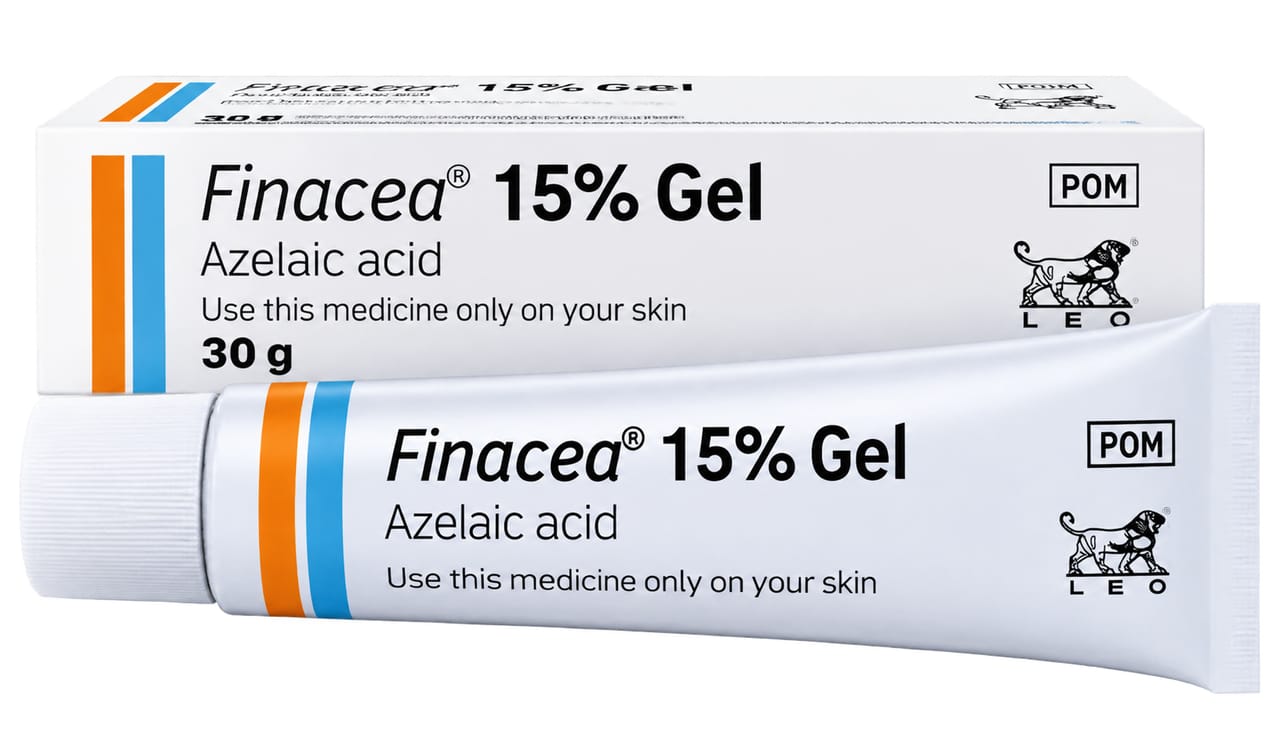
Finacea is a prescription medicine that contains azelaic acid, a naturally occurring acid. It comes as a topical gel or foam and is used on the skin to treat rosacea.
Finacea Gel uses
- Treats mild to moderate rosacea, specifically the inflammatory papules and pustules (red bumps and pus-filled bumps) it causes
- May not be effective for treating skin redness alone
Benefits of Finacea Gel
- Helps skin renew itself more quickly, reducing pimple and blackhead-type formation
- Helps kill bacteria that contribute to acne and rosacea
- Clinical trials showed it reduces the number of facial lesions in people with rosacea
How Finacea Gel works
Azelaic acid helps the skin renew itself faster, which reduces pimple and blackhead formation, and it helps kill bacteria linked to acne and rosacea. However, the exact way it works to treat rosacea is not fully understood.
Finacea Gel dosage
Apply exactly as prescribed by your doctor and follow all directions on the label. This medicine is for use on the skin only; do not swallow it. Wash your hands before and after applying, and shake the foam well before each use. Clean the affected area with a mild soap or soap-free cleansing lotion and pat dry with a soft towel before applying. Gently but thoroughly massage the medicine into the affected areas in the morning and evening.
Do not apply to sunburned, windburned, dry, chapped, irritated, or broken skin. Do not cover the treated area with a bandage or airtight wrap unless your doctor tells you to. You can apply cosmetics once the medicine has dried on your skin.
Symptoms may not improve for several weeks; keep using it as directed and tell your doctor if there is no improvement after 12 weeks. If you miss an application, apply it as soon as you remember, but skip it if it is almost time for your next dose; do not apply two doses at once. This medicine is not approved for use in anyone younger than 18 years old.
| Age group | Dose |
|---|---|
| Under 18 years | Safety and effectiveness not established |
| 18–64 years | Apply a thin layer twice daily — morning and evening |
| 65+ years | Apply a thin layer twice daily — morning and evening |
Available forms and strengths
- Gel
- Foam
Side effects of Finacea Gel
Common
- Pain, burning, stinging, or tingling of the skin
- Dry or scaly skin
- Itching or other irritation
- Skin redness or discoloration
Serious
- Severe burning, stinging, or warmth
- Severe itching or tingling
- Severe redness, dryness, peeling, or other irritation
- Changes in skin color (including patches of lighter skin/hypopigmentation)
- New or worsening breathing problems
- Signs of an allergic reaction: hives, difficulty breathing, swelling of the face, lips, tongue, or throat
Warnings and precautions
- It is not known for sure if Finacea is safe to use during pregnancy, as it hasn't been well studied in pregnant women. Tell your doctor if you are pregnant.
- It isn't known for certain if Finacea is safe while breastfeeding. Azelaic acid may pass into breast milk, so caution is advised, and you should avoid applying the medicine to your nipple area.
- For external use only. Do not use orally, in the eyes, or intravaginally. Avoid contact with the eyes, mouth, and other mucous membranes. If it gets into the eyes, rinse thoroughly with plenty of water.
- May cause burning, stinging, itching, dryness, redness, or irritation, especially during the first few weeks. If severe or persistent irritation occurs, stop treatment and consult a healthcare professional.
- Avoid harsh skin products, including alcoholic cleansers, astringents, abrasives, and peeling agents, as they may increase irritation. Avoid occlusive dressings or tight coverings over the treated area.
- Avoid Finacea if allergic to azelaic acid or any ingredient. Stop use if swelling of the face/eyes, hives, breathing difficulty, or other serious allergic reactions occur.
- Rare cases of hypopigmentation have been reported. People with darker complexions should monitor for unusual lightening of the skin.
- Your doctor may recommend avoiding alcoholic drinks, since they can trigger flushing or redness of the skin during treatment, and alcohol has been linked to increased rosacea risk.
- Wash hands immediately after application. Cosmetics can be applied after the gel has dried. Avoid foods and drinks that may worsen rosacea flushing, particularly spicy foods, very hot foods/drinks, and alcohol.
- Worsening of asthma has been reported with azelaic acid formulations. Consult a healthcare professional if asthma symptoms worsen during treatment.
- Avoid getting this medicine in your eyes, nose, mouth, rectum, or vagina.
- Do not use on sunburned, windburned, dry, chapped, irritated, or broken skin. Wait until the skin has healed before using this medicine.
- Do not cover the treated area after applying, as this could cause too much medicine to be absorbed and could be harmful.
- There have been reports of worsening asthma in people using azelaic acid, the active drug in Finacea. Tell your doctor if you have ever had asthma.
- There have been isolated reports of skin lightening (hypopigmentation) after using azelaic acid. This hasn't been well studied in people with dark skin, so they should be watched for early signs.
- Finacea foam is flammable and its contents are under pressure. Avoid open flames and smoking right after applying, and don't puncture or expose the can to high heat.
Storage
- Store at room temperature away from moisture and heat
- Throw away the foam 8 weeks after opening
- Finacea foam is flammable. Do not use near high heat or open flame. Do not smoke until the gel has completely dried on your skin
- Finacea gel should be stored at room temperature (77°F/25°C); for short periods, such as travel, it can be stored between 59°F and 86°F (15°C and 30°C)
- Avoid storing in areas that could get damp or wet, such as bathrooms
- After opening a pump bottle of gel or a can of foam, safely discard it after 8 weeks, even if medicine remains; tubes of gel can be used until their expiration date instead
When to see a doctor
- Get emergency medical help if you have signs of an allergic reaction: hives, difficulty breathing, or swelling of your face, lips, tongue, or throat.
- Stop using the medicine and call your doctor right away if you have severe burning, stinging, warmth, severe itching or tingling, severe redness, dryness, peeling or other irritation, changes in skin color, or new or worsening breathing problems.
- If this medicine gets in your eyes, rinse with water. Call your doctor if you have ongoing eye irritation after this happens.
- Seek emergency medical attention or contact a poison control center if anyone has accidentally swallowed the medicine.
Alternatives
- Azelaic acid 20% cream (Azelex)
- Metronidazole 0.75% cream/gel
- Ivermectin 1% cream (Soolantra)
Watch the video
FAQs
What is Finacea Gel used for?
Finacea Gel is a prescription medicine containing azelaic acid used to treat mild to moderate rosacea, specifically the inflammatory papules and pustules (red bumps and pus-filled bumps) it causes. It may not be effective for treating skin redness alone.
How do you apply Finacea Gel?
Wash your hands, clean the affected area with a mild soap or soap-free cleanser, and pat dry. Gently massage a thin layer of the gel into the affected areas twice daily, in the morning and evening. Avoid sunburned, windburned, dry, chapped, irritated, or broken skin, and do not cover the area with a bandage or airtight wrap.
How long does it take for Finacea Gel to work?
Symptoms may not improve for several weeks. You should keep using it as directed and tell your doctor if there is no improvement after 12 weeks.
What are the common side effects of Finacea Gel?
Common side effects include pain, burning, stinging, or tingling of the skin, dry or scaly skin, itching or other irritation, and skin redness or discoloration.
Can Finacea Gel cause skin lightening?
Yes, rare cases of hypopigmentation (lighter patches of skin) have been reported with azelaic acid. People with darker complexions should monitor for unusual skin lightening.
General information, not medical advice
Your prescriber and the leaflet in your pack know your situation. This page does not.
- Follow your prescriber and the leaflet
- Don't start, stop, or change a dose on your own
- Doses and warnings differ by country and product
Sources
Video
Related medicines

Injectafer Injection: Uses, Dosage, Side Effects, Precautions and Alternates
Iron products
Injectafer (ferric carboxymaltose) treats iron deficiency anemia and heart failure-related iron deficiency via IV. Learn uses, dosage, side effects, and

Gliclazide Tablet: Uses, Dosage, Side Effects, Precautions and Alternates
Sulfonylurea (hypoglycemic/antidiabetic agent)
Gliclazide Tablet is a sulfonylurea for type 2 diabetes that boosts insulin release. Learn about dosage, side effects, warnings, and precautions.