
Safety
General information, not medical advice
Your prescriber and the leaflet in your pack know your situation. This page does not.
- Follow your prescriber and the leaflet
- Don't start, stop, or change a dose on your own
- Doses and warnings differ by country and product
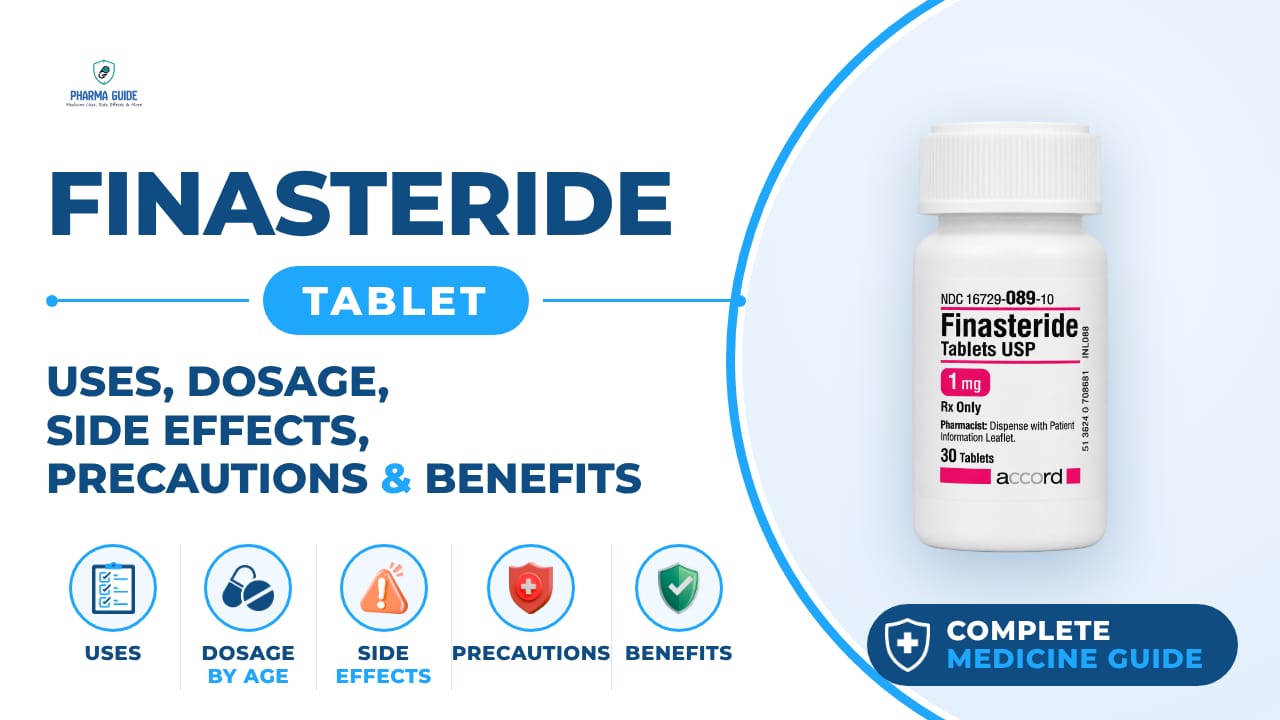
Finasteride Tablet: Uses, Dosage, Side Effects, Precautions and Alternates
| Generic name | Finasteride |
|---|---|
| Drug class | 5-alpha-reductase inhibitor (Type II 5α-reductase inhibitor) |
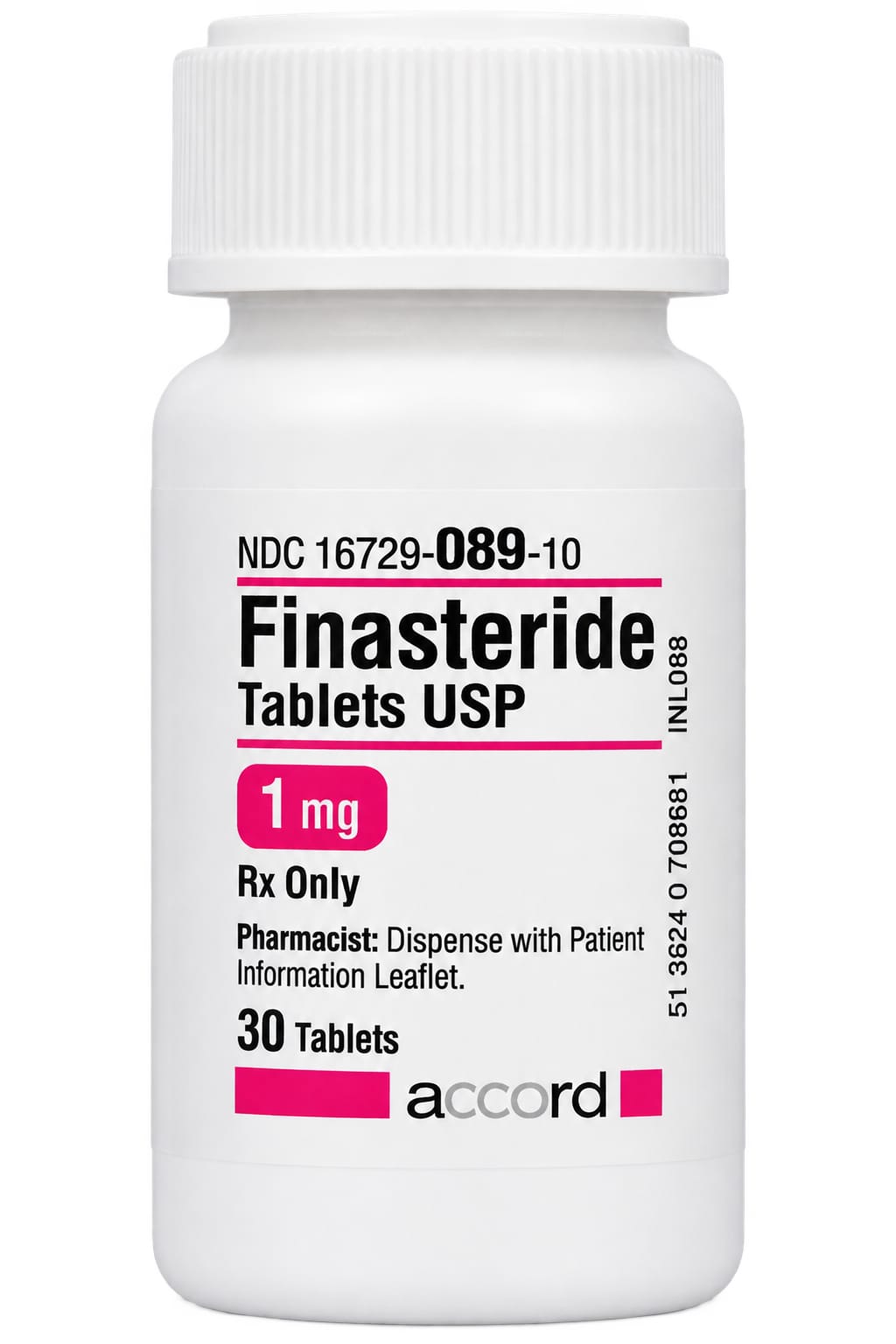
| Forms | Tablet (1 mg), Tablet (5 mg) |
Quick overview
Finasteride Tablet (generic name Finasteride) is a prescription medicine belonging to the 5-alpha-reductase inhibitor class. It is used by men to treat male pattern hair loss and, at a higher dose, to treat an enlarged prostate (benign prostatic hyperplasia). It works by lowering a hormone called DHT (dihydrotestosterone) in the body. It is for use in men only and should be taken exactly as prescribed by a doctor.
What is Finasteride Tablet
Finasteride is a prescription tablet that lowers a hormone called DHT (dihydrotestosterone) in the body. It is used by men to treat male pattern hair loss, and a higher-dose version is used to treat an enlarged prostate (benign prostatic hyperplasia).
Finasteride Tablet uses
- Treatment of male pattern hair loss (androgenetic alopecia) in men to increase hair growth on the scalp and prevent further hair loss
- Treatment of benign prostatic hyperplasia (enlarged prostate) at a higher dose, to improve urinary flow and reduce the risk of urinary retention and need for surgery
Benefits of Finasteride Tablet
- Men with mild to moderate hair loss can expect increased hair growth and reduced further hair loss
- No need to change your usual hair care routine such as shampooing or haircuts while taking this medicine
How Finasteride Tablet works
Finasteride blocks an enzyme that turns testosterone into a hormone called DHT. Men with pattern hair loss have higher DHT levels in the balding part of the scalp, so lowering DHT there helps hair grow back and slows further loss.
Finasteride Tablet dosage
Take this medicine only when prescribed by your doctor, and continue until your doctor tells you to stop. Take it at the same time each day. It can be taken with or without food. Swallow the tablet whole with a glass of water; do not crush or break it. This medicine is for men only — do not give it to women or children.
It takes time to work: daily use for three months or more may be needed before you notice increased hair growth or less hair loss. If you stop taking it, your hair loss is likely to come back. Taking it more than once a day will not make it work faster or better.
If you miss a dose, take it as soon as you remember unless it is almost time for your next dose — in that case skip the missed dose. Never take a double dose.
| Age group | Dose |
|---|---|
| Under 18 Years | Not recommended |
| Adults (18–49 Years) | 1 mg once daily (hair loss) or 5 mg once daily (enlarged prostate) |
| Adults (50+ Years) | 5 mg once daily for prostate conditions; dose based on medical evaluation |
| Older Adults (65+ years) | Usually no adjustment required; monitor based on health condition |
Available forms and strengths
- Tablet (1 mg)
- Tablet (5 mg)
Side effects of Finasteride Tablet
Common
- Difficulty achieving or keeping an erection
- Less desire for sex
- Decreased amount of semen released during sex
- Problems with ejaculation
Serious
- Allergic reactions such as hives, skin rash, itchiness, or swelling of the lips, tongue, throat or face
- Breast swelling, tenderness, lumps, pain, or discharge from the nipples
- Male breast cancer (rare)
- Testicle pain
- Blood in the semen
- Depression, including suicidal thoughts, that may continue after stopping the medicine
- Muscle injury, muscle pain, muscle weakness
Warnings and precautions
- This medicine may increase the risk of a more serious, high-grade form of prostate cancer.
- This medicine can lower PSA test results, which are used to screen for prostate cancer, so tell your doctor you are taking it before any PSA test.
- Serious mood and mental health changes, including depression and suicidal thoughts, have been reported and may continue even after stopping treatment.
- Do not give this medicine to anyone else, even if they have the same condition.
- Women who are or may become pregnant should avoid contact with a male partner's semen while he is taking this medicine, or the partner should discontinue treatment.
- Women who are pregnant or may become pregnant must not take this medicine or handle crushed or broken tablets, because it may cause abnormalities of the sex organs in a male baby.
- This medicine is not meant for use in women, and it is not known whether it passes into breast milk.
- No dose change is needed for people with kidney problems, including reduced kidney function.
- People with liver problems should use this medicine with caution because it is processed by the liver.
- This medicine is not expected to affect your ability to drive or use machinery.
Storage
- Keep in a cool dry place where the temperature stays below 25°C
- Keep tablets in the blister pack until it is time to take them; never put them in another container
- Store away from moisture, heat or sunlight; do not store in the bathroom, near a sink, in the car, or on window sills
- Keep out of the reach and sight of children
- If you no longer need the medicine or it is out of date, take it to a pharmacy for safe disposal
- Do not use after the expiry date
When to see a doctor
- Get emergency help right away if you notice swelling of the lips, tongue, throat or face, or have trouble swallowing or breathing — this could be a serious allergic reaction.
- Tell your doctor immediately if you notice breast swelling, tenderness, lumps, pain, or nipple discharge, testicle pain, blood in semen, or feelings of severe sadness including suicidal thoughts.
- If you feel sad, want to hurt yourself, or have thoughts of ending your life, or others notice changes in your behavior, get medical help right away.
- If you think you have taken too much of this medicine, get medical help immediately even if you feel fine, by contacting your doctor, a hospital emergency department, or your local poison control center.
Alternatives
- Dutasteride
- Minoxidil
- Alfuzosin
Watch the video
FAQs
What is Finasteride Tablet used for?
It is used by men to treat male pattern hair loss and, at a higher dose, to treat an enlarged prostate (benign prostatic hyperplasia).
How does Finasteride Tablet work?
It blocks an enzyme that turns testosterone into DHT. Men with pattern hair loss have higher DHT levels in the balding scalp, so lowering DHT helps hair grow back and slows further loss.
How long does it take for Finasteride Tablet to work?
Daily use for three months or more may be needed before you notice increased hair growth or less hair loss. If you stop taking it, your hair loss is likely to come back.
What are the common side effects of Finasteride Tablet?
Common side effects include difficulty achieving or keeping an erection, less desire for sex, decreased semen amount, and problems with ejaculation.
Can women take Finasteride Tablet?
No, this medicine is not meant for use in women. Pregnant women or those who may become pregnant must not take it or handle crushed or broken tablets, as it may cause abnormalities of the sex organs in a male baby.
General information, not medical advice
Your prescriber and the leaflet in your pack know your situation. This page does not.
- Follow your prescriber and the leaflet
- Don't start, stop, or change a dose on your own
- Doses and warnings differ by country and product
Sources
- Australian Commission on Safety and Quality in Health Care - Medicine Finder (APO-Finasteride 1)
- Health Canada Product Monograph - Sanis Health Inc. Finasteride Tablets
- GoodRx - Finasteride Side Effects
- FDA Prescribing Information - Accord Healthcare Finasteride Tablets USP
- Drugs.com - Finasteride
- UK Package Leaflet - Finasteride 5 mg film-coated tablets (Aurobindo/Milpharm)
Video
Related medicines

Injectafer Injection: Uses, Dosage, Side Effects, Precautions and Alternates
Iron products
Injectafer (ferric carboxymaltose) treats iron deficiency anemia and heart failure-related iron deficiency via IV. Learn uses, dosage, side effects, and

Gliclazide Tablet: Uses, Dosage, Side Effects, Precautions and Alternates
Sulfonylurea (hypoglycemic/antidiabetic agent)
Gliclazide Tablet is a sulfonylurea for type 2 diabetes that boosts insulin release. Learn about dosage, side effects, warnings, and precautions.