
Safety
General information, not medical advice
Your prescriber and the leaflet in your pack know your situation. This page does not.
- Follow your prescriber and the leaflet
- Don't start, stop, or change a dose on your own
- Doses and warnings differ by country and product
Firvanq Liquid: Uses, Dosage, Side Effects, Precautions and Alternates
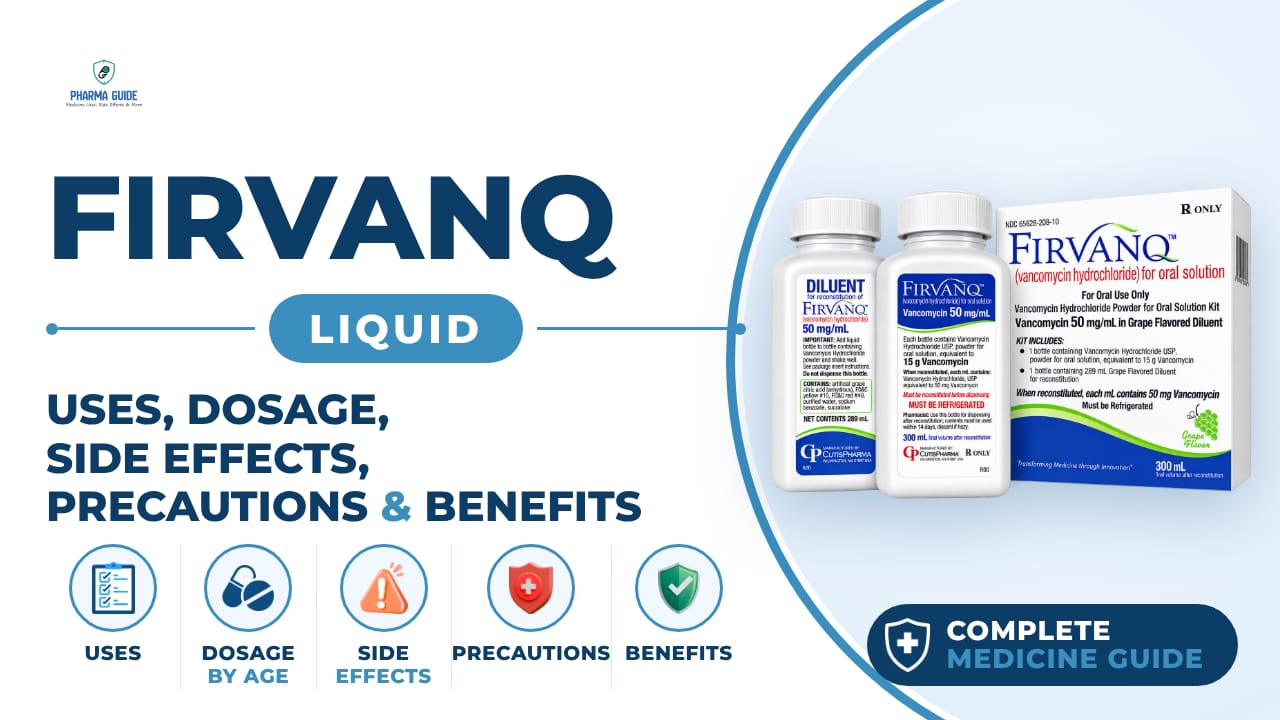
| Generic name | vancomycin hydrochloride |
|---|---|
| Drug class | Glycopeptide antibiotic |
| Forms | Powder for oral solution (liquid), Oral capsules (other vancomycin brands) |
Quick overview
Firvanq Liquid (vancomycin hydrochloride) is a glycopeptide antibiotic that works only in the intestines to treat Clostridium difficile-associated diarrhea and Staphylococcus aureus enterocolitis. It is not normally absorbed into the rest of the body and is not effective for infections outside the intestines. It is taken by mouth exactly as prescribed, usually for a 10-day course.
What is Firvanq Liquid
Firvanq is an antibiotic liquid that fights bacteria in the intestines. It works only in the gut and is not normally absorbed into the rest of the body.
Firvanq Liquid uses
- Treating Clostridium difficile-associated diarrhea in adults and children
- Treating enterocolitis (bowel inflammation) caused by Staphylococcus aureus, including methicillin-resistant strains
- Not effective for other types of infections outside the intestines
Benefits of Firvanq Liquid
- Effective against susceptible C. difficile
- Useful when a liquid formulation is needed
- Provides oral treatment for intestinal infection
- Has relatively low systemic absorption in most patients
How Firvanq Liquid works
Firvanq kills the bacteria causing the infection by stopping them from building their cell walls, which also disrupts their outer membrane and ability to make proteins they need to grow.
Firvanq Liquid dosage
Shake the reconstituted liquid well before each use and measure the dose with the oral dosing device provided, not a kitchen spoon. Take the medicine exactly as prescribed for the full length of treatment, even if you start feeling better sooner. Do not skip doses or stop early, since this can let the infection come back more resistant to treatment.
If you miss a dose, take it as soon as you remember, but skip it if it's almost time for the next dose; do not double up. This medicine only works in the intestines and will not treat infections elsewhere in the body or viral illnesses like a cold or flu.
| Age group | Dose |
|---|---|
| 12–17 years | Commonly 125 mg 4 times daily for 10 days for C. difficile infection |
| 18–64 years | Commonly 125 mg 4 times daily for 10 days |
| 65–74 years | Usually 125 mg 4 times daily for 10 days |
Available forms and strengths
- Powder for oral solution (liquid)
- Oral capsules (other vancomycin brands)
Side effects of Firvanq Liquid
Common
- Nausea
- Stomach/abdominal pain
- Low potassium levels
Serious
- Watery or bloody diarrhea that increases
- Hearing loss or ringing in the ears
- Kidney problems such as swelling, rapid weight gain, pain in the side or lower back, or little to no urination
- Low potassium symptoms such as leg cramps, constipation, irregular heartbeat, fluttering in the chest, increased thirst or urination, numbness, tingling, or muscle weakness
- Severe skin reactions such as rash, blisters, or peeling skin
- Signs of a severe allergic reaction, including hives, difficulty breathing, or swelling of the face, lips, tongue, or throat
Warnings and precautions
- This medicine must be taken by mouth only for these conditions — taking it another way will not work, and an injectable form must be used for other types of infections.
- Some patients, especially those with kidney problems or bowel inflammation, may absorb more of this medicine into their bloodstream than expected, raising the risk of side effects usually seen with higher doses.
- This medicine can cause kidney damage during or after treatment, and the risk is higher in people over 65.
- This medicine can cause hearing problems, which may be temporary or permanent.
- Stop taking this medicine right away and get medical help if you develop a skin rash, mouth sores, or blisters, as these can be signs of a serious skin reaction.
- Using this medicine when it isn't needed for a proven bacterial infection increases the risk of bacteria becoming resistant to treatment in the future.
- Serious eye damage, including permanent vision loss, has happened when vancomycin was given by injection directly into the eye during or after cataract surgery; this medicine is not meant to be used that way.
- Pregnancy: It isn't known for certain how this medicine affects pregnancy. Tell your doctor if you are or plan to become pregnant so they can weigh the benefits and risks.
- Breastfeeding: It isn't known if this medicine passes into breast milk in meaningful amounts, but the amount absorbed into the body is expected to be very small. Talk with your doctor about the benefits and risks while breastfeeding.
- Kidney: This medicine can cause kidney problems, especially in people over 65, even if their kidneys worked normally before treatment. Your doctor may need to check your kidney function during and after treatment.
- Liver: No routine hepatic dose adjustment is generally required.
- Alcohol: There are no known interactions between this medicine and alcohol, but heavy drinking can slow your immune response and make it harder for your body to fight infection.
- Driving: Usually does not impair driving.
Storage
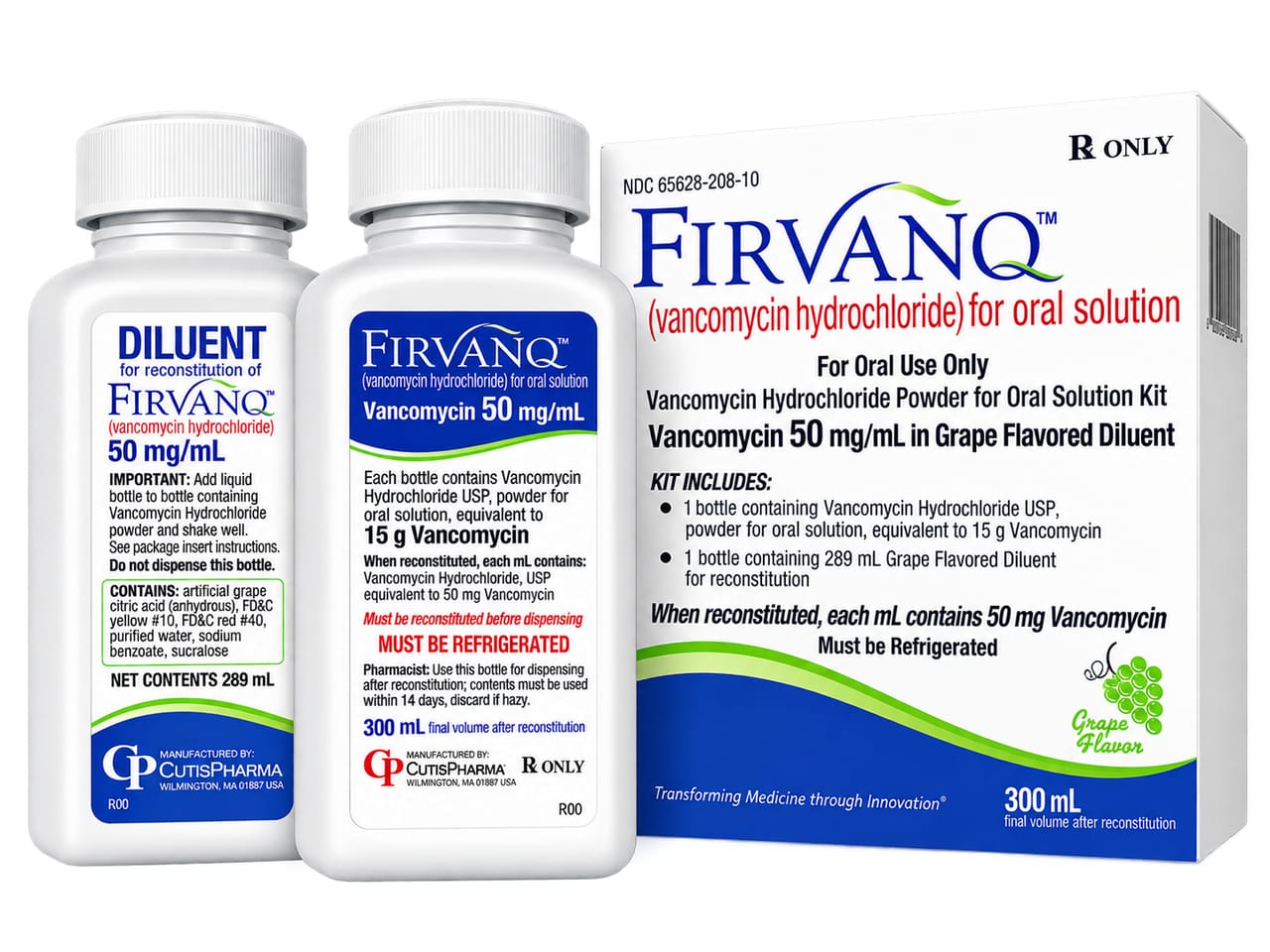
- Store the FIRVANQ kit at refrigerated conditions, 2°C to 8°C (36°F to 46°F).
- Store reconstituted solutions of FIRVANQ at 2°C to 8°C.
- Do not freeze. Keep container tightly closed. Protect from light.
- Discard the reconstituted solution of FIRVANQ after 14 days, or if it appears hazy or contains particulates.
When to see a doctor
- Get emergency help right away if you have signs of a serious allergic reaction, such as hives, trouble breathing, or swelling of the face, lips, tongue, or throat.
- Call your doctor right away if you notice worsening watery or bloody diarrhea, hearing loss or ringing in the ears, signs of kidney problems like swelling or reduced urination, or signs of low potassium like leg cramps, irregular heartbeat, or muscle weakness.
- Stop the medicine and seek medical attention immediately if you notice a skin rash, mouth sores, or blisters, as these can be early signs of a dangerous skin reaction.
- If you think you've taken too much of this medicine, get emergency medical help or contact a poison control center right away.
Alternatives
- Fidaxomicin
- Vancocin capsules
- Bezlotoxumab
Watch the video
FAQs
What is Firvanq Liquid used for?
Firvanq Liquid treats Clostridium difficile-associated diarrhea and Staphylococcus aureus enterocolitis, including methicillin-resistant strains, by working directly in the intestines. It is not effective for infections outside the intestines.
How is Firvanq Liquid taken?
Shake the reconstituted liquid well before each use and measure the dose with the provided oral dosing device, not a kitchen spoon. It should be taken exactly as prescribed for the full course, usually 10 days, even if symptoms improve sooner.
What is the typical dosage of Firvanq Liquid?
For ages 12 and older, the common dose is 125 mg four times daily for 10 days for C. difficile infection.
What are the serious side effects of Firvanq Liquid?
Serious side effects include worsening watery or bloody diarrhea, hearing loss or ringing in the ears, kidney problems, low potassium symptoms, severe skin reactions, and signs of a severe allergic reaction.
How should Firvanq Liquid be stored?
Store the FIRVANQ kit and reconstituted solution refrigerated at 2°C to 8°C, do not freeze, keep the container tightly closed, protect from light, and discard the reconstituted solution after 14 days or if it appears hazy or contains particulates.
General information, not medical advice
Your prescriber and the leaflet in your pack know your situation. This page does not.
- Follow your prescriber and the leaflet
- Don't start, stop, or change a dose on your own
- Doses and warnings differ by country and product
Sources
Video
Related medicines
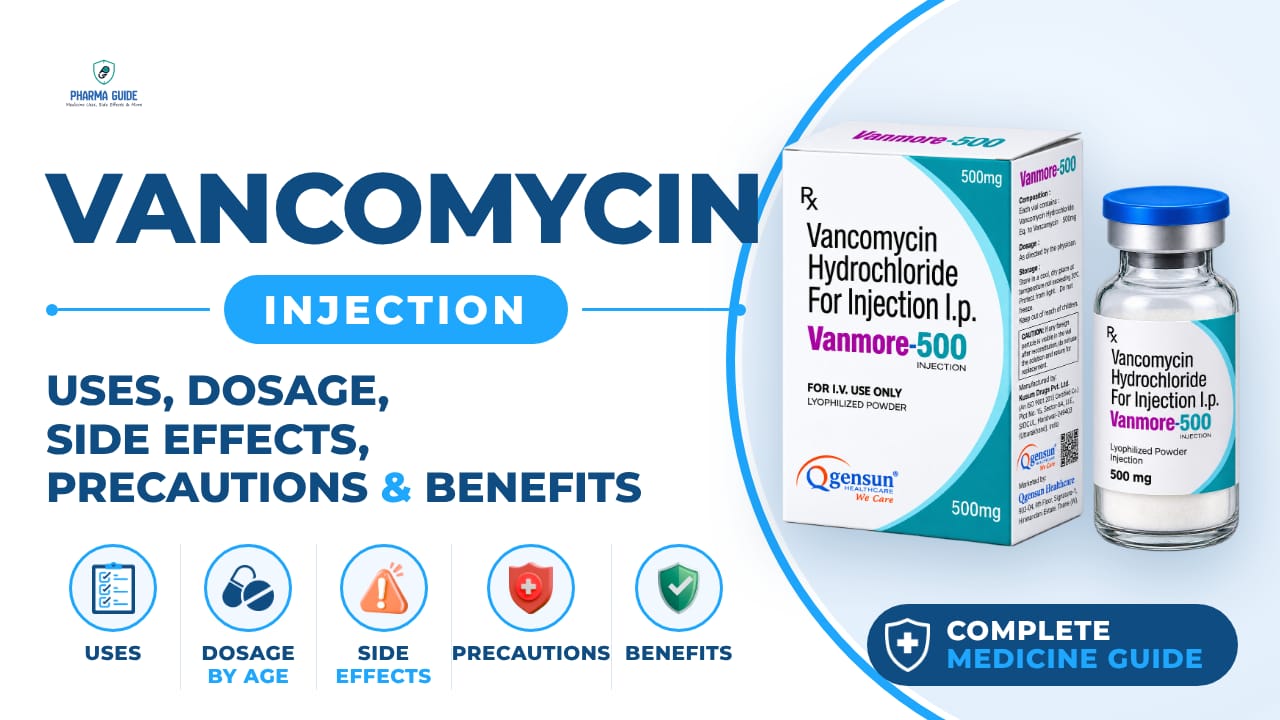
Vancomycin Injection: Uses, Dosage, Side Effects, Precautions and Alternates
Glycopeptide antibiotic
Vancomycin Injection treats serious bacterial infections like endocarditis and septicemia. Learn dosage, side effects, warnings, and storage tips here.

Injectafer Injection: Uses, Dosage, Side Effects, Precautions and Alternates
Iron products
Injectafer (ferric carboxymaltose) treats iron deficiency anemia and heart failure-related iron deficiency via IV. Learn uses, dosage, side effects, and