
Safety
General information, not medical advice
Your prescriber and the leaflet in your pack know your situation. This page does not.
- Follow your prescriber and the leaflet
- Don't start, stop, or change a dose on your own
- Doses and warnings differ by country and product
Vancomycin Injection: Uses, Dosage, Side Effects, Precautions and Alternates
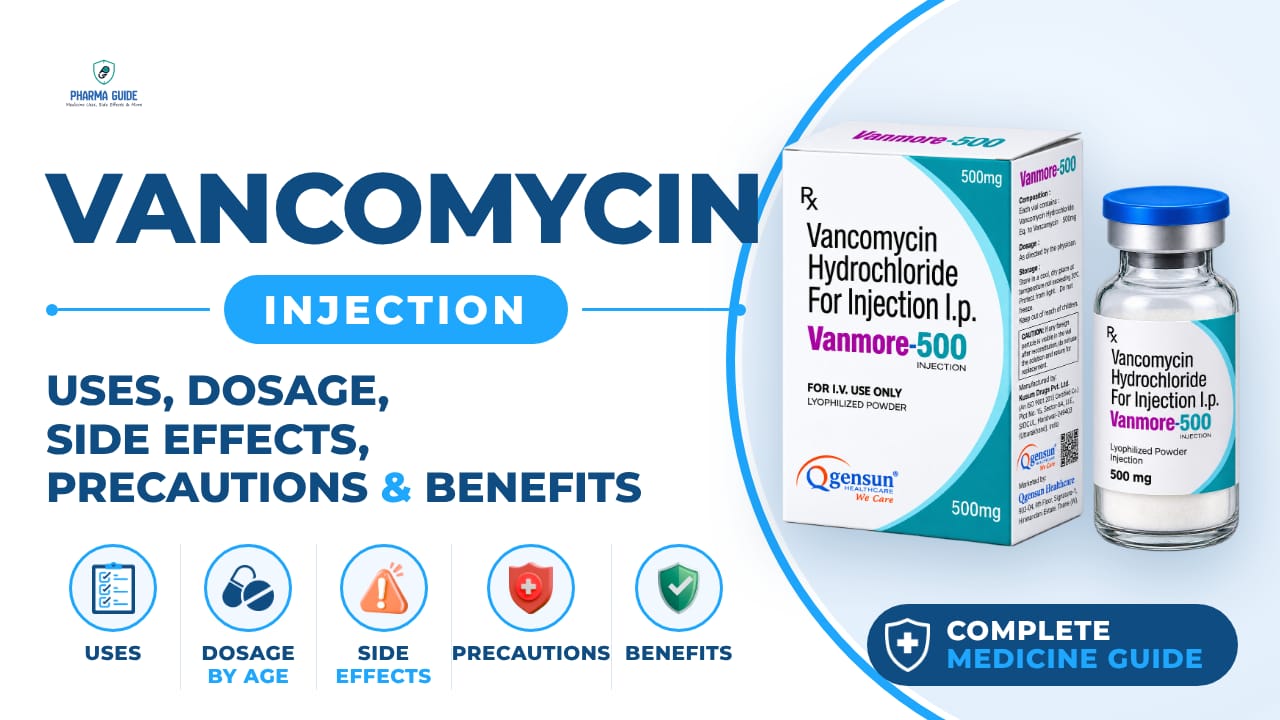
| Generic name | Vancomycin hydrochloride |
|---|---|
| Drug class | Glycopeptide antibiotic |
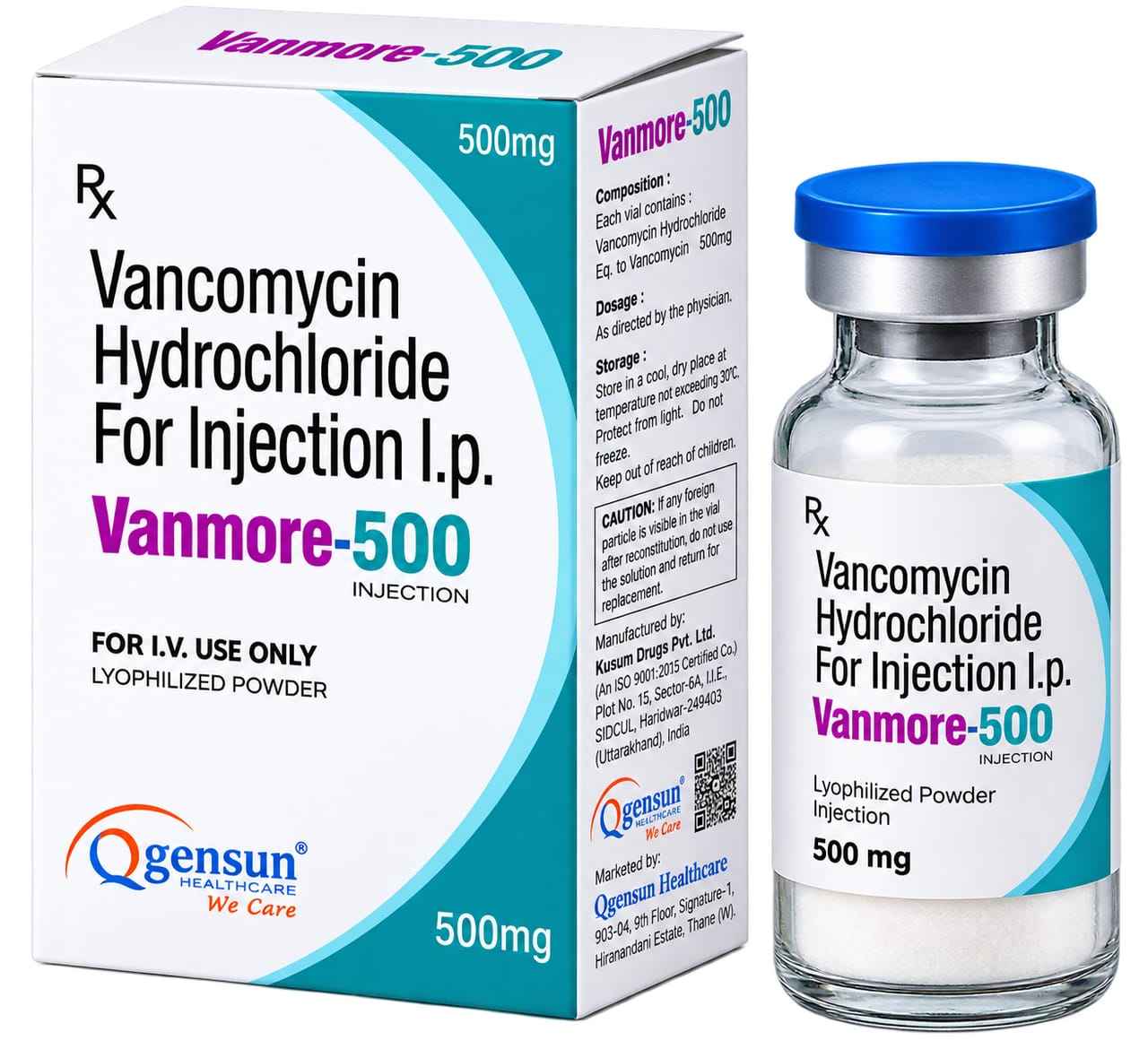
| Forms | Solution, Powder for solution, Single-dose fliptop vials containing 500 mg, 750 mg, or 1 g |
Quick overview
Vancomycin Injection is a glycopeptide antibiotic given intravenously to treat certain serious bacterial infections. It works by killing the bacteria that cause infections and will not work for colds, flu, or other viral infections. It is used for infections such as bone infections, endocarditis, lower respiratory tract infections, septicemia, and skin infections, and patients should begin to feel better during the first few days of treatment.
What is Vancomycin Injection
Vancomycin injection is an antibiotic used to treat certain serious infections caused by bacteria. It works by killing the bacteria that cause infections. It will not work for colds, flu, or other viral infections.
Vancomycin Injection uses
- Treating serious infections caused by bacteria
- Treating infections in many different parts of the body, such as bone infections, heart lining infections (endocarditis), lower respiratory tract infections, blood infections (septicemia), and skin infections
- Treating infections in people with heart valve disease or artificial heart valves who are allergic to penicillin
- Preventing endocarditis in certain patients having dental work or upper respiratory tract surgery
- Treating serious infections when other medicines may not work
Benefits of Vancomycin Injection
- Helps clear serious bacterial infections
- You should begin to feel better during the first few days of treatment
How Vancomycin Injection works
Vancomycin kills bacteria mainly by stopping them from building their cell walls. It also changes how the bacterial cell membrane works and affects the bacteria's RNA.
Vancomycin Injection dosage
Vancomycin injection comes as a powder that is mixed with fluid and given into a vein (intravenously), and also as a premixed product. It is given slowly, over a period of at least 60 minutes, once every 6 to 24 hours. Giving it too quickly can cause serious reactions.
You may receive it in a hospital, or you may use it at home. If you use it at home, your healthcare provider will show you how to infuse the medication. Be sure you understand these directions and ask if you have questions. A nurse or other trained health professional may give you this medicine through an IV catheter placed in one of your veins. The length of your treatment depends on the type of infection you have.
Continue your normal diet unless your doctor tells you otherwise. Use vancomycin until you finish the prescription, even if you feel better. Stopping too soon or skipping doses may leave the infection untreated and can lead to antibiotic-resistant bacteria.
| Age group | Dose |
|---|---|
| Newborns (0–28 days) | 10–15 mg/kg/dose, interval based on age & kidney function |
| 1 month–11 years | 15 mg/kg every 6 hours |
| 12–17 years | 15 mg/kg every 6–8 hours |
| 18–64 years | 15–20 mg/kg every 8–12 hours |
| 65+ years | Individualized dosing based on body weight, kidney function, and drug levels/exposure |
Available forms and strengths
- Solution
- Powder for solution
- Single-dose fliptop vials containing 500 mg, 750 mg, or 1 g
Side effects of Vancomycin Injection
Common
- Pain, redness, or swelling at the injection site
- Fever; chills
- Nausea
Serious
- Severe diarrhea with watery or bloody stools (up to 2 months after treatment); stomach pain or cramps
- Rash; difficulty breathing or swallowing; swelling of the eyes, face, throat, tongue, or lips; hoarseness
- Redness of the skin above the waist; pain and muscle tightness of the chest and back
- Peeling or blistering of the skin
- Hearing loss, roaring or ringing in the ears, or dizziness
- Urinating less often than usual (possible serious kidney problem)
- Infusion reactions such as dizziness, wheezing, shortness of breath, itching, hives, flushing of the upper body, or muscle pain or spasm of the chest and back
- Serious skin reactions such as toxic epidermal necrolysis, Stevens-Johnson syndrome, DRESS, and blistering or peeling skin
- Signs of a possible blood problem, such as unusual bleeding or bruising, sore throat, pale skin, or unusual tiredness
- Blurred vision, change in vision, or loss of vision
Warnings and precautions
- Tell your doctor if you are pregnant or plan to become pregnant. It is not known whether vancomycin causes harm to an unborn baby, so it should be used during pregnancy only if clearly needed.
- If you become pregnant while using it, call your doctor.
- Vancomycin passes into human breast milk. Talk with your doctor and weigh the benefits against the risks before using this medicine while breastfeeding.
- Tell your doctor if you have or have ever had kidney disease. Vancomycin should be used with caution in people with kidney problems because the risk of toxicity is higher, and blood tests may be needed to check kidney function.
- Giving vancomycin too quickly can cause a serious drop in blood pressure, including shock and, rarely, cardiac arrest. It should be given slowly in a dilute solution over at least 60 minutes.
- Vancomycin can cause hearing damage, which may be temporary or permanent. This is more likely at high doses, in people who already have hearing loss, or in those taking other medicines that can harm hearing.
- This medicine can cause diarrhea from Clostridium difficile that ranges from mild to severe, life-threatening colitis. It can start even up to two months after your last dose. Do not take any diarrhea medicine without checking with your doctor first.
- Using antibiotics when they are not needed increases your risk of getting an infection later that resists antibiotic treatment. Take the full course exactly as directed.
Storage
- Your healthcare provider will tell you how to store your medication. Store it only as directed and make sure you understand how to store it properly.
- Store the vials at 20 to 25°C (68 to 77°F), controlled room temperature.
- Dispose of unneeded medications so that pets, children, and other people cannot take them.
- Do not flush this medication down the toilet.
- Use a medicine take-back program. Talk to your pharmacist about take-back programs in your community.
- Keep all medication out of sight and reach of children, as many containers are not child-resistant. Always lock safety caps and place the medication up and away and out of sight and reach.
When to see a doctor
- Tell your doctor right away or get emergency medical care if you have signs of an infusion reaction, such as dizziness, wheezing, shortness of breath, itching, hives, flushing of the upper body, or muscle pain or spasm of the chest and back.
- Call your doctor right away or get emergency medical treatment if you have severe diarrhea with watery or bloody stools, trouble breathing or swallowing, swelling of the face, throat, tongue, or lips, peeling or blistering skin, hearing loss or ringing in the ears, or you urinate less often than usual.
- In case of overdose, call your local poison control center. If the person has collapsed, had a seizure, has trouble breathing, or cannot be awakened, call emergency services right away.
Alternatives
- Ceftaroline
- Dalbavancin
- Oritavancin
- Telavancin
- Clindamycin
- Trimethoprim + Sulfamethoxazole
- Doxycycline
Watch the video
FAQs
What is Vancomycin Injection used for?
It is used to treat serious bacterial infections such as bone infections, endocarditis, lower respiratory tract infections, septicemia, and skin infections. It is also used in people with heart valve disease or artificial valves who are allergic to penicillin, and to prevent endocarditis in certain patients having dental or upper respiratory tract surgery.
How is Vancomycin Injection given?
It is given intravenously, either as a powder mixed with fluid or as a premixed product, slowly over at least 60 minutes, once every 6 to 24 hours. Giving it too quickly can cause serious reactions. It may be given in a hospital or at home by a trained professional.
What are the serious side effects of Vancomycin Injection?
Serious side effects include severe diarrhea with watery or bloody stools, difficulty breathing or swallowing, swelling of the face or throat, peeling or blistering skin, hearing loss or ringing in the ears, reduced urination, infusion reactions, and signs of blood problems like unusual bleeding or bruising.
Can Vancomycin Injection affect hearing?
Yes, vancomycin can cause hearing damage that may be temporary or permanent, especially at high doses, in people who already have hearing loss, or those taking other medicines that can harm hearing.
Is Vancomycin Injection safe during pregnancy?
It is not known whether vancomycin harms an unborn baby, so it should only be used during pregnancy if clearly needed. Patients should tell their doctor if they are pregnant or plan to become pregnant.
General information, not medical advice
Your prescriber and the leaflet in your pack know your situation. This page does not.
- Follow your prescriber and the leaflet
- Don't start, stop, or change a dose on your own
- Doses and warnings differ by country and product
Sources
- MedlinePlus (https://medlineplus.gov/druginfo/meds/a601167.html)
- Mayo Clinic (https://www.mayoclinic.org/drugs-supplements/vancomycin-intravenous-route/description/drg-20068900)
- Pfizer/Hospira Vancomycin Hydrochloride for Injection labeling (https://labeling.pfizer.com/ShowLabeling.aspx?id=14317)
Video
Related medicines
Firvanq Liquid: Uses, Dosage, Side Effects, Precautions and Alternates
Glycopeptide antibiotic
Firvanq Liquid is an oral antibiotic that treats C. difficile diarrhea and Staph enterocolitis in the intestines. Learn dosing, side effects, and warnings.

Injectafer Injection: Uses, Dosage, Side Effects, Precautions and Alternates
Iron products
Injectafer (ferric carboxymaltose) treats iron deficiency anemia and heart failure-related iron deficiency via IV. Learn uses, dosage, side effects, and