
Safety
General information, not medical advice
Your prescriber and the leaflet in your pack know your situation. This page does not.
- Follow your prescriber and the leaflet
- Don't start, stop, or change a dose on your own
- Doses and warnings differ by country and product
Flecainide Tablet: Uses, Dosage, Side Effects, Precautions and Alternates
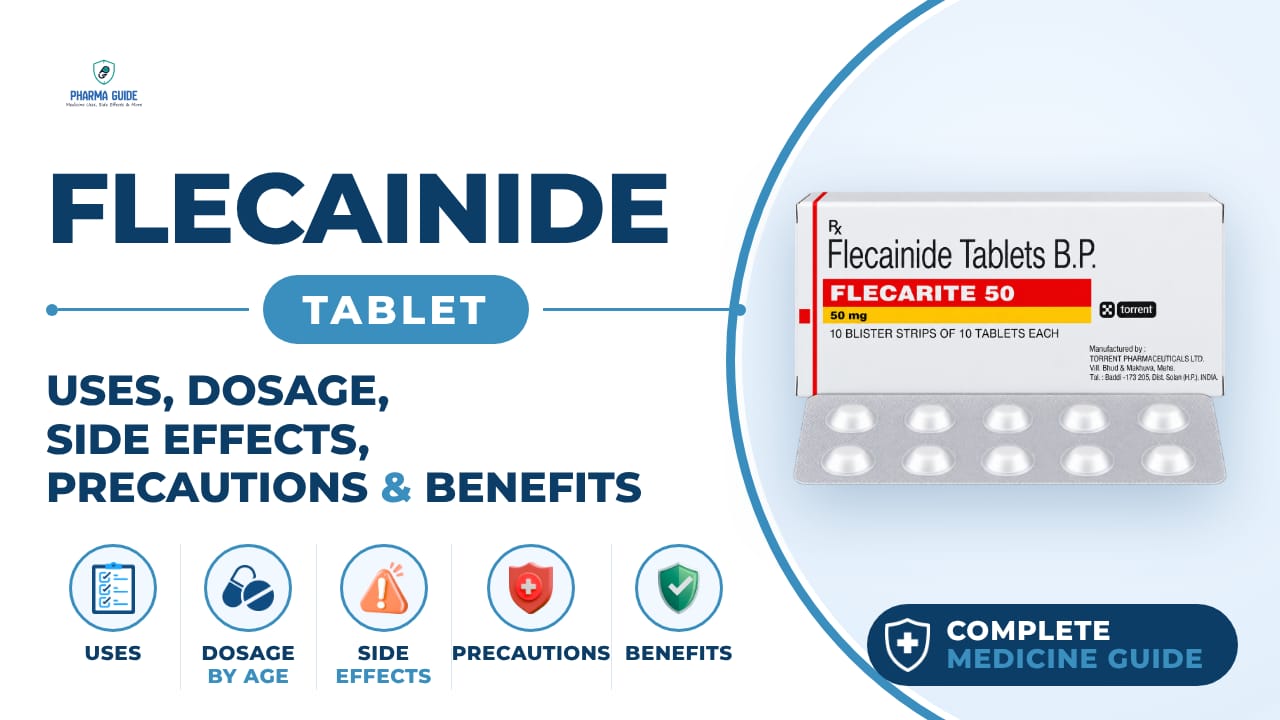
| Generic name | Flecainide Acetate |
|---|---|
| Drug class | Antiarrhythmic Agent |
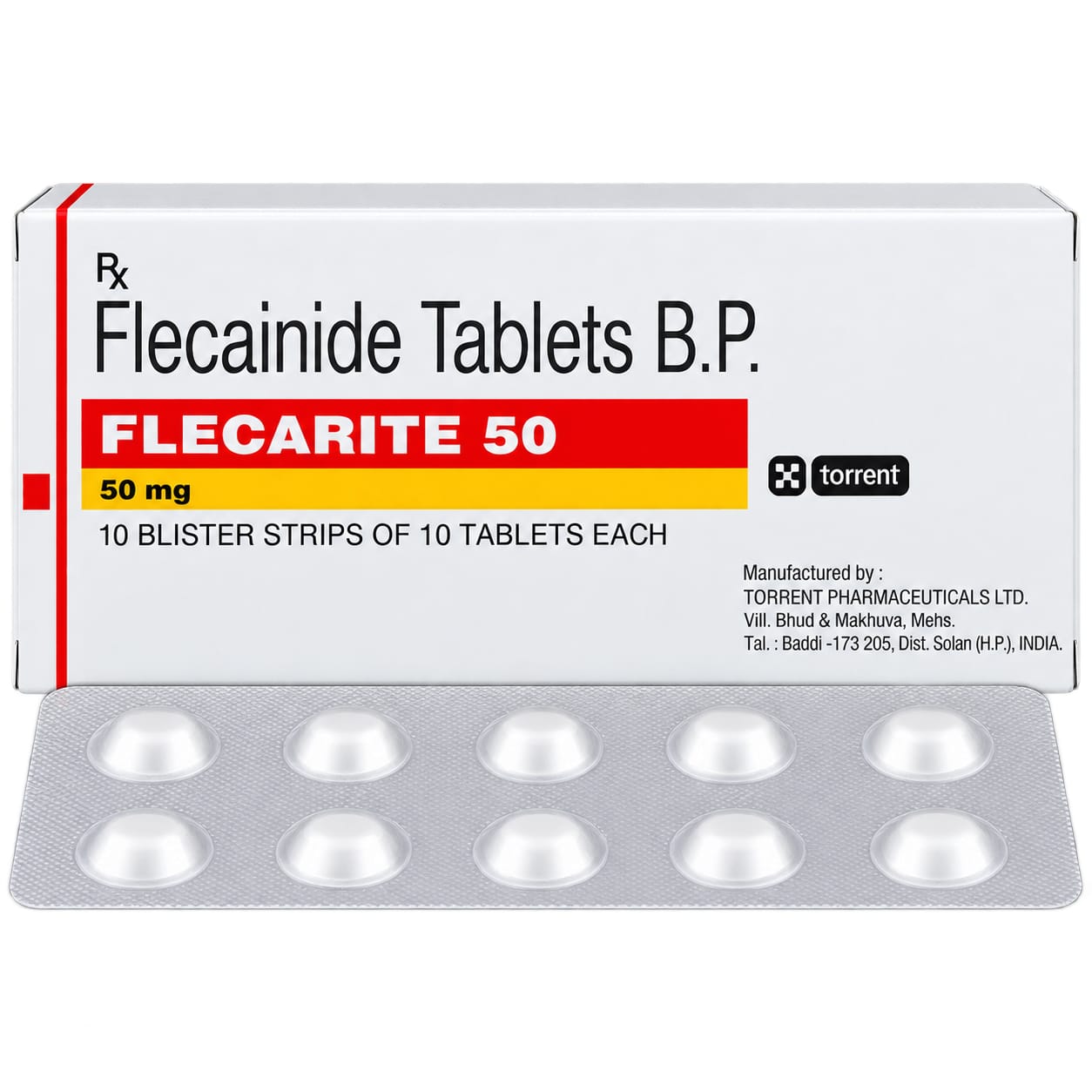
| Forms | Tablets, 50 mg and 100 mg |
Quick overview
Flecainide Tablet (Flecainide Acetate) is a prescription antiarrhythmic medicine used to help control certain serious, irregular heartbeats. It is reserved for arrhythmias that are disabling or life-threatening because it carries its own risk of causing dangerous heart rhythm problems. It works by slowing electrical signals in the heart to help restore a normal rhythm. It is available as tablets and must be used exactly as prescribed, with regular monitoring.
What is Flecainide Tablet
Flecainide is a prescription medicine used to help control certain serious, irregular heartbeats (arrhythmias). It is only for patients whose arrhythmias are disabling or life-threatening, because it carries its own risk of causing dangerous heart rhythm problems.
Flecainide Tablet uses
- Prevents paroxysmal supraventricular tachycardia (PSVT), a fast heart rate that starts above the lower chambers of the heart
- Prevents paroxysmal atrial fibrillation/flutter (PAF), a sudden, fast, chaotic heartbeat in the upper chambers of the heart
- Treats life-threatening sustained ventricular tachycardia, a severe fast rhythm in the lower chambers of the heart
Benefits of Flecainide Tablet
- Helps control certain abnormal heart rhythms
- Can reduce episodes of paroxysmal atrial fibrillation
- May help prevent certain supraventricular tachycardias
- Can help maintain a more regular heart rhythm
- May reduce symptoms such as palpitations in appropriately selected patients
How Flecainide Tablet works
Flecainide belongs to a group of medicines called antiarrhythmics. It works on the heart tissue by slowing down the electrical signals that travel through the heart, which helps the heart beat normally again.
Flecainide Tablet dosage
Take this medicine exactly as your healthcare professional tells you, and do not change your dose on your own. You may receive your first few doses in a hospital or clinic so your heart can be closely monitored. Your heart rhythm will likely be checked with an ECG (EKG), and you may need regular blood tests to check your liver and kidney function. Food and antacids do not affect how this medicine is absorbed.
If you miss a dose, take it as soon as you remember, but if it is almost time for your next dose, skip the missed one and continue your regular schedule — do not take two doses at once.
| Age group | Dose |
|---|---|
| Adults 18–64 years | Commonly 50 mg twice daily initially for certain supraventricular arrhythmias; adjusted by clinician |
Available forms and strengths
- Tablets, 50 mg and 100 mg
Side effects of Flecainide Tablet
Common
- Dizziness
- Vision problems or blurred vision
- Headache
- Nausea
- Tiredness
- Shortness of breath
- Chest pain
- Feeling of skipped or pounding heartbeats
- Constipation
- Abdominal pain
- Nervousness
- Skin rash
- Feeling weak
Serious
- New or worsened abnormal heart rhythms (arrhythmia) — rapid, slow, or irregular heartbeat
- Heart failure — shortness of breath, fatigue, swelling in ankles/legs/feet, cough, fluid retention, lack of appetite, rapid or irregular heartbeat
- Severe allergic reaction — difficulty swallowing or breathing, wheezing, hives, rash, swelling of face, lips, tongue or throat
- Blood disorders (anemia, leukopenia, granulocytopenia, thrombocytopenia, pancytopenia) — fatigue, fever, infections, bruising or bleeding easily
- Fainting (syncope) due to a sudden drop in blood pressure
- Kidney failure — confusion, itchiness, puffiness of face and hands, swelling of feet or ankles, urinating less or not at all, weight gain
- Convulsions, seizures, or nervous system problems — weakness or paralysis, difficulty speaking, confusion, hallucinations, loss of consciousness
Warnings and precautions
- This medicine is meant only for people with life-threatening irregular heartbeats, because antiarrhythmic drugs like this one can themselves cause dangerous heart rhythms and have been linked to an increased chance of sudden death.
- Do not take this medicine if you have certain types of heart block (second- or third-degree AV block, or bifascicular/trifascicular bundle branch block) unless you have a pacemaker.
- Do not take this medicine if you have cardiogenic shock, a life-threatening condition where the heart cannot pump enough blood to the body.
- Do not stop taking this medicine suddenly without talking to your doctor, as this can make your heart condition much worse.
- This medicine can cause new or worsened heart failure, especially in people who already have heart muscle problems or severe existing heart failure.
- This medicine should not be used during pregnancy unless there is no safer option for a life-threatening irregular heartbeat, because its effects on a human baby are not known.
- This medicine passes into breast milk. Because it could cause serious side effects in a nursing baby, you and your doctor should decide together whether to stop breastfeeding or stop the medicine.
- People with kidney problems may need a lower dose and more frequent blood tests, because the body clears this medicine more slowly when the kidneys are not working well.
- This medicine should not be used in people with significant liver problems unless the benefits clearly outweigh the risks, and if it is used, blood levels must be checked often.
- It is not known exactly how alcohol affects this medicine, but drinking alcohol may increase the risk of dizziness while taking it.
- This medicine can cause dizziness, light-headedness, fainting, and vision problems. Do not drive or operate machinery that requires full attention and coordination until you know how this medicine affects you.
Storage
- Store between 15° and 30°C and protect from light.
- Keep out of reach and sight of children.
When to see a doctor
- Get emergency help right away if you notice chest pain, shortness of breath, fainting, or a heartbeat that is fast, slow, pounding, or skipping — these can be signs of a serious heart rhythm change.
- Tell your healthcare professional right away if you have shortness of breath, swelling in your feet, ankles, or legs, sudden weight gain, or unusual tiredness, as these may be signs of new or worsening heart failure.
- Stop taking this medicine and get help right away if you have signs of a serious allergic reaction, such as trouble breathing or wheezing, swelling of the face, lips, mouth, tongue or throat, or hives.
- If you think you or someone you are caring for has taken too much of this medicine, contact a healthcare professional, a hospital emergency department, or your regional poison control center right away, even if there are no symptoms.
Alternatives
- Propafenone
- Sotalol
- Amiodarone
- Dofetilide
Watch the video
FAQs
What is Flecainide Tablet used for?
It is used to prevent paroxysmal supraventricular tachycardia, prevent paroxysmal atrial fibrillation/flutter, and treat life-threatening sustained ventricular tachycardia.
How does Flecainide Tablet work?
It is an antiarrhythmic that slows down the electrical signals traveling through the heart, helping the heart beat normally again.
What should I do if I miss a dose of Flecainide Tablet?
Take it as soon as you remember, but if it is almost time for your next dose, skip the missed one and continue your regular schedule without doubling up.
What are the serious side effects of Flecainide Tablet?
Serious side effects include new or worsened abnormal heart rhythms, heart failure, severe allergic reactions, blood disorders, fainting, kidney failure, and seizures or nervous system problems.
Who should not take Flecainide Tablet?
People with certain heart blocks (unless they have a pacemaker) or cardiogenic shock should not take it, and it should not be stopped suddenly without talking to a doctor.
General information, not medical advice
Your prescriber and the leaflet in your pack know your situation. This page does not.
- Follow your prescriber and the leaflet
- Don't start, stop, or change a dose on your own
- Doses and warnings differ by country and product
Sources
Video
Related medicines
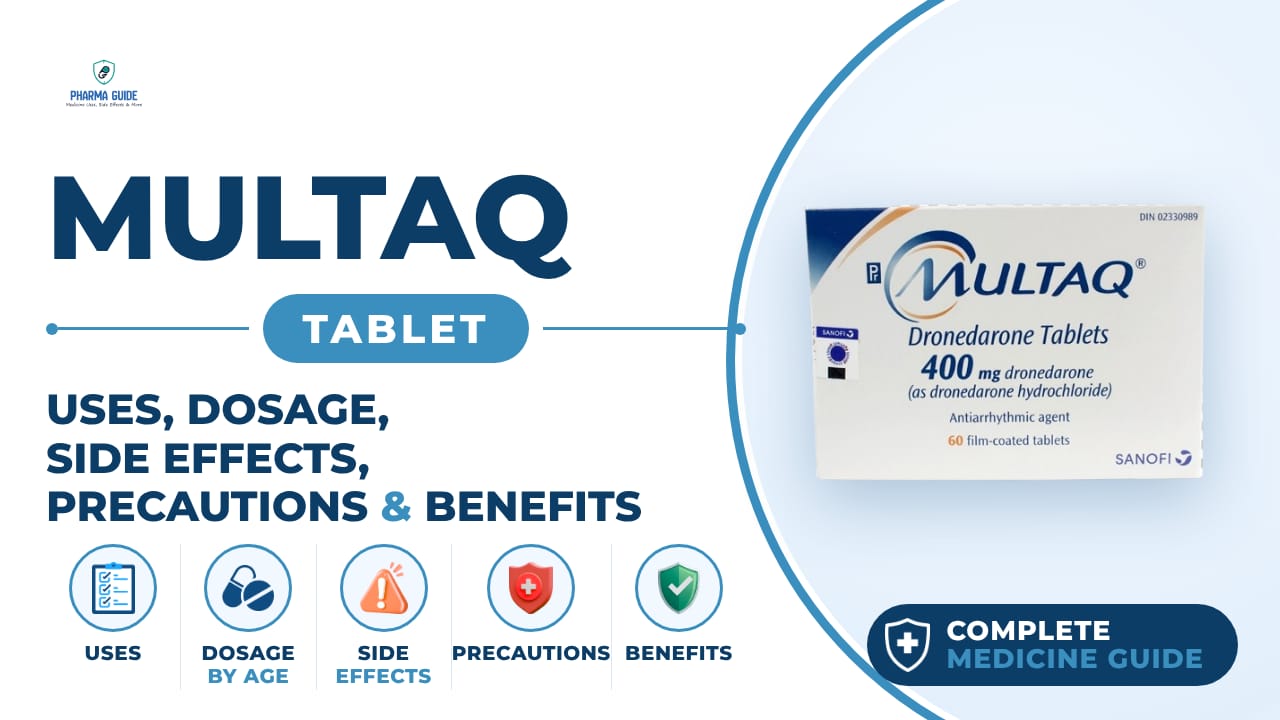
Multaq Tablet: Uses, Dosage, Side Effects, Precautions and Alternates
antiarrhythmic agent
Multaq Tablet (dronedarone) helps reduce hospitalization risk from atrial fibrillation. Learn about its uses, dosage, side effects, and precautions.
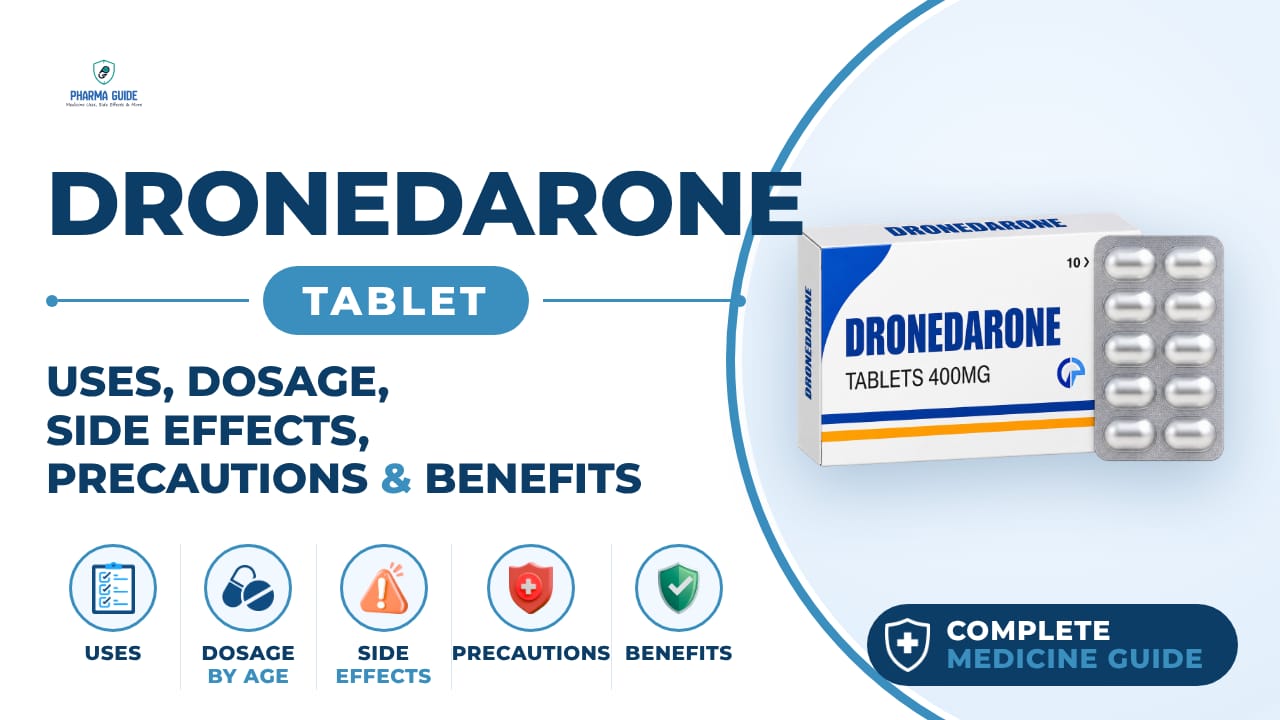
Dronedarone Tablet: Uses, Dosage, Side Effects, Precautions and Alternates
antiarrhythmic agent
Dronedarone Tablet helps reduce hospitalization risk from atrial fibrillation or flutter by maintaining normal heart rhythm. Learn dosage, side effects, and