
Safety
General information, not medical advice
Your prescriber and the leaflet in your pack know your situation. This page does not.
- Follow your prescriber and the leaflet
- Don't start, stop, or change a dose on your own
- Doses and warnings differ by country and product
Multaq Tablet: Uses, Dosage, Side Effects, Precautions and Alternates
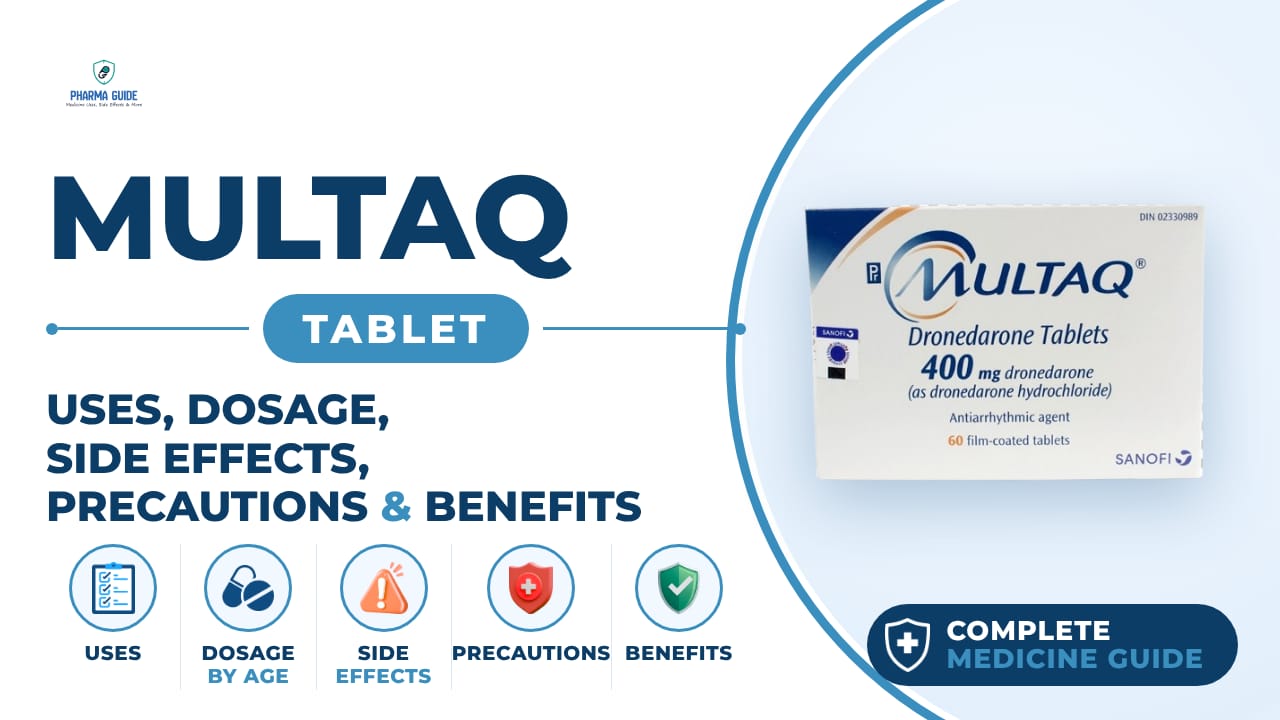
| Generic name | dronedarone |
|---|---|
| Drug class | antiarrhythmic agent |
| Forms | 400 mg oral tablets |
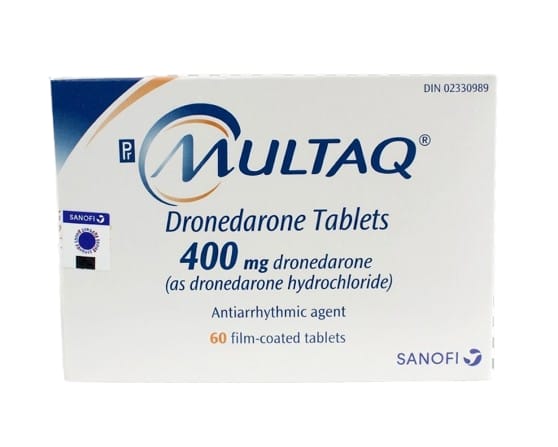
Quick overview
Multaq Tablet contains dronedarone, an antiarrhythmic agent. It is a prescription medicine taken to reduce the risk of being hospitalized for certain abnormal heart rhythms called atrial fibrillation. It is used in people who currently have a normal heart rhythm but have had short-lasting (paroxysmal) or longer-lasting (persistent) atrial fibrillation in the past. Multaq is available as 400 mg oral tablets, usually taken twice daily with food.
What is Multaq Tablet
Multaq is a prescription medicine taken to reduce the risk of being hospitalized for certain abnormal heart rhythms called atrial fibrillation. It is used in people who currently have a normal heart rhythm but have had short-lasting (paroxysmal) or longer-lasting (persistent) atrial fibrillation in the past.
Multaq Tablet uses
- Paroxysmal atrial fibrillation.
- Persistent atrial fibrillation.
- Reducing hospitalization risk in eligible patients with atrial fibrillation.
Benefits of Multaq Tablet
- Helps maintain normal heart rhythm.
- Helps reduce recurrence of atrial fibrillation.
- May reduce hospitalization related to atrial fibrillation.
- Helps manage certain irregular heart rhythms.
How Multaq Tablet works
Multaq helps keep the heart beating in a normal rhythm.
Multaq Tablet dosage
Take with food, as this helps your body absorb the medicine so it works better. It is usually taken twice daily, once with the morning meal and once with the evening meal. Avoid eating grapefruit or drinking grapefruit juice while taking this medicine, since it can increase your risk of side effects. Take it regularly and at the same times each day to get the most benefit. Do not stop taking it without asking your doctor first, and keep taking it even if you feel well. Get medical help right away if your heartbeat or pulse becomes fast or irregular. This medicine is not established as safe and effective for use in children.
| Age group | Dose |
|---|---|
| Under 18 years | Not recommended |
| 18–64 years | 400 mg, twice/day |
| 65+ years | 400 mg, twice/day |
Available forms and strengths
- 400 mg oral tablets
Side effects of Multaq Tablet
Common
- Diarrhea
- Nausea
- Stomach pain
- Vomiting
- Upset stomach (indigestion)
- Slow heartbeat
- Skin problems such as redness, rash, or itching
- Feeling unusually weak or tired
Serious
- Severe allergic reactions, including breathing problems, swelling of the face, lips, mouth, tongue, or throat, hives, or dizziness
- Heart failure, including new or worsening shortness of breath, swelling in feet, ankles, or legs, fast weight gain, or unusual tiredness
- Liver damage, including nausea, stomach pain, fever, itching, loss of appetite, weight loss, light-colored stool, dark urine, or yellowing of skin or eyes
- Lung damage (inflammation or scarring), including shortness of breath or cough
- Low potassium or magnesium levels in the blood
- Dangerous heart rhythm changes (QT prolongation and torsade de pointes), including fainting or fast or skipping heartbeat
- Kidney problems and kidney failure
- Stroke
Warnings and precautions
Multaq should not be used by people with permanent atrial fibrillation that cannot be corrected, since it can increase the risk of stroke and death. Multaq should not be used by people with severe heart failure or heart failure that recently required hospitalization, since it can increase the risk of death. Multaq doubles the risk of dying in people with decompensated heart failure or permanent atrial fibrillation. Do not take Multaq if you have certain heart block conditions without a pacemaker, a heart rate under 50 beats per minute, certain ECG abnormalities, or if you had liver or lung problems after using amiodarone. Do not drink grapefruit juice while taking Multaq, as it can raise the level of the medicine in your blood and increase the risk of side effects. Do not take Multaq if you are allergic to dronedarone or any of its ingredients.
Multaq may harm an unborn baby. Tell your health care provider if you are or plan to become pregnant. A pregnancy test will be done before starting treatment, and effective birth control should be used during treatment and for 5 days after the last dose.
Do not breastfeed while taking Multaq and for 5 days after the last dose, since it is not known if the medicine passes into breast milk.
Tell your health care provider if you have kidney problems, since Multaq may cause changes in kidney function, especially in people with heart failure.
Multaq should not be taken by people with severe liver problems, or by people who had liver problems after using a medicine called amiodarone. Liver tests may be done before and during treatment.
It is not known whether drinking alcohol affects Multaq.
Storage
- Store at room temperature, between 68 F and 77 F (20 C and 25 C)
- Can be exposed to temperatures between 59 F and 86 F (15 C and 30 C) for shorter periods, such as when transporting it
- Store in a cool, dry place
- Store away from light and moisture
- Do not store in the bathroom
- Keep all medications away from children and pets
- Do not flush medications down the toilet or pour them into a drain unless instructed to do so
- Properly discard this product when it is expired or no longer needed; consult your pharmacist or local waste disposal company
When to see a doctor
- Get help right away if you have signs of a serious allergic reaction, such as breathing problems or wheezing, racing heart, swelling of the face, lips, mouth, tongue, or throat, trouble swallowing, hives, or fainting.
- Tell your health care provider right away if you have signs of heart failure, such as shortness of breath, trouble breathing while lying down, swelling in your feet, ankles, or legs, fast weight gain, or unusual tiredness.
- Call your health care provider right away if you notice signs of liver damage, such as nausea, vomiting, stomach pain, fever, itching, loss of appetite, weight loss, light-colored stool, dark urine, or yellowing of the skin or eyes.
- Call your health care provider right away if you have symptoms of lung damage, such as shortness of breath or cough.
- Tell your health care provider right away if you faint or notice changes in your heart rate or rhythm, such as a fast or skipping heartbeat.
- Seek emergency care right away if you notice signs of a stroke, such as numbness or weakness in the face, arms, or legs on one side, confusion, trouble speaking, trouble seeing, or loss of balance.
- If you think you have taken too much Multaq, get medical help right away or contact a poison control center.
Alternatives
- Amiodarone
- Sotalol
- Propafenone
Watch the video
FAQs
What is Multaq Tablet used for?
Multaq is used to reduce the risk of hospitalization in people who currently have a normal heart rhythm but have had short-lasting (paroxysmal) or longer-lasting (persistent) atrial fibrillation in the past.
How should I take Multaq Tablet?
Multaq is usually taken twice daily, once with the morning meal and once with the evening meal, as food helps your body absorb the medicine better. It should be taken regularly at the same times each day, and you should not stop taking it without asking your doctor first.
Can I drink grapefruit juice while taking Multaq?
No, you should avoid eating grapefruit or drinking grapefruit juice while taking Multaq, as it can raise the level of the medicine in your blood and increase the risk of side effects.
Who should not take Multaq Tablet?
Multaq should not be used by people with permanent atrial fibrillation that cannot be corrected or by people with severe heart failure or heart failure that recently required hospitalization, since it can increase the risk of stroke and death.
What are the common side effects of Multaq Tablet?
Common side effects include diarrhea, nausea, stomach pain, vomiting, indigestion, slow heartbeat, skin problems such as redness, rash, or itching, and feeling unusually weak or tired.
General information, not medical advice
Your prescriber and the leaflet in your pack know your situation. This page does not.
- Follow your prescriber and the leaflet
- Don't start, stop, or change a dose on your own
- Doses and warnings differ by country and product
Sources
Video
Related medicines

Flecainide Tablet: Uses, Dosage, Side Effects, Precautions and Alternates
Antiarrhythmic Agent
Flecainide Tablet helps control serious irregular heartbeats like PSVT, atrial fibrillation, and ventricular tachycardia. Learn uses, dosage, side effects, and
Dronedarone Tablet: Uses, Dosage, Side Effects, Precautions and Alternates
antiarrhythmic agent
Dronedarone Tablet helps reduce hospitalization risk from atrial fibrillation or flutter by maintaining normal heart rhythm. Learn dosage, side effects, and