
Safety
General information, not medical advice
Your prescriber and the leaflet in your pack know your situation. This page does not.
- Follow your prescriber and the leaflet
- Don't start, stop, or change a dose on your own
- Doses and warnings differ by country and product
Flexon Tablet: Uses, Dosage, Side Effects, Precautions and Alternates
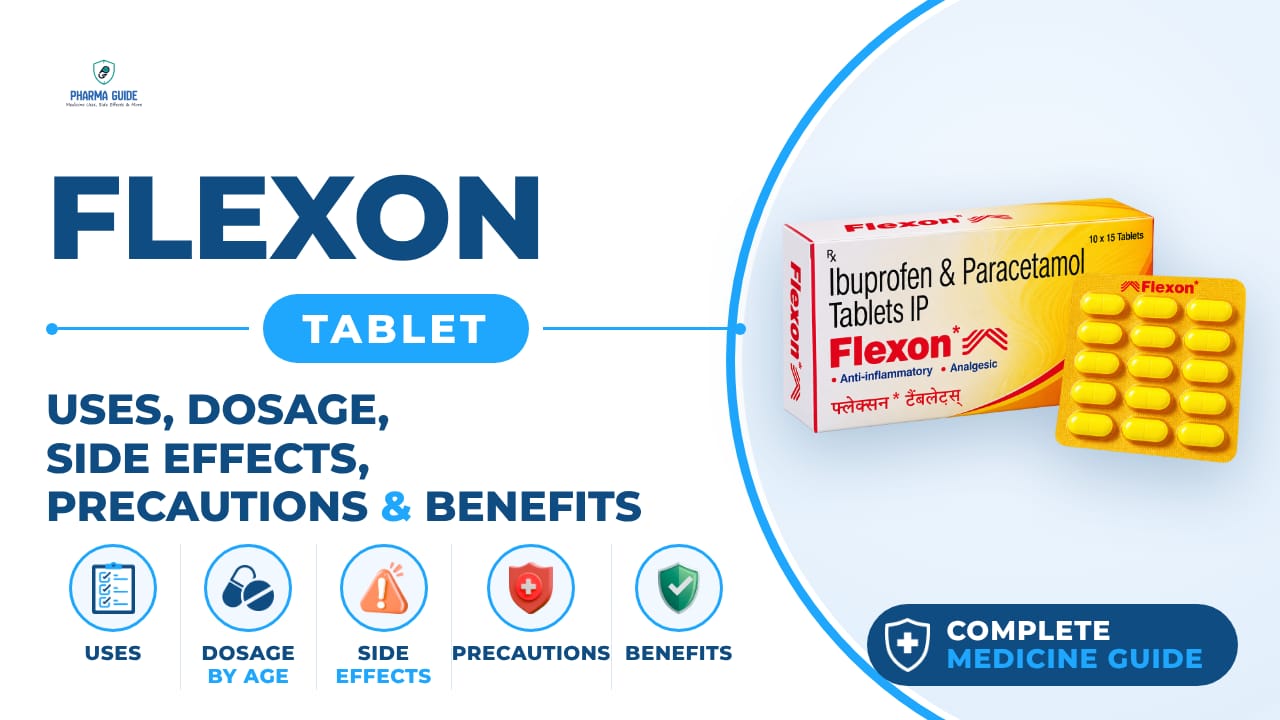
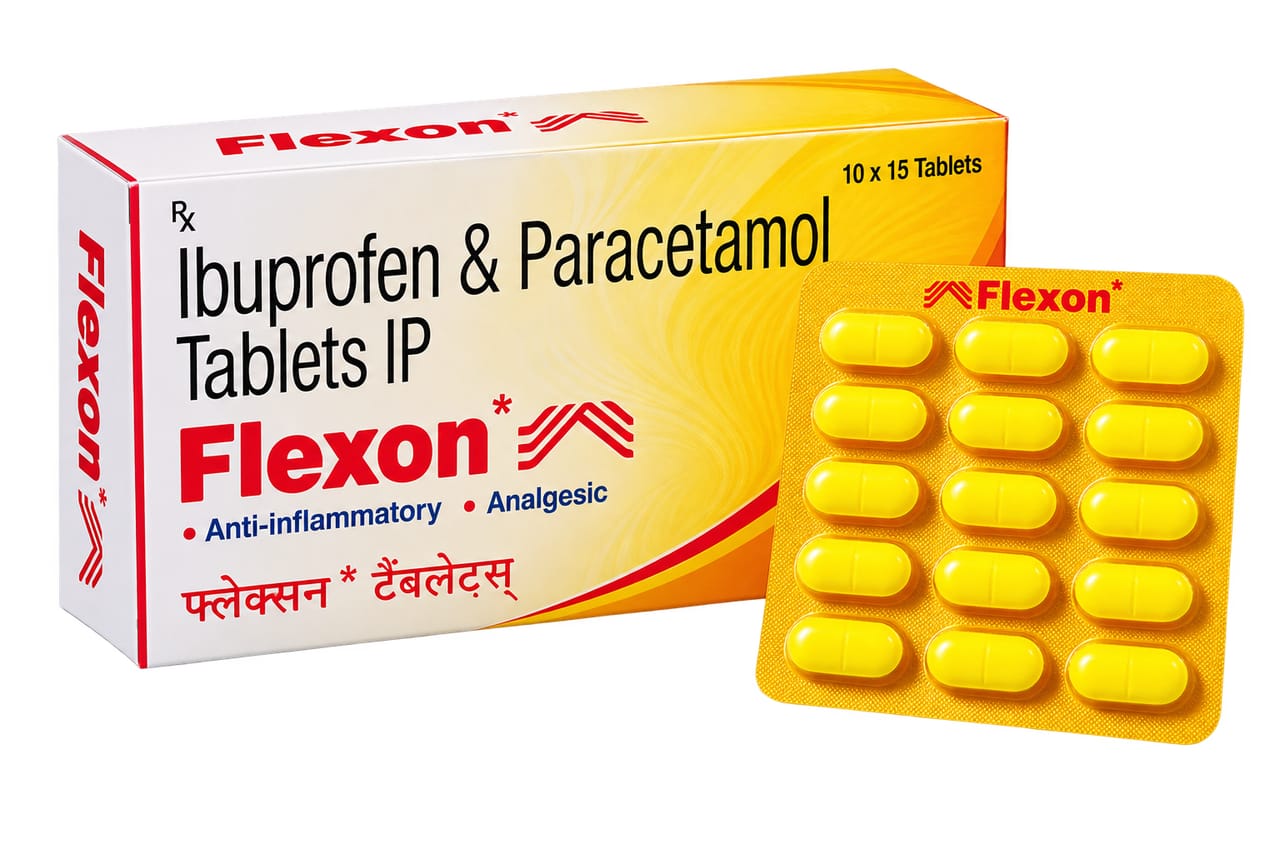
| Generic name | Paracetamol (325 mg) + Ibuprofen (400 mg) |
|---|---|
| Drug class | Analgesic and Antipyretic (Prostaglandin Synthesis Inhibitor / NSAID + Paracetamol combination) |
| Forms | Tablet |
Quick overview
Flexon Tablet is a combination medicine containing paracetamol (325 mg) and ibuprofen (400 mg). It is used to relieve pain, inflammation, and fever associated with conditions such as headache, toothache, back pain, joint pain, muscle aches, and menstrual cramps. It belongs to the drug class of Analgesic and Antipyretic (Prostaglandin Synthesis Inhibitor / NSAID + Paracetamol combination).
What is Flexon Tablet
Flexon Tablet is a combination medicine that contains ibuprofen (an anti-inflammatory painkiller) and paracetamol (which relieves pain and lowers fever). It is used to relieve pain, inflammation and fever linked with conditions such as headache, toothache, back pain, joint pain, muscle aches and menstrual cramps.
Flexon Tablet uses
- Fever and pain
- Mild to moderate pain
- Menstrual cramps
- Osteoarthritis
- Rheumatoid arthritis
- Gout
- Headache, toothache, back pain and joint pain
- Muscle aches
Benefits of Flexon Tablet
- Relieves everyday pain such as headache, toothache, back pain and joint pain
- Eases muscle aches and menstrual cramps
- Reduces swelling and inflammation
- Helps lower a raised body temperature (fever)
How Flexon Tablet works
Flexon Tablet contains two active ingredients. Ibuprofen is an NSAID that reduces pain, fever and inflammation by blocking cyclooxygenase (COX) enzymes, which make prostaglandins (chemical messengers that signal pain and inflammation). Paracetamol reduces pain and fever, mainly by lowering prostaglandin production in the central nervous system and acting on the part of the brain that controls temperature.
Flexon Tablet dosage
Swallow the tablet whole with a glass of water. Do not crush, chew, or break the tablet. Take the tablet with food to reduce stomach upset or irritation. Do not take more than the instructed dose without consulting your doctor. Do not stop using this medicine suddenly without speaking to your doctor first. If the medicine makes you drowsy, consider taking it at bedtime. Take it orally.
| Age group | Dose |
|---|---|
| Under 12 years | Not recommended |
| 12–17 years | 1 tablet up to 3 times daily, only if advised by a doctor |
| 18 years and older | 1 tablet up to 3 times daily, preferably after food |
Available forms and strengths
- Tablet — Paracetamol 325 mg + Ibuprofen 400 mg
Side effects of Flexon Tablet
Common
- Nausea or vomiting
- Rash
- Gastric or mouth ulcer
- Heartburn or indigestion
- Abdominal discomfort or stomach pain
- Constipation
- Fatigue
- Drowsiness
- Dizziness
- Loss of appetite
- Ringing or buzzing in the ears
Serious
- Bloody and cloudy urine
- Abnormal blood counts
- Decreased urine output
- Yellow colored eyes or skin
- Vomiting of blood
- Severe gastrointestinal bleeding
- Fatal skin allergies (rashes, hives, fever, or other allergic symptoms)
Warnings and precautions
- This medicine may cause severe gastrointestinal bleeding and perforation after prolonged use, sometimes without warning symptoms.
- The risk is higher in older people and those with a history of gastrointestinal disease.
- This medicine is not recommended in chronic alcoholic patients because of the increased risk of severe liver damage.
- This medicine may cause fatal skin allergies without warning in some people. Report any rashes, hives, fever or other allergic symptoms to your doctor without delay.
- This medicine is not recommended for use in children. It should be used with extreme caution in malnourished patients due to the increased risk of severe adverse effects.
- It should not be used if you are allergic to paracetamol, ibuprofen or any other NSAIDs, or in people with NSAID-induced asthma, recent heart bypass surgery, or peptic ulcer/gastrointestinal bleeding disorders.
- This medicine is not recommended during pregnancy unless absolutely necessary. Discuss all the risks and benefits with your doctor before taking it.
- This medicine is not recommended while breastfeeding unless absolutely necessary. Discuss all the risks and benefits with your doctor before taking it.
- This medicine is not recommended in people with impaired kidney function linked to excessive painkiller use. If you have a history of kidney problems, consult your doctor before using it.
- This medicine is not recommended in severe liver impairment and should be used with extreme caution in people with liver problems or active liver disease. Close monitoring of liver function is needed. Discuss any liver problems with your doctor before starting.
- Avoid alcohol during treatment. It raises the risk of serious side effects such as severe gastrointestinal bleeding, dizziness, fatigue, weakness, rashes, nausea, joint pain and fever, as well as liver damage.
- Dizziness or drowsiness can occur with this medicine. Do not drive or operate heavy machinery if you experience these effects.
Storage
- Store in a cool place, ideally below 30°C.
- Keep it safe from direct sunlight, heat, and moisture.
- Keep the medicine out of reach of children.
- Use the medicine before its expiry date.
When to see a doctor
- Get emergency medical treatment or contact your doctor in case of an overdose.
- Report stomach upset, dizziness or a rash to your doctor promptly.
- Report any signs of allergy such as rashes, hives, or fever to your doctor without delay.
Alternatives
- Zupar Tablet
- Fenceta Tablet
- Ibugesic Plus Tablet
Watch the video
FAQs
What is Flexon Tablet used for?
Flexon Tablet is used to relieve pain, inflammation, and fever linked with conditions such as headache, toothache, back pain, joint pain, muscle aches, menstrual cramps, osteoarthritis, rheumatoid arthritis, and gout.
What are the active ingredients in Flexon Tablet?
Flexon Tablet contains paracetamol (325 mg) and ibuprofen (400 mg), which together relieve pain, reduce inflammation, and lower fever.
What is the dosage of Flexon Tablet for adults?
Adults aged 18 years and older can take 1 tablet up to 3 times daily, preferably after food. It should be swallowed whole with water and not crushed or chewed.
What are the common side effects of Flexon Tablet?
Common side effects include nausea, vomiting, rash, gastric or mouth ulcer, heartburn, indigestion, abdominal discomfort, constipation, fatigue, drowsiness, dizziness, loss of appetite, and ringing in the ears.
Can Flexon Tablet be taken during pregnancy?
Flexon Tablet is not recommended during pregnancy unless absolutely necessary. The risks and benefits should be discussed with a doctor before taking it.
General information, not medical advice
Your prescriber and the leaflet in your pack know your situation. This page does not.
- Follow your prescriber and the leaflet
- Don't start, stop, or change a dose on your own
- Doses and warnings differ by country and product
Sources
Video
Related medicines

Injectafer Injection: Uses, Dosage, Side Effects, Precautions and Alternates
Iron products
Injectafer (ferric carboxymaltose) treats iron deficiency anemia and heart failure-related iron deficiency via IV. Learn uses, dosage, side effects, and

Gliclazide Tablet: Uses, Dosage, Side Effects, Precautions and Alternates
Sulfonylurea (hypoglycemic/antidiabetic agent)
Gliclazide Tablet is a sulfonylurea for type 2 diabetes that boosts insulin release. Learn about dosage, side effects, warnings, and precautions.