
Safety
General information, not medical advice
Your prescriber and the leaflet in your pack know your situation. This page does not.
- Follow your prescriber and the leaflet
- Don't start, stop, or change a dose on your own
- Doses and warnings differ by country and product
Flonase Nasal Spray: Uses, Dosage, Side Effects, Precautions and Alternates
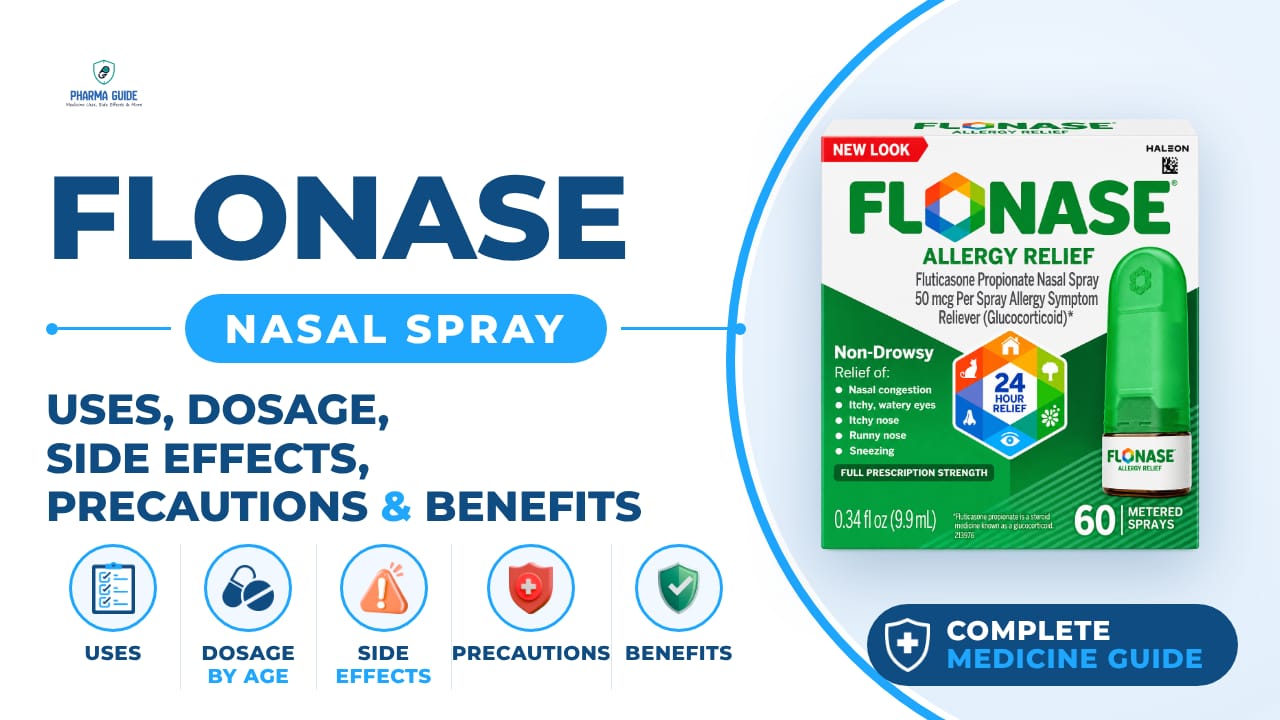
| Generic name | Fluticasone propionate |
|---|---|
| Drug class | Corticosteroid (nasal steroid) |
| Forms | Nasal spray |
Quick overview
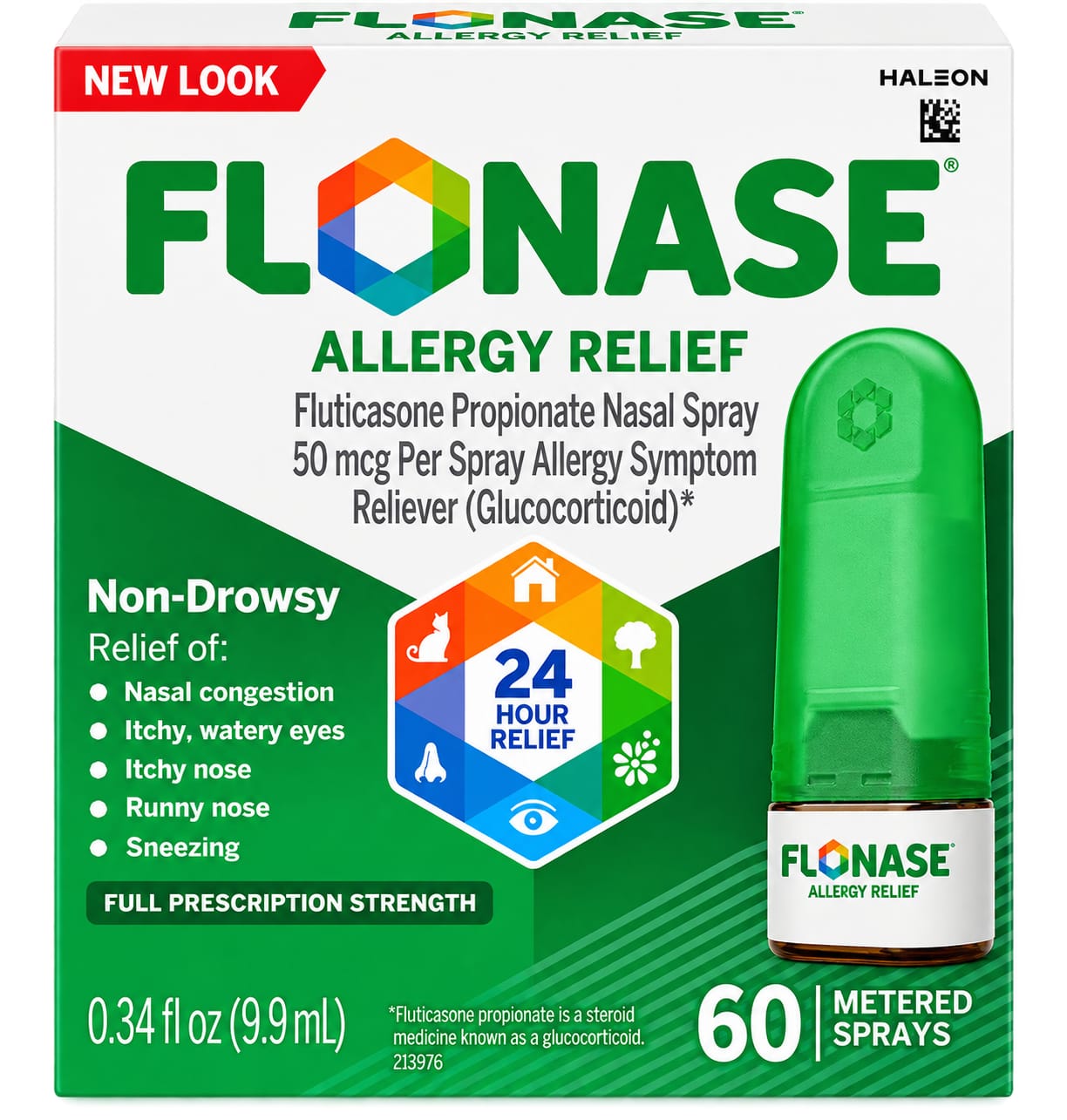
Flonase Nasal Spray contains fluticasone propionate, a corticosteroid used inside the nose to manage nasal symptoms in adults and children aged 4 years and older. It helps treat non-allergy related nasal symptoms such as runny nose, stuffy nose, sneezing, and nasal itching. Flonase works by reducing inflammation in the nasal lining and is intended for regular daily use. It is available as a nasal spray.
What is Flonase Nasal Spray
Flonase is a corticosteroid nasal spray used to manage nasal symptoms in adults and children aged 4 years and older. It is a synthetic steroid that reduces inflammation in the lining of the nose.
Flonase Nasal Spray uses
- Management of nasal symptoms of perennial nonallergic rhinitis in adults and children aged 4 years and older
- Treats non-allergy nasal symptoms such as runny nose, stuffy nose, sneezing, and nasal itching
Benefits of Flonase Nasal Spray
- Reduces nasal congestion, sneezing, and runny nose
- Helps control nasal symptoms with regular daily use
How Flonase Nasal Spray works
Fluticasone propionate attaches to steroid receptors inside nasal cells. This turns down the production of substances that cause inflammation, which reduces swelling, mucus, and irritation in the nose. Only a small amount of the medicine is absorbed into the rest of the body, so its main effect stays local to the nose.
Flonase Nasal Spray dosage
For use in the nose only; do not spray in the eyes or mouth. Shake the bottle gently before each use. Prime the spray by releasing several sprays into the air away from the face before first use or after not using it for a week or more. Blow your nose first to clear your nostrils before spraying.
Tilt your head forward slightly, close one nostril, and spray into the other while breathing in gently through the nose, then breathe out through your mouth. Use at regular intervals since effectiveness depends on regular daily use; it may take several days to feel the full effect. Do not use more often than prescribed and do not stop use without talking to your healthcare provider.
Children should use the spray with an adult's help, as instructed by the child's healthcare provider. Wipe the nozzle clean and replace the dust cover after each use. Clean the nasal applicator and dust cover under warm tap water at least once a week.
| Age group | Dose |
|---|---|
| Under 4 years | Do not use unless directed by a doctor |
| 4–11 years | 1 spray in each nostril once daily |
| 12 years & older | 2 sprays in each nostril once daily initially; reduce to 1 spray each nostril once daily when symptoms improve |
| Adults | 2 sprays in each nostril once daily initially; then 1 spray each nostril once daily |
Available forms and strengths
- Nasal spray
Side effects of Flonase Nasal Spray
Common
- Headache
- Sore throat (pharyngitis)
- Nosebleeds (epistaxis)
- Nasal burning or irritation
- Nausea and vomiting
- Cough
- Asthma symptoms
Serious
- Nasal sores (ulcers)
- Fungal infection in the nose, mouth, or throat (thrush/Candida)
- Hole in the cartilage of the nose (nasal septal perforation)
- Slow wound healing in the nose
- Glaucoma and cataracts
- Serious allergic reactions including rash, hives, swelling of face/mouth/tongue, and breathing problems
- Weakened immune system and increased chance of infections
- Lowered steroid hormone levels (adrenal insufficiency)
- Slowed growth in children
Warnings and precautions
- This medicine can cause nose problems such as nosebleeds, sores, fungal infection, a hole in the nasal cartilage, and slow wound healing. Avoid use if you have had recent nasal sores, nasal surgery, or nasal injury until it has healed.
- Using this medicine may lead to glaucoma or cataracts. Tell your healthcare provider about any changes in your eyesight, and you may need to see an eye doctor if you use it for a long time.
- Serious allergic reactions, including anaphylaxis, swelling, hives, and rash, have happened with this medicine. Stop using it if this occurs.
- This medicine can weaken the immune system, making infections worse, including tuberculosis and certain viral, fungal, bacterial, or parasitic infections. Chickenpox or measles can become more serious or even fatal in people using this type of medicine.
- Taking too much of this medicine, or being especially sensitive to it, can cause hormone problems in the body. If this happens, the medicine should be stopped slowly, not suddenly.
- Do not use this medicine together with certain strong medicines that affect liver enzymes, such as ritonavir or ketoconazole, since this is not recommended and may increase the risk of side effects.
- This medicine may slow growth in children. A child's growth should be checked regularly by their healthcare provider.
- There isn't enough information to know if this medicine is safe during pregnancy. Tell your healthcare provider if you are pregnant or planning to become pregnant.
- It is not known if this medicine passes into breast milk or if it can harm a breastfeeding baby. Talk to your healthcare provider about the benefits and risks.
- This medicine has not been formally studied in people with kidney problems.
- People with liver disease should be watched closely, since liver problems can cause this medicine to build up in the body.
Storage
- Store between 39°F and 86°F (4°C and 30°C)
- Do not use after the expiry date shown on the label or box
- Keep out of the reach of children
- Discard the bottle when the labeled number of actuations has been used, even if it is not completely empty
When to see a doctor
- Get emergency medical care if you notice signs of a serious allergic reaction, such as rash, hives, swelling of the face, mouth, or tongue, or trouble breathing.
- Contact your healthcare provider right away if you come into contact with someone who has chickenpox or measles while using this medicine.
- Tell your healthcare provider if you notice any changes in your eyesight while using this medicine.
- Contact your healthcare provider if your symptoms do not improve or get worse, or if you notice signs of infection such as fever, tiredness, aches, chills, nausea, or vomiting.
Alternatives
- Nasonex
- Rhinocort
- Beclomethasone nasal spray
Watch the video
FAQs
What is Flonase Nasal Spray used for?
Flonase is a corticosteroid nasal spray used to manage nasal symptoms of perennial nonallergic rhinitis in adults and children aged 4 years and older, including runny nose, stuffy nose, sneezing, and nasal itching.
How does Flonase Nasal Spray work?
Fluticasone propionate attaches to steroid receptors inside nasal cells, reducing substances that cause inflammation, which decreases swelling, mucus, and irritation in the nose. Only a small amount is absorbed into the rest of the body.
What is the dosage of Flonase Nasal Spray for adults?
Adults typically start with 2 sprays in each nostril once daily, then reduce to 1 spray in each nostril once daily once symptoms improve.
What are the common side effects of Flonase Nasal Spray?
Common side effects include headache, sore throat, nosebleeds, nasal burning or irritation, nausea and vomiting, cough, and asthma symptoms.
Can children use Flonase Nasal Spray?
Yes, children aged 4 to 11 years can use 1 spray in each nostril once daily, with an adult's help as instructed by their healthcare provider. It should not be used in children under 4 unless directed by a doctor.
General information, not medical advice
Your prescriber and the leaflet in your pack know your situation. This page does not.
- Follow your prescriber and the leaflet
- Don't start, stop, or change a dose on your own
- Doses and warnings differ by country and product
Sources
Video
Related medicines
Beclomethasone Nasal Spray: Uses, Dosage, Side Effects, Precautions and Alternates
Corticosteroid (nasal steroid)
Beclomethasone Nasal Spray relieves allergic and nonallergic rhinitis symptoms and helps prevent nasal polyps from returning. Learn uses, dosage, and side
Nasacort Nasal Spray: Uses, Dosage, Side Effects, Precautions and Alternates
corticosteroid (nasal steroid)
Nasacort Nasal Spray (triamcinolone acetonide) relieves sneezing, congestion, and runny nose from allergic rhinitis. Learn dosage, side effects, and