
Safety
General information, not medical advice
Your prescriber and the leaflet in your pack know your situation. This page does not.
- Follow your prescriber and the leaflet
- Don't start, stop, or change a dose on your own
- Doses and warnings differ by country and product
Fluconazole Capsule: Uses, Dosage, Side Effects, Precautions and Alternates
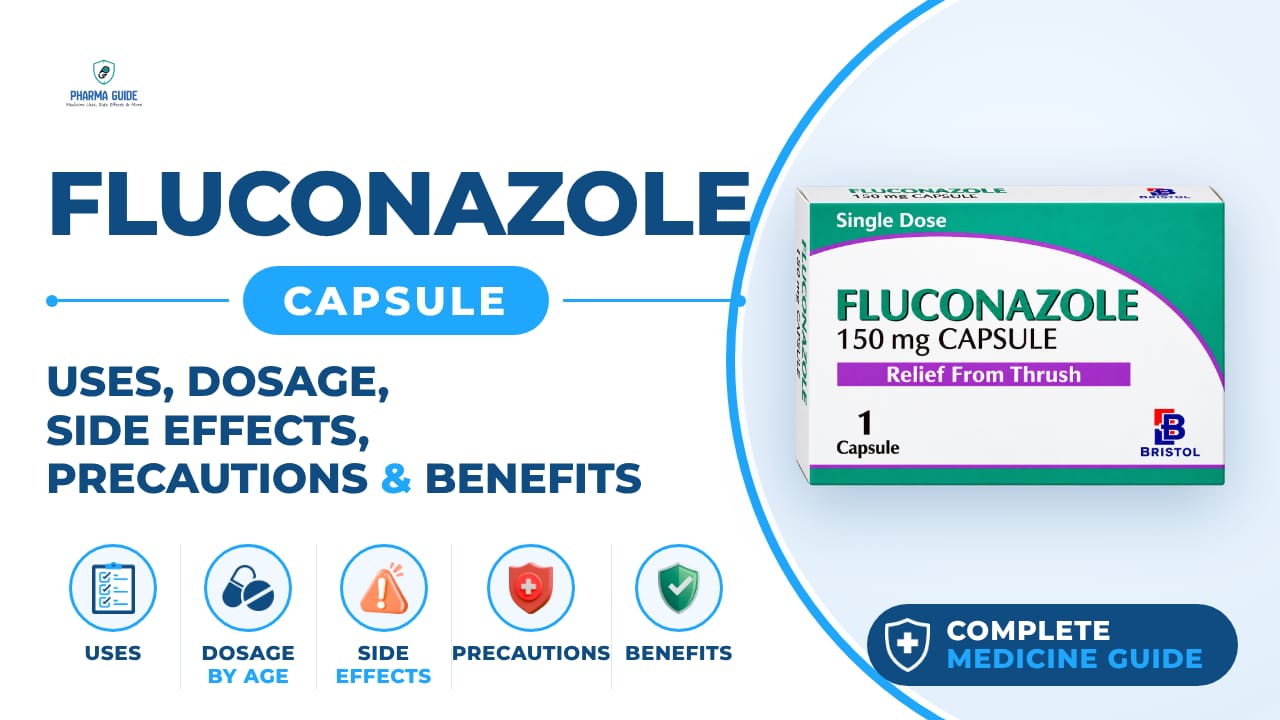
| Generic name | Fluconazole |
|---|---|
| Drug class | Azole antifungal (triazole derivative) |
| Forms | Capsule, Tablet, Powder for Suspension, Oral suspension, Solution for Injection (I.V.) |
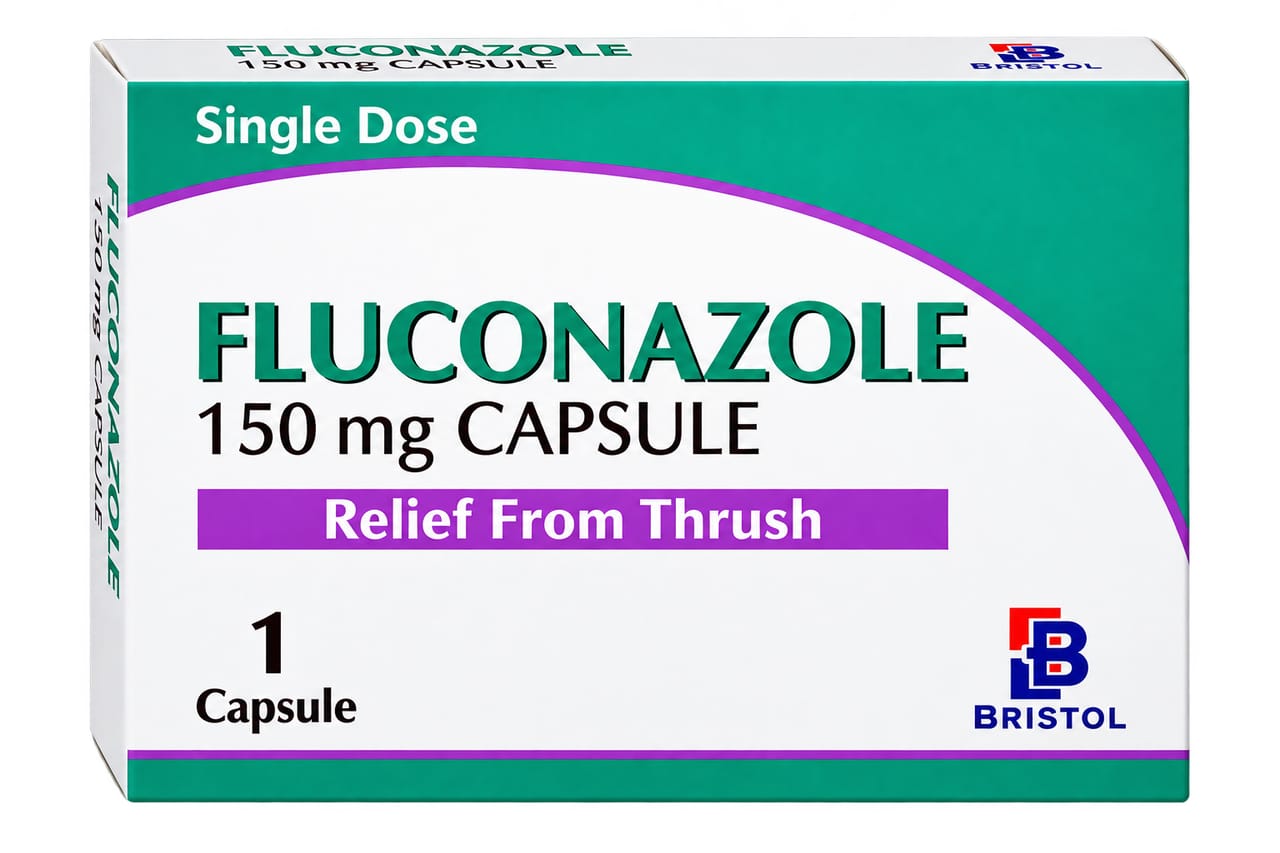
Quick overview
Fluconazole Capsule is a prescription antifungal medicine belonging to the azole antifungal class, specifically a triazole derivative. It is used to treat serious fungal or yeast infections in various parts of the body, including the vagina, mouth, throat, lungs, bladder, and blood. It works by stopping fungus from growing. Fluconazole is available as capsules, oral suspension, and an injectable solution.
What is Fluconazole Capsule
Fluconazole is a prescription antifungal medicine used to treat serious fungal or yeast infections. It is available as capsules, oral suspension, and an injectable solution.
Fluconazole Capsule uses
- Vaginal candidiasis (vaginal yeast infections)
- Oropharyngeal candidiasis (thrush, oral thrush)
- Esophageal candidiasis (candida esophagitis)
- Other candida infections, including urinary tract infections and peritonitis
- Systemic candida infections including candidemia, disseminated candidiasis, and pneumonia
- Cryptococcal (fungal) meningitis
- Prevention of candidiasis in patients having bone marrow transplants who receive cancer or radiation treatment
- Prevention of fungal infections in people with weak immune systems from cancer treatment, AIDS, or in children on life support (ECMO)
- Dermatomycosis including tinea pedis, tinea corporis, tinea cruris, tinea versicolor, and tinea unguium
- Deep endemic mycoses such as coccidioidomycosis, paracoccidioidomycosis, sporotrichosis, and histoplasmosis
Benefits of Fluconazole Capsule
- Kills the fungus or yeast causing infection, or stops it from growing
- Can treat infections in many parts of the body including the vagina, mouth, throat, lungs, bladder, and blood
- Available as a single-dose treatment for vaginal yeast infections
How Fluconazole Capsule works
Fluconazole blocks an enzyme that fungi need to build their cell walls. This causes abnormal substances to build up in the fungal cell wall, weakening it and stopping the fungus from growing. It affects fungal cells much more than human cells, which helps limit side effects.
Fluconazole Capsule dosage
Take this medicine exactly as directed by your doctor, for as long as your doctor tells you, even if you feel better after a few doses. You may take it with or without food, and you can take it at any time of day. Keep using it for the full treatment time; stopping too soon may allow the infection to come back.
If using the liquid form, shake it well before each use and measure with a proper dosing syringe or medicine cup, not a kitchen spoon. Capsules should be swallowed whole.
If you miss a dose, take it as soon as you remember, but skip it if it is almost time for your next dose; do not double up doses.
| Age group | Dose |
|---|---|
| Infants under 6 months | Only under medical supervision; dosing depends on age, gestational age, weight, and infection. |
| Children 6 months–17 years | No safe general age-only dose; dosing is calculated according to body weight and the type/severity of infection. |
| Adults (18+ years) | 150 mg once for uncomplicated vaginal thrush. Other fungal infections require different regimens. |
Available forms and strengths
- Capsule
- Tablet
- Powder for Suspension
- Oral suspension
- Solution for Injection (I.V.)
Side effects of Fluconazole Capsule
Common
- Headache
- Diarrhea
- Nausea or upset stomach
- Dizziness
- Stomach pain
- Changes in the way food tastes
- Belching
- Heartburn
- Indigestion
- Stomach discomfort or upset
Serious
- Signs of allergic reaction (anaphylaxis) such as rash, itching, hives, hoarseness, trouble breathing or swallowing, swelling of hands, face, or mouth
- Liver problems: stomach pain or tenderness, clay-colored stools, dark urine, decreased or loss of appetite, fever, headache, itching, nausea and vomiting, skin rash, swelling of feet or lower legs, unusual tiredness or weakness, yellow eyes or skin
- Serious skin reactions: skin rash, itching, blistering, peeling, or loosening of the skin, red skin lesions often with a purple center
- Heart rhythm changes: dizziness, fainting, fast, pounding, or uneven heartbeat, chest pain or discomfort
- Adrenal gland problems: darkening of the skin, diarrhea, dizziness, fainting, loss of appetite, mental depression, nausea, skin rash, unusual tiredness or weakness, vomiting
- Seizures
- Unusual bleeding or bruising
- Sore throat, fever, or chills with signs of infection
- Yellow eyes and skin, vomiting of blood, black tarry stools
Warnings and precautions
Do not take certain medicines, including erythromycin, pimozide, or quinidine, while using fluconazole because of the risk of dangerous side effects. This medicine may rarely cause serious liver problems and may rarely cause a serious, life-threatening allergic reaction called anaphylaxis. Serious skin reactions can occur during treatment with this medicine.
This medicine can affect heart rhythm, which may cause dizziness, fainting, or an irregular heartbeat. Tell your doctor if you or a family member have ever had heart rhythm problems. This medicine may also cause adrenal gland problems.
Do not take other medicines, including over-the-counter drugs, herbal remedies, or vitamin supplements, unless you have discussed it with your doctor, because fluconazole interacts with many medicines.
Using this medicine for a long time or in high amounts during pregnancy, especially in the first trimester, can harm an unborn baby. Use in pregnancy should generally be avoided unless the infection is severe or life-threatening. Effective birth control should be used during treatment and for about a week after the last dose. Tell your doctor right away if you think you are pregnant.
Fluconazole passes into breast milk. Talk to your doctor about the best way to feed your baby while taking this medicine.
This medicine should be used with caution if you have kidney disease, because it may take longer for your body to remove the medicine, increasing its effects.
This medicine should be used with caution if you have liver disease, as it may make the condition worse, and it can rarely cause serious liver problems.
Discuss with your healthcare professional about using this medicine with alcohol, since interactions may occur.
This medicine may cause dizziness or make you less alert. Do not drive or do anything dangerous until you know how it affects you.
Storage
- Keep out of the reach of children.
- Do not keep outdated medicine or medicine no longer needed.
- Ask your healthcare professional how you should dispose of any medicine you do not use.
- Store the medicine in a closed container at room temperature, away from heat, moisture, and direct light. Keep from freezing.
- The mixed oral liquid should be kept in the refrigerator or at room temperature and used within 14 days. Do not freeze.
- Store at temperatures not exceeding 30°C.
When to see a doctor
- Check with your doctor right away if you have signs of liver problems such as stomach pain, clay-colored stools, dark urine, loss of appetite, fever, headache, itching, nausea and vomiting, skin rash, swelling of feet or legs, unusual tiredness, or yellow eyes or skin.
- Call your doctor right away if you have a rash, itching, hives, hoarseness, trouble breathing or swallowing, or swelling of your hands, face, or mouth.
- Check with your doctor right away if you start having a skin rash, itching, or any other skin changes.
- Contact your doctor right away if you notice changes in your heart rhythm, such as feeling dizzy or faint, or a fast, pounding, or uneven heartbeat.
- Check with your doctor right away if you have signs of adrenal gland problems such as darkening skin, diarrhea, dizziness, fainting, loss of appetite, depression, nausea, rash, tiredness, or vomiting.
- Get emergency help right away if you have symptoms of overdose such as fearfulness, suspiciousness, other mental changes, or seeing, hearing, or feeling things that are not there.
- If your symptoms do not improve, or if they get worse, check with your doctor.
Alternatives
- Diflucan
- CanesOral
Watch the video
FAQs
What is Fluconazole Capsule used for?
It treats serious fungal or yeast infections including vaginal candidiasis, oral and esophageal thrush, systemic candida infections, cryptococcal meningitis, and dermatomycosis like tinea infections.
How does Fluconazole Capsule work?
It blocks an enzyme fungi need to build their cell walls, causing abnormal substances to build up and weaken the fungal cell wall, stopping the fungus from growing, while affecting fungal cells much more than human cells.
What is the adult dosage of Fluconazole Capsule for vaginal thrush?
For uncomplicated vaginal thrush, adults typically take 150 mg once. Other fungal infections require different dosing regimens.
What are the common side effects of Fluconazole Capsule?
Common side effects include headache, diarrhea, nausea or upset stomach, dizziness, stomach pain, taste changes, belching, heartburn, and indigestion.
Can Fluconazole Capsule be used during pregnancy?
Long-term or high-dose use during pregnancy, especially in the first trimester, can harm an unborn baby, so it should generally be avoided unless the infection is severe or life-threatening.
General information, not medical advice
Your prescriber and the leaflet in your pack know your situation. This page does not.
- Follow your prescriber and the leaflet
- Don't start, stop, or change a dose on your own
- Doses and warnings differ by country and product
Sources
Video
Related medicines

Injectafer Injection: Uses, Dosage, Side Effects, Precautions and Alternates
Iron products
Injectafer (ferric carboxymaltose) treats iron deficiency anemia and heart failure-related iron deficiency via IV. Learn uses, dosage, side effects, and

Gliclazide Tablet: Uses, Dosage, Side Effects, Precautions and Alternates
Sulfonylurea (hypoglycemic/antidiabetic agent)
Gliclazide Tablet is a sulfonylurea for type 2 diabetes that boosts insulin release. Learn about dosage, side effects, warnings, and precautions.