
Safety
General information, not medical advice
Your prescriber and the leaflet in your pack know your situation. This page does not.
- Follow your prescriber and the leaflet
- Don't start, stop, or change a dose on your own
- Doses and warnings differ by country and product
Fluconazole Tablet: Uses, Dosage, Side Effects, Precautions and Alternates
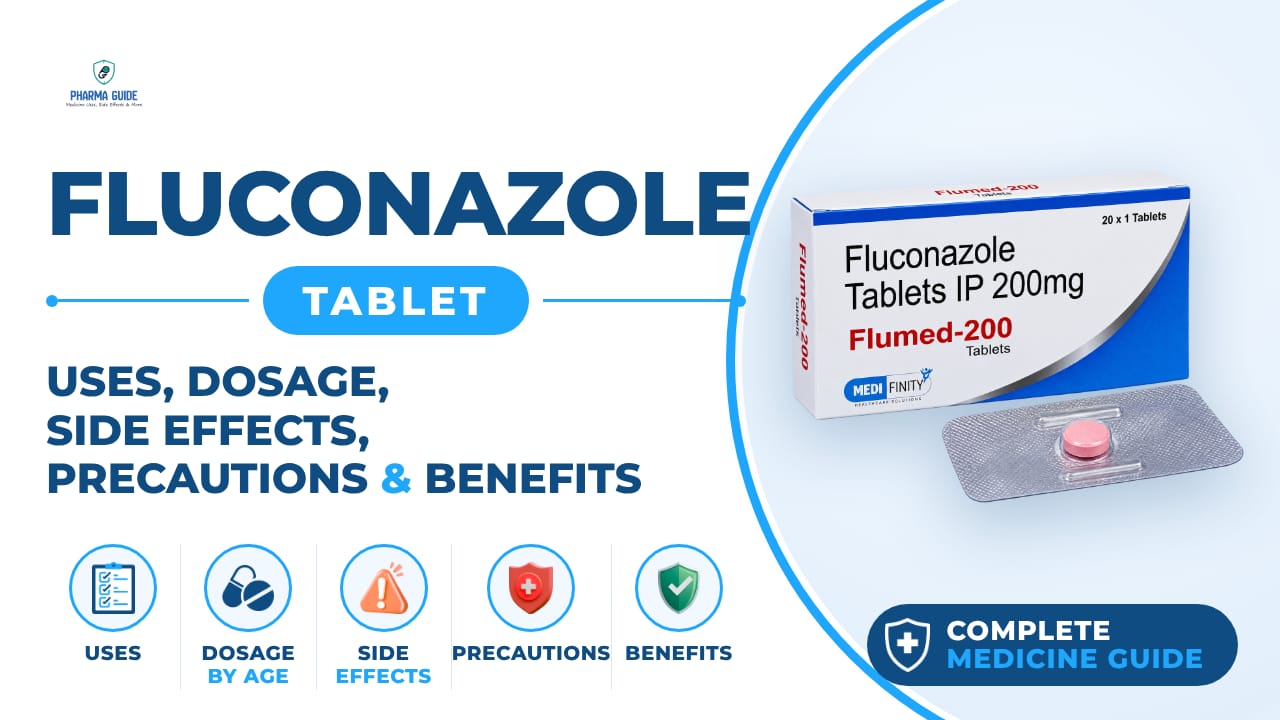
| Generic name | Fluconazole |
|---|---|
| Drug class | Azole antifungal (triazole antifungal) |
| Forms | Oral tablet, Oral suspension (liquid), Injection for intravenous infusion |
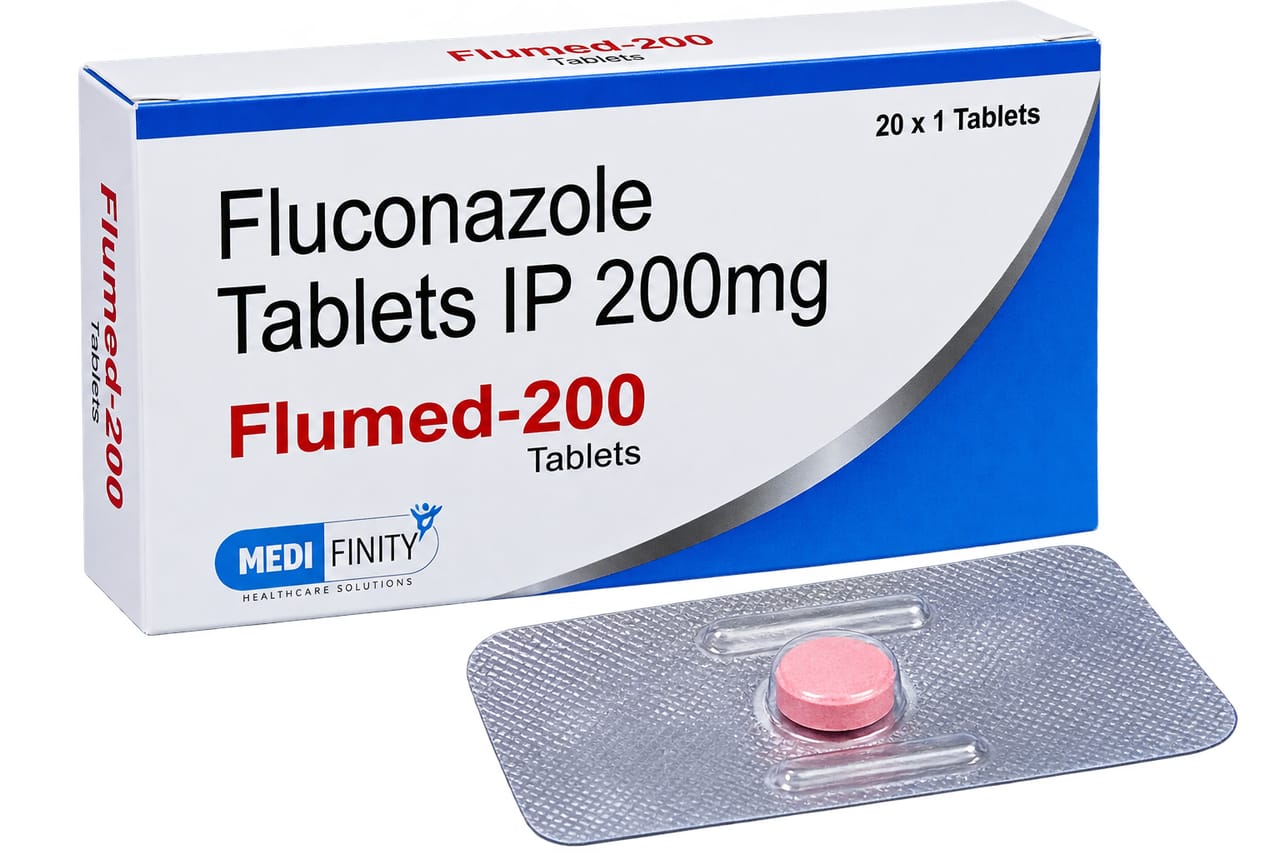
Quick overview
Fluconazole Tablet is a prescription azole antifungal medicine used to treat serious fungal or yeast infections, including vaginal, oral, throat, esophageal, urinary, and bloodstream infections, as well as cryptococcal meningitis. It is also used to help prevent fungal infections in people with weakened immune systems. Fluconazole works by blocking an enzyme fungi need to build their cell walls, stopping the fungus from growing and allowing the body's defenses to clear the infection. It is available as a tablet, oral suspension, and intravenous injection.
What is Fluconazole Tablet
Fluconazole is a prescription antifungal medicine used to treat serious fungal or yeast infections. It comes as an oral tablet, oral suspension, or injection given into a vein.
Fluconazole Tablet uses
- Vaginal yeast infections (vaginal candidiasis)
- Oral and throat yeast infections (oropharyngeal candidiasis)
- Esophageal candidiasis
- Candida urinary tract infections and peritonitis
- Systemic Candida infections including candidemia, disseminated candidiasis, and pneumonia
- Cryptococcal meningitis (a fungal infection of the brain and spinal cord)
- Preventing fungal infections in people undergoing bone marrow transplant who are receiving chemotherapy and/or radiation therapy
- Preventing fungal infections in people with weakened immune systems due to cancer treatment, AIDS, or children on life support (ECMO)
Benefits of Fluconazole Tablet
- Treats a wide range of fungal and yeast infections affecting the vagina, mouth, throat, lungs, bladder, or blood
- Can help prevent fungal infections in people with weakened immune systems
- Well absorbed by mouth, so oral tablets work similarly to the intravenous form
- Usually only needs to be taken once daily due to its long-lasting effect in the body
How Fluconazole Tablet works
Fluconazole works by blocking an enzyme that fungi need to build their cell walls. This stops the fungus from growing properly, which helps the body's defenses clear the infection.
Fluconazole Tablet dosage
Follow all directions on your prescription label and read all medication guides or instruction sheets. Use the medicine exactly as directed and for the full length of time prescribed, even if your symptoms improve quickly. Skipping doses can increase the risk of an infection that is resistant to treatment. This medicine will not treat viral infections such as the flu or common cold.
Tablets can be taken with or without food and at any time of day. Tablets can be cut or crushed. Call your doctor if your symptoms do not improve or get worse.
If a dose is missed, take it as soon as you remember, but skip it if it is almost time for your next dose. Do not take two doses at once.
| Age group | Dose |
|---|---|
| Under 1 month | Only under specialist medical supervision; dose depends on the condition |
| 1 month–11 years | Weight-based dosing is required; there is no safe general tablet dose based on age alone |
| 12–17 years | Usually weight-based, depending on the fungal infection |
| 18+ years | 150 mg as a single dose |
Available forms and strengths
- Oral tablet
- Oral suspension (liquid)
- Injection for intravenous infusion
Side effects of Fluconazole Tablet
Common
- Headache
- Diarrhea
- Nausea or upset stomach
- Dizziness
- Stomach pain
- Changes in the way food tastes
- Vomiting
- Skin rash
Serious
- Allergic reactions including anaphylaxis (shortness of breath, coughing, wheezing, fever, chills, throbbing of the heart or ears, swelling of eyelids/face/mouth/neck/other body parts, skin rash, hives, blisters, or skin peeling)
- Liver injury (loss of appetite, upper right stomach pain, tiredness, itching, dark urine, clay-colored stools, jaundice)
- Serious skin conditions including exfoliative skin disorders, Stevens-Johnson syndrome, and DRESS (rash, blisters, itching, reddening or itchy red spots, swelling of eyelids/face/lips, peeling or lost skin, fever, swollen lymph glands)
- Adrenal gland problems (chronic fatigue, muscle weakness, loss of appetite, weight loss, abdominal pain)
- Irregular heart rhythm including torsades de pointes (palpitations, fast irregular heart rate, dizziness, fainting, seizures)
Warnings and precautions
- Fluconazole can cause a severe, potentially fatal allergic reaction. Do not take it again if you have ever had an allergic reaction to it.
- This medicine can cause serious liver problems, including rare cases of liver failure and death, mainly in people with serious underlying health conditions.
- Fluconazole can cause a severe rash that can be life-threatening. Stop taking the drug if you develop any rash.
- This medicine can change your heart rhythm, raising the risk of a life-threatening condition called torsades de pointes, especially if combined with certain other medicines.
- Fluconazole can cause adrenal gland problems, which affect hormone production needed for normal body functions. This may be reversible after stopping the drug.
- Do not take fluconazole with certain medicines like erythromycin, pimozide, or quinidine, as this combination can cause dangerous heart rhythm problems.
- Do not give this medicine to other people even if they have similar symptoms, as it may harm them.
- Fluconazole may harm an unborn baby and can increase the risk of miscarriage.
- It should only be used during pregnancy to treat serious, life-threatening fungal infections.
- Women who can become pregnant should use effective birth control during treatment and for about a week after the last dose.
- Fluconazole passes into breast milk and may affect a breastfed baby. Talk to your doctor about the best way to feed your baby while taking this medicine.
- If you have kidney disease, your body may not clear this drug normally, which can raise drug levels and increase side effects. Your dose may need to be lowered.
- Fluconazole can cause liver problems, including rare but serious liver toxicity. Tell your doctor if you already have liver problems before starting this medicine.
- This medicine can cause dizziness or seizures, so avoid driving or operating machinery until you know how it affects you.
Storage
- Store at room temperature away from moisture and heat
- Do not freeze
- Store fluconazole tablets below 86°F (30°C)
- Don't store this medication in moist or damp areas, such as bathrooms
- Keep out of reach and sight of children and pets
When to see a doctor
- Get emergency help right away if you have signs of a severe allergic reaction, such as trouble breathing, coughing, wheezing, fever, chills, throbbing heartbeat, or swelling of the face, mouth, or throat.
- Tell your doctor right away if you notice signs of liver problems such as loss of appetite, upper right stomach pain, tiredness, itching, dark urine, light-colored stools, or yellowing of the skin or eyes.
- Tell your doctor immediately if you develop a skin rash or unusual skin lesions while taking this medicine.
- Contact your doctor if you have ongoing tiredness, muscle weakness, loss of appetite, weight loss, or stomach pain, which could be signs of adrenal gland problems.
- Call your doctor right away if you feel your heart skipping beats, have a fast or irregular heartbeat, feel dizzy, faint, or have seizures, as these could be signs of a dangerous heart rhythm problem.
- If you think you have taken too much of this medicine, contact a healthcare professional, hospital emergency department, or your regional poison control center right away, even if you have no symptoms.
- Call your doctor right away if you become pregnant while taking this medicine.
Alternatives
- Diflucan
- Sporanox (itraconazole)
- Fungizone
- Tolsura
- Flucytosine
- Amphotericin B
- Itraconazole
Watch the video
FAQs
What is Fluconazole Tablet used for?
It treats serious fungal or yeast infections including vaginal, oral, throat, esophageal, urinary, and bloodstream infections, as well as cryptococcal meningitis, and helps prevent fungal infections in people with weakened immune systems.
How does Fluconazole Tablet work?
It works by blocking an enzyme that fungi need to build their cell walls, stopping the fungus from growing properly and helping the body's defenses clear the infection.
What is the adult dosage of Fluconazole Tablet?
For adults 18 years and older, the typical dose is 150 mg as a single dose.
What are the common side effects of Fluconazole Tablet?
Common side effects include headache, diarrhea, nausea or upset stomach, dizziness, stomach pain, changes in taste, vomiting, and skin rash.
Can Fluconazole Tablet be taken during pregnancy?
Fluconazole may harm an unborn baby and can increase the risk of miscarriage, so it should only be used during pregnancy to treat serious, life-threatening fungal infections.
General information, not medical advice
Your prescriber and the leaflet in your pack know your situation. This page does not.
- Follow your prescriber and the leaflet
- Don't start, stop, or change a dose on your own
- Doses and warnings differ by country and product
Sources
Video
Related medicines
Cresemba Capsule: Uses, Dosage, Side Effects, Precautions and Alternates
azole antifungal (triazole antifungal)
Cresemba Capsule (isavuconazonium) treats invasive aspergillosis and mucormycosis. Learn about dosage, side effects, warnings, and precautions before use.

Triflucan Capsule: Uses, Dosage, Side Effects, Precautions and Alternates
Azole antifungal (triazole antifungal)
Triflucan Capsule (fluconazole) treats fungal and yeast infections like vaginal candidiasis, oral thrush, and cryptococcal meningitis. Learn dosage, side