
Safety
General information, not medical advice
Your prescriber and the leaflet in your pack know your situation. This page does not.
- Follow your prescriber and the leaflet
- Don't start, stop, or change a dose on your own
- Doses and warnings differ by country and product
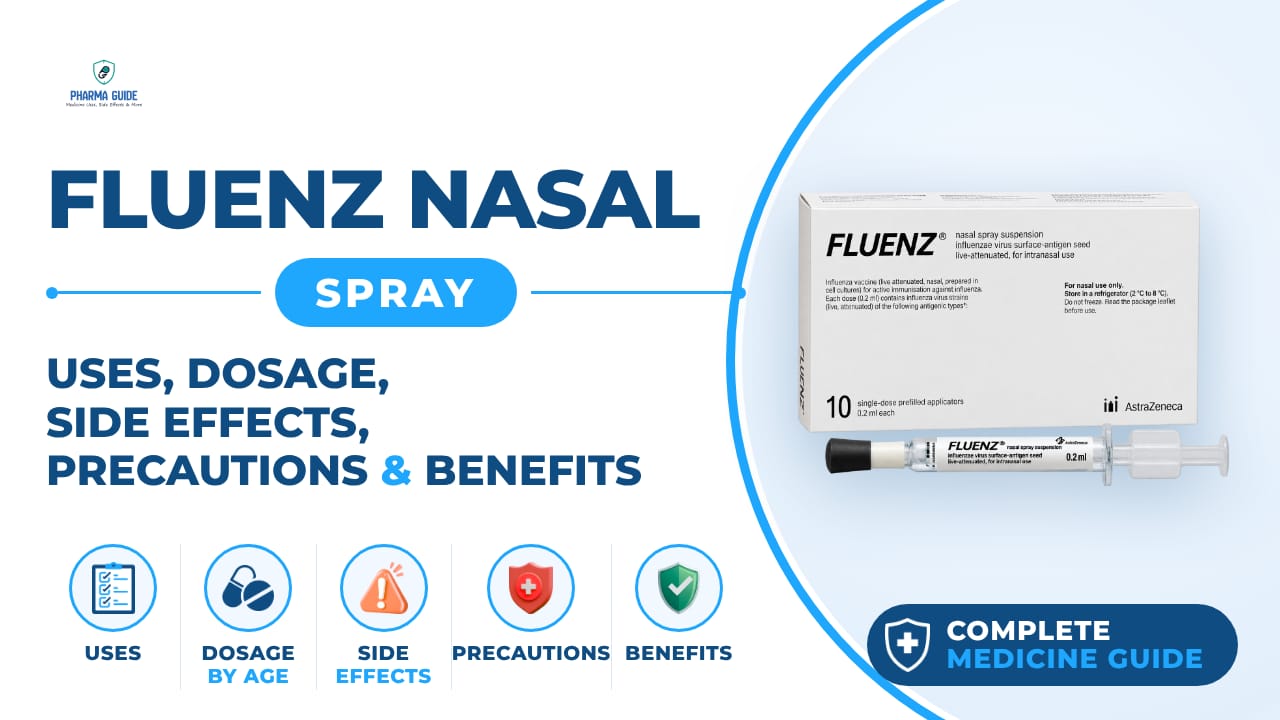
Fluenz Nasal Spray: Uses, Dosage, Side Effects, Precautions and Alternates
| Generic name | Influenza vaccine (live attenuated, nasal) |
|---|---|
| Drug class | Vaccines (live attenuated influenza vaccine) |
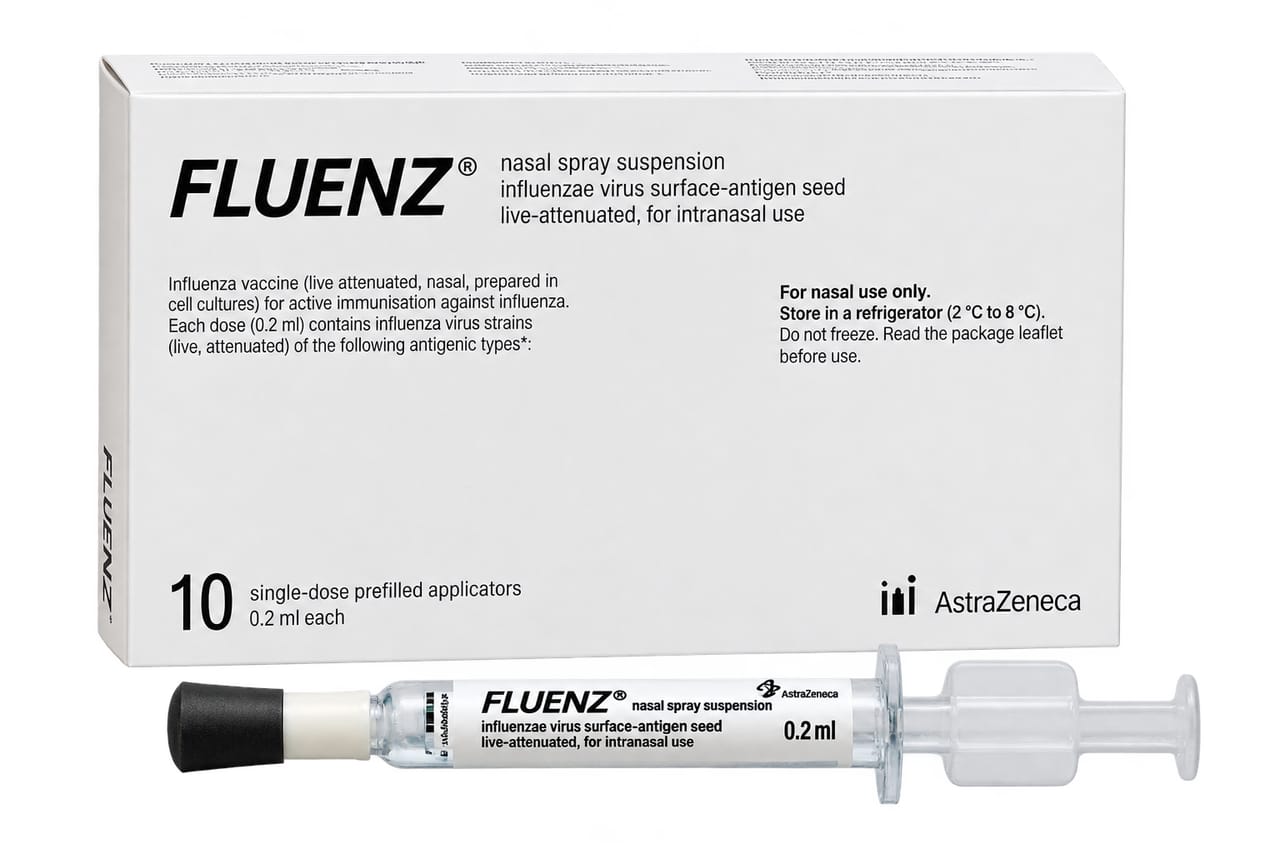
| Forms | Nasal spray, suspension (single-use nasal applicator) |
Quick overview
Fluenz Nasal Spray is a live attenuated influenza vaccine used to help protect children and adolescents from 2 years to less than 18 years of age against seasonal flu. It contains live but weakened flu viruses selected each year to match expected flu strains and is given as a nasal spray rather than an injection. The vaccine works by training the immune system to recognize and fight influenza viruses.
What is Fluenz Nasal Spray
Fluenz is a vaccine used to help protect children and adolescents from 2 years to less than 18 years old against seasonal flu. It contains live but weakened flu viruses selected each year to match the expected flu strains.
Fluenz Nasal Spray uses
- Preventing seasonal influenza (flu) in children and adolescents from 2 years to less than 18 years of age
Benefits of Fluenz Nasal Spray
- Helps protect against seasonal influenza (flu).
- Reduces the risk of becoming seriously ill from flu.
- Helps lower the risk of flu-related complications and hospitalization.
- Stimulates the immune system to recognize and fight influenza viruses.
- Provides a needle-free nasal vaccination, which can be easier for children.
- In the UK, Fluenz is licensed for children and adolescents from 2 years to under 18 years of age.
How Fluenz Nasal Spray works
The vaccine contains weakened flu viruses that grow inside the nose and lining of the throat, without causing illness, which trains the immune system to recognize and fight the real flu virus.
Fluenz Nasal Spray dosage
Fluenz is given only as a nasal spray by a doctor, nurse, or pharmacist — it is never injected. It is given as a spray split between both nostrils, with one half administered in each side. The person can breathe normally during administration; there is no need to actively sniff or inhale. Children who have not had a flu vaccine before will need a second dose after a gap of at least several weeks. Fluenz should not be given to children currently having an asthma flare or an acute illness with fever until they have recovered.
| Age group | Dose |
|---|---|
| Under 2 years | Not recommended |
| 2–17 years | 0.2 mL intranasally — 0.1 mL into each nostril |
| 18 years and older | Fluenz is generally not indicated under the UK/EU pediatric product authorization |
| Children not previously vaccinated against seasonal influenza | A second 0.2 mL dose after at least 4 weeks may be recommended |
Available forms and strengths
- Nasal spray, suspension (single-use nasal applicator)
Side effects of Fluenz Nasal Spray
Common
- Runny or stuffy nose
- Reduced appetite
- Weakness
- Headache
- Fever
- Muscle aches
Serious
- Nose bleed
- Rash
- Allergic reactions, including itchy skin rash, shortness of breath, and swelling of the face or tongue
- Very rare anaphylactic reactions
- Very rare Guillain-Barré syndrome
- Very rare worsening of Leigh syndrome symptoms
Warnings and precautions
- Do not use Fluenz in children with a blood disorder or cancer affecting the immune system, or a weakened immune system from disease, medicine, or other treatment.
- Do not use Fluenz in anyone allergic to eggs, egg proteins, gentamicin, gelatin, or other ingredients in the vaccine.
- Do not give Fluenz to anyone under 18 who is already taking aspirin (acetylsalicylic acid), because of a rare but serious risk called Reye's syndrome.
- Fluenz should not be given to children with severe asthma or who are currently wheezing.
- Fluenz must never be injected — it is for nasal use only.
- People given this vaccine could pass the weakened virus to people with severely weakened immune systems, so close contact with such people should be avoided for one to two weeks after vaccination when possible.
- Do not give aspirin-containing medicine to children under 18 for four weeks after vaccination unless a doctor says otherwise.
- Fluenz is not recommended for women who are pregnant or breast-feeding. No specific dose adjustment is required for kidney issues, but safety data are limited in children with chronic kidney disease, so medical advice is recommended.
- There is no specific liver-related dose adjustment listed; discuss significant chronic liver disease with the vaccination team before use.
- There is no known direct interaction with alcohol, and the vaccine is unlikely to affect the ability to drive or use machines.
Storage
- Store in a refrigerator at 2–8°C (36–46°F).
- Keep the nasal spray in the original carton to protect it from light.
- Do not freeze; discard the vaccine if it has been frozen.
- Keep refrigerated until it is ready to be administered.
- Follow the expiry date and manufacturer's temperature-excursion instructions if it has been outside refrigeration.
- Keep securely stored and out of reach of children.
When to see a doctor
- Get help right away if there are signs of an allergic reaction such as itchy skin rash, shortness of breath, or swelling of the face or tongue.
- Tell your doctor, nurse, or pharmacist if any side effect becomes serious, or if you notice a side effect not listed here.
Alternatives
- Fluarix
- Vaxigrip
- Influvac
- Flucelvax
- Inactivated Influenza Vaccine (Injection)
Watch the video
FAQs
What age group can use Fluenz Nasal Spray?
Fluenz is used for children and adolescents from 2 years to less than 18 years of age to help protect against seasonal flu.
How is Fluenz Nasal Spray given?
Fluenz is given only as a nasal spray by a doctor, nurse, or pharmacist, split between both nostrils with 0.1 mL in each side. It is never injected, and the person can breathe normally during administration.
Do children need more than one dose of Fluenz?
Children who have not had a flu vaccine before will need a second 0.2 mL dose after a gap of at least 4 weeks.
Who should not use Fluenz Nasal Spray?
Fluenz should not be used in children with a blood disorder or cancer affecting the immune system, a weakened immune system, allergies to eggs, egg proteins, gentamicin, gelatin, or other ingredients, severe asthma or current wheezing, or those under 18 already taking aspirin.
What are the common side effects of Fluenz Nasal Spray?
Common side effects include runny or stuffy nose, reduced appetite, weakness, headache, fever, and muscle aches.
General information, not medical advice
Your prescriber and the leaflet in your pack know your situation. This page does not.
- Follow your prescriber and the leaflet
- Don't start, stop, or change a dose on your own
- Doses and warnings differ by country and product
Sources
Video
Related medicines

Injectafer Injection: Uses, Dosage, Side Effects, Precautions and Alternates
Iron products
Injectafer (ferric carboxymaltose) treats iron deficiency anemia and heart failure-related iron deficiency via IV. Learn uses, dosage, side effects, and

Gliclazide Tablet: Uses, Dosage, Side Effects, Precautions and Alternates
Sulfonylurea (hypoglycemic/antidiabetic agent)
Gliclazide Tablet is a sulfonylurea for type 2 diabetes that boosts insulin release. Learn about dosage, side effects, warnings, and precautions.