
Safety
General information, not medical advice
Your prescriber and the leaflet in your pack know your situation. This page does not.
- Follow your prescriber and the leaflet
- Don't start, stop, or change a dose on your own
- Doses and warnings differ by country and product
Fluphenazine Injection: Uses, Dosage, Side Effects, Precautions and Alternates

| Generic name | fluphenazine hydrochloride |
|---|---|
| Drug class | Phenothiazine antipsychotic (first-generation/typical antipsychotic) |
| Forms | Injection, solution (intramuscular), Oral tablets, Oral elixir (liquid), Oral concentrate (liquid) |
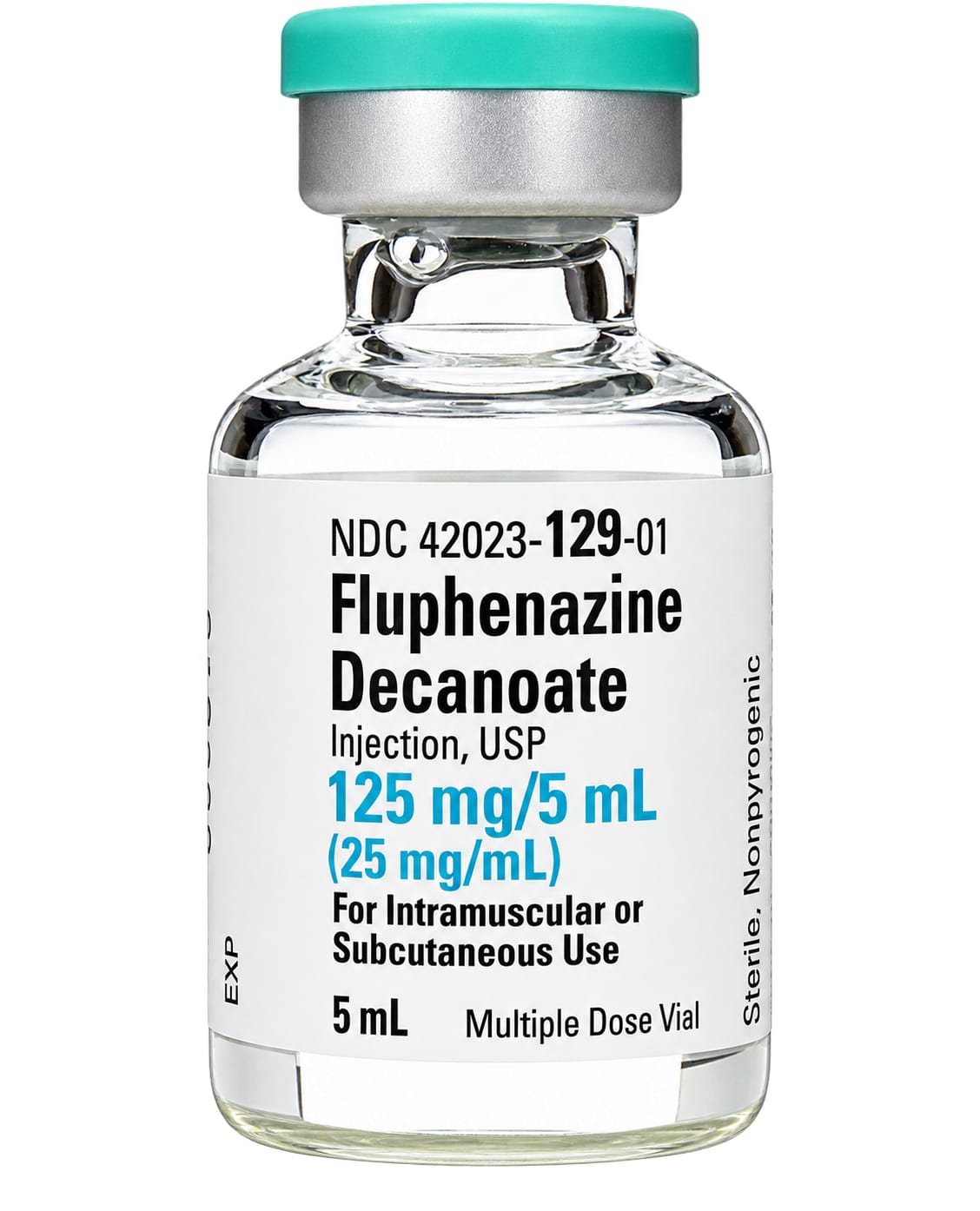
Quick overview
Fluphenazine Injection (fluphenazine hydrochloride) is a phenothiazine antipsychotic given as a sterile solution shot into a muscle. It is used to treat schizophrenia and other psychotic disorders, helping control symptoms such as hallucinations, delusions, and disorganized thinking. It is available as a short-acting injection and as a long-acting decanoate injection, with oral forms used for ongoing maintenance.
What is Fluphenazine Injection
Fluphenazine Hydrochloride Injection is a sterile solution given as a shot into a muscle, used to treat schizophrenia and other psychotic disorders. It belongs to the phenothiazine class of antipsychotic medicines, sometimes called first-generation or typical antipsychotics.
Fluphenazine Injection uses
- Management of manifestations of psychotic disorders, such as schizophrenia
- Treats schizophrenia
- Controls chronic psychotic symptoms
- Helps reduce hallucinations
- Helps reduce delusions
- May improve disorganized thinking
- Long-acting formulation can provide maintenance antipsychotic treatment
Benefits of Fluphenazine Injection
- Helps control symptoms of psychosis such as hallucinations, delusions, and hostility
- Provides effective antipsychotic symptom control
- Long-acting formulation reduces the need for daily dosing
- May help maintain treatment stability
- Can reduce relapse of psychotic symptoms in appropriately selected patients
How Fluphenazine Injection works
The exact way fluphenazine works is not fully known, but it is thought to affect brain chemicals, including blocking areas where dopamine acts, which lowers dopamine's effects on behavior and thinking.
Fluphenazine Injection dosage
This medicine is given as a shot into a muscle by a healthcare provider. The injection form is usually given in a hospital or clinic, so you will not store or give it yourself. When symptoms are under control, your doctor may switch you to a tablet or liquid form taken by mouth, often once a day. The liquid and tablet forms can be taken with or without food.
Continue taking this medicine regularly even if you feel well; it may take a few weeks of regular use for full effect. Do not stop taking this medicine suddenly without talking to your doctor, especially after long-term or high-dose use; your doctor may lower your dose gradually. If you miss a dose of the injection, contact your healthcare provider to find out when to get your next dose.
| Age group | Dose |
|---|---|
| Under 12 years | Long-acting fluphenazine decanoate is not intended for this age group |
| 18–64 years – short-acting injection | Common starting dose: 1.25 mg IM; total initial daily dosing may range 2.5–10 mg/day in divided doses |
| 18–64 years – decanoate injection | Common initial long-acting dose: 25 mg IM or SC, then individualized |
Available forms and strengths
- Injection, solution (intramuscular)
- Oral tablets
- Oral elixir (liquid)
- Oral concentrate (liquid)
Side effects of Fluphenazine Injection
Common
- Constipation
- Dizziness
- Drowsiness
- Difficulty emptying your bladder
- High or low blood pressure
- Restlessness
- Nausea or loss of appetite
- Weakness or tiredness
- Excitement or anxiety, nightmares
- Dry mouth
- Breast enlargement or discharge
- Late or missed menstrual period
- Decreased sexual ability
- Feeling unsteady or having trouble keeping your balance
Serious
- Severe allergic reactions (breathing problems, swelling of face/lips/tongue/throat, hives, racing heart)
- Parkinson-like symptoms (shakiness, stiffness, jerkiness, drooling, falling, balance problems)
- Uncontrolled movements (tardive dyskinesia) such as tongue sticking out, lip smacking, grimacing, rapid eye blinking, jerking or twisting of arms/legs/trunk
- Neuroleptic malignant syndrome (high fever, muscle stiffness, changes in breathing or heart rate, sweating, confusion)
- Blood disorders (fever, chills, sore throat, frequent infections, unusual tiredness, mouth sores, swollen lymph nodes)
- High prolactin levels (vaginal dryness, irregular periods, breast milk production, erectile problems, enlarged breasts)
- Low blood pressure on standing and falls (dizziness, fainting, blurred vision, confusion, weakness)
- Liver damage (nausea, stomach pain, fever, weakness, itching, loss of appetite, light-colored stools, dark urine, yellowing of skin or eyes)
- Immune system reactions resembling lupus (rash, joint pain, fever, weakness)
- Eye effects (deposits on cornea and lens, eye discomfort, vision changes)
Warnings and precautions
- Elderly patients with dementia-related confusion or psychosis who take antipsychotic drugs like this one have a higher risk of death, mostly from heart-related problems or infections like pneumonia. This medicine is not approved for treating dementia-related psychosis.
- This medicine can cause tardive dyskinesia, a condition of uncontrollable, possibly permanent movements, especially with long-term use.
- This medicine can cause a rare but serious and potentially fatal condition called Neuroleptic Malignant Syndrome, with symptoms like high fever, muscle stiffness, confusion, and irregular heartbeat or blood pressure.
- This medicine can cause drowsiness, low blood pressure when standing, and problems with movement or senses, which can lead to falls, fractures, or other injuries.
- Safety and effectiveness of this medicine have not been established in children.
- This medicine is not approved for treating behavior problems caused by intellectual disability.
- The safety of using fluphenazine during pregnancy has not been established. It should only be used if the potential benefit outweighs the potential risk to the unborn baby. Babies exposed in the third trimester may have withdrawal or movement symptoms after birth.
- It is not known if fluphenazine passes into breast milk. Tell your doctor if you are breastfeeding so they can advise you.
- Kidney function should be monitored during long-term treatment; if kidney tests become abnormal, treatment should be stopped.
- This medicine should not be used if you have liver damage, and liver function should be checked periodically during treatment because liver damage can occur.
- Drinking alcohol while using this medicine can increase its sedating effects.
- This medicine can affect the mental and physical abilities needed for driving or operating machinery, so avoid these activities until you know how it affects you.
Storage
- Store at 20° to 25°C (68° to 77°F) [see USP Controlled Room Temperature]
- Protect from light
- Solutions should be protected from exposure to light. Parenteral solutions may vary in color from essentially colorless to light amber. If a solution has become any darker than light amber or is discolored in any other way, it should not be used.
When to see a doctor
- Get emergency help right away if you have signs of a serious allergic reaction, such as trouble breathing or swallowing, swelling of the face, lips, mouth, tongue, or throat, hives, or a racing heart.
- Call your doctor right away if you notice uncontrolled movements of the face, tongue, or body, such as tongue sticking out, lip smacking, grimacing, or jerking movements of the arms, legs, or trunk, since these may be signs of a serious movement disorder.
- Stop the medicine and call your doctor right away if you develop high fever, severe muscle stiffness, fast or irregular heartbeat, heavy sweating, or confusion, which can be signs of a rare, life-threatening reaction.
- Call your doctor right away if you have signs of a blood problem, such as fever, chills, sore throat, cough, frequent infections, unusual tiredness, or mouth sores.
- Call your doctor right away if you notice yellowing of your skin or eyes, dark urine, pale stools, nausea, stomach pain, or unusual tiredness, which could be signs of liver damage.
- If you or someone else may have taken too much of this medicine, get medical help right away or contact a poison control center.
Alternatives
- Haloperidol
- Risperidone
- Olanzapine
Watch the video
FAQs
What is Fluphenazine Injection used for?
It is used to manage symptoms of psychotic disorders such as schizophrenia, including hallucinations, delusions, and disorganized thinking, and can be used for long-term maintenance treatment.
How is Fluphenazine Injection given?
It is given as a shot into a muscle by a healthcare provider, usually in a hospital or clinic. Once symptoms are controlled, your doctor may switch you to a tablet or liquid form taken by mouth.
What are the common side effects of Fluphenazine Injection?
Common side effects include constipation, dizziness, drowsiness, difficulty emptying the bladder, high or low blood pressure, restlessness, nausea, dry mouth, and weakness or tiredness.
What are the serious risks of Fluphenazine Injection?
Serious risks include tardive dyskinesia, neuroleptic malignant syndrome, Parkinson-like symptoms, blood disorders, liver damage, high prolactin levels, and low blood pressure with fainting.
Can I stop taking Fluphenazine Injection suddenly?
No, you should not stop suddenly without talking to your doctor, especially after long-term or high-dose use; your doctor may lower your dose gradually.
General information, not medical advice
Your prescriber and the leaflet in your pack know your situation. This page does not.
- Follow your prescriber and the leaflet
- Don't start, stop, or change a dose on your own
- Doses and warnings differ by country and product
Sources
Video
Related medicines

Injectafer Injection: Uses, Dosage, Side Effects, Precautions and Alternates
Iron products
Injectafer (ferric carboxymaltose) treats iron deficiency anemia and heart failure-related iron deficiency via IV. Learn uses, dosage, side effects, and

Gliclazide Tablet: Uses, Dosage, Side Effects, Precautions and Alternates
Sulfonylurea (hypoglycemic/antidiabetic agent)
Gliclazide Tablet is a sulfonylurea for type 2 diabetes that boosts insulin release. Learn about dosage, side effects, warnings, and precautions.