
Safety
General information, not medical advice
Your prescriber and the leaflet in your pack know your situation. This page does not.
- Follow your prescriber and the leaflet
- Don't start, stop, or change a dose on your own
- Doses and warnings differ by country and product
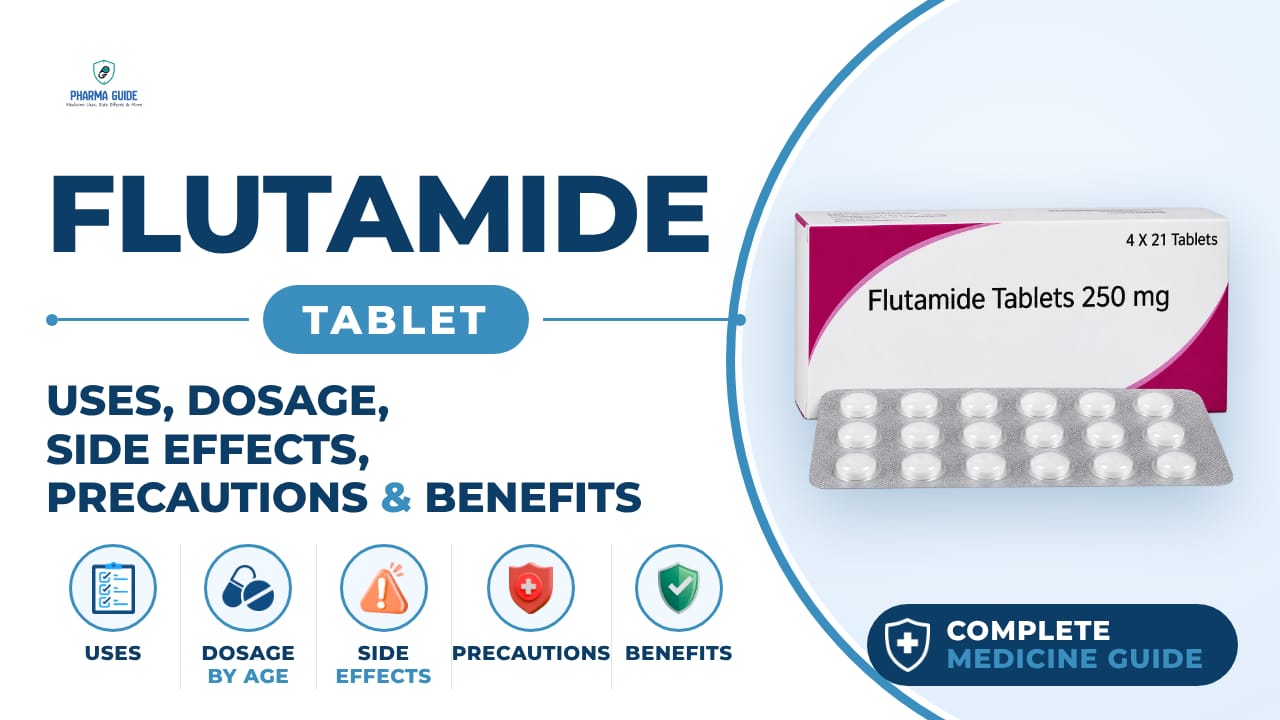
Flutamide Tablet: Uses, Dosage, Side Effects, Precautions and Alternates
| Generic name | Flutamide |
|---|---|
| Drug class | Antiandrogen (nonsteroidal antiandrogen / androgen receptor inhibitor) |
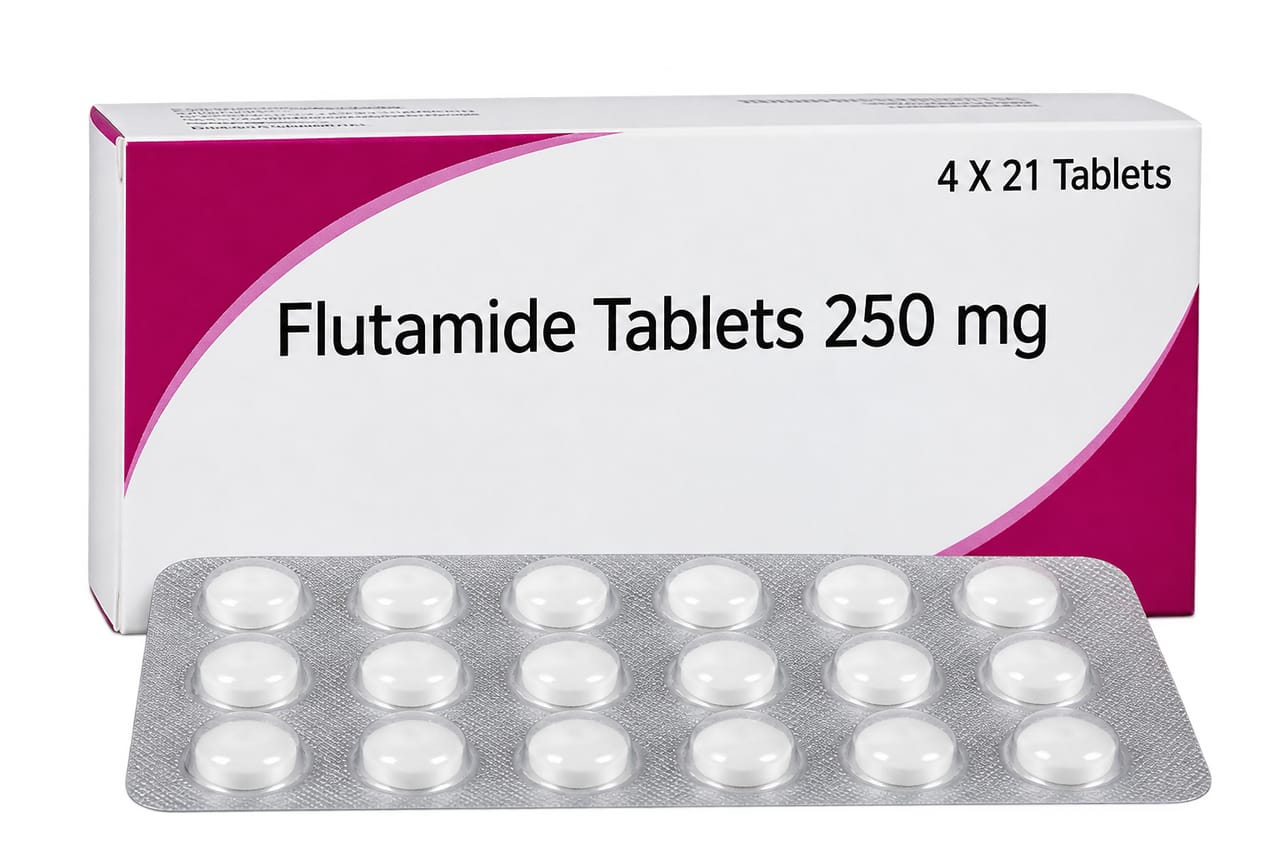
| Forms | Tablet, Capsule |
Quick overview
Flutamide Tablet (flutamide) is a nonsteroidal antiandrogen, also called an androgen receptor inhibitor, used together with an LHRH agonist to treat certain types of prostate cancer, including cancer that has spread. It is taken by mouth and works by blocking testosterone from reaching prostate cancer cells. It is not for use by women or children and requires regular liver monitoring during treatment.
What is Flutamide Tablet
Flutamide is a medicine that blocks the effects of male hormones called androgens. It belongs to a group of medicines called nonsteroidal antiandrogens, also known as androgen receptor inhibitors.
Flutamide Tablet uses
- Treats certain types of prostate cancer, including cancer that has spread to other parts of the body
- Used together with another hormone medicine called an LHRH agonist (such as leuprolide, goserelin, or triptorelin)
- Can also be used in men who have had their testicles surgically removed
- May be used to help manage symptoms like pain and urinary problems in advanced prostate cancer
Benefits of Flutamide Tablet
- Taken by mouth, so no injections are needed for this part of treatment
- One of the recommended treatment options for metastatic prostate cancer
- Usually only needed for a few weeks after starting an LHRH agonist
- Available as a lower-cost generic medicine
How Flutamide Tablet works
Most prostate cancer cells need the male hormone testosterone to grow. Flutamide blocks testosterone from attaching to prostate cancer cells, so the cancer cells don't get the signal they need to grow and spread.
Flutamide Tablet dosage
Swallow the tablet whole with a glass of water, preferably after meals. It can be taken with or without food. Take it at around the same time each day, usually every 8 hours (three times a day). It must be taken together with another hormone medicine (an LHRH agonist) — it is not meant to be used alone for prostate cancer. Keep taking it for as long as your doctor prescribes, even if you start to feel better; don't stop without talking to your doctor first. Do not crush or chew the tablet. This medicine is not for use by women or children. Drink plenty of fluids, and your doctor may suggest a special diet to help prevent diarrhea.
| Age group | Dose |
|---|---|
| Under 18 years | Not recommended |
| 18–64 years | 250 mg, 3 times/day |
| 65+ years | 250 mg, 3 times/day |
Available forms and strengths
- Tablet
- Capsule
Side effects of Flutamide Tablet
Common
- Hot flashes
- Loss of sex drive or decreased sexual ability
- Erectile dysfunction / impotence
- Diarrhea
- Nausea and vomiting
- Breast swelling, enlargement, or tenderness in men
- Loss of appetite
- Tiredness
- Difficulty sleeping
- Increased appetite
Serious
- Signs of liver damage: nausea, vomiting, stomach pain, tiredness, loss of appetite, yellowing of the skin or eyes (jaundice), dark urine, clay-colored or light-colored stools, flu-like symptoms, itching, right upper stomach pain
- Signs of a serious allergic reaction: hives, swelling of the face, lips, tongue, or throat, trouble breathing or wheezing, racing heart, fever, swollen lymph nodes
- Signs of serious bleeding (if also taking warfarin): sudden weakness or numbness, severe headache, confusion, dizziness, seizures, vision changes, loss of balance, slurred speech, vomiting blood, or bloody or black tarry stools
- Signs of blood toxicity: dizziness, tiredness, weakness, trouble breathing, bluish-colored lips, fingernails, or palms
- Severe respiratory problems
- Unusual bruising or bleeding, black tarry stools, blood in urine
- Chest pain, irregular or fast/slow heartbeat
- Development of breast cancer in men (rare)
- Blood clots that may block a blood vessel
Warnings and precautions
- Flutamide can rarely cause serious, life-threatening liver damage, usually within the first 3 months of treatment. Your doctor will check your liver with blood tests before starting and regularly for at least the first 4 months.
- If you take a blood thinner called warfarin, flutamide can increase your risk of bleeding, even if your warfarin dose was previously stable. This can happen days to weeks after starting flutamide.
- Rarely, flutamide can cause serious blood or liver toxicity as the body breaks it down. This risk is higher in people who smoke or who have certain rare genetic blood conditions.
- Flutamide should not be taken by women or children.
- Do not take this medicine if you are allergic to flutamide or any of its ingredients, or if you currently have serious liver problems.
- Your skin may become very sensitive to sunlight while taking flutamide, so use sunscreen and cover your skin when outdoors.
- Flutamide is not for use by women. It can cause birth defects if a woman is exposed to it, including through skin contact, so women who are or could become pregnant should avoid handling it without gloves.
- It isn't known if flutamide passes into breast milk. People who are breastfeeding should avoid touching the medicine without gloves, since it can be absorbed through the skin.
- Tell your doctor if you have any problems with your kidneys before taking this medicine.
- This medicine should not be used if you have severe liver problems, and it can cause serious liver damage in rare cases. Your doctor will check your liver with blood tests before you start and regularly during the first several months of treatment.
- You should avoid drinking too much alcohol while taking this medicine, as it may worsen flushing and could increase the risk of liver problems.
- This medicine may make you feel tired or drowsy, especially when you start treatment. Don't drive or use tools or machines if you feel drowsy.
Storage
- This medicinal product does not require any special storage conditions.
- Keep this medicine out of the sight and reach of children.
- Do not use this medicine after the expiry date which is stated on the blister pack and the outer carton after Exp.
- Store at room temperature away from moisture, heat, and light.
- Dispose of unneeded medications in a way so that pets, children, and other people cannot take them. Do not flush this medication down the toilet. Use a medicine take-back program.
When to see a doctor
- Get medical help right away if you notice signs of liver damage, such as nausea, vomiting, loss of appetite, extreme tiredness, flu-like symptoms, muscle aches, pain in the upper right part of your stomach, yellowing of your skin or eyes, or dark urine.
- Seek medical help immediately if you have signs of a serious bleed, such as sudden weakness or numbness, severe headache, confusion, dizziness, seizures, vision changes, loss of balance, slurred speech, vomiting blood, or bloody or black tarry stools.
- Get emergency help right away if you have signs of a severe allergic reaction, such as hives, difficulty breathing, or swelling of your face, lips, tongue, or throat.
- Call your doctor right away if you develop itching, blistering, and reddening of the skin.
- Contact your doctor immediately if you have severe breathing or respiratory problems.
- If you think you have taken too much of this medicine, get medical help right away or go to the nearest hospital emergency department, bringing any leftover tablets and the container with you.
Alternatives
- Apalutamide
- Enzalutamide
- Bicalutamide
Watch the video
FAQs
What is Flutamide Tablet used for?
Flutamide is used to treat certain types of prostate cancer, including cancer that has spread, in combination with another hormone medicine called an LHRH agonist (such as leuprolide, goserelin, or triptorelin). It can also be used in men who have had their testicles surgically removed.
How should I take Flutamide Tablet?
Swallow the tablet whole with a glass of water, preferably after meals, though it can be taken with or without food. It is usually taken every 8 hours (three times a day) and must be taken together with an LHRH agonist, not alone. Do not crush or chew the tablet.
What is the dosage of Flutamide Tablet for adults?
For adults aged 18 to 64 and for those 65 and older, the usual dose is 250 mg taken three times a day. It is not recommended for use in those under 18 years.
What are the serious side effects of Flutamide Tablet?
Serious side effects include signs of liver damage (nausea, vomiting, jaundice, dark urine, light-colored stools), serious allergic reactions, bleeding problems (especially if also taking warfarin), blood toxicity, severe respiratory problems, and rarely breast cancer in men or blood clots.
Can women take Flutamide Tablet?
No, Flutamide Tablet is not for use by women or children. It can cause birth defects if a woman is exposed to it, including through skin contact, so women who are or could become pregnant should avoid handling it without gloves.
General information, not medical advice
Your prescriber and the leaflet in your pack know your situation. This page does not.
- Follow your prescriber and the leaflet
- Don't start, stop, or change a dose on your own
- Doses and warnings differ by country and product
Sources
Video
Related medicines

Injectafer Injection: Uses, Dosage, Side Effects, Precautions and Alternates
Iron products
Injectafer (ferric carboxymaltose) treats iron deficiency anemia and heart failure-related iron deficiency via IV. Learn uses, dosage, side effects, and

Gliclazide Tablet: Uses, Dosage, Side Effects, Precautions and Alternates
Sulfonylurea (hypoglycemic/antidiabetic agent)
Gliclazide Tablet is a sulfonylurea for type 2 diabetes that boosts insulin release. Learn about dosage, side effects, warnings, and precautions.