
Safety
General information, not medical advice
Your prescriber and the leaflet in your pack know your situation. This page does not.
- Follow your prescriber and the leaflet
- Don't start, stop, or change a dose on your own
- Doses and warnings differ by country and product
Fluticasone Nasal Spray: Uses, Dosage, Side Effects, Precautions and Alternates
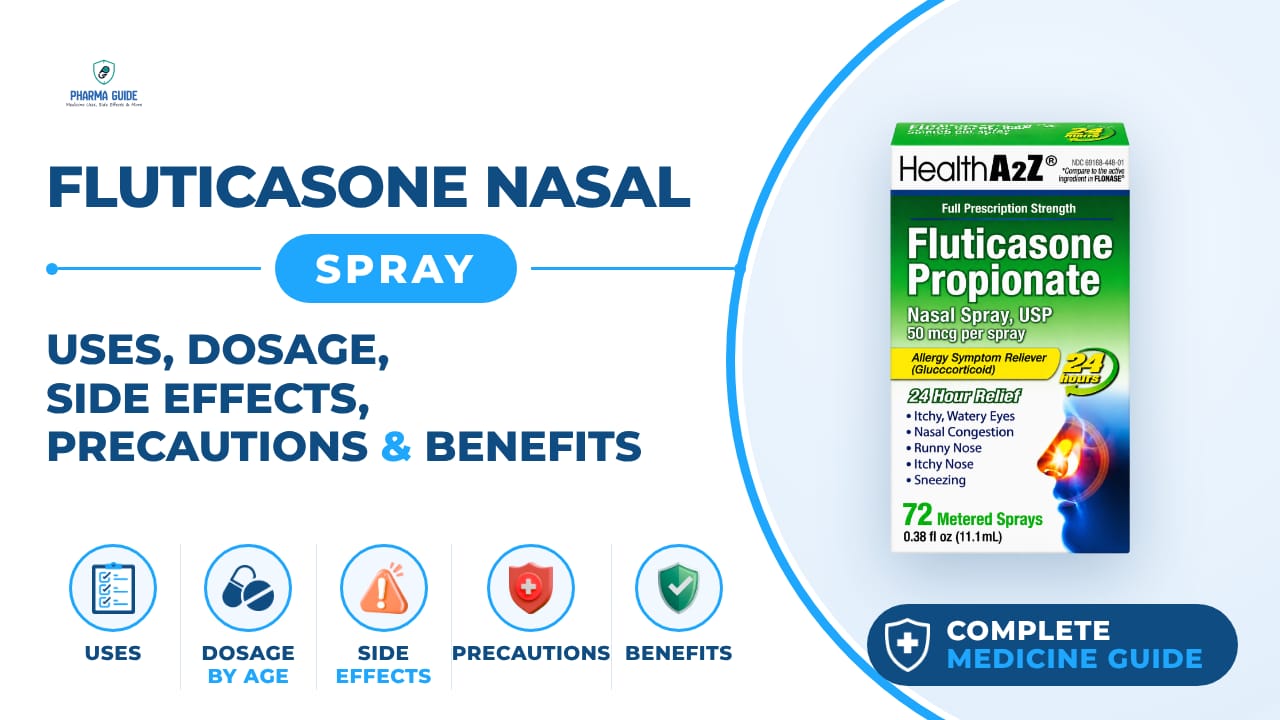
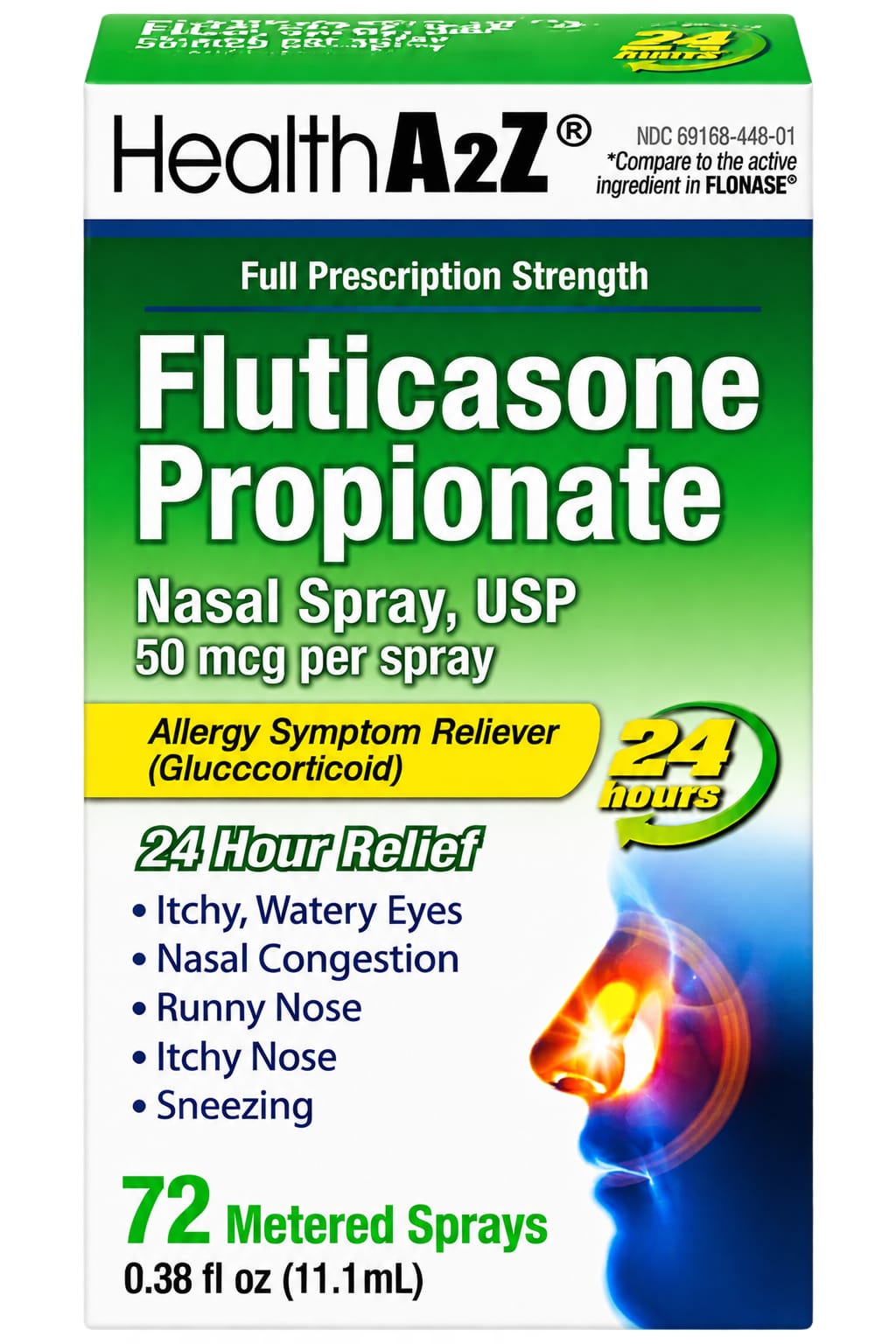
| Generic name | Fluticasone |
|---|---|
| Drug class | Nasal corticosteroid |
| Forms | Nasal spray |
Quick overview
Fluticasone Nasal Spray is a nasal corticosteroid used to relieve sneezing, itching, and a runny or stuffy nose caused by allergies or other conditions. It may also be used for nasal polyps and chronic sinus swelling, with a common brand being Flonase. The spray works by reducing inflammation inside the nose and is typically used on a regular schedule for best results.
What is Fluticasone Nasal Spray
Fluticasone is a nasal spray that treats allergy symptoms like sneezing, itching, and a runny or stuffy nose. It may also be used for nasal polyps and chronic sinus swelling. A common brand is Flonase.
Fluticasone Nasal Spray uses
- Relieving sneezing, itching, and runny or stuffy nose from hay fever or other allergies
- Relieving symptoms of nonallergic rhinitis (runny or stuffy nose not caused by allergies)
- Treating chronic rhinosinusitis with or without nasal polyps
- Treating itchy, watery eyes caused by allergies
Benefits of Fluticasone Nasal Spray
- Reduces inflammation in the nose to make breathing easier
- Controls symptoms of hay fever, allergies, and sinus swelling with regular use
How Fluticasone Nasal Spray works
Fluticasone works by blocking the release of natural substances in the body that cause allergy symptoms, which reduces swelling and inflammation in the nose.
Fluticasone Nasal Spray dosage
Use this medicine only in the nose; do not swallow it or spray it into your eyes or mouth. Shake the bottle gently before each use. Prime the pump before first use or if you haven't used it for a while, following the instructions that come with the spray. Blow your nose to clear your nostrils before using the spray.
Close one nostril, tilt your head slightly forward, and breathe in gently through your nose while spraying into the other nostril. Breathe out through your mouth after spraying. Wipe the tip of the spray with a clean tissue and replace the cap after use. Do not blow your nose or tip your head back right after using the spray, for some products.
Use on a regular schedule for best results, unless told to use it only as needed. Symptoms may start to improve within a day or two, but full benefit may take longer. Do not share your nasal spray bottle with anyone else. Continue your normal diet unless your doctor tells you otherwise.
Talk to your doctor about use in children, as this medicine may be given to children as young as 2 years for certain conditions but with precautions. Throw away the bottle once you've used the labeled number of sprays, even if it still contains liquid.
| Age group | Dose |
|---|---|
| Under 4 Years | Use only if recommended by a healthcare professional |
| 4–11 Years | Usually 1 spray (50 mcg) in each nostril once daily |
| 12 Years and Above | Usually 2 sprays (50 mcg each) in each nostril once daily, then reduce as symptoms improve |
| Adults (18–64 Years) | 1–2 sprays per nostril daily depending on symptom severity |
Available forms and strengths
- Nasal spray, 50 mcg per spray
Side effects of Fluticasone Nasal Spray
Common
- Headache
- Dryness, stinging, burning, or irritation in the nose
- Sore throat
- Nausea
- Vomiting
- Diarrhea
- Bloody mucus in nose
- Dizziness
- Change in sense of smell or taste
- Cough
- Stomach discomfort
- Back pain
- Toothache
- Weight gain
Serious
- Allergic reactions such as skin rash, itching, hives, or swelling of the face, lips, tongue, or throat
- Crusting or sores inside the nose
- Frequent or severe nosebleeds
- Signs of low adrenal gland function such as nausea, vomiting, loss of appetite, unusual weakness, or dizziness
- Thrush, or white patches in the nose or mouth
- Whistling sound through the nostrils that does not go away
- Severe face pain
- Thick nasal discharge
- Fever, sore throat, chills, cough, and other signs of infection
- Difficulty breathing or swallowing
- Wheezing
- Feeling faint
- Blurred vision, change in vision, or loss of vision
- Trouble breathing or chest tightness
Warnings and precautions
- This medicine may increase your risk of infections. Tell your doctor if you've been around anyone with chickenpox or measles, or if you develop sores or blisters that don't heal properly.
- This medicine can cause serious allergic reactions, including life-threatening swelling, which need immediate medical attention.
- Using this medicine may increase the risk of glaucoma or cataracts, so regular eye exams are recommended during treatment.
- This medicine may slow a child's growth rate, so talk to your child's doctor about growth monitoring.
- This medicine may cause holes or ulcers in the cartilage of the nose and delay wound healing, so tell your doctor about any recent nose surgery, injury, or infection.
- Using too much of this medicine, or using it for a long time, may increase the risk of adrenal gland problems.
- This medicine may decrease bone mineral density with long-term use, which can lead to weak bones or osteoporosis.
- Tell your care team if you are pregnant or trying to get pregnant before using this medicine.
- There isn't enough research to know if this medicine is safe during breastfeeding, so weigh the possible benefits and risks with your doctor.
- Elderly patients are more likely to have age-related kidney problems, which may require caution and a dose adjustment.
- Use with caution if you have severe liver disease, since the medicine may be removed from your body more slowly and its effects may be increased.
- Use regularly as directed; it may take several days to reach full effect.
- Use carefully if you have nasal sores, recent nasal surgery, or frequent nosebleeds.
Storage
- Store between 15 and 25 degrees C (59 and 77 degrees F)
- Protect from light
- Keep from freezing
- Keep in the container it came in, tightly closed, and out of reach of children
- Store at room temperature away from excess heat, moisture, and light (not in the bathroom)
- Get rid of any unused medication after the expiration date
- Do not keep outdated medicine or medicine no longer needed
- Take unused or expired medication to a medication take-back program; if not available, ask your pharmacist how to dispose of it safely
- Do not flush this medication down the toilet
When to see a doctor
- Get medical help right away if you have a rash, itching, hoarseness, large hive-like swelling of the face, lips, tongue, throat, hands, legs, or feet, trouble breathing or swallowing, or any swelling of the hands, face, or mouth.
- Check with your doctor immediately if you notice blurred vision, difficulty reading, or any other change in vision.
- Contact your doctor right away if you have darkening of the skin, diarrhea, dizziness, fainting, loss of appetite, depression, nausea, skin rash, unusual tiredness or weakness, or vomiting, as these may be signs of adrenal gland problems.
- If someone swallows this medicine, contact your local poison control center right away; if the person has collapsed or is not breathing, call emergency services immediately.
- If you think you've taken too much of this medicine, contact a poison control center or emergency room right away.
Alternatives
- Triamcinolone Nasal Spray
- Beclomethasone Nasal Spray
- Budesonide Nasal Spray
- Mometasone Nasal Spray
Watch the video
FAQs
What is Fluticasone Nasal Spray used for?
It is used to relieve sneezing, itching, and a runny or stuffy nose caused by allergies or nonallergic rhinitis, and to treat chronic rhinosinusitis with or without nasal polyps and itchy, watery eyes from allergies.
How does Fluticasone Nasal Spray work?
It works by blocking the release of natural substances in the body that cause allergy symptoms, which reduces swelling and inflammation in the nose.
How is Fluticasone Nasal Spray used?
It should be used only in the nose on a regular schedule, after shaking and priming the bottle, by spraying into one nostril at a time while breathing in gently, and symptoms may start to improve within a day or two.
What are the common side effects of Fluticasone Nasal Spray?
Common side effects include headache, nasal dryness or irritation, sore throat, nausea, vomiting, diarrhea, bloody mucus in the nose, dizziness, change in sense of smell or taste, cough, stomach discomfort, back pain, toothache, and weight gain.
Can children use Fluticasone Nasal Spray?
It may be given to children as young as 2 years for certain conditions with precautions, and doctors may monitor growth since it may slow a child's growth rate.
General information, not medical advice
Your prescriber and the leaflet in your pack know your situation. This page does not.
- Follow your prescriber and the leaflet
- Don't start, stop, or change a dose on your own
- Doses and warnings differ by country and product
Sources
Video
Related medicines

Injectafer Injection: Uses, Dosage, Side Effects, Precautions and Alternates
Iron products
Injectafer (ferric carboxymaltose) treats iron deficiency anemia and heart failure-related iron deficiency via IV. Learn uses, dosage, side effects, and

Gliclazide Tablet: Uses, Dosage, Side Effects, Precautions and Alternates
Sulfonylurea (hypoglycemic/antidiabetic agent)
Gliclazide Tablet is a sulfonylurea for type 2 diabetes that boosts insulin release. Learn about dosage, side effects, warnings, and precautions.