
Safety
General information, not medical advice
Your prescriber and the leaflet in your pack know your situation. This page does not.
- Follow your prescriber and the leaflet
- Don't start, stop, or change a dose on your own
- Doses and warnings differ by country and product
FML Eye Drops: Uses, Dosage, Side Effects, Precautions and Alternates
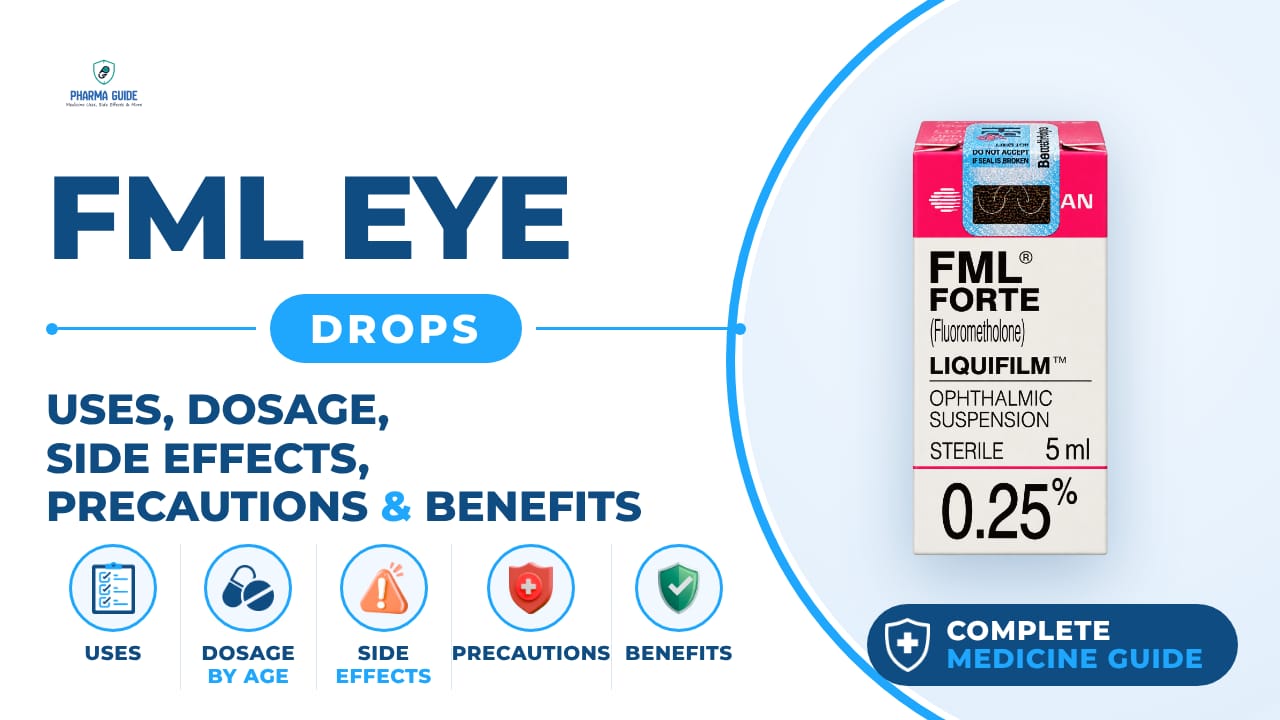
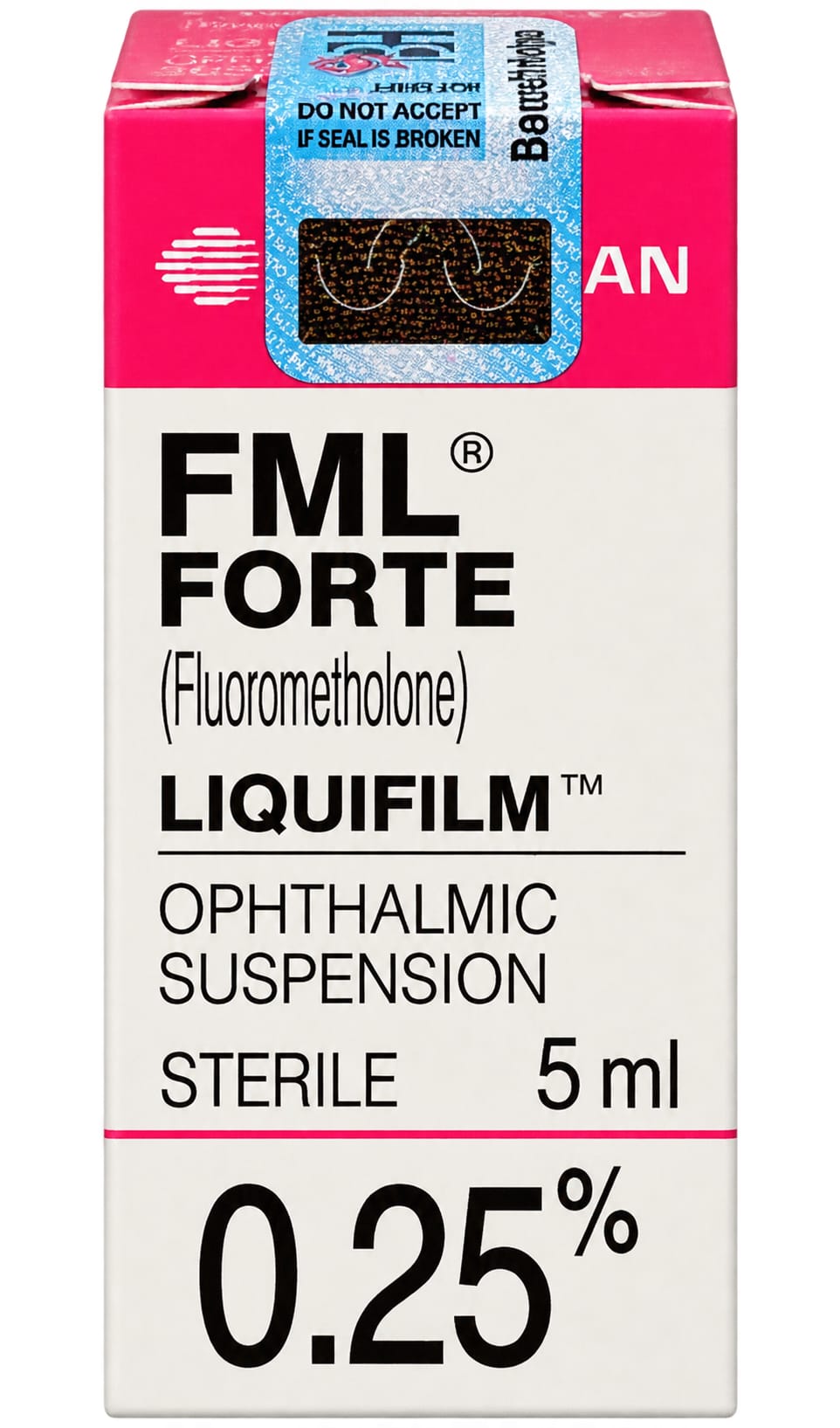
| Generic name | Fluorometholone |
|---|---|
| Drug class | Ophthalmic corticosteroid, Anti-inflammatory agent |
| Forms | Eye Drops |
Quick overview
FML Eye Drops is a steroid eye drop containing fluorometholone, used to treat inflammation such as pain, swelling and redness of the eye. It works by calming inflammation in eye tissue and is used for conditions like allergic conjunctivitis, uveitis, and inflammation following eye surgery. It is applied directly to the eye as a suspension drop and is generally used for short courses or as directed by a doctor.
What is FML Eye Drops
FML Eye Drops is a steroid eye drop containing fluorometholone. It is used to treat inflammation such as pain, swelling and redness of the eye.
FML Eye Drops uses
- Treats inflammation (pain, swelling and redness) of the eye
- Reduces inflammation after cataract or other eye surgery
- Treats allergic conjunctivitis with itchy, red and watery eyes
- Manages non infectious inflammation of the cornea
- Eases uveitis, an inflammation inside the eye
- Reduces redness and swelling caused by eye irritation or minor injury
Benefits of FML Eye Drops
- Brings fast relief from eye redness, itching and swelling
- Carries a lower risk of raising eye pressure than stronger steroids like dexamethasone
- Suitable for short courses of treatment after eye surgery
- Works well for milder, longer lasting inflammatory eye conditions
- Comes in an easy to use suspension drop form
How FML Eye Drops works
Fluorometholone reduces inflammation in the eye. It works on eye tissue by binding to receptors inside cells and blocking substances that cause inflammation, which reduces swelling of blood vessels, fluid leakage, and movement of inflammatory cells into the eye tissue.
FML Eye Drops dosage
These eye drops are for topical use only in the eye. Wash your hands well with soap and water before and after use. If you wear soft contact lenses, remove them before using the drops and wait at least 15 minutes before putting them back in. Shake the bottle well before use since it is a suspension.
Tilt your head back and look up, then gently pull down your lower eyelid to form a pocket. Put the tip of the bottle close to your lower eyelid without letting it touch your eye, eyelid, or any other surface. Close your eye after using the drop and avoid blinking or rubbing your eye. While your eye is closed, press gently on the inner corner of your eye near the nose for about two minutes to help stop the medicine draining into your nose and throat.
Wait at least 5 minutes before applying any other eye drop. Use the drops every day at about the same time unless your doctor tells you otherwise. If you forget a dose, skip the missed dose and use your next dose as scheduled, or use it as soon as you remember unless it is nearly time for the next dose. Do not use extra drops to make up for a missed dose. Not recommended for children younger than 2 years of age.
| Age group | Dose |
|---|---|
| Under 2 years | Safety and effectiveness not established |
| 2–17 years | 1 drop in affected eye 2–4 times daily, under ophthalmologist supervision |
| 18–64 years | 1 drop in affected eye 2–4 times daily |
| 65+ years | 1 drop in affected eye 2–4 times daily |
Available forms and strengths
- Eye Drops
Side effects of FML Eye Drops
Common
- Swelling of the eye, eye lid or surrounding areas
- Itchy eye
- Eye redness
- Eye pain
- Eye irritation
- Dilation of the pupil
- Eye discharge
- Calcium deposit in the cornea
- The feeling of having something in the eye
- Droopy eyelids
- Watery eye(s)
- Changes to taste
- Itchy, red skin rash
- Delayed wound healing
- Temporary blurred vision right after application
- Mild burning or stinging sensation
- Increased sensitivity to light
Serious
- Increased pressure in the eye
- Eye infection
- Blurred vision or other changes to your vision
- Severe allergic reaction, including swelling of the tongue, lips and throat, difficulty breathing
- Reduced vision from cataract with long term use
Warnings and precautions
- Do not use if you have an eye infection caused by the Herpes simplex virus, any infection in or around the eye, tuberculosis of the eye, or an allergy to fluorometholone or any ingredient.
- Do not use eye drops containing a corticosteroid for more than 10 days unless a doctor is closely monitoring your eye pressure.
- Long-term or repeated use of this steroid eye drop can raise eye pressure and lead to glaucoma, especially in people with a family history of the condition.
- Long-term use has been linked to a type of cataract forming at the back of the eye's lens.
- This medicine can slow healing of the eye's surface after surgery or injury.
- Steroid use can hide or worsen viral, fungal, and bacterial eye infections, including a virus called herpes simplex keratitis.
- Do not use this medicine for a red eye that has not been examined by a doctor, as it may worsen an underlying infection.
- Do not stop using this medicine suddenly without checking with your doctor.
- Do not let the dropper tip touch your eye, eyelid, or any other surface to avoid contamination.
- Do not use this medicine while wearing soft contact lenses; remove them first and wait before reinserting.
- Tell your doctor if you are pregnant or planning to become pregnant. It is not known if this medicine is safe to use during pregnancy.
- Tell your doctor if you are breastfeeding or planning to breastfeed, since it is not known if the medicine passes into breast milk and could affect the baby.
- There is no information on the effects of using this medicine with alcohol.
- Wait until your vision is clear after using the eye drops before you drive or use machines.
Storage
- Store it upright in a cool place, below 30°C away from heat, or sunlight. Do not freeze.
- Store the bottle at room temperature between 15 and 25 degrees Celsius.
- Keep the cap tightly closed when not in use.
- Protect the bottle from direct sunlight and heat.
- Keep out of reach of children.
- Discard the bottle 28 days after opening even if drops remain.
- Avoid touching the dropper tip to any surface to prevent contamination.
- Write the date on the bottle when you open the eye drops and discard unused contents 4 weeks after first opening it.
- If your doctor advises that you no longer need to use this medicine or it is out of date, take it to any pharmacy for safe disposal.
- Do not open a new bottle to use it if the expiry date has passed.
When to see a doctor
- Call your doctor straight away if you develop an eye infection, receive an eye injury, or have eye surgery.
- Call your doctor straight away if you develop blurred vision or notice any changes in your vision.
- Call your doctor straight away if you become pregnant while using this medicine.
- Call your doctor straight away if your eye condition seems to be getting worse or is not improving.
- Go straight to the Emergency Department if you notice a severe allergic reaction, including swelling of the tongue, lips and throat, or difficulty breathing.
- If the medicine is accidentally swallowed, contact your doctor, poison control, or go to the nearest hospital emergency department right away, even if there are no symptoms.
Alternatives
- Lotemax
- Durezol
- Vexol
Watch the video
FAQs
What is FML Eye Drops used for?
FML Eye Drops is a steroid eye drop used to treat inflammation such as pain, swelling and redness of the eye, including allergic conjunctivitis, uveitis, non-infectious corneal inflammation, and inflammation after eye surgery.
How does FML Eye Drops work?
Fluorometholone reduces inflammation by binding to receptors inside cells and blocking substances that cause inflammation, reducing swelling of blood vessels, fluid leakage, and movement of inflammatory cells into eye tissue.
What is the usual dosage of FML Eye Drops?
The usual dose is 1 drop in the affected eye 2–4 times daily, used at about the same time each day unless a doctor advises otherwise. It is not recommended for children younger than 2 years.
What are the common side effects of FML Eye Drops?
Common side effects include eye swelling, itching, redness, pain, irritation, watery eyes, blurred vision right after application, mild burning or stinging, and increased sensitivity to light.
How long can I use FML Eye Drops?
Corticosteroid eye drops like FML should not be used for more than 10 days unless a doctor is closely monitoring your eye pressure, as long-term use can raise eye pressure and lead to glaucoma or cataracts.
General information, not medical advice
Your prescriber and the leaflet in your pack know your situation. This page does not.
- Follow your prescriber and the leaflet
- Don't start, stop, or change a dose on your own
- Doses and warnings differ by country and product
Sources
Video
Related medicines

Injectafer Injection: Uses, Dosage, Side Effects, Precautions and Alternates
Iron products
Injectafer (ferric carboxymaltose) treats iron deficiency anemia and heart failure-related iron deficiency via IV. Learn uses, dosage, side effects, and

Gliclazide Tablet: Uses, Dosage, Side Effects, Precautions and Alternates
Sulfonylurea (hypoglycemic/antidiabetic agent)
Gliclazide Tablet is a sulfonylurea for type 2 diabetes that boosts insulin release. Learn about dosage, side effects, warnings, and precautions.