
Safety
General information, not medical advice
Your prescriber and the leaflet in your pack know your situation. This page does not.
- Follow your prescriber and the leaflet
- Don't start, stop, or change a dose on your own
- Doses and warnings differ by country and product
Folic Acid Tablet: Uses, Dosage, Side Effects, Precautions and Alternates
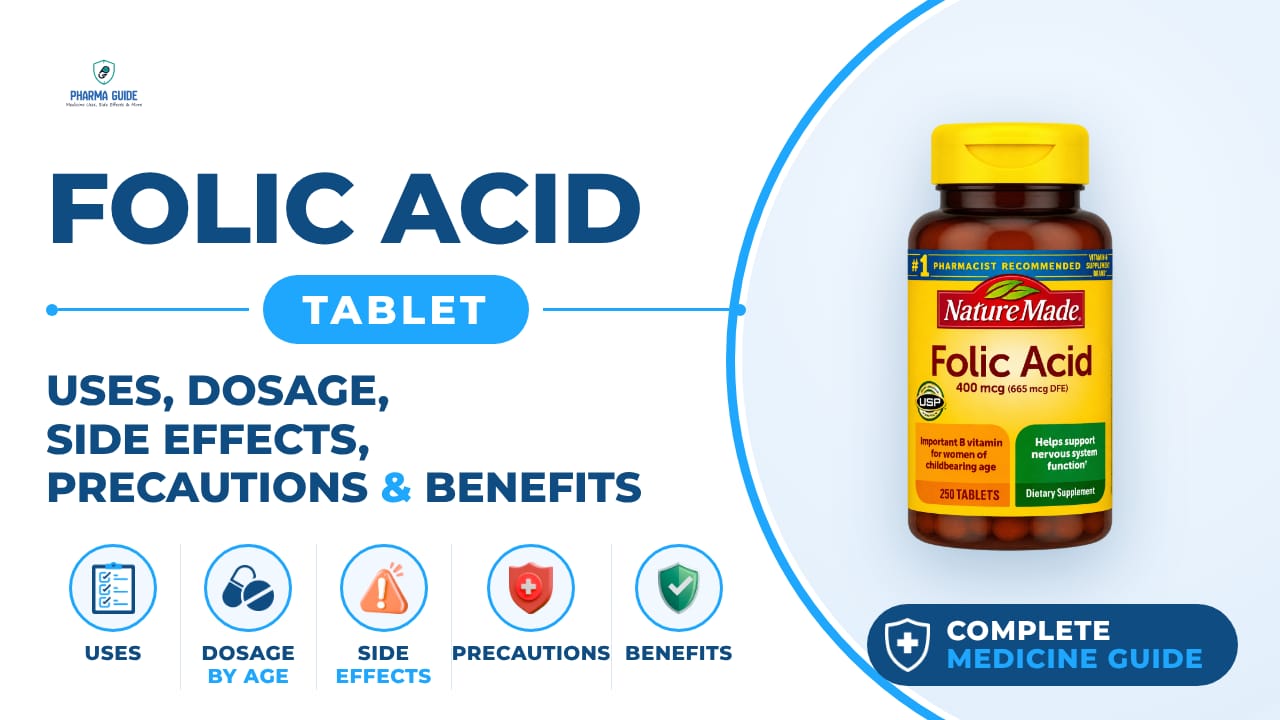
| Generic name | folic acid |
|---|---|
| Drug class | Vitamins |
| Forms | oral tablet, injection, oral solution |
Quick overview
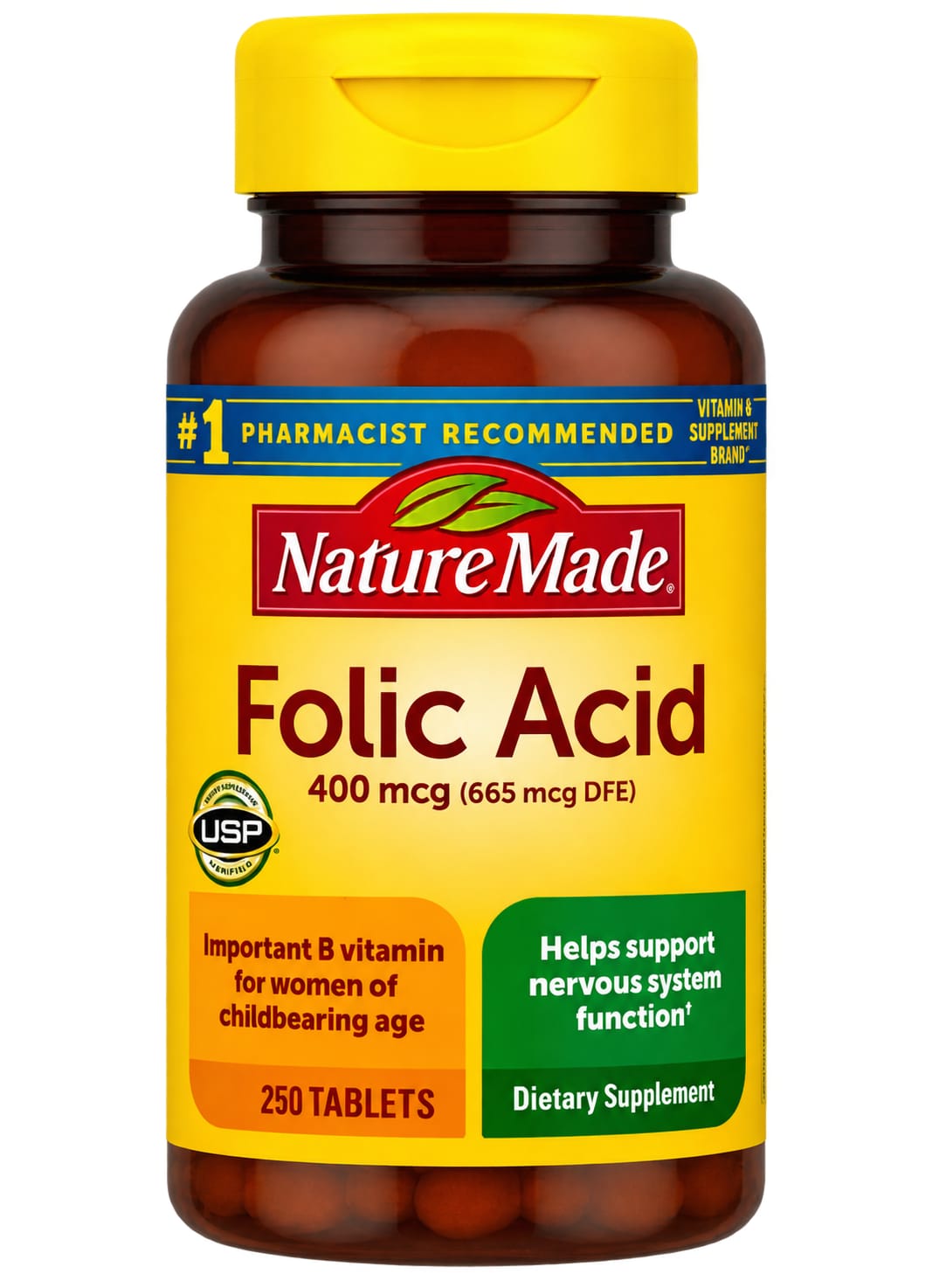
Folic Acid Tablet contains folic acid, a man-made form of vitamin B9 belonging to the vitamins drug class. It is used to prevent and treat folate-deficiency anemia, support healthy pregnancy by helping prevent neural tube defects, lower high homocysteine levels, and reduce side effects of methotrexate. It is available as a tablet, injection, and oral solution.
What is Folic Acid Tablet
Folic acid is a man-made form of vitamin B9. Your body uses it to make new cells, including blood cells, and to help with cell growth, repair, and DNA production. When you take folic acid, your body turns it into a usable form called folate.
Folic Acid Tablet uses
- Preventing and treating megaloblastic (folate-deficiency) anemia in adults and children
- Anaemia in pregnancy or anaemia caused as a side effect of certain medicines
- Anaemia due to damaged red blood cells
- Anaemia in patients on kidney dialysis
- Preventing neural tube defects (such as spina bifida) and other birth defects in pregnancy
- Lowering high levels of homocysteine in the blood
- Reducing side effects (toxicity) caused by the drug methotrexate
Benefits of Folic Acid Tablet
- Helps prevent serious birth defects of the brain and spine (neural tube defects) when taken before and during early pregnancy
- Helps treat and prevent folate-deficiency anemia, improving red blood cell production
- Helps reduce nausea, mouth sores, and other side effects in people taking methotrexate
- May help lower high homocysteine levels, which can otherwise raise cardiovascular risk
How Folic Acid Tablet works
Folic acid is a vitamin B9 supplement that plays a crucial role in healthy red blood cell production and is also vital for cell growth, repair, and DNA synthesis. Folic acid helps ensure the proper closure of the neural tube early in pregnancy, which forms the brain, spinal cord, and surrounding structures.
Folic Acid Tablet dosage
Take this medicine exactly as your doctor tells you, and follow the directions on the label. Swallow the tablet with a full glass of water, unless told otherwise. You can take folic acid with or without food; swallow the tablets whole with a drink.
If you take it once a day and miss a dose, take it as soon as you remember, but skip it if it's almost time for your next dose - never take two doses at once. If you take a weekly dose and miss it, take it as soon as you remember, unless that day is also your methotrexate day - in that case, wait a day and take the missed dose the following day, then return to your usual weekly schedule.
Leave a gap of at least two hours between taking folic acid and indigestion remedies containing aluminium or magnesium, as these can stop it being properly absorbed. Avoid drinking alcohol with folic acid, as it may reduce how well the vitamin is absorbed.
| Age group | Dose |
|---|---|
| Infants (0–12 Months) | 65–80 mcg/day |
| Children (1–8 Years) | 150–200 mcg/day |
| Children (9–13 Years) | 300 mcg/day |
| Teenagers (14–18 Years) | 400 mcg/day |
Available forms and strengths
- Oral tablet
- Injection
- Oral solution
Side effects of Folic Acid Tablet
Common
- Nausea or feeling sick
- Loss of appetite
- Bloating or gas (flatulence)
- Stomach pain
- Bitter or unpleasant taste in the mouth
- Sleep problems
- Mood changes such as depression, irritability, or excitement
- Trouble concentrating or confusion
Serious
- Signs of a serious allergic reaction: hives, rash, itching, skin redness, wheezing, difficulty breathing, or swelling of the face, lips, tongue, or throat
- Signs of shock: cold sweaty skin, weak pulse, dry mouth, dilated pupils, dizziness, weakness, or fainting
- Worsening of symptoms of vitamin B12 deficiency, which can cause nerve damage if left untreated
- Increased risk of seizures in some people with epilepsy taking phenobarbital, primidone, or phenytoin
Warnings and precautions
- Do not take folic acid if you have ever had an allergic reaction to it. Do not take folic acid if you have cancer, unless it is being used for anaemia caused by folic acid deficiency, because folic acid could potentially affect how well cancer treatments work.
- Folic acid should never be used to treat anaemia without a doctor first finding out the full cause, because it can hide the blood test signs of a vitamin B12 problem (pernicious anaemia) while nerve damage keeps getting worse. If you take methotrexate for cancer, do not add folic acid unless your cancer doctor tells you to, since it may reduce how well the cancer treatment works.
- Folic acid given by injection contains aluminum, which can build up to toxic levels in people with kidney problems or in premature babies.
- Folic acid needs increase a lot during pregnancy, and not getting enough can harm the unborn baby. Studies have not shown that taking folic acid during pregnancy increases the risk of fetal abnormalities, and it can be used to treat anaemia in pregnancy.
- Folic acid passes into breast milk but is not harmful to the baby. Needs increase during breastfeeding, though the amount in breast milk is usually enough for the infant; premature or unwell babies may need extra. Check with your doctor if your baby is premature or has health problems.
- Ask a doctor or pharmacist before use if you have kidney disease or are on dialysis, since this may affect your folic acid needs and requires monitoring. Ask a doctor or pharmacist before use if you have cirrhosis or other liver disease.
- Avoid drinking alcohol while taking folic acid, as it may stop the vitamin from being properly absorbed. It is also safer to avoid alcohol during pregnancy or if trying to conceive, since alcohol can harm the baby's growth.
- This medicine should not affect your ability to drive a car or operate machinery.
Storage
- Store folic acid at room temperature, away from moisture and heat.
- Do not store above 25°C. Store in the original container in order to protect from light.
- Keep out the sight and reach of children.
- Do not take after the expiry date on the container (bottle label or carton) or if the tablets show signs of 'going off' such as discolouration.
- Do not throw away any medicines via wastewater or household waste. Ask your pharmacist how to throw away medicines you no longer use.
When to see a doctor
- Get emergency medical help right away if you have signs of a serious allergic reaction: hives, rash, itching, skin redness, wheezing, difficulty breathing, or swelling of your face, lips, tongue, or throat.
- Call your healthcare provider or seek emergency medical attention if you take more folic acid than recommended.
- Go to the emergency department straight away if you get a skin rash with itching, redness, swelling, blistering or peeling skin, wheezing, tightness in the chest or throat, trouble breathing or talking, or swelling of your mouth, face, lips, tongue, or throat — these are signs of a serious allergic reaction.
Alternatives
- Methylfolate
- Folvite
- Prenatal Vitamins with Folate
Watch the video
FAQs
What is Folic Acid Tablet used for?
It is used to prevent and treat folate-deficiency (megaloblastic) anemia, prevent neural tube defects like spina bifida during pregnancy, lower high homocysteine levels, and reduce side effects of methotrexate.
How should I take Folic Acid Tablet if I miss a dose?
If you take it once daily and miss a dose, take it as soon as you remember unless it's almost time for the next dose, then skip it. If you take a weekly dose and miss it, take it as soon as you remember, unless that day is your methotrexate day, in which case wait a day before taking it.
Can I drink alcohol while taking Folic Acid Tablet?
No, you should avoid alcohol while taking folic acid, as it may reduce how well the vitamin is absorbed. It is also safer to avoid alcohol during pregnancy or if trying to conceive.
What are the common side effects of Folic Acid Tablet?
Common side effects include nausea, loss of appetite, bloating or gas, stomach pain, a bitter taste in the mouth, sleep problems, mood changes, and trouble concentrating or confusion.
Is Folic Acid Tablet safe during pregnancy and breastfeeding?
Folic acid needs increase during pregnancy, and studies have not shown it increases the risk of fetal abnormalities; it can also treat anaemia in pregnancy. It passes into breast milk but is not harmful to the baby, though premature or unwell babies may need extra, so check with your doctor.
General information, not medical advice
Your prescriber and the leaflet in your pack know your situation. This page does not.
- Follow your prescriber and the leaflet
- Don't start, stop, or change a dose on your own
- Doses and warnings differ by country and product
Sources
Video
Related medicines
Cyanocobalamin (Vitamin B12) Injection: Uses, Dosage, Side Effects, Precautions and Alternates
Vitamins
Cyanocobalamin (Vitamin B12) Injection treats and prevents B12 deficiency and pernicious anemia, supporting nerve, blood cell, and DNA health.
Vitamin E Capsule: Uses, Dosage, Side Effects, Precautions and Alternates
Vitamins
Vitamin E Capsule is an antioxidant supplement used to treat or prevent vitamin E deficiency. Learn its uses, dosage, side effects, and precautions.