
Safety
General information, not medical advice
Your prescriber and the leaflet in your pack know your situation. This page does not.
- Follow your prescriber and the leaflet
- Don't start, stop, or change a dose on your own
- Doses and warnings differ by country and product
Folivit Tablet: Uses, Dosage, Side Effects, Precautions and Alternates
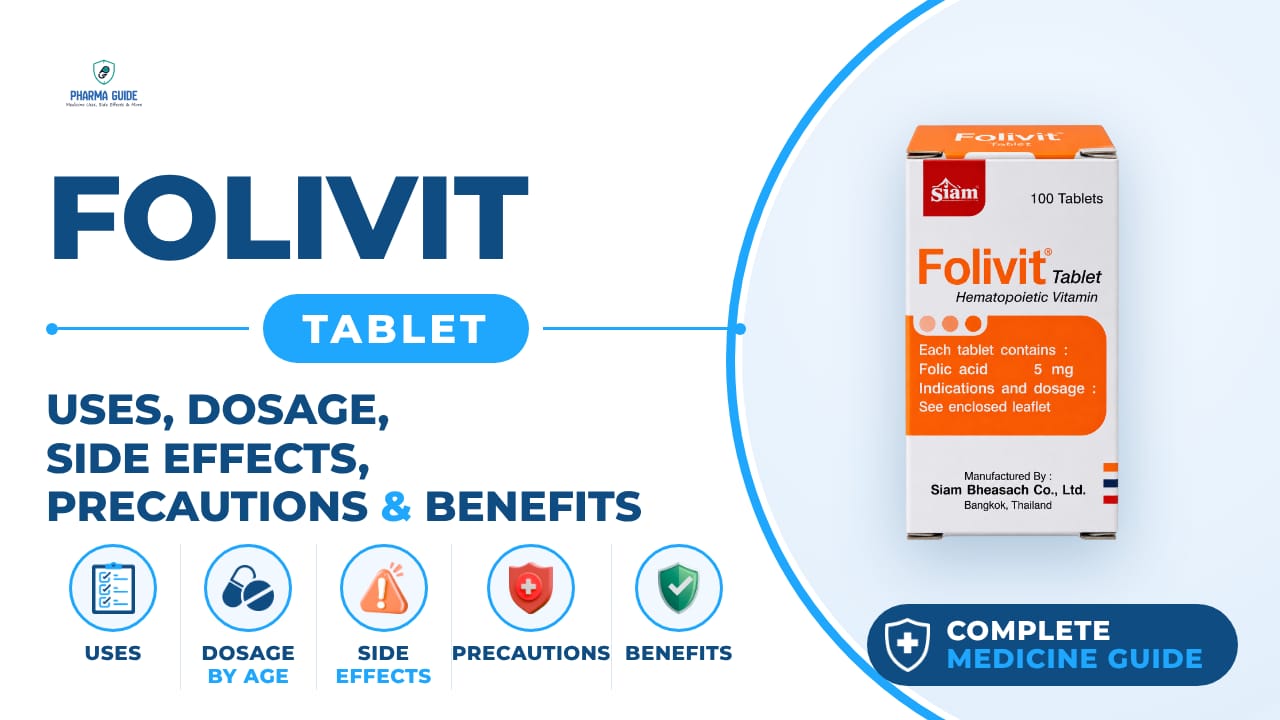
| Generic name | folic acid |
|---|---|
| Drug class | Vitamins, Water-Soluble |
| Forms | tablet, oral solution, injectable solution |
Quick overview
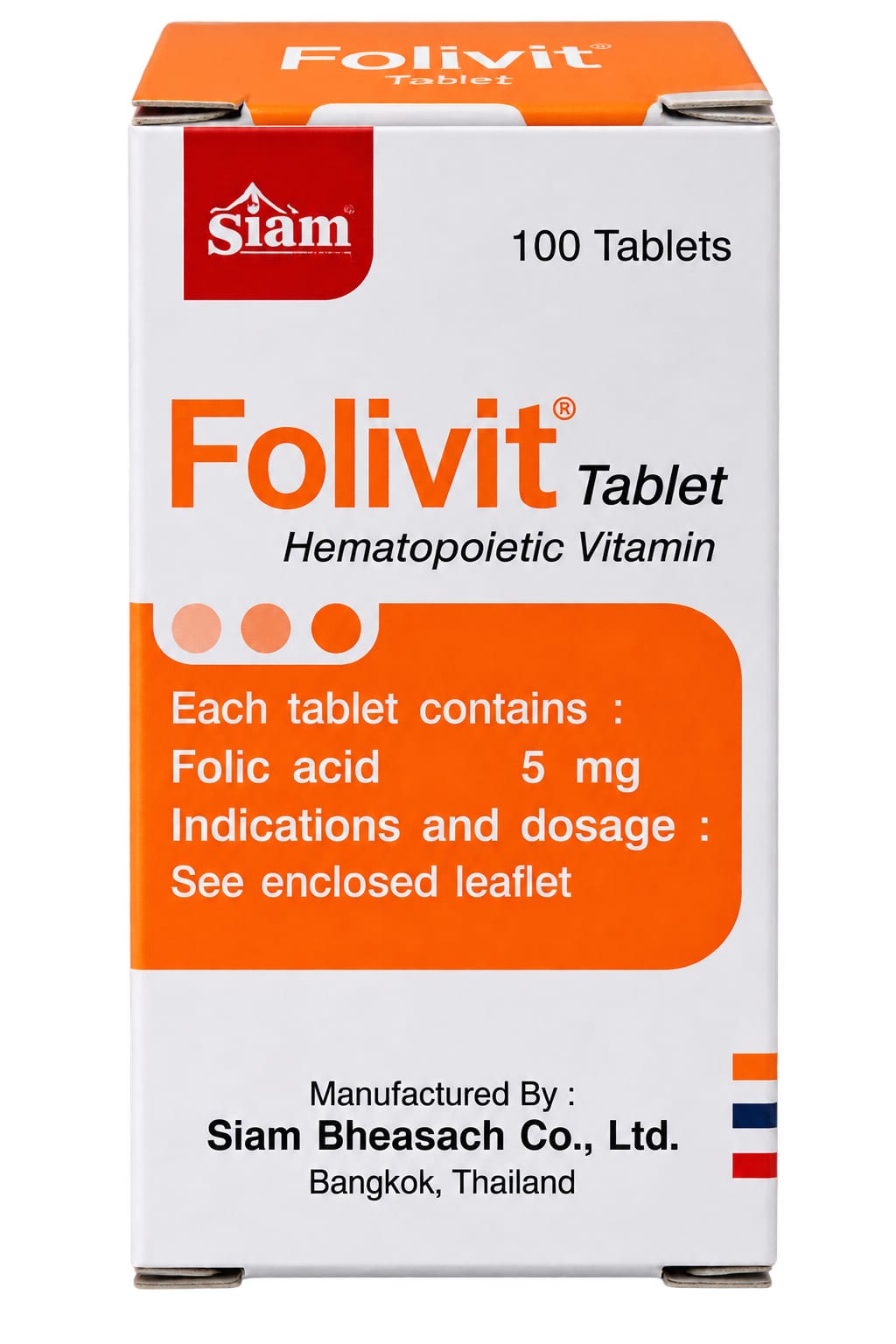
Folivit Tablet contains folic acid, a man-made version of vitamin B9. It is used to treat or prevent low folate levels in the body, which can lead to certain types of anemia or birth defects. It supports red blood cell production, healthy foetal brain and spinal cord development during pregnancy, and helps lower homocysteine levels for heart health.
What is Folivit Tablet
Folivit is a tablet form of folic acid, a man-made version of folate (vitamin B9). It is used to treat or prevent low folate levels in the body, which can lead to certain types of anemia or birth defects.
Folivit Tablet uses
- Treating megaloblastic anemia caused by low folic acid levels
- Preventing or treating low folate levels from poor diet, pregnancy, alcoholism, liver disease, certain stomach or intestinal problems, or kidney dialysis
- Supporting healthy foetal brain and spinal cord development during pregnancy, which may reduce the risk of neural tube defects
- Supporting red blood cell production and overall blood health
- Helping lower homocysteine levels to support heart health
Benefits of Folivit Tablet
- Helps manage folic acid deficiency and supports overall health
- Supports proper brain and spinal cord formation in the baby during pregnancy
- Helps improve blood health and oxygen transport by replenishing folic acid stores
- Helps metabolise homocysteine, supporting heart health
- Supports DNA and RNA synthesis needed for cell division and repair
- May support cognitive function and nervous system health
How Folivit Tablet works
Folic acid is needed by the body to build genetic material (DNA) and to keep red blood cell production working normally. It specifically boosts the production of red blood cells, white blood cells, and platelets in people with certain types of anemia caused by low folate.
Folivit Tablet dosage
Folivit can be taken with or without food. Taking it with or after meals may help reduce the chance of stomach upset. Take it with water, preferably after a meal, to help absorption. Avoid tea, coffee, or antacids within two hours of taking the tablet, as they may interfere with absorption. Avoid alcohol, as it may interfere with folic acid absorption. Take it at the same time each day for best results, and use exactly as directed by your doctor.
| Age group | Dose |
|---|---|
| Children | Dose depends on folic acid requirement and medical advice |
| Adolescents (13–17 Years) | Usually 400 mcg once daily as advised |
| Adults (18–64 Years) | Usually 400 mcg–1 mg once daily depending on need |
| Older Adults (65+ Years) | Usually 400 mcg–1 mg once daily as advised |
Available forms and strengths
- Tablet
- Oral solution
- Injectable solution
Side effects of Folivit Tablet
Common
- Mild flushing
- Malaise (general feeling of being unwell)
Serious
- Rash
- Itching
- Swelling, especially of the face, tongue, or throat
- Dizziness
- Trouble breathing
- Sudden vision loss, blurred vision, tunnel vision, eye pain or swelling, or seeing halos around lights
- Fast, irregular, or pounding heartbeats; fluttering in the chest; shortness of breath; sudden dizziness, lightheadedness, or passing out
- Severe headache, confusion, slurred speech, arm or leg weakness, trouble walking, loss of coordination, feeling unsteady, very stiff muscles, high fever, profuse sweating, or tremors
- Bronchospasm (breathing difficulty caused by tightening of the airways)
Warnings and precautions
- Folic acid on its own is not the right treatment for pernicious anemia or other types of megaloblastic anemia caused by a lack of vitamin B12.
- Taking more than a small daily amount of folic acid can hide the blood signs of pernicious anemia, even while nerve damage from the disease keeps getting worse.
- Taking folic acid at doses above a small daily amount can mask a diagnosis of anemia that hasn't been fully checked, so anemia should be properly diagnosed before starting treatment.
- Folic acid is generally considered safe to take during pregnancy when used as directed, and taking enough of it may help prevent certain spinal cord birth defects in the baby.
- Folic acid passes into breast milk but is unlikely to harm a nursing baby. Still, check with your doctor before breastfeeding while taking it.
- People on kidney dialysis can develop low folate levels, which is one of the conditions this medicine is used to treat.
- Liver disease is one of the conditions that can cause low folate levels, which this medicine is used to treat.
- Alcohol use is linked to low folate levels, and if you have a history of alcoholism your doctor may need to increase your maintenance dose. It's also recommended to avoid alcohol since it may reduce how well folic acid is absorbed.
- Inform your doctor if you have vitamin B12 deficiency or anemia of unknown cause.
Storage
- Store below 30°C
- Store in a cool, dry place, away from direct sunlight and heat
- Keep out of the reach of children
When to see a doctor
- Get medical help right away if you notice signs of a serious allergic reaction, such as rash, itching or swelling of the face, tongue, or throat, dizziness, or trouble breathing.
- Seek emergency medical care right away for serious eye symptoms such as sudden vision loss, blurred vision, tunnel vision, eye pain or swelling, or seeing halos around lights.
- Seek emergency medical care right away for serious heart symptoms such as a fast, irregular, or pounding heartbeat, fluttering in the chest, shortness of breath, or sudden dizziness, lightheadedness, or passing out.
- Seek emergency medical care right away if you have a severe headache, confusion, slurred speech, arm or leg weakness, trouble walking, loss of coordination, feeling unsteady, very stiff muscles, high fever, heavy sweating, or tremors.
Alternatives
- Methylfolate Supplements
- Iron + Folic Acid Tablets
- Folate Supplements
- Folic Acid Tablets
Watch the video
FAQs
What is Folivit Tablet used for?
Folivit Tablet is used to treat megaloblastic anemia caused by low folic acid, prevent or treat low folate levels from poor diet, pregnancy, alcoholism, liver disease, stomach or intestinal problems, or kidney dialysis, and it supports foetal brain and spinal cord development, red blood cell production, and heart health by lowering homocysteine levels.
How should I take Folivit Tablet?
Folivit can be taken with or without food, though taking it with or after a meal with water may help reduce stomach upset and improve absorption. Avoid tea, coffee, or antacids within two hours of taking it, avoid alcohol, and take it at the same time each day as directed by your doctor.
What is the usual dose of Folivit Tablet for adults?
Adults aged 18-64 years usually take 400 mcg to 1 mg once daily depending on their need, while older adults typically take the same 400 mcg to 1 mg once daily as advised by their doctor.
Is Folivit Tablet safe during pregnancy and breastfeeding?
Folic acid is generally considered safe during pregnancy when used as directed and may help prevent certain spinal cord birth defects in the baby. It also passes into breast milk but is unlikely to harm a nursing baby, though you should check with your doctor before breastfeeding while taking it.
What are the side effects of Folivit Tablet?
Common side effects include mild flushing and malaise. Serious side effects can include rash, itching, swelling of the face, tongue, or throat, dizziness, trouble breathing, vision changes, irregular heartbeats, and severe neurological symptoms like confusion or slurred speech, which require immediate medical attention.
General information, not medical advice
Your prescriber and the leaflet in your pack know your situation. This page does not.
- Follow your prescriber and the leaflet
- Don't start, stop, or change a dose on your own
- Doses and warnings differ by country and product
Sources
Video
Related medicines

Injectafer Injection: Uses, Dosage, Side Effects, Precautions and Alternates
Iron products
Injectafer (ferric carboxymaltose) treats iron deficiency anemia and heart failure-related iron deficiency via IV. Learn uses, dosage, side effects, and

Gliclazide Tablet: Uses, Dosage, Side Effects, Precautions and Alternates
Sulfonylurea (hypoglycemic/antidiabetic agent)
Gliclazide Tablet is a sulfonylurea for type 2 diabetes that boosts insulin release. Learn about dosage, side effects, warnings, and precautions.