
Safety
General information, not medical advice
Your prescriber and the leaflet in your pack know your situation. This page does not.
- Follow your prescriber and the leaflet
- Don't start, stop, or change a dose on your own
- Doses and warnings differ by country and product
Fondaparinux Injection: Uses, Dosage, Side Effects, Precautions and Alternates
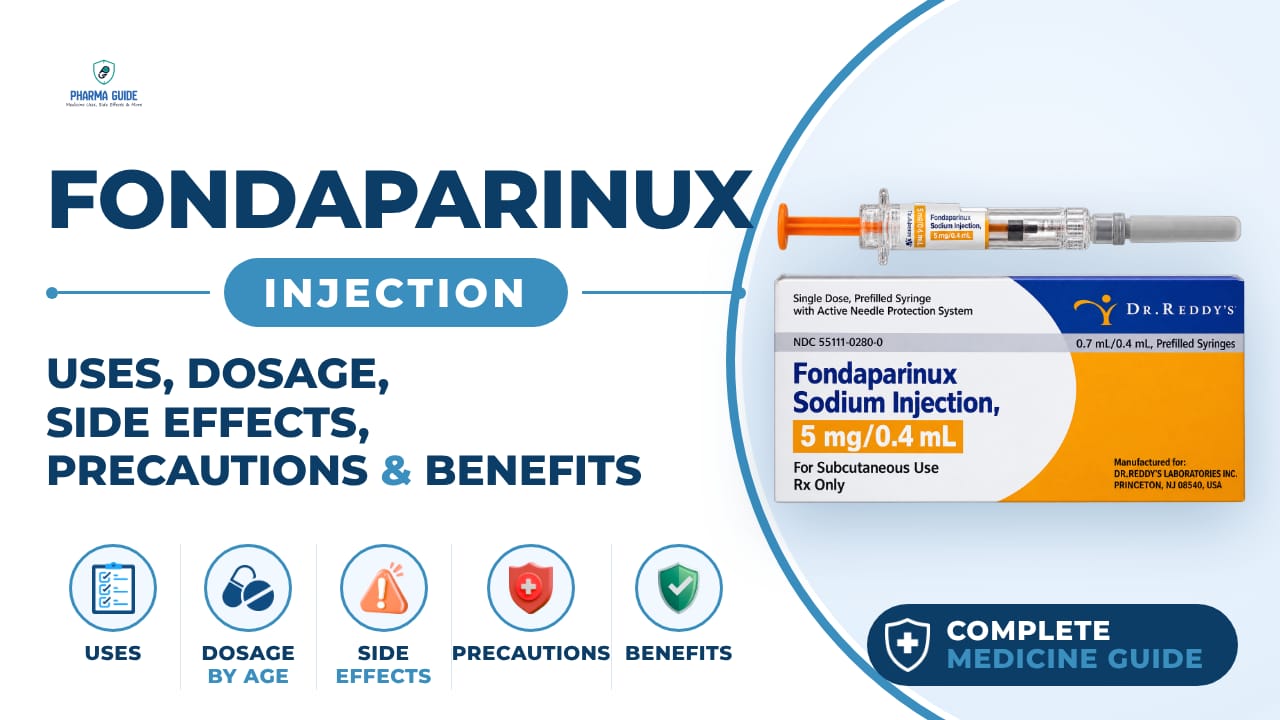
| Generic name | fondaparinux sodium |
|---|---|
| Drug class | anticoagulant, factor Xa inhibitor |
| Forms | Injection |
Quick overview
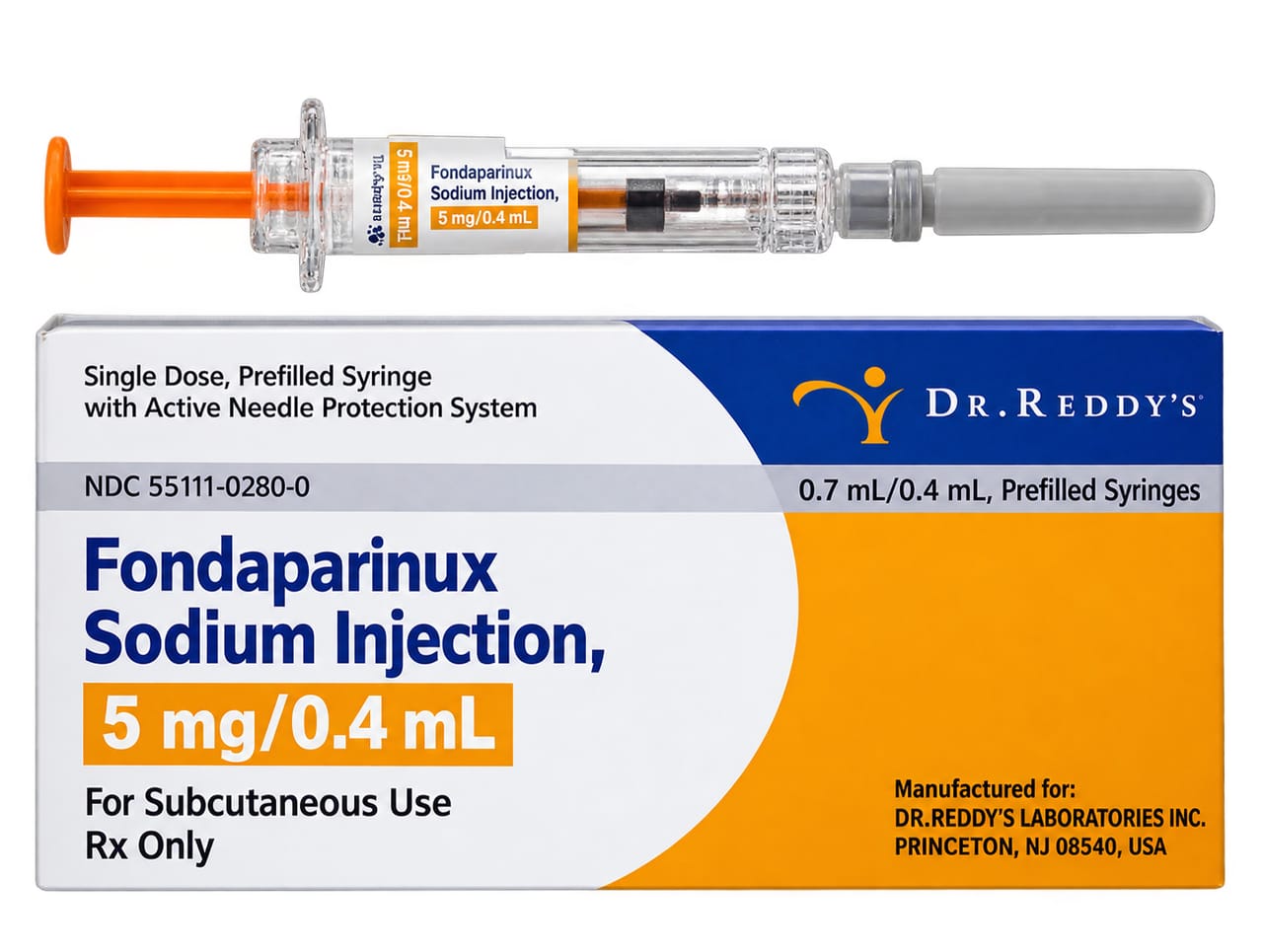
Fondaparinux Injection (fondaparinux sodium) is an anticoagulant in the factor Xa inhibitor class, given as an injection under the skin to prevent or treat blood clots. It is used after certain surgeries, for deep venous thrombosis and pulmonary embolism, and in certain heart conditions. It works by blocking clotting factors and enzymes that are needed for blood to clot.
What is Fondaparinux Injection
Fondaparinux is a blood thinner (anticoagulant) given as an injection under the skin. It is used to treat or prevent blood clots.
Fondaparinux Injection uses
- To prevent blood clots in the leg (deep venous thrombosis, DVT) after certain hip, knee, or stomach surgeries
- To treat blood clots, including DVT or a blood clot in the lung (pulmonary embolism, PE)
- To prevent blood clots in people with unstable angina, a recent heart attack, or certain types of surgery
Benefits of Fondaparinux Injection
- Helps prevent dangerous blood clots from forming after surgery
- Treats existing blood clots in the legs and lungs
- Can help prevent complications like heart attack, stroke, or pulmonary embolism caused by blood clots
How Fondaparinux Injection works
Fondaparinux blocks certain clotting factors and enzymes in the blood that help blood clot, which prevents new clots from forming or growing.
Fondaparinux Injection dosage
Fondaparinux is given as an injection under the skin (subcutaneous), not into a muscle. It is usually given once a day, at around the same time every day. Inject into a skin fold of the lower stomach (abdomen) area, and rotate injection sites between the left and right sides.
Wash your hands and clean the injection site with an alcohol swab before injecting; do not rub the injection site. Do not use the syringe if it is leaky or if the medication looks cloudy or discolored. Each syringe is for one use only; do not reuse needles or syringes. Do not mix this medication with other medications or solutions. Continue your normal diet unless your doctor tells you otherwise.
If you miss a dose, take it as soon as you remember; if it is almost time for your next dose, skip the missed dose and continue your regular schedule; do not use double or extra doses. People over 65 may be more at risk of bleeding from this medication. This medication has not been established as safe and effective for children under 17 years old.
| Age group | Dose |
|---|---|
| Under 18 years | Not recommended |
| 18–64 years | 2.5 mg, once/day |
| 65+ years | 2.5 mg, once/day |
Available forms and strengths
- Injection
Side effects of Fondaparinux Injection
Common
- Anemia
- Low blood pressure
- Trouble sleeping, dizziness, and confusion
- Increased bleeding
- Bleeding, rash, and itching at the injection site
- Increased wound drainage
- Low potassium level
- Bruises or discolored spots on the skin
- Constipation
- Coughing
- Diarrhea
- Flushing
- Headache
- Heartburn
- Swelling in the feet, ankles, or wrists
- Tiredness
- Blisters on skin
- Pale skin
Serious
- Severe allergic reactions (breathing problems, wheezing, racing heart, fever, swollen lymph nodes, swelling of face/lips/mouth/tongue/throat, trouble swallowing, hives, nausea or vomiting, dizziness or fainting, stomach cramps, joint pain)
- Spinal blood clots that can cause long-term or permanent paralysis, especially with spinal taps or epidurals
- Severe bleeding that can lead to death, including pink/red/brown urine, vomit like coffee grounds, red or black tarry stools, or coughing up blood
- Severely low platelet levels (easy bruising or bleeding, bleeding that does not stop, nosebleeds)
- Signs of liver problems (nausea, vomiting, diarrhea, loss of appetite, weight loss, yellowing of skin or eyes, dark urine, pale stools)
- Signs of a urinary tract infection
- Chest pain, shortness of breath, or loss of consciousness
Warnings and precautions
- Fondaparinux may cause harm to a fetus and should not be used during pregnancy unless the benefits outweigh the risks. Tell your doctor right away if you become pregnant while using this medicine.
- It is not known if fondaparinux passes into breast milk. Talk to your doctor about whether you should continue breastfeeding while using this medicine.
- Kidney disease or reduced kidney function can cause this medicine to build up in the body and increase the risk of bleeding. Your doctor may need to monitor your kidney function.
- Tell your doctor if you have liver problems before using this medicine.
- It is not known for certain how alcohol affects this medicine, but drinking alcohol may increase dizziness and confusion, and both alcohol and this medicine can raise the risk of bleeding, so it's best to limit alcohol.
- Using this medicine along with a spinal tap or epidural can cause a blood clot near the spine, which may lead to long-term or permanent paralysis. Tell your doctor right away if you have back pain, tingling, numbness, muscle weakness, or loss of bladder or bowel control.
- Do not use this medicine if you have uncontrolled bleeding, a heart infection, certain low platelet conditions, or if you are an adult weighing less than 110 pounds and are using it to prevent a blood clot.
- This medicine can increase your risk of serious bleeding, especially if you have a bleeding disorder, stomach ulcers, or have recently had brain, spine, or eye surgery. People who weigh less than 50 kg may have a higher risk of bleeding.
- The needle shield of the prefilled syringe contains natural latex rubber, which may cause an allergic reaction in people allergic to latex.
- Do not share this medicine with others, even if they have the same symptoms, as it could harm them.
Storage
- Store at room temperature, between 68 F and 77 F (20 C and 25 C)
- Can be exposed to temperatures between 59 F and 86 F (15 C and 30 C) for shorter periods, such as when transporting it
- Store in a cool, dry place
- Do not freeze
- Keep out of the reach and sight of children
- Do not dispose of medications in wastewater (such as down the sink or in the toilet) or in household garbage
- Safely dispose of used syringes in approved containers
- Ask your pharmacist about take-back programs in your community for unneeded or expired medication
When to see a doctor
- Get medical help right away if you have symptoms of a serious allergic reaction, such as trouble breathing, swelling of the face/lips/tongue/throat, hives, or stomach cramps with nausea and vomiting.
- Call your doctor right away if you notice signs of severe bleeding, such as pink, red, or brown urine, vomit that looks like coffee grounds, red or black tarry stools, or coughing up blood.
- Get medical help immediately if you suddenly cannot move part of your body or have sudden back pain or tenderness, as this could mean bleeding around the spine.
- Call your doctor immediately if you experience muscle weakness, numbness or tingling (especially in your legs), or are unable to move your legs.
- If you think you have used too much of this medicine, get medical help right away or contact a poison control center.
Alternatives
- Heparin
- Arixtra
- Dalteparin
Watch the video
FAQs
What is Fondaparinux Injection used for?
It is used to prevent blood clots after certain hip, knee, or stomach surgeries, to treat deep venous thrombosis (DVT) and pulmonary embolism (PE), and to prevent clots in people with unstable angina, a recent heart attack, or certain surgeries.
How is Fondaparinux Injection given?
It is given as a subcutaneous injection, usually once a day at the same time, into a skin fold of the lower abdomen, rotating between left and right sides. It should not be injected into a muscle.
What should I do if I miss a dose of Fondaparinux?
Take the missed dose as soon as you remember. If it is almost time for your next dose, skip the missed dose and continue your regular schedule. Do not take double or extra doses.
What are the serious side effects of Fondaparinux Injection?
Serious side effects include severe allergic reactions, spinal blood clots that can cause long-term or permanent paralysis, severe bleeding, severely low platelet levels, and signs of liver problems.
Can Fondaparinux Injection be used during pregnancy?
Fondaparinux may harm a fetus and should not be used during pregnancy unless the benefits outweigh the risks. Tell your doctor right away if you become pregnant while using this medicine.
General information, not medical advice
Your prescriber and the leaflet in your pack know your situation. This page does not.
- Follow your prescriber and the leaflet
- Don't start, stop, or change a dose on your own
- Doses and warnings differ by country and product
Sources
Video
Related medicines
Eliquis Tablet: Uses, Dosage, Side Effects, Precautions and Alternates
Anticoagulant (Factor Xa inhibitor)
Eliquis Tablet (apixaban) prevents stroke and blood clots by blocking Factor Xa. Learn uses, dosage, side effects, warnings, and when to see a doctor.

Injectafer Injection: Uses, Dosage, Side Effects, Precautions and Alternates
Iron products
Injectafer (ferric carboxymaltose) treats iron deficiency anemia and heart failure-related iron deficiency via IV. Learn uses, dosage, side effects, and