
Safety
General information, not medical advice
Your prescriber and the leaflet in your pack know your situation. This page does not.
- Follow your prescriber and the leaflet
- Don't start, stop, or change a dose on your own
- Doses and warnings differ by country and product
Foracort Inhaler: Uses, Dosage, Side Effects, Precautions and Alternates
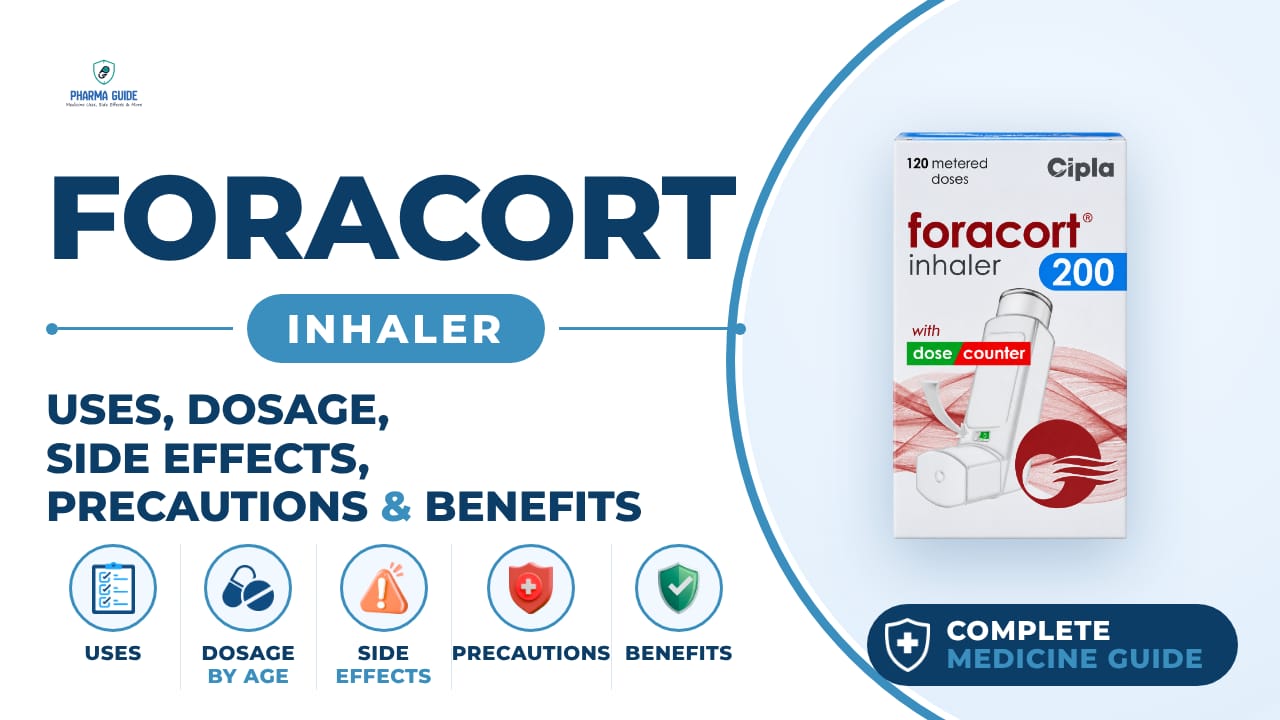
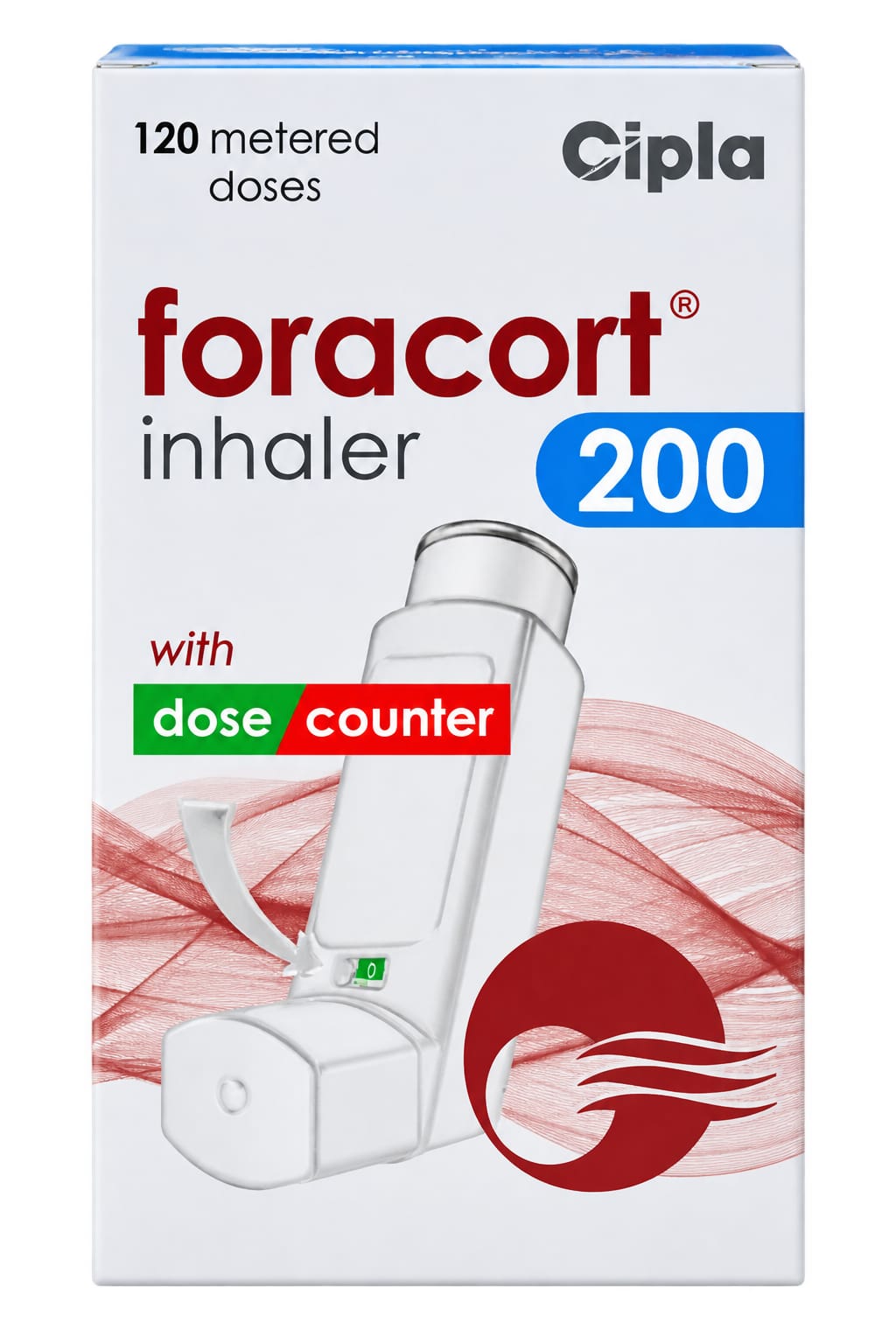
| Generic name | Formoterol fumarate dihydrate and Budesonide Inhaler |
|---|---|
| Drug class | Combination inhaler (Corticosteroid and Long-acting beta-agonist) |
| Forms | Aerosol inhaler (metered dose inhaler) |
Quick overview
Foracort Inhaler contains formoterol fumarate dihydrate and budesonide, a combination inhaler belonging to the corticosteroid and long-acting beta-agonist class. It is used for the long-term control of asthma and chronic obstructive pulmonary disease (COPD). It is not meant to relieve a sudden asthma or breathing attack. A separate fast-acting rescue inhaler should always be kept on hand for sudden symptoms.
What is Foracort Inhaler
Foracort Inhaler combines two medicines, budesonide and formoterol, in one inhaler. It is used for the long-term control of asthma and chronic obstructive pulmonary disease (COPD). It is not meant to relieve a sudden asthma or breathing attack.
Foracort Inhaler uses
- Regular treatment of asthma
- Regular treatment of moderate to severe COPD with frequent symptoms and a history of exacerbations
- Relief of symptoms such as wheezing, shortness of breath, chest tightness, breathing difficulty and coughing
Benefits of Foracort Inhaler
- Helps keep the airways in your lungs open by relaxing the muscles around them, making it easier for air to move in and out
- Relieves symptoms such as chest tightness, shortness of breath, wheezing and coughing so daily activities become easier
- Can help prevent an asthma attack from starting if used before exercise or exposure to triggers like dust, pollen, pets or cigarette smoke
How Foracort Inhaler works
Foracort combines two medicines. Budesonide is a steroid that reduces swelling and irritation in the airways. Formoterol is a long-acting medicine that relaxes the muscles around the airways so they open up. Together they make breathing easier.
Foracort Inhaler dosage
Use this inhaler every day, even when you have no symptoms, because it is meant to prevent symptoms rather than treat a sudden attack. Check the label for directions before use, and shake the inhaler well before each puff. Breathe out fully, then start breathing in slowly through the mouth and press down on the inhaler once while continuing to inhale deeply. Hold your breath for about 10 seconds before breathing out slowly. Rinse your mouth thoroughly with water afterward and spit it out to help prevent mouth and throat infections.
Do not use this inhaler to relieve sudden shortness of breath; always keep a separate rescue inhaler with you for that purpose. If you miss a dose, take it as soon as you remember, but if it is almost time for your next dose, skip the missed one and continue your regular schedule; do not double up. Do not stop using it unless your doctor tells you to, as your symptoms may come back or get worse.
| Age group | Dose |
|---|---|
| Under 6 Years | Use only if prescribed by a healthcare professional |
| 6–11 Years | Dose depends on inhaler strength and medical condition |
| 12 Years and Above | Usually 1–2 inhalations twice daily depending on strength and severity |
| Adults (18–64 Years) | Usually 1–2 inhalations twice daily as prescribed |
| Older Adults (65+ Years) | Adult dose; adjustment may be needed based on health condition |
Available forms and strengths
- Aerosol inhaler (metered dose inhaler)
Side effects of Foracort Inhaler
Common
- Nausea
- Vomiting
- Headache
- Stomach discomfort
- Cough
- Nasopharyngitis (inflammation of the throat and nasal passages)
- Upper respiratory tract infection
- Sinus inflammation (sinusitis)
- Fungal infection of the mouth and throat (thrush)
- Tremors
- Palpitations
- Voice change (hoarseness)
- Throat pain
- Influenza
- Back pain
- Nasal congestion
- Bronchitis (in COPD patients)
Serious
- Chest pain, increased blood pressure, a fast and irregular heartbeat, tremor and nervousness from using too much of the LABA component
- Fungal infection (thrush) in the mouth or throat
- Pneumonia and other lower respiratory tract infections, especially in people with COPD
- Increased chance of infections due to effects on the immune system
- Adrenal insufficiency, especially when switching from steroid tablets to this inhaler
- Increased wheezing right after taking a dose (paradoxical bronchospasm)
- Serious allergic reactions including rash, hives, swelling of the face, mouth and tongue, and breathing problems
- Lower bone mineral density with long-term use
- Slowed growth in children
- Eye problems including glaucoma and cataracts
- Swelling of blood vessels with symptoms such as pins and needles, numbness, sinus pain and swelling, or rash
- Decreases in blood potassium levels (hypokalemia)
- Increases in blood sugar levels (hyperglycemia)
Warnings and precautions
- This inhaler does not relieve sudden breathing problems or an asthma attack that has already started. Always keep a separate fast-acting rescue inhaler with you for sudden symptoms.
- Do not use this inhaler during a sudden, severe asthma attack or a severe worsening of COPD, since it is not meant for these emergency situations.
- If your breathing gets worse, you wake up at night with asthma more often, or your chest feels tight for longer than usual, contact your doctor right away as your treatment may need to change.
- Rinse your mouth with water after each use, without swallowing, to help lower the chance of getting a fungal mouth or throat infection.
- Do not use more than the maximum recommended number of inhalations per day, and seek medical advice if you find you need to use it more often than usual.
- This inhaler should not be used together with other long-acting bronchodilator medicines, as this could lead to an overdose.
- Do not stop using this inhaler suddenly without your doctor's advice, as your symptoms could come back or get worse.
- Talk to your doctor before using this inhaler if you are pregnant or planning to become pregnant. It should only be used if your doctor decides the benefits outweigh the possible risks to your unborn baby, and you should not stop using it without talking to your doctor first.
- If you are breastfeeding, talk to your doctor before using this inhaler, since one of its ingredients passes into breast milk.
- There is no specific information on using this medicine in people with kidney problems, so tell your doctor about any kidney disease before starting treatment.
- Reduced liver function can affect how the body clears the steroid component of this medicine, so tell your doctor if you have severe liver problems before using this inhaler.
- It is not clearly known how alcohol interacts with this medicine, so it is best to check with your doctor before drinking alcohol while using it.
- This medicine has no or only a very small effect on your ability to drive or use machines.
Storage
- FORACORT Inhaler should be stored away from moisture below a temperature of 30°C and should be taken out of the blister immediately before use.
- Keep FORACORT Inhaler and all medicines out of reach of children.
When to see a doctor
- Get medical help right away if you notice increased wheezing immediately after using the inhaler, worsening shortness of breath, chest pain, a fast heartbeat, or shakiness.
- Seek emergency care for signs of a serious allergic reaction, such as rash, hives, or swelling of the face, mouth, or tongue with breathing problems.
- Contact your doctor if you notice signs of a possible lung infection, such as more mucus, a change in mucus colour, fever, chills, worse cough, or more difficulty breathing.
- Call your doctor or get medical care right away if your breathing problems get worse, you need your rescue inhaler more often than usual, or it does not work as well as before.
- If you accidentally take too much of this medicine, get emergency medical treatment straight away and take the pack or strip with you.
Alternatives
- Symbicort Inhaler
- Seretide Inhaler
- Breo Ellipta
Watch the video
FAQs
What is Foracort Inhaler used for?
It is used for the regular, long-term treatment of asthma and moderate to severe COPD, helping relieve symptoms like wheezing, shortness of breath, chest tightness and coughing. It is not meant to relieve a sudden asthma or breathing attack.
How does Foracort Inhaler work?
It combines budesonide, a steroid that reduces swelling and irritation in the airways, with formoterol, a long-acting medicine that relaxes the muscles around the airways so they open up, making breathing easier.
What is the usual dose of Foracort Inhaler for adults?
Adults usually take 1–2 inhalations twice daily as prescribed, used every day even without symptoms since it is meant to prevent symptoms rather than treat a sudden attack.
What are the common side effects of Foracort Inhaler?
Common side effects include nausea, vomiting, headache, stomach discomfort, cough, nasopharyngitis, upper respiratory tract infection, sinusitis, oral thrush, tremors, palpitations, hoarseness, throat pain, influenza, back pain, and nasal congestion.
Can Foracort Inhaler be used for a sudden asthma attack?
No, it does not relieve sudden breathing problems or an asthma attack that has already started. A separate fast-acting rescue inhaler should always be kept on hand for sudden symptoms.
General information, not medical advice
Your prescriber and the leaflet in your pack know your situation. This page does not.
- Follow your prescriber and the leaflet
- Don't start, stop, or change a dose on your own
- Doses and warnings differ by country and product
Sources
- Ciplamed: FORACORT Inhaler prescribing information (https://www.ciplamed.com/product-index/foracort-inhaler)
- PingMeDoc: Foracort 200 Inhaler (https://www.pingmedoc.com/pharmacy/medicine/foracort-200-inhaler)
- Practo: Foracort-200 Inhaler Medicine Info (https://www.practo.com/medicine-info/foracort-200-inhaler-46257)
Video
Related medicines

Injectafer Injection: Uses, Dosage, Side Effects, Precautions and Alternates
Iron products
Injectafer (ferric carboxymaltose) treats iron deficiency anemia and heart failure-related iron deficiency via IV. Learn uses, dosage, side effects, and

Gliclazide Tablet: Uses, Dosage, Side Effects, Precautions and Alternates
Sulfonylurea (hypoglycemic/antidiabetic agent)
Gliclazide Tablet is a sulfonylurea for type 2 diabetes that boosts insulin release. Learn about dosage, side effects, warnings, and precautions.