
Safety
General information, not medical advice
Your prescriber and the leaflet in your pack know your situation. This page does not.
- Follow your prescriber and the leaflet
- Don't start, stop, or change a dose on your own
- Doses and warnings differ by country and product
Fosphenytoin Injection: Uses, Dosage, Side Effects, Precautions and Alternates
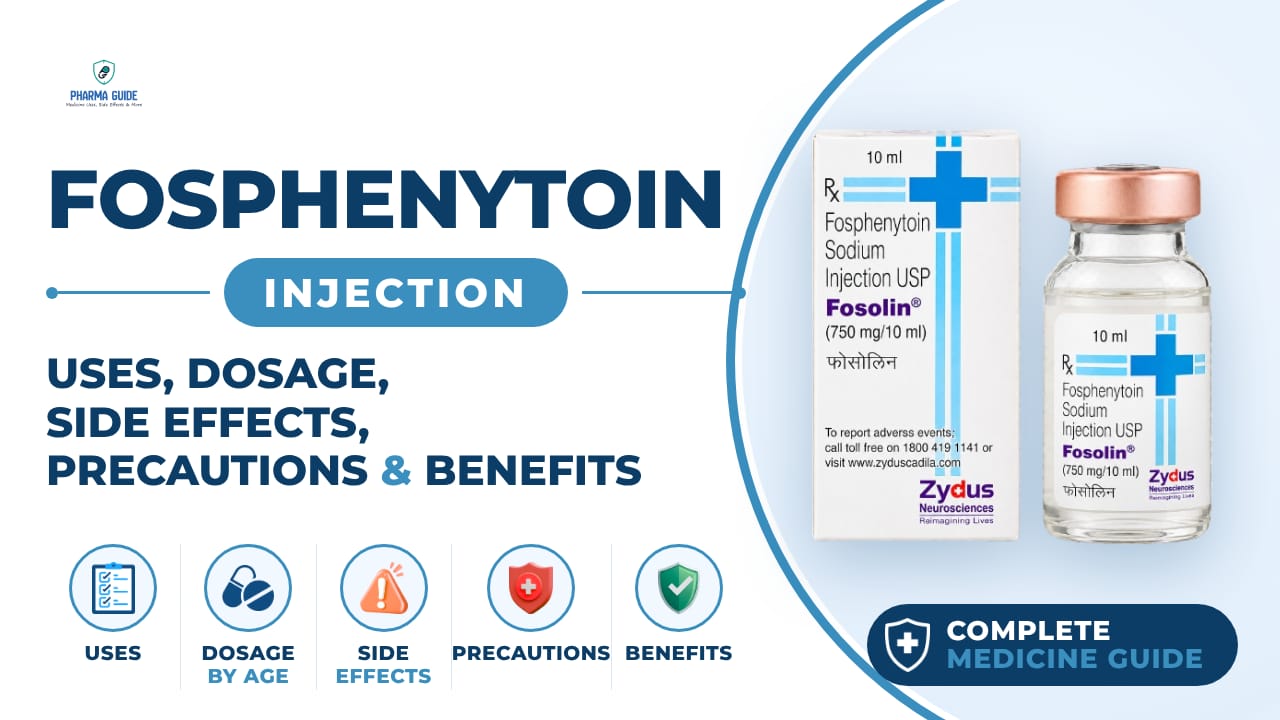
| Generic name | Fosphenytoin |
|---|---|
| Drug class | Hydantoin anticonvulsant |
| Forms | Injectable solution (given into a vein or muscle) |
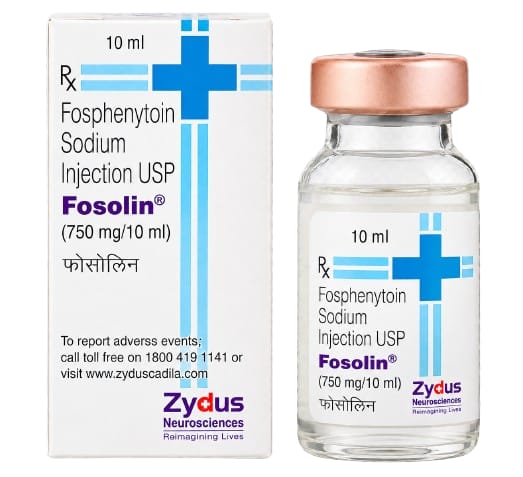
Quick overview
Fosphenytoin Injection, known generically as fosphenytoin, is a hydantoin anticonvulsant that the body converts into phenytoin. It is given by a doctor or nurse, usually when seizure medicine cannot be taken by mouth, to control status epilepticus, prevent seizures around brain surgery, and serve as short-term replacement for oral phenytoin. It requires close monitoring during administration due to its effects on heart rhythm and blood pressure.
What is Fosphenytoin Injection
Fosphenytoin is a medicine given by injection that the body converts into phenytoin, a drug used to stop and prevent seizures. It is given by a doctor or nurse, usually when seizure medicine cannot be taken by mouth.
Fosphenytoin Injection uses
- Controlling status epilepticus (a long-lasting or repeated seizure emergency)
- Preventing and treating seizures that happen during or after brain or nervous system surgery
- Short-term replacement for oral phenytoin when a person cannot take phenytoin by mouth
Benefits of Fosphenytoin Injection
- Controls severe seizures.
- Treats status epilepticus.
- Helps prevent seizures during brain surgery.
- Helps manage generalized tonic-clonic seizures.
- Provides short-term treatment when oral phenytoin cannot be taken.
How Fosphenytoin Injection works
After injection, the body quickly converts fosphenytoin into phenytoin, which calms down overactive electrical signals in the brain that cause seizures.
Fosphenytoin Injection dosage
This medicine is given only by a doctor or nurse in a hospital or medical facility, either into a vein or into a muscle. When given into a vein, it is usually given slowly, not pushed in quickly. You will be watched closely during the injection and for about 10 to 20 minutes afterward to check your heart, blood pressure, and breathing.
Do not stop this treatment suddenly if it is being used to control your seizures, because stopping suddenly can cause seizures to come back or worsen. If you miss a scheduled dose, contact your doctor right away since dosing is managed by a healthcare professional.
| Age group | Dose |
|---|---|
| Under 18 years | Not recommended |
| 18–64 years | 100–150 mg/day |
| 65+ years | 100–150 mg/day |
Available forms and strengths
- Injectable solution (given into a vein or muscle)
Side effects of Fosphenytoin Injection
Common
- Dizziness and drowsiness
- Unusual or involuntary eye movements (nystagmus)
- Vomiting and nausea
- Itching, burning, or tingling sensation
- Problems with balance or muscle coordination
- Headache
- Dry mouth
- Changes in taste
- Ringing in the ears
- Constipation
Serious
- Very slow heartbeat, shortness of breath, or chest pain
- Feeling light-headed like you might pass out
- Confusion, unusual thoughts or behavior
- Pain, swelling, and purple discoloration at the injection site that may spread to the hand or fingers
- Sudden fever, chills, sore throat, or weakness
- Easy bruising or unusual bleeding
- Signs of swollen lymph nodes such as a painful or warm lump under the skin, tiredness, rash, weight loss, fever, or night sweats
- Low blood potassium: leg cramps, constipation, irregular heartbeats, fluttering in the chest, increased thirst or urination, numbness or tingling, muscle weakness
- Signs of a severe allergic reaction: hives, difficulty breathing, swelling of face or throat
- Signs of a severe skin reaction: fever, sore throat, burning eyes, skin pain, red or purple skin rash with blistering and peeling
- Yellowing of the skin or eyes, pain in the upper right stomach, loss of appetite (possible liver problems)
- Thoughts of suicide or self-harm
Warnings and precautions
Giving this medicine too fast into a vein can cause a sudden drop in blood pressure and dangerous irregular heartbeats. Your heart, blood pressure, and breathing will be closely watched during and after the infusion. This medicine should not be used in people with certain serious heart rhythm problems, including slow heartbeat, heart block, or Adams-Stokes syndrome.
Serious, sometimes fatal, skin reactions such as Stevens-Johnson syndrome and toxic epidermal necrolysis have occurred. The medicine should be stopped right away if a rash or these symptoms occur. People of Asian ancestry may have a higher genetic risk of developing a serious skin reaction to this medicine, and genetic testing may be recommended before starting treatment.
A serious reaction called DRESS (Drug Reaction with Eosinophilia and Systemic Symptoms) can occur, involving fever, rash, swollen lymph nodes, and damage to organs like the liver. Serious blood disorders, some fatal, have occurred, including low platelet counts, low white blood cell counts, and bone marrow suppression.
Swelling, discoloration, and pain near the injection site (sometimes called 'purple glove syndrome') can occur and in rare cases has led to tissue damage requiring surgery or amputation. Stopping antiepileptic medicines suddenly can cause seizures to return or worsen, including status epilepticus, so dose changes should be made gradually under medical supervision.
Using this medicine during pregnancy may increase the risk of birth defects and other problems in the baby, although uncontrolled seizures also pose risks to mother and baby. Newborns exposed to phenytoin before birth may have a serious bleeding problem that can be prevented with vitamin K treatment to the mother before delivery and to the baby after birth.
Fosphenytoin may harm an unborn baby, but having a seizure during pregnancy can also harm the mother and baby, so the benefits may outweigh the risks. Do not start or stop this medicine during pregnancy without your doctor's advice, and tell your doctor right away if you become pregnant.
It is not known if fosphenytoin passes into breast milk, but phenytoin (the active form of this drug) does pass into milk in low amounts, so breastfeeding is not recommended while receiving this medicine.
People with kidney disease may process this medicine differently, which can increase the risk and severity of side effects. Your doctor may need to adjust your dose and monitor you more closely.
The liver breaks down this medicine, so people with liver problems, elderly patients, or those who are very ill may show early signs of toxicity. Serious liver injury has also been reported with phenytoin.
Avoid drinking alcohol while using this medicine. Drinking alcohol can change how much of the medicine is in your blood and may increase side effects such as feeling less alert or worsening mood.
This medicine can make you dizzy or drowsy, so you should not drive or operate dangerous machinery until you know how it affects you.
Storage
- Store under refrigeration at 2° to 8°C (36° to 46°F)
- Do not store at room temperature for more than 48 hours
- Do not use vials that develop particulate matter
- Keep out of the reach and sight of children
When to see a doctor
- Get emergency help right away if you have signs of a severe allergic reaction, such as hives, trouble breathing, or swelling of your face or throat.
- Call your doctor immediately if you have a very slow heartbeat, shortness of breath, or feel like you might pass out.
- Seek medical care if you notice swelling, pain, or purple discoloration where the injection was given, especially if it spreads to your hand or fingers.
- Tell your doctor right away if you notice signs of swollen lymph nodes, such as a painful lump under the skin along with tiredness, rash, weight loss, fever, or night sweats.
- Seek medical help for signs of a serious body-wide reaction, including rash, fever, swollen glands, muscle aches, severe weakness, unusual bruising, or yellowing of the skin or eyes.
- If you think you have received too much of this medicine, seek emergency medical attention right away, as an overdose can be fatal.
- Tell your doctor immediately if you develop thoughts of suicide or self-harm while receiving this medicine.
Alternatives
- Lacosamide
- Levetiracetam
- Phenytoin
Watch the video
FAQs
What is Fosphenytoin Injection used for?
It is used to control status epilepticus, prevent and treat seizures during or after brain or nervous system surgery, and serve as short-term replacement for oral phenytoin when a person cannot take it by mouth.
How is Fosphenytoin Injection given?
It is given only by a doctor or nurse in a hospital or medical facility, either into a vein or into a muscle. When given into a vein, it is given slowly, and you are watched closely during and for about 10 to 20 minutes after the injection.
What are the serious side effects of Fosphenytoin Injection?
Serious side effects include very slow heartbeat, chest pain, confusion, pain and purple discoloration at the injection site, signs of severe allergic or skin reactions, liver problems, low blood potassium, blood disorders, and thoughts of suicide or self-harm.
Can Fosphenytoin Injection be stopped suddenly?
No, it should not be stopped suddenly if used to control seizures, because this can cause seizures to return or worsen, including status epilepticus. Dose changes should be made gradually under medical supervision.
Is Fosphenytoin Injection safe during pregnancy?
It may increase the risk of birth defects and other problems in the baby, but uncontrolled seizures also pose risks, so the benefits may outweigh the risks. Patients should not start or stop the medicine during pregnancy without a doctor's advice.
General information, not medical advice
Your prescriber and the leaflet in your pack know your situation. This page does not.
- Follow your prescriber and the leaflet
- Don't start, stop, or change a dose on your own
- Doses and warnings differ by country and product
Sources
Video
Related medicines
Phenytoin Capsule: Uses, Dosage, Side Effects, Precautions and Alternates
Hydantoin anticonvulsant
Phenytoin Capsule is an anticonvulsant used to control seizures and prevent seizures during brain surgery. Learn dosage, side effects, and warnings.

Injectafer Injection: Uses, Dosage, Side Effects, Precautions and Alternates
Iron products
Injectafer (ferric carboxymaltose) treats iron deficiency anemia and heart failure-related iron deficiency via IV. Learn uses, dosage, side effects, and