
Safety
General information, not medical advice
Your prescriber and the leaflet in your pack know your situation. This page does not.
- Follow your prescriber and the leaflet
- Don't start, stop, or change a dose on your own
- Doses and warnings differ by country and product
Phenytoin Capsule: Uses, Dosage, Side Effects, Precautions and Alternates
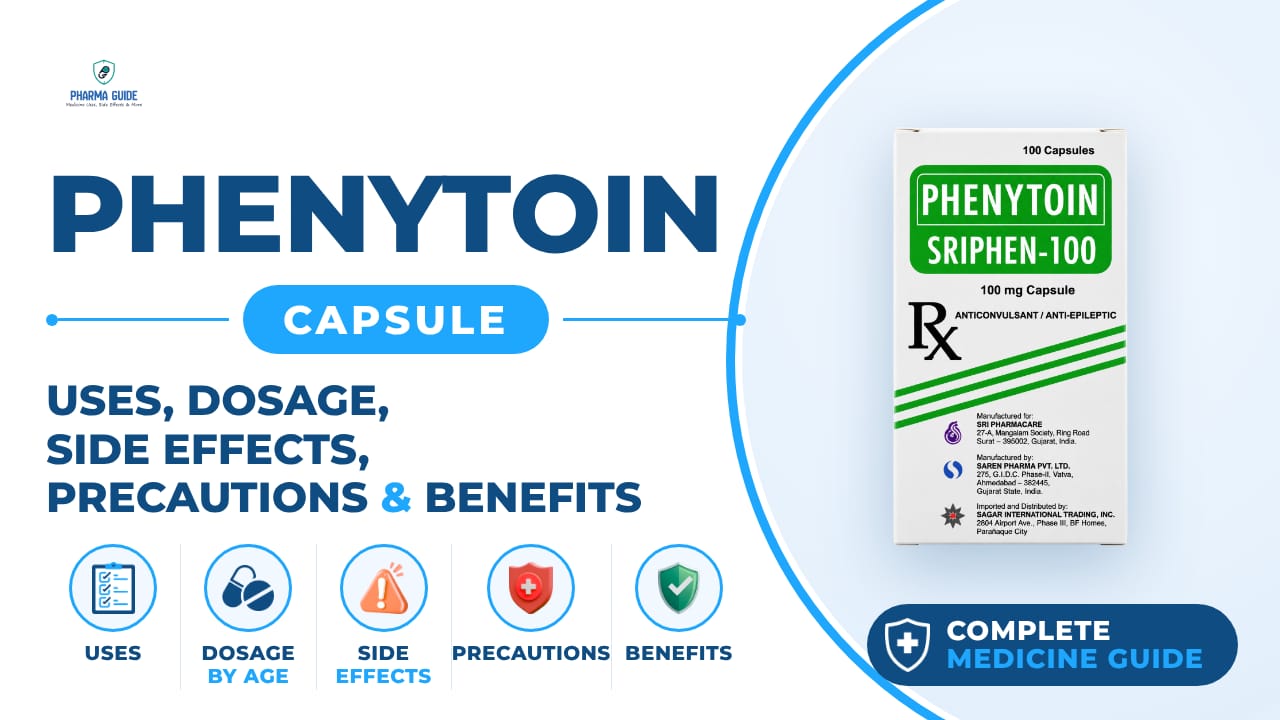
| Generic name | phenytoin |
|---|---|
| Drug class | Hydantoin anticonvulsant |
| Forms | Extended-release capsule, Chewable tablet, Oral suspension (liquid) |
Quick overview
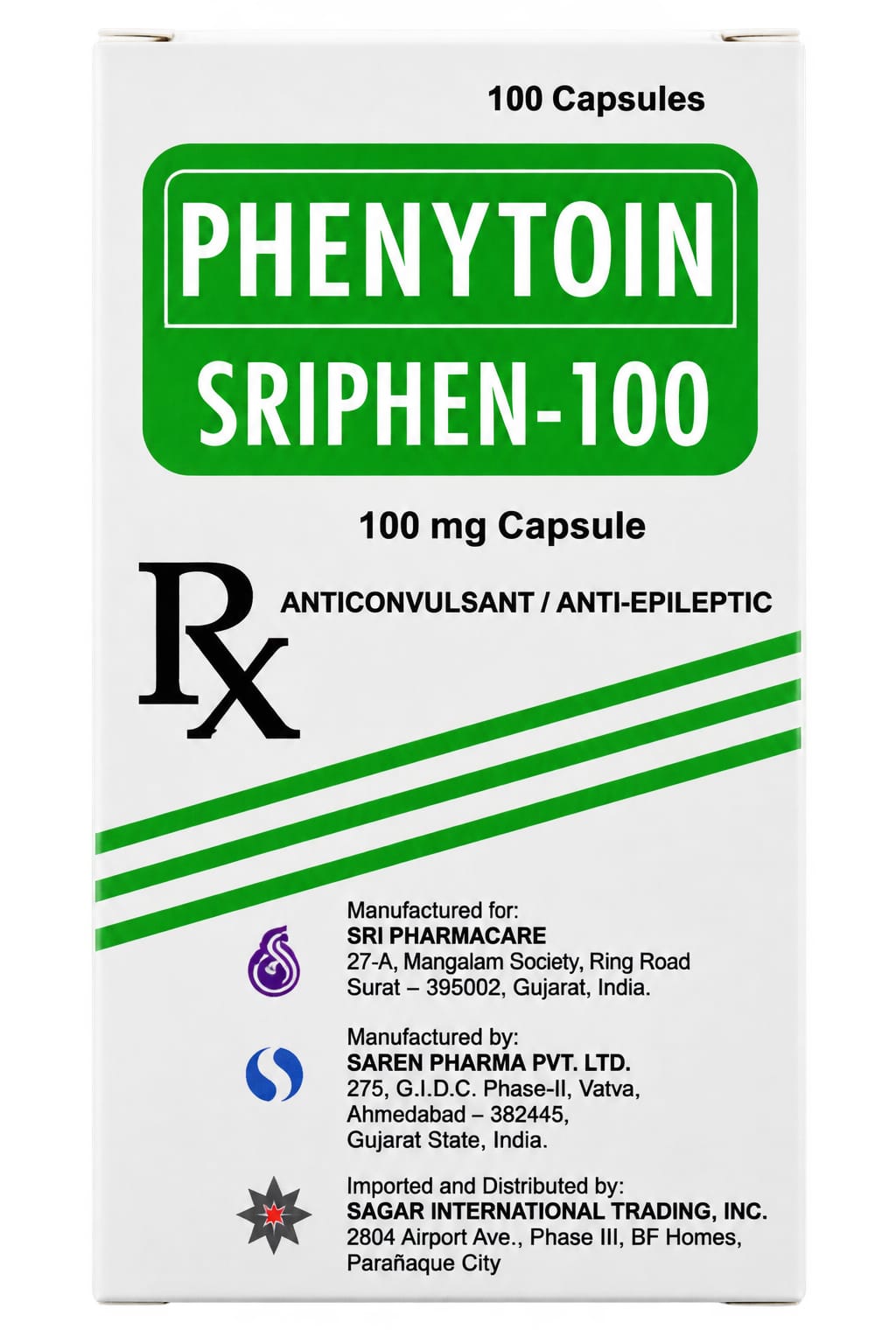
Phenytoin Capsule (generic name: phenytoin) is a hydantoin anticonvulsant used to control certain types of seizures and to prevent or treat seizures during or after brain surgery. It comes as an extended-release capsule that works by slowing down electrical signals in the brain that cause seizures. It must be taken exactly as prescribed, and sudden stopping should be avoided as it may cause seizures to return or worsen.
What is Phenytoin Capsule
Phenytoin is an anti-epileptic (anticonvulsant) medicine. It comes as an extended-release capsule that you swallow whole.
Phenytoin Capsule uses
- Controls certain types of seizures, including tonic-clonic (grand mal) seizures and psychomotor (temporal lobe) seizures
- Prevents and treats seizures that happen during or after brain surgery
Benefits of Phenytoin Capsule
- Helps reduce how often seizures happen when taken as prescribed
- Can be taken once a day in some patients once seizure control is established, which may be more convenient than multiple daily doses
How Phenytoin Capsule works
Phenytoin works by slowing down electrical signals in the brain that cause seizures. It seems to work mainly in the part of the brain that controls movement, stopping seizure activity from spreading to nearby areas of the brain.
Phenytoin Capsule dosage
Take this medicine exactly as your doctor prescribes; do not change your dose without medical advice. Swallow the extended-release capsule whole; do not crush, chew, break, or open it. If you have trouble swallowing capsules, ask your doctor about the oral suspension or chewable tablet forms instead. Do not use capsules that look discolored.
Do not stop taking this medicine suddenly, even if you feel well, because this can cause seizures to come back or worsen. If a dose is missed, take it as soon as you remember, but skip it if it is almost time for your next dose; never take two doses at once.
You may need regular blood tests to check the amount of medicine in your body, especially if you switch between different forms or brands of phenytoin. Practice good dental hygiene (brushing and flossing) and see your dentist regularly, since this medicine can cause gum swelling. Carry medical identification that shows you have a seizure disorder.
| Age group | Dose |
|---|---|
| Under 6 Years | Dose based on body weight; only under specialist supervision |
| 6–17 Years | Usually 5 mg/kg/day in divided doses; adjusted as needed |
| Adults (18–64 Years) | Usually 100 mg three times daily or 300 mg once daily |
| Older Adults (65+ years) | Usually lower starting dose; adjusted based on response and blood levels |
Available forms and strengths
- Extended-release capsule
- Chewable tablet
- Oral suspension (liquid)
Side effects of Phenytoin Capsule
Common
- Drowsiness or confusion
- Slurred speech
- Abnormal eye movements (nystagmus)
- Problems with balance, coordination, or muscle movement
- Dizziness
- Trouble sleeping (insomnia)
- Nausea, vomiting, constipation
- Headache
- Nervousness
- Tingling or prickling sensation on the skin
- Changes in facial features
- Extra body or facial hair growth
- Change in taste
- Swollen or overgrown gums
Serious
- Signs of a severe allergic reaction: hives, difficulty breathing, swelling of face or throat
- Severe skin reactions: fever, sore throat, burning eyes, skin pain, red or purple skin rash that spreads and causes blistering and peeling
- Serious multi-organ drug reaction: skin rash, fever, swollen glands, muscle aches, severe weakness, unusual bruising, or yellowing of skin or eyes
- Mood or behavior changes, depression, anxiety, agitation, hostility, restlessness, or thoughts of suicide or self-harm
- Slow or uneven heartbeats, chest pain, fluttering in the chest, or feeling like you might pass out
- Any skin rash, no matter how mild
- Fever, chills, sore throat, or swollen glands
- Red or swollen gums, or mouth sores
- Easy bruising, unusual bleeding, or purple/red spots under the skin
- Liver problems: loss of appetite, upper stomach pain, dark urine, clay-colored stools, yellowing of skin or eyes
- Softening of bones (osteopenia, osteoporosis, osteomalacia), which can lead to bone fractures
Warnings and precautions
- Do not stop taking this medicine suddenly, as this could cause your seizures to return more often or lead to seizures that will not stop.
- This medicine may increase the risk of suicidal thoughts or behavior in a small number of people. Report any new or worsening mood or behavior changes to your doctor right away.
- This medicine can cause severe, sometimes fatal, skin reactions. Stop the medicine and get medical help right away if you notice any rash, especially with fever, blistering, or peeling skin.
- People of Asian ancestry may have a higher risk of developing serious skin reactions to this medicine. Your doctor may recommend a blood test to check your risk before starting treatment.
- This medicine can cause serious heart problems, including slow heartbeat and cardiac arrest, especially in people with existing heart conditions.
- This medicine can cause serious blood problems that may be life-threatening.
- This medicine can make hormonal birth control (like the pill) less effective. Talk to your doctor about using a non-hormonal method of birth control.
- Avoid becoming pregnant while taking this medicine unless directed otherwise by your doctor.
- Phenytoin can cause serious birth defects, but having a seizure during pregnancy can also harm both mother and baby. Do not start or stop this medicine during pregnancy without talking to your doctor.
- It may not be safe to breastfeed while taking this medicine. Talk to your doctor about the risks.
- If you have kidney problems, your body may have higher levels of unbound phenytoin, so your doctor may need to monitor your blood levels more closely.
- If you have liver problems, this medicine may build up in your body more than expected, and early signs of toxicity may appear sooner. Tell your doctor if you have liver disease.
- Avoid drinking alcohol while taking this medicine without talking to your doctor first. Drinking alcohol can change your blood levels of this medicine and may cause serious side effects.
- Avoid driving or operating machinery until you know how this medicine affects you, since it can slow your thinking and motor skills.
Storage
- Store at room temperature away from moisture, light, and heat
- Store between 15-30°C (59-86°F)
- Protect from light and moisture
- Keep out of reach and sight of children
When to see a doctor
- Get emergency help right away if you have signs of a severe allergic reaction, such as hives, trouble breathing, or swelling of the face or throat.
- Seek medical help right away if you notice a skin rash of any kind, along with fever, swollen glands, or flu-like symptoms.
- Contact your doctor right away if you have thoughts of harming or killing yourself or others at any time.
- Get medical help immediately if you think you or someone else has taken too much of this medicine, even if there are no symptoms yet.
- Call your doctor right away if you notice signs of heart problems such as dizziness, tiredness, a slow or skipping heartbeat, or chest pain.
Alternatives
- Levetiracetam
- Lamotrigine
- Sodium Valproate
Watch the video
FAQs
What is Phenytoin Capsule used for?
It is used to control certain types of seizures, including tonic-clonic and psychomotor seizures, and to prevent or treat seizures during or after brain surgery.
How does Phenytoin Capsule work?
It works by slowing down electrical signals in the brain that cause seizures, mainly in the part of the brain that controls movement, stopping seizure activity from spreading.
Can I stop taking Phenytoin Capsule suddenly?
No, you should not stop taking it suddenly, even if you feel well, because this can cause seizures to come back or worsen.
What are common side effects of Phenytoin Capsule?
Common side effects include drowsiness, confusion, slurred speech, abnormal eye movements, dizziness, nausea, headache, and swollen gums.
Is it safe to take Phenytoin Capsule during pregnancy?
Pregnancy should be avoided unless directed otherwise by your doctor, as phenytoin can cause serious birth defects, though having a seizure during pregnancy can also harm both mother and baby.
General information, not medical advice
Your prescriber and the leaflet in your pack know your situation. This page does not.
- Follow your prescriber and the leaflet
- Don't start, stop, or change a dose on your own
- Doses and warnings differ by country and product
Sources
Video
Related medicines
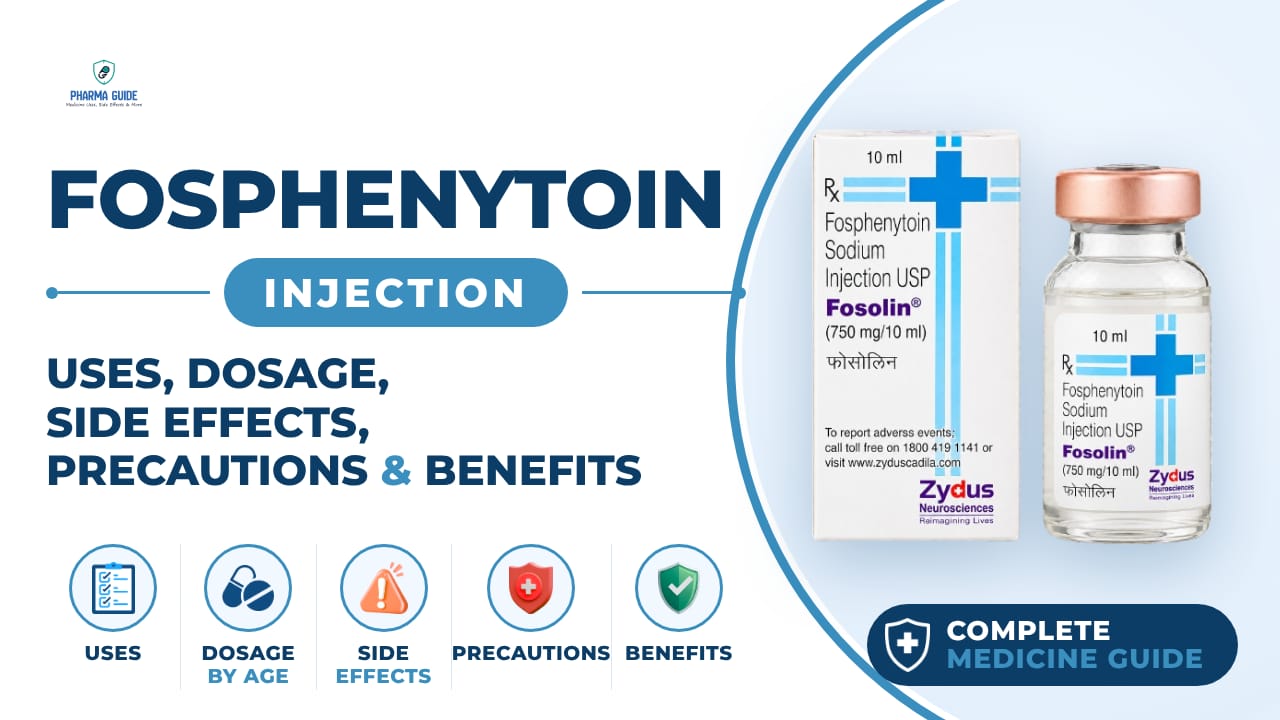
Fosphenytoin Injection: Uses, Dosage, Side Effects, Precautions and Alternates
Hydantoin anticonvulsant
Fosphenytoin Injection is a hospital-administered anticonvulsant used for status epilepticus and seizure control. Learn uses, dosage, side effects, and

Injectafer Injection: Uses, Dosage, Side Effects, Precautions and Alternates
Iron products
Injectafer (ferric carboxymaltose) treats iron deficiency anemia and heart failure-related iron deficiency via IV. Learn uses, dosage, side effects, and