
Safety
General information, not medical advice
Your prescriber and the leaflet in your pack know your situation. This page does not.
- Follow your prescriber and the leaflet
- Don't start, stop, or change a dose on your own
- Doses and warnings differ by country and product
Fucibet Cream: Uses, Dosage, Side Effects, Precautions and Alternates
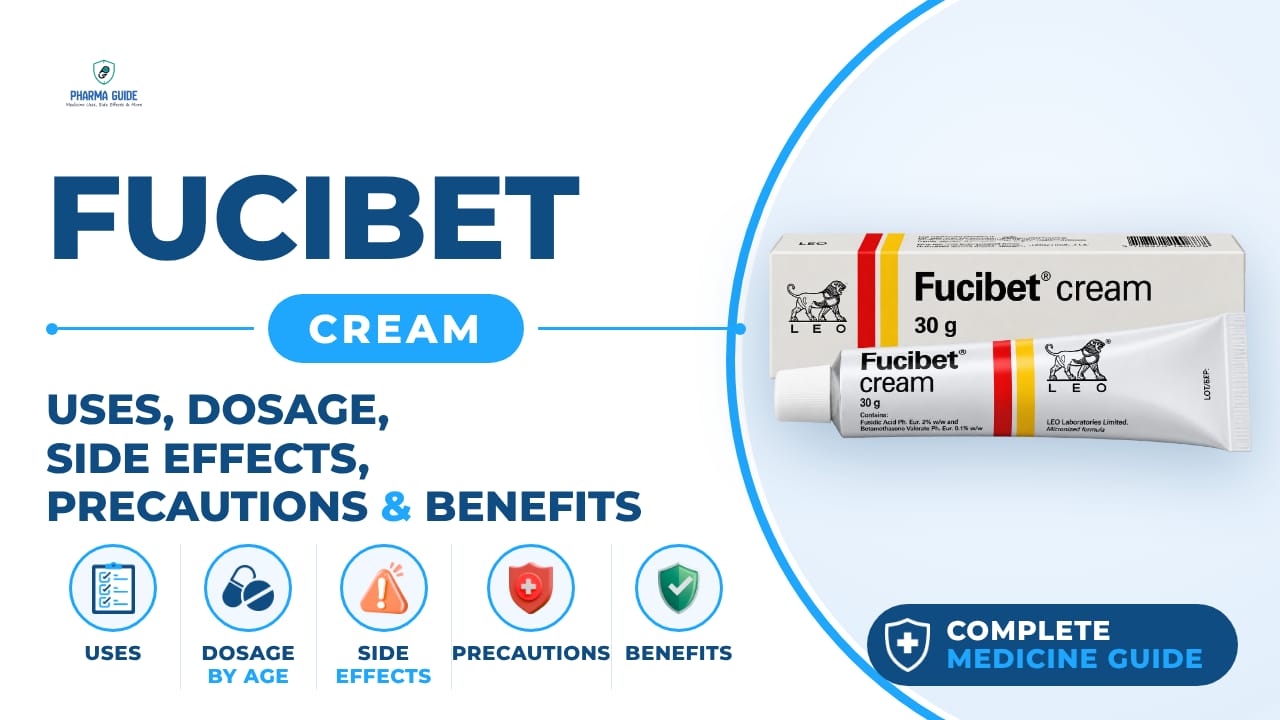
| Generic name | fusidic acid and betamethasone valerate |
|---|---|
| Drug class | Topical antibiotic combined with topical corticosteroid |
| Forms | Cream |
Quick overview
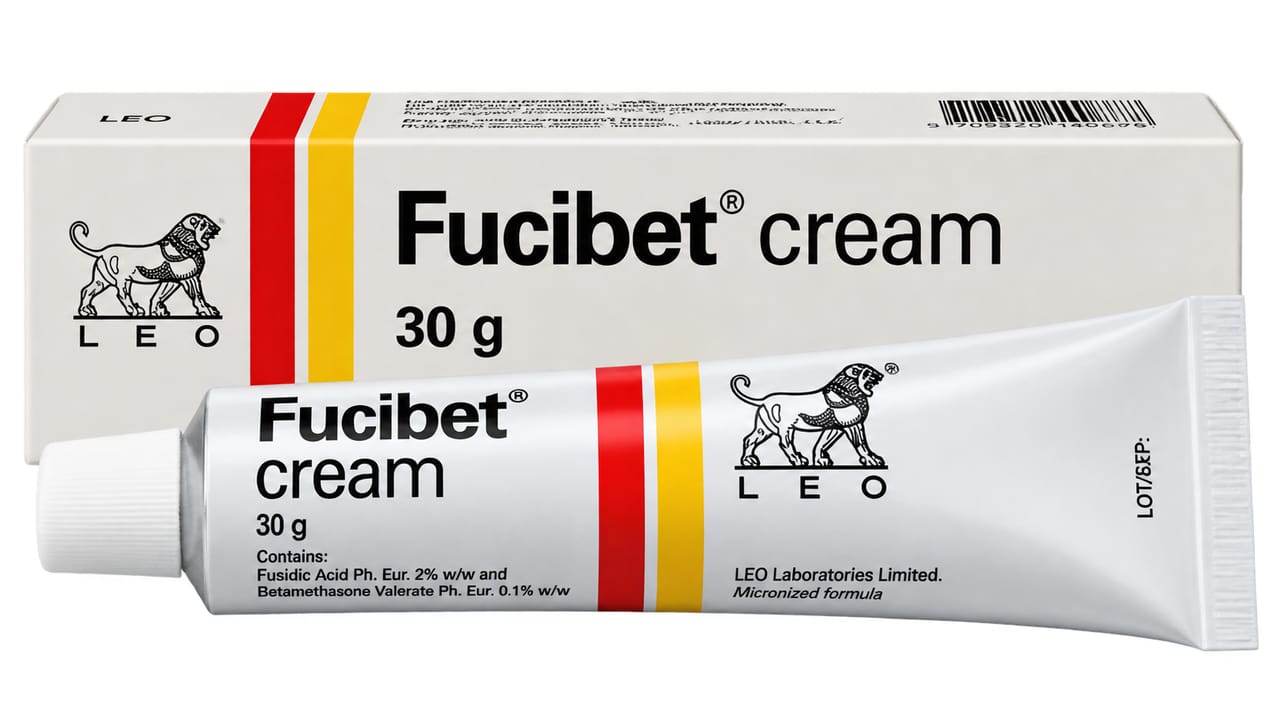
Fucibet Cream combines fusidic acid, an antibiotic, with betamethasone valerate, a corticosteroid (steroid). These two medicines work at the same time in different ways to treat skin that is both inflamed and infected by bacteria. It is for external use on the skin only, usually applied twice daily, and should not be used for more than the time your doctor recommends, typically up to 2 weeks.
What is Fucibet Cream
Fucibet contains 2 different types of medicine. One medicine is called fusidic acid, a type of antibiotic. The other medicine is called betamethasone valerate, a type of corticosteroid (steroid). These 2 medicines work at the same time in different ways.
Fucibet Cream uses
- Skin that is inflamed (eczema or dermatitis) and also infected by bacteria
- Bacterial skin infections
Benefits of Fucibet Cream
- Kills germs (bacteria) that cause infections
- Reduces swelling, redness or itchiness of the skin
How Fucibet Cream works
Fucibet works because the antibiotic part kills the bacteria causing the infection, while the steroid part reduces swelling, redness, and itching of the skin.
Fucibet Cream dosage
This medicine is only for use on the skin. Do not swallow it. Do not put it inside your body. Wash your hands before using Fucibet. Rub the medicine gently on the skin. If using on the face, be careful to avoid the eyes. Unless using the cream to treat the hands, wash your hands after using Fucibet.
Usually the cream should be used twice each day, in the morning and evening. If you have been told to cover the skin with dressings or bandages, you may not need to use the medicine as often. A nappy on a baby may act as a dressing.
Skin should start to improve after a few days of use; if there is no improvement after 7 days, stop using the cream and go back to the doctor. Do not use the cream for more than the time your doctor recommends, usually up to 2 weeks, to avoid bacteria becoming resistant and to avoid steroid side effects.
If a dose is missed, use it as soon as remembered, then continue at the usual time. Do not use a double dose to make up for a forgotten one. Do not cover the treated area with bandages unless told to by a doctor. Leave the cream to soak in for a period before applying other lotions, ointments, or creams to ensure it is fully absorbed and not diluted.
| Age group | Dose |
|---|---|
| Under 1 year | Doctor-directed use only |
| 1–11 years | Apply a thin layer 2–3 times daily, as prescribed |
| 12–17 years | Apply a thin layer 2–3 times daily |
| 18 years & older | Apply a thin layer 2–3 times daily |
| Older adults | Apply a thin layer 2–3 times daily, as prescribed |
Available forms and strengths
- Cream
Side effects of Fucibet Cream
Common
- Itchy rash and skin inflammation in the area where the medicine is used
- Worsening of eczema
- Burning feeling
- Itching
- Dry skin
- Application site pain
- Application site irritation
- Skin redness
- Hives
- Skin rash
- Application site swelling
- Application site blisters
- Excessive hair growth (hypertrichosis)
- Inflamed hair follicles (folliculitis)
- Skin thinning or discoloration with prolonged use
Serious
- Difficulty breathing
- Face or throat swelling
- Severe skin rash
- Blurred vision
- Adrenal glands may stop working properly (signs: tiredness, depression and anxiety)
- Glaucoma
- Thinning of the skin
- Red spotty rash around the mouth or chin
- Stretch marks
- Small veins near the surface of the skin become visible
- Changes in growth of body hair
- Excessive sweating
- Lightening of skin colour
- Redness and pimples around the mouth
- Redness of the skin, nose or mouth
- Formation of cataracts
Warnings and precautions
- Fucibet should not be used during pregnancy unless a doctor has told you to do so. Fucibet may be used while breastfeeding, but should not be applied to the breasts to avoid accidental ingestion by the infant.
- For external use only. Avoid contact with the eyes, mouth, and mucous membranes. Use only for the prescribed condition and for the shortest appropriate duration. Because it contains a potent corticosteroid, avoid prolonged use or repeated courses without medical advice.
- Do not use on the face, groin, or skin folds unless specifically prescribed. Avoid applying to large areas, broken skin, or under airtight dressings unless directed by a doctor. Do not use for fungal, viral, or untreated skin infections. Prolonged use may cause skin thinning, stretch marks, discoloration, or increased susceptibility to infection.
- It is not known how this medicine interacts with alcohol, so check with your doctor before drinking.
- This medicine should not affect your ability to drive or use machines. Check with your doctor if you notice any side effect that might affect this.
- Do not use the cream on yourself or a child for more than 2 weeks, to avoid bacteria becoming resistant to the antibiotic and to avoid the steroid causing side effects.
- Take special care using this medicine near the eyes, as it may lead to glaucoma if it gets into the eye.
- Using the cream over a long time or in large amounts increases the chance of side effects or infections, and the skin may become more sensitive to it.
- Do not use this medicine for a long time on the face.
- Unless a doctor has advised otherwise, do not use Fucibet on open wounds or sensitive areas such as the nostrils, ears, lips or genitals.
- Unless a doctor has advised otherwise, do not use Fucibet on thin skin, skin ulcers, broken veins or acne.
- Adrenal suppression may occur, with signs of tiredness, depression and anxiety; this can be reversed by stopping Fucibet.
- Do not smoke or go near naked flames while using this product, as fabric that has been in contact with it can catch fire more easily, creating a serious fire hazard even after washing.
- Do not use this medicine to treat skin conditions caused by fungus, viruses, tuberculosis, syphilis, perioral dermatitis, or rosacea, or skin conditions caused only by bacteria such as boils or spots.
Storage
- Keep this medicine out of the sight and reach of children.
- Do not use Fucibet after the expiry date which is stated on the tube or carton after EXP. The expiry date is the last day of that month.
- Do not store the medicine above 30°C.
- Do not use the tube for more than 3 months after you first open it. Make a note of the date you first opened the tube, in the space provided on the carton.
- Do not throw away any medicines via wastewater or household waste. Ask your pharmacist how to throw away any medicines you no longer use.
When to see a doctor
- Tell your doctor or nurse immediately if you have difficulty breathing, your face or throat swell, or your skin develops a severe rash — you may need to stop treatment.
- Contact your doctor if you experience blurred vision or other visual disturbances.
- If you accidentally get medicine in your eye, wash it out with cold water straight away, and contact your doctor immediately if you have any problems with your sight or your eye is sore.
- Tell your doctor straight away if you have used more Fucibet than you should.
Alternatives
- Fucidin Cream
- Fusidic acid + hydrocortisone
- Mupirocin Cream/Ointment
- Betamethasone cream
Watch the video
FAQs
What is Fucibet Cream used for?
It is used to treat skin that is inflamed (eczema or dermatitis) and also infected by bacteria, as it combines an antibiotic and a steroid to fight infection and reduce swelling, redness, and itchiness.
How long can I use Fucibet Cream?
It should not be used for more than the time your doctor recommends, typically up to 2 weeks, to avoid antibiotic resistance and steroid-related side effects.
How often should Fucibet Cream be applied?
It is usually applied twice daily, in the morning and evening, as a thin layer on the affected skin.
What should I do if there is no improvement with Fucibet Cream?
If there is no improvement after 7 days of use, you should stop using the cream and go back to your doctor.
Can Fucibet Cream be used during pregnancy or breastfeeding?
It should not be used during pregnancy unless a doctor advises it, and while breastfeeding it should not be applied to the breasts to avoid accidental ingestion by the infant.
General information, not medical advice
Your prescriber and the leaflet in your pack know your situation. This page does not.
- Follow your prescriber and the leaflet
- Don't start, stop, or change a dose on your own
- Doses and warnings differ by country and product
Sources
Video
Related medicines

Injectafer Injection: Uses, Dosage, Side Effects, Precautions and Alternates
Iron products
Injectafer (ferric carboxymaltose) treats iron deficiency anemia and heart failure-related iron deficiency via IV. Learn uses, dosage, side effects, and

Gliclazide Tablet: Uses, Dosage, Side Effects, Precautions and Alternates
Sulfonylurea (hypoglycemic/antidiabetic agent)
Gliclazide Tablet is a sulfonylurea for type 2 diabetes that boosts insulin release. Learn about dosage, side effects, warnings, and precautions.