
Safety
General information, not medical advice
Your prescriber and the leaflet in your pack know your situation. This page does not.
- Follow your prescriber and the leaflet
- Don't start, stop, or change a dose on your own
- Doses and warnings differ by country and product
Fulvestrant Injection: Uses, Dosage, Side Effects, Precautions and Alternates
| Generic name | fulvestrant |
|---|---|
| Drug class | Estrogen receptor antagonist (nonagonist); anti-estrogen endocrine therapy |
| Forms | Solution for injection in a pre-filled syringe |
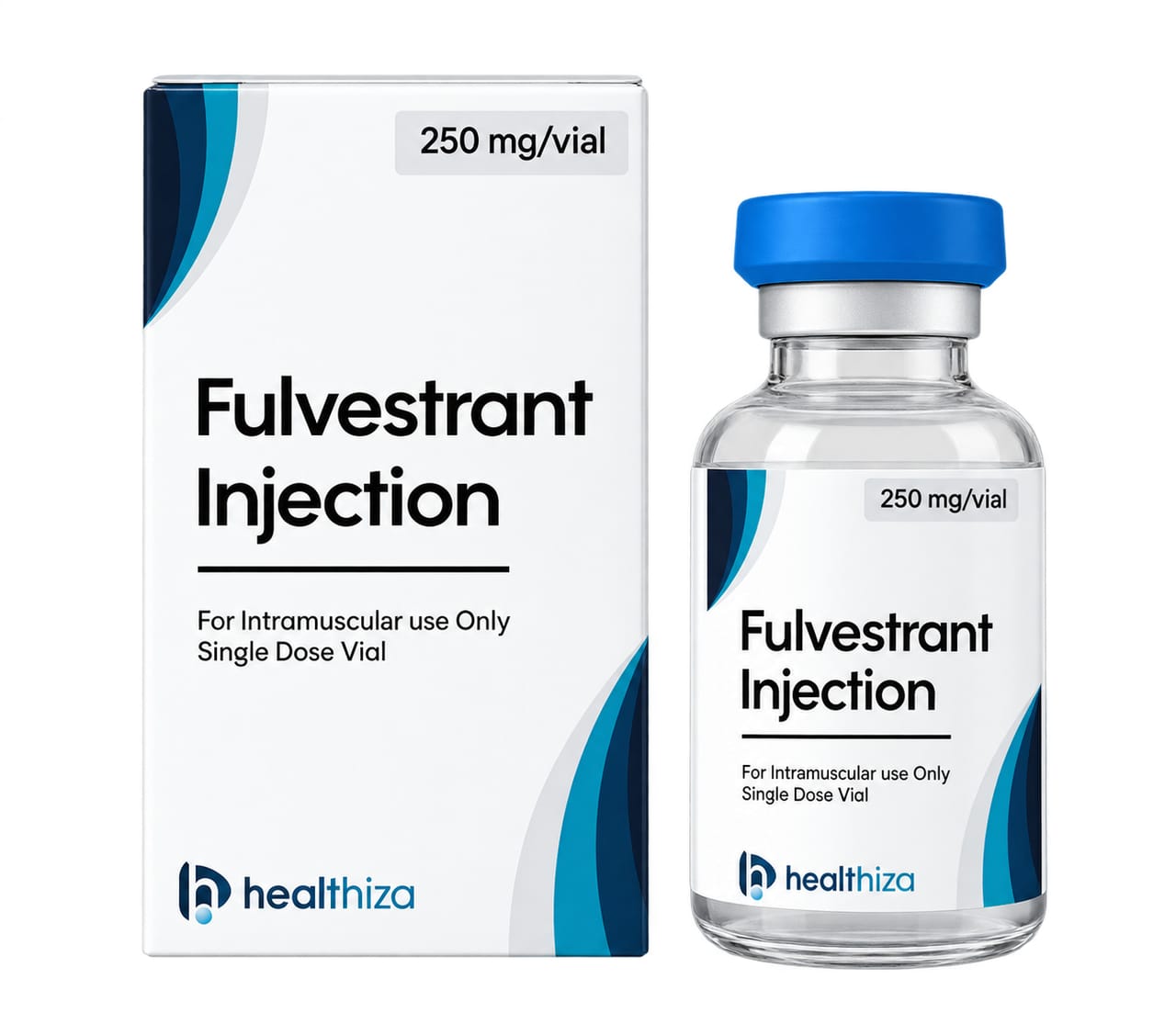
Quick overview
Fulvestrant Injection contains the active substance fulvestrant, an estrogen receptor antagonist used in anti-estrogen endocrine therapy. It is given as an injection into the buttock muscle to treat certain estrogen receptor-positive and hormone receptor-positive breast cancers in postmenopausal women. It works by blocking and reducing estrogen receptors on cancer cells, slowing cancer growth. It may be used alone or in combination with certain targeted therapies.
What is Fulvestrant Injection
Fulvestrant Injection contains the active substance fulvestrant, which belongs to a group of medicines called estrogen blockers. Estrogen is a female sex hormone that can help some breast cancers grow. This medicine is given as an injection into the muscle of the buttock.
Fulvestrant Injection uses
- Treatment of estrogen receptor-positive, locally advanced or metastatic breast cancer in postmenopausal women not previously treated with endocrine therapy
- Treatment of hormone receptor-positive advanced or metastatic breast cancer in postmenopausal women whose disease has come back or gotten worse after previous hormone therapy
- Used in combination with ribociclib as initial hormone-based therapy or after disease progression on endocrine therapy
- Used in combination with palbociclib or abemaciclib in women whose disease has progressed after endocrine therapy
Benefits of Fulvestrant Injection
- Can slow down the growth of hormone-sensitive breast cancer by blocking the effects of estrogen
- Shown to extend the time before the cancer gets worse (progression-free survival) compared with some other hormone therapies
- Treats certain hormone receptor-positive breast cancers
- Helps slow growth of estrogen-dependent cancer cells
- Used in some advanced or metastatic breast cancers
- Can be combined with targeted therapies in selected patients
How Fulvestrant Injection works
Fulvestrant blocks estrogen receptors on cancer cells, stopping estrogen from signaling the cancer to grow, and it also reduces the amount of these receptors in the body.
Fulvestrant Injection dosage
This medicine is given by a doctor or nurse as a slow injection into the muscle of each buttock. Two injections are needed to make up a full monthly dose, one in each buttock. Injections are given slowly, over one to two minutes each. Caution is used if the injection is given in a certain area of the buttock close to the sciatic nerve. This medicine is not meant for use in men or children.
| Age group | Dose |
|---|---|
| Under 18 years | Safety and effectiveness have not been established |
| 18–39 years | 500 mg IM on Days 1, 15, and 29, then once monthly |
| 40–64 years | 500 mg IM on Days 1, 15, and 29, then once monthly |
Available forms and strengths
- Solution for injection in a pre-filled syringe
Side effects of Fulvestrant Injection
Common
- Injection site reactions, such as pain and/or inflammation
- Nausea
- Weakness and tiredness (asthenia)
- Joint and musculoskeletal pain
- Hot flushes
- Skin rash
- Headache
- Vomiting, diarrhea, or loss of appetite
- Urinary tract infections
- Back pain
- Vaginal bleeding
- Sciatica (lower back pain spreading to the leg)
- Numbness, tingling, or weakness in the leg
- Decreased platelet counts
- Elevated liver enzymes
Serious
- Allergic (hypersensitivity) reactions, including swelling of the face, lips, tongue, and/or throat that may signal a severe allergic reaction
- Increased risk of blood clots (thromboembolism)
- Inflammation of the liver (hepatitis)
- Liver failure
- Anaphylactic reactions
Warnings and precautions
- Because this medicine is given as an injection into the muscle, it should be used carefully in people who have bleeding disorders, low platelet counts, or who take blood-thinning medicines.
- Injections given in a certain area of the buttock can risk nerve damage because of a nearby nerve, so caution is used with the injection site.
- There is no long-term information about how this medicine affects bone health, and it may carry a risk of bone thinning (osteoporosis).
- This medicine can cause false results in certain blood tests that measure estrogen levels.
- This medicine is not recommended for use in children or teenagers because its safety and effectiveness have not been proven in this age group.
- This medicine must not be used during pregnancy because it can harm an unborn baby. Women who can become pregnant should use effective birth control during treatment and for a period after the last dose.
- Breastfeeding is not allowed during treatment with this medicine because it could harm the nursing infant.
- Caution is needed in people with severe kidney problems; no dose change is needed for mild to moderate kidney problems.
- This medicine should be used carefully in people with mild to moderate liver problems and should not be used in those with severe liver problems.
- This medicine contains alcohol, which could be harmful for people with alcohol problems, liver disease, or epilepsy, and should be considered for pregnant or breastfeeding women and children.
- This medicine is not expected to affect your ability to drive or use machines, but if you feel very tired or weak, you should avoid driving or operating machinery.
Storage
- Store and transport refrigerated (2°C–8°C)
- Temperature excursions outside 2°C–8°C should be limited and should not exceed a 28-day period where the average storage temperature is below 25°C
- After a temperature excursion, return the product immediately to the recommended refrigerated storage conditions
- Temperature excursions have a cumulative effect on product quality; the 28-day limit must not be exceeded over the product's shelf life
- Exposure to temperatures below 2°C will not damage the product as long as it is not stored below -20°C
- Keep the pre-filled syringe in its original package to protect it from light
- Keep out of the sight and reach of children
- Do not use after the expiry date shown on the carton or syringe label
- Do not throw away medicines via wastewater or household waste; ask your pharmacist how to dispose of medicines no longer needed
- Pre-filled syringes are for single use only; discard any unused portion
When to see a doctor
- Get medical help right away if you notice swelling of the face, lips, tongue, or throat, hives, or trouble breathing, which could be signs of a severe allergic reaction.
- Seek medical attention if you notice yellowing of the skin or eyes, severe tiredness, or stomach pain, which could be signs of liver problems.
- Call your doctor if you notice unusual bruising, bleeding, or signs of a blood clot such as swelling, pain, or redness in a limb, or sudden shortness of breath.
- Contact your doctor if you have numbness, tingling, or weakness in your legs after an injection.
Alternatives
- Exemestane
- Anastrozole
- Letrozole
Watch the video
FAQs
What is Fulvestrant Injection used for?
It treats estrogen receptor-positive, locally advanced or metastatic breast cancer in postmenopausal women, either alone or in combination with ribociclib, palbociclib, or abemaciclib.
How is Fulvestrant Injection given?
It is given by a doctor or nurse as a slow injection into the muscle of each buttock, with two injections needed to make up a full monthly dose, each given over one to two minutes.
What is the dosage schedule for Fulvestrant Injection?
The standard dose is 500 mg given by intramuscular injection on Days 1, 15, and 29, then once monthly thereafter.
What are the common side effects of Fulvestrant Injection?
Common side effects include injection site reactions, nausea, weakness and tiredness, joint pain, hot flushes, skin rash, headache, and back pain.
Can Fulvestrant Injection be used during pregnancy?
No, it must not be used during pregnancy because it can harm an unborn baby, and effective birth control should be used during treatment and for a period after the last dose.
General information, not medical advice
Your prescriber and the leaflet in your pack know your situation. This page does not.
- Follow your prescriber and the leaflet
- Don't start, stop, or change a dose on your own
- Doses and warnings differ by country and product
Sources
Video
Related medicines

Injectafer Injection: Uses, Dosage, Side Effects, Precautions and Alternates
Iron products
Injectafer (ferric carboxymaltose) treats iron deficiency anemia and heart failure-related iron deficiency via IV. Learn uses, dosage, side effects, and

Gliclazide Tablet: Uses, Dosage, Side Effects, Precautions and Alternates
Sulfonylurea (hypoglycemic/antidiabetic agent)
Gliclazide Tablet is a sulfonylurea for type 2 diabetes that boosts insulin release. Learn about dosage, side effects, warnings, and precautions.