
Safety
General information, not medical advice
Your prescriber and the leaflet in your pack know your situation. This page does not.
- Follow your prescriber and the leaflet
- Don't start, stop, or change a dose on your own
- Doses and warnings differ by country and product
Furadantin Suspension: Uses, Dosage, Side Effects, Precautions and Alternates
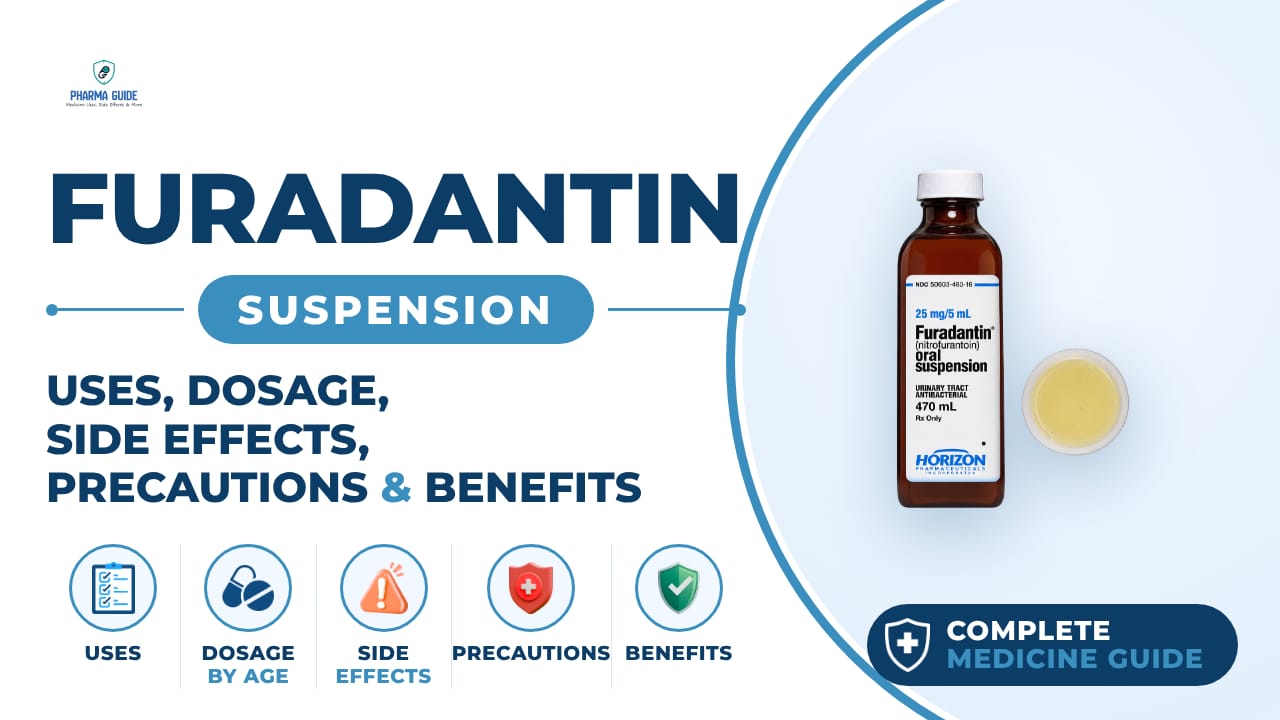
| Generic name | nitrofurantoin |
|---|---|
| Drug class | Antibiotics, Other |
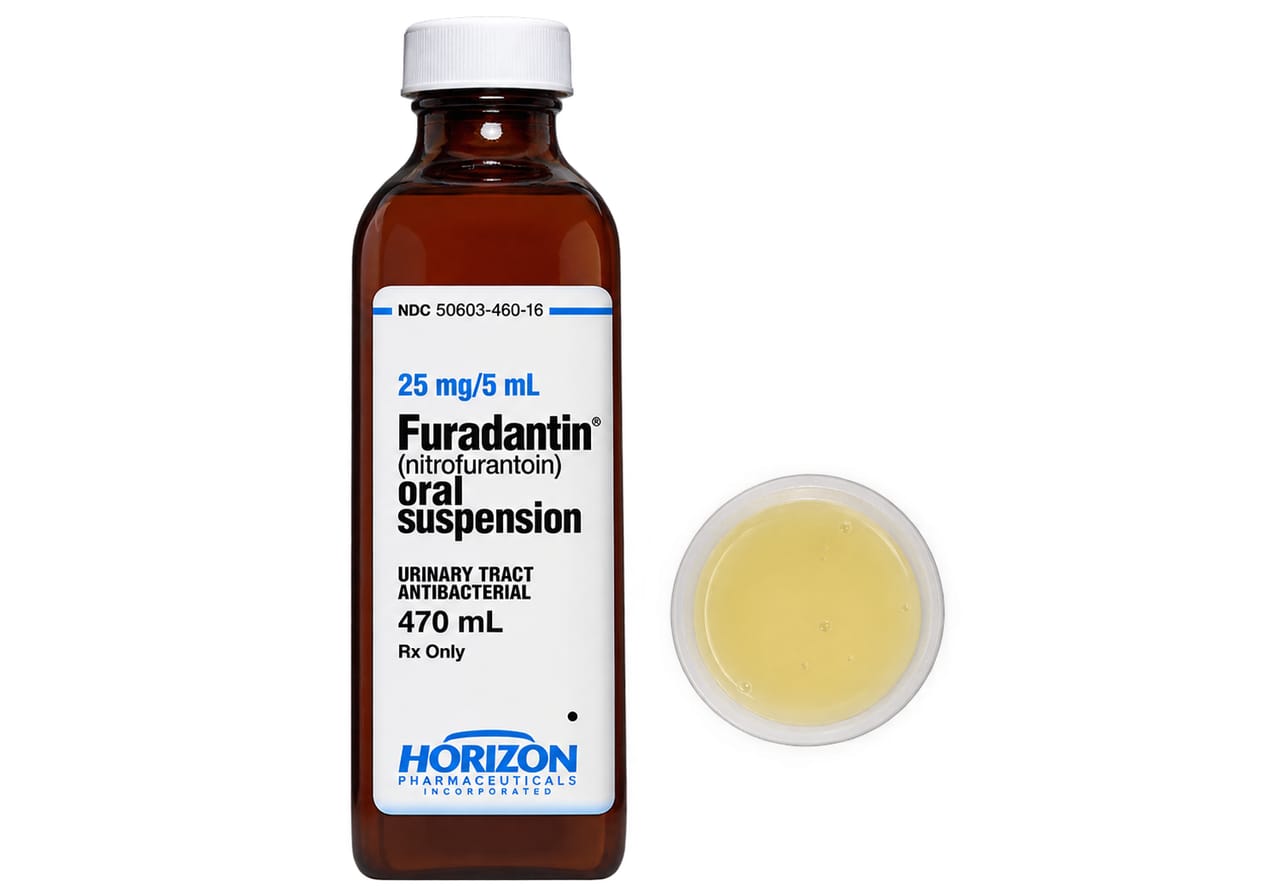
| Forms | Oral suspension (liquid), 25 mg/5 mL, Oral suspension (liquid), 50 mg/5 mL |
Quick overview
Furadantin Suspension is an oral antibiotic containing nitrofurantoin, used to treat urinary tract infections caused by susceptible bacteria in adults and children one month of age and older. It works by damaging the DNA and proteins of bacteria, stopping the infection. The suspension should be taken with food and used exactly as prescribed, with attention to important warnings about allergic reactions, lung, liver, and nerve effects.
What is Furadantin Suspension
Furadantin is an antibiotic oral suspension used to treat urinary tract infections. It contains nitrofurantoin, which is specific for urinary tract infections.
Furadantin Suspension uses
- Treatment of urinary tract infections due to susceptible strains of Escherichia coli, Enterococcus species, Staphylococcus aureus, Klebsiella species and Enterobacter species in adults and children 1 month of age and older
Benefits of Furadantin Suspension
- Treats bacterial urinary tract infections (UTIs)
- Helps eliminate bacteria causing bladder infections
- Helps control bacterial growth in the urinary tract
- Helps relieve burning during urination as the infection improves
- Helps reduce frequent urination caused by a bacterial bladder infection
How Furadantin Suspension works
Furadantin works by being broken down inside bacteria into substances that damage the bacteria's DNA and proteins, which stops the infection.
Furadantin Suspension dosage
Take this medicine with food to help your body absorb it better and to help your stomach tolerate it. Shake the bottle well before each use. Use an oral dosing syringe from your pharmacy to measure the exact amount prescribed, especially for children. Finish the full course of treatment even if you feel better, but contact your doctor if anything unusual happens during treatment. Do not use antacids that contain magnesium trisilicate while taking this medicine, since they can reduce how well the medicine is absorbed. This medicine is not approved for infants younger than 1 month old.
| Age group | Dose |
|---|---|
| Under 18 years | Not recommended |
| 18–64 years | 50–100 mg, 4 times/day |
| 65+ years | Not recommended |
Available forms and strengths
- Oral suspension (liquid), 25 mg/5 mL
- Oral suspension (liquid), 50 mg/5 mL
Side effects of Furadantin Suspension
Common
- Nausea
- Vomiting
- Loss of appetite
- Upset stomach
- Diarrhea
- Headache
- Dizziness
- Drowsiness
- Rust-colored or brownish urine
- Vaginal itching or discharge
Serious
- Eye pain, vision changes, or sudden vision loss, blurred vision, tunnel vision, eye swelling, or seeing halos around lights
- Mental or mood changes, confusion, slurred speech
- Persistent or severe headaches
- New signs of infection such as fever or persistent sore throat
- Easy bruising or bleeding
- Fast, irregular, or pounding heartbeats, fluttering in the chest, shortness of breath, sudden dizziness or passing out
- Severe headache, arm or leg weakness, trouble walking, loss of coordination, very stiff muscles, high fever, profuse sweating, or tremors
- Lung problems such as cough, fever, chills, chest pain, or shortness of breath
- Liver damage symptoms such as yellowing of skin or eyes, dark urine, and severe tiredness
- Numbness, tingling, or weakness in the hands and feet (nerve damage)
- Signs of hemolytic anemia, especially in people with G6PD deficiency
- Severe or bloody diarrhea
Warnings and precautions
- Serious and sometimes fatal allergic reactions have occurred with this medicine. If signs of an allergic reaction occur, stop the medicine right away and get medical care.
- Lung problems, including chronic lung scarring, have happened in people treated with this medicine, especially those on it for six months or longer. These reactions have contributed to deaths in some cases.
- Liver damage, including hepatitis and liver failure, can occur, sometimes without obvious early symptoms. Doctors should check liver function periodically during long-term use.
- Nerve damage, which can become severe or permanent, has been reported, including some deaths. People with kidney problems, anemia, diabetes, or poor nutrition are at higher risk.
- This medicine can cause a type of anemia from red blood cell breakdown, especially in people with a genetic condition called G6PD deficiency.
- Severe diarrhea caused by an overgrowth of bacteria called C. difficile can occur during or even months after treatment, and can range from mild to life-threatening.
- This medicine should not be used by people with certain kidney problems, a past history of liver problems linked to the drug, known allergy to the drug, or by pregnant women near the end of pregnancy or during labor.
- This medicine should only be used during pregnancy if clearly needed. It must not be used in the last few weeks of pregnancy, during labor, or at delivery because it can cause a blood disorder in the newborn.
- This medicine passes into breast milk. Breastfeeding is not recommended for infants younger than 1 month old or those with G6PD deficiency, because they are at risk of a blood disorder called hemolytic anemia. For older infants with normal G6PD, your doctor can help you weigh the benefits and risks.
- This medicine should not be used by people with significant kidney problems, because it raises the risk of toxic effects from reduced ability to clear the drug from the body.
- This medicine should not be used by people who have had liver problems (such as jaundice) linked to nitrofurantoin in the past. Liver damage, including hepatitis and liver failure, can occur and should be watched for.
Storage
- Avoid exposure to strong light which may darken the drug
- It is stable when stored between 20°C to 25°C (68°F to 77°F); excursions permitted to 15°C to 30°C (59°C to 86°F)
- Protect from freezing
- Shake vigorously
- Dispense in tight, light-resistant, plastic (PET) or glass container
- Use within 30 days
- Keep out of reach of children
When to see a doctor
- Get medical help right away for sudden vision loss, blurred or tunnel vision, eye pain or swelling, or seeing halos around lights
- Get medical help right away for a fast, irregular, or pounding heartbeat, fluttering in the chest, shortness of breath, or sudden dizziness or passing out
- Get medical help right away for severe headache, confusion, slurred speech, arm or leg weakness, trouble walking, loss of coordination, feeling unsteady, very stiff muscles, high fever, heavy sweating, or shaking
- Contact your doctor as soon as possible if you develop watery or bloody diarrhea, with or without stomach cramps and fever, even if it happens months after you finish the medicine
- Discontinue the medicine and contact your doctor at the first sign of an allergic reaction
Alternatives
- Fosfomycin
- Trimethoprim
- Macrobid
Watch the video
FAQs
What is Furadantin Suspension used for?
It is used to treat urinary tract infections caused by susceptible bacteria such as E. coli, Enterococcus, Staphylococcus aureus, Klebsiella, and Enterobacter species in adults and children 1 month of age and older.
How should Furadantin Suspension be taken?
It should be taken with food to improve absorption and stomach tolerance. Shake the bottle well before each use and measure doses with an oral dosing syringe, especially for children. Finish the full course even if you feel better.
Can Furadantin Suspension be taken with antacids?
No, antacids containing magnesium trisilicate should be avoided while taking this medicine, since they can reduce how well it is absorbed.
What are the serious side effects of Furadantin Suspension?
Serious side effects include lung problems, liver damage, nerve damage, hemolytic anemia (especially with G6PD deficiency), severe allergic reactions, and severe or bloody diarrhea.
Is Furadantin Suspension safe during pregnancy?
It should only be used during pregnancy if clearly needed and must not be used in the last few weeks of pregnancy, during labor, or at delivery because it can cause a blood disorder in the newborn.
General information, not medical advice
Your prescriber and the leaflet in your pack know your situation. This page does not.
- Follow your prescriber and the leaflet
- Don't start, stop, or change a dose on your own
- Doses and warnings differ by country and product
Sources
Video
Related medicines

Injectafer Injection: Uses, Dosage, Side Effects, Precautions and Alternates
Iron products
Injectafer (ferric carboxymaltose) treats iron deficiency anemia and heart failure-related iron deficiency via IV. Learn uses, dosage, side effects, and

Gliclazide Tablet: Uses, Dosage, Side Effects, Precautions and Alternates
Sulfonylurea (hypoglycemic/antidiabetic agent)
Gliclazide Tablet is a sulfonylurea for type 2 diabetes that boosts insulin release. Learn about dosage, side effects, warnings, and precautions.