
Safety
General information, not medical advice
Your prescriber and the leaflet in your pack know your situation. This page does not.
- Follow your prescriber and the leaflet
- Don't start, stop, or change a dose on your own
- Doses and warnings differ by country and product
Furosemide Injection: Uses, Dosage, Side Effects, Precautions and Alternates

| Generic name | Furosemide |
|---|---|
| Drug class | Loop diuretic |
| Forms | Intravenous solution, Intramuscular injection, Subcutaneous injection (autoinjector), Subcutaneous on-body infusor |
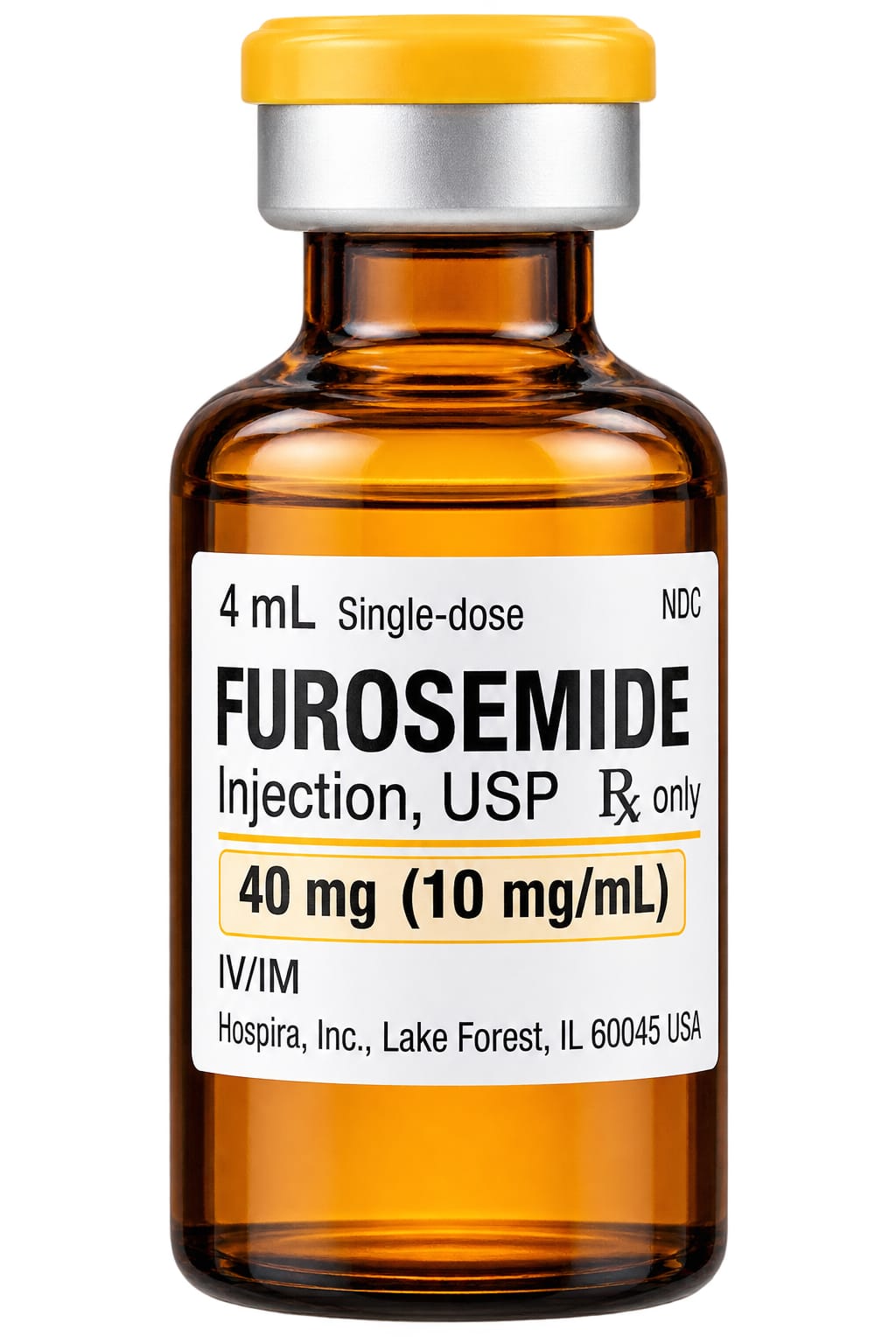
Quick overview
Furosemide Injection is a loop diuretic used to treat edema (fluid retention) in people who cannot take medication by mouth or who need rapid treatment in emergency situations. It is also used to treat high blood pressure. It works by causing the kidneys to remove extra water and salt from the body, which helps reduce swelling and lower blood pressure.
What is Furosemide Injection
Furosemide injection is used to treat edema (excess fluid held in body tissues) caused by various medical problems in people who cannot take medications by mouth or in emergency situations. It is in a class of medications called diuretics, or 'water pills.'
Furosemide Injection uses
- Treats fluid retention (edema) caused by congestive heart failure, liver disease, or chronic kidney disorders such as nephrotic syndrome
- Treats high blood pressure (hypertension)
- Used for acute pulmonary edema and cerebral edema when a rapid and intense diuretic effect is needed
- Used when oral therapy cannot be taken because of interference with intestinal absorption or other reasons
Benefits of Furosemide Injection
- Increases the amount of urine the body makes, helping to reduce swelling and symptoms of fluid retention
- Helps lower high blood pressure
- Provides a rapid onset of diuresis when given by injection, useful in emergencies
How Furosemide Injection works
Furosemide works by causing the kidneys to remove extra water and salt from the body, which reduces swelling and lowers blood pressure.
Furosemide Injection dosage
Use furosemide injection exactly as directed by your doctor; do not use more or less of it or use it more often than prescribed. A healthcare provider will give this injection into a muscle, under the skin, or into a vein if you are unable to take the medicine by mouth. If using the on-body infusor at home, you or your caregiver should be trained first and should read the Instructions for Use that comes with the prescription.
Wash your hands before use, and check that the liquid is clear and colorless to slightly yellow; do not use it if you see particles or if it is cloudy or discolored. Subcutaneous furosemide is given into the abdomen only, and a different spot on the abdomen should be used each time. Choose an injection site away from the belly button, avoiding broken or irritated skin, scars, or stretch marks; clean the area and let it dry before use.
Limit your activity and avoid bending movements while wearing the on-body infusor. Do not get the infusor wet; do not bathe, shower, or swim while wearing it, and do not apply lotions or creams to the area. Do not use the on-body infusor within about 12 inches of mobile phones, tablets, computers, or other wireless devices. Traveling by car or airplane while wearing the infusor is not recommended, and it cannot be used during an MRI.
Subcutaneous furosemide is not for use in an emergency and is not for long-term use; it should be replaced with oral diuretics as soon as practical. Doses for children and teenagers are based on body weight and may change if the child gains or loses weight.
If a dose is missed and the medicine is used regularly, take it as soon as possible, but skip the missed dose if it is almost time for the next one; do not take two doses at once.
| Age group | Dose |
|---|---|
| Infants & children <18 years | 1 mg/kg per dose; may increase cautiously according to response |
| 18–64 years – Edema | 20–40 mg IV/IM once initially; adjust according to response |
| 18–64 years – Acute pulmonary edema | 40 mg IV initially; further dosing depends on response |
| 65+ years | Usually start at the lower end and adjust cautiously |
Available forms and strengths
- Intravenous solution
- Intramuscular injection
- Subcutaneous injection (autoinjector)
- Subcutaneous on-body infusor
Side effects of Furosemide Injection
Common
- Diarrhea, constipation, loss of appetite
- Numbness or tingling
- Headache, dizziness
- Blurred vision
- Redness, bruising, swelling, or pain where a subcutaneous dose is given
- Frequent urination
Serious
- Signs of an allergic reaction such as hives, difficulty breathing, or swelling of the face or throat
- Severe skin reaction with fever, sore throat, burning eyes, skin pain, or a red or purple skin rash with blistering and peeling
- A light-headed feeling like you might pass out
- Ringing in the ears or hearing loss
- Muscle spasms or contractions
- Pale skin, easy bruising, unusual bleeding
- High blood sugar with increased thirst, increased urination, dry mouth, or fruity breath odor
- Kidney problems with swelling, urinating less, feeling tired or short of breath
- Signs of liver or pancreas problems, such as loss of appetite, upper stomach pain that may spread to the back, nausea or vomiting, dark urine, or yellowing of the skin or eyes
- Signs of an electrolyte imbalance, such as increased thirst or urination, constipation, muscle weakness, leg cramps, numbness or tingling, feeling jittery, or fluttering in the chest
- Decreased urination, dry mouth, thirst, nausea, vomiting, weakness, drowsiness, confusion, muscle pain or cramps, or rapid or pounding heartbeats
- Ongoing pain that begins in the stomach area but may spread to the back
Warnings and precautions
- Furosemide is a potent diuretic that must be used under strict medical supervision in a hospital setting, since too much can cause severe fluid and electrolyte loss.
- High doses given by injection, especially quickly, can cause hearing problems including permanent deafness in some cases.
- You should not use furosemide if you cannot urinate, and using more than the recommended dose will not make it work better and may cause permanent hearing loss.
- The subcutaneous on-body infusor should not be used near an MRI machine and should not be worn while bathing, showering, or swimming.
- This medicine is not for use in an emergency situation and is not meant for long-term use when given as a subcutaneous injection; it should be switched to oral treatment as soon as possible.
- It is not known if furosemide will harm an unborn baby.
- Tell your doctor if you are pregnant or plan to become pregnant, since animal studies have shown fetal abnormalities and fetal growth needs close monitoring.
- It may not be safe to breastfeed while using furosemide, as it may slow breast milk production and passes into breast milk.
- Furosemide should not be used in patients with complete kidney shutdown, and if worsening kidney problems occur during treatment, the medicine should be stopped.
- People with liver disease such as cirrhosis need careful monitoring, since sudden changes in fluid and electrolytes can trigger serious complications like hepatic coma.
- Drinking alcohol with this medicine can add to dizziness and other side effects.
- This medicine can cause dizziness, lightheadedness, and fainting, especially when standing up quickly, which could affect activities like driving.
Storage
- Keep the on-body delivery system in the carton it came in, tightly closed, and out of reach of children
- Store it at room temperature and protect from light and water
- Do not refrigerate or freeze
- Keep all medication out of sight and reach of children
- Dispose of unneeded medications in a way so that pets, children, and other people cannot take them
- Do not flush this medication down the toilet; use a medicine take-back program
- Dispose of used autoinjectors, infusors, and cartridges in a sharps or puncture-resistant container; do not put them in household trash and do not recycle them
- Store furosemide injection between 15°C and 30°C and protect from light
When to see a doctor
Get emergency medical help if you have signs of a serious allergic reaction, like hives, difficulty breathing, or swelling of the face or throat, or a severe skin reaction with fever, blistering, and peeling skin.
Call your doctor right away if you feel like you might pass out, have ringing in your ears or hearing loss, muscle spasms, unusual bruising or bleeding, signs of high blood sugar, signs of kidney problems, signs of liver or pancreas problems, or signs of an electrolyte imbalance.
If you experience serious symptoms such as loss of consciousness, seizure, trouble breathing, or cannot be woken up, get emergency help right away.
Seek emergency medical attention or contact poison control if you think you have taken too much, especially if you feel very thirsty or hot, have heavy sweating, hot and dry skin, extreme weakness, or fainting.
Call your doctor if you do not need to urinate at least twice during the infusion using the on-body injector.
Alternatives
- Hydrochlorothiazide
- Eplerenone
- Ethacrynic Acid
- Torsemide
- Bumetanide Injection
Watch the video
FAQs
What is Furosemide Injection used for?
It is used to treat edema (fluid retention) caused by congestive heart failure, liver disease, or chronic kidney disorders, as well as high blood pressure, and is used for acute pulmonary edema and cerebral edema when rapid, intense diuresis is needed or when oral therapy cannot be taken.
How is Furosemide Injection given?
A healthcare provider gives it into a muscle, under the skin, or into a vein if you cannot take it by mouth. If using the on-body infusor at home, you or your caregiver should be trained first and follow the Instructions for Use, with subcutaneous doses given only in the abdomen.
Can the on-body infusor be used long-term or in emergencies?
No, subcutaneous furosemide via the on-body infusor is not for use in an emergency and is not for long-term use; it should be replaced with oral diuretics as soon as practical.
What are the serious side effects of Furosemide Injection?
Serious side effects include allergic reactions, severe skin reactions, hearing loss or ringing in the ears, muscle spasms, easy bruising or bleeding, high blood sugar, kidney problems, liver or pancreas problems, and electrolyte imbalance.
Can I use the on-body infusor near electronic devices or during an MRI?
No, the on-body infusor should not be used within about 12 inches of mobile phones, tablets, computers, or other wireless devices, and it cannot be used during an MRI.
General information, not medical advice
Your prescriber and the leaflet in your pack know your situation. This page does not.
- Follow your prescriber and the leaflet
- Don't start, stop, or change a dose on your own
- Doses and warnings differ by country and product
Sources
- Drugs.com Furosemide monograph (https://www.drugs.com/furosemide.html)
- MedlinePlus Furosemide Injection (https://medlineplus.gov/druginfo/meds/a616046.html)
- Furosemide Injection USP Product Monograph, Hikma Canada Limited (https://pdf.hres.ca/dpd_pm/00065648.PDF)
- StatPearls: Furosemide
Video
Related medicines
Bumetanide Tablet: Uses, Dosage, Side Effects, Precautions and Alternates
loop diuretic
Bumetanide Tablet is a loop diuretic that treats fluid buildup from heart, liver, or kidney problems. Learn uses, dosage, side effects, and precautions.

Lasix Injection: Uses, Dosage, Side Effects, Precautions and Alternates
Loop diuretic
Lasix Injection (furosemide) is a hospital-given diuretic that treats fluid buildup from heart, liver, or kidney issues and helps control high blood pressure.