
Safety
General information, not medical advice
Your prescriber and the leaflet in your pack know your situation. This page does not.
- Follow your prescriber and the leaflet
- Don't start, stop, or change a dose on your own
- Doses and warnings differ by country and product
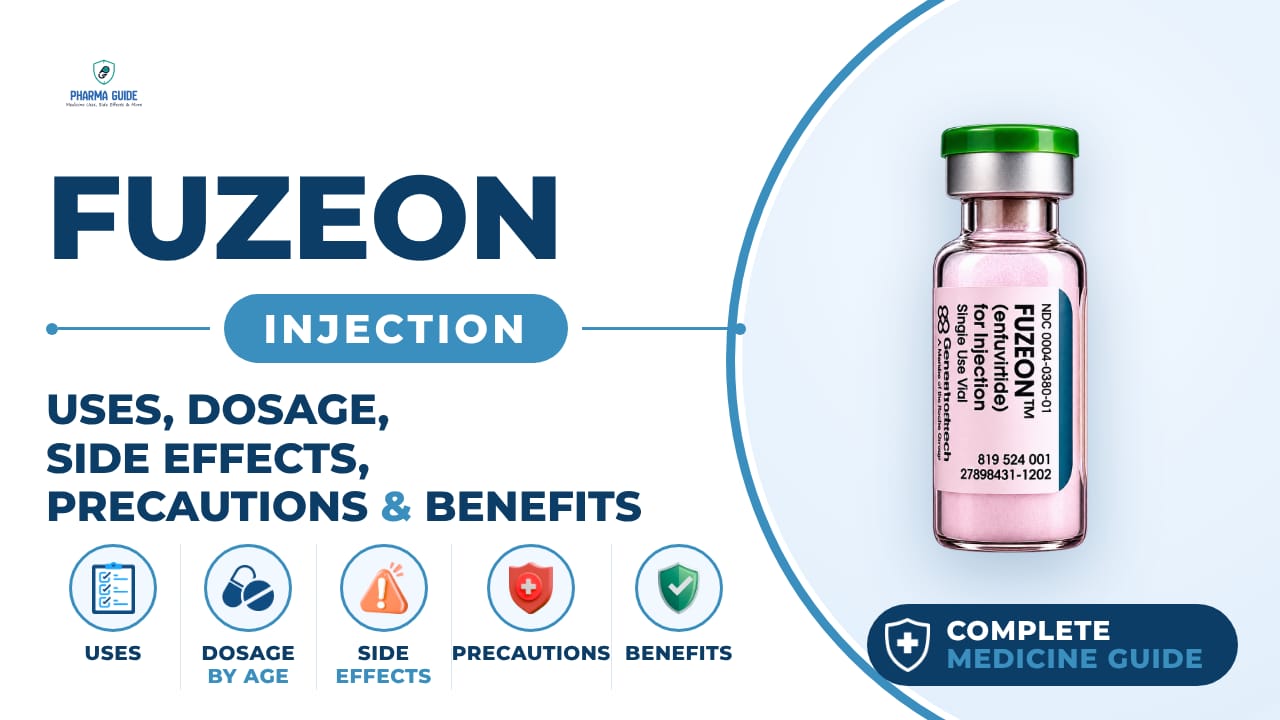
Fuzeon Injection: Uses, Dosage, Side Effects, Precautions and Alternates
| Generic name | enfuvirtide |
|---|---|
| Drug class | HIV-1 fusion inhibitor (antiretroviral) |
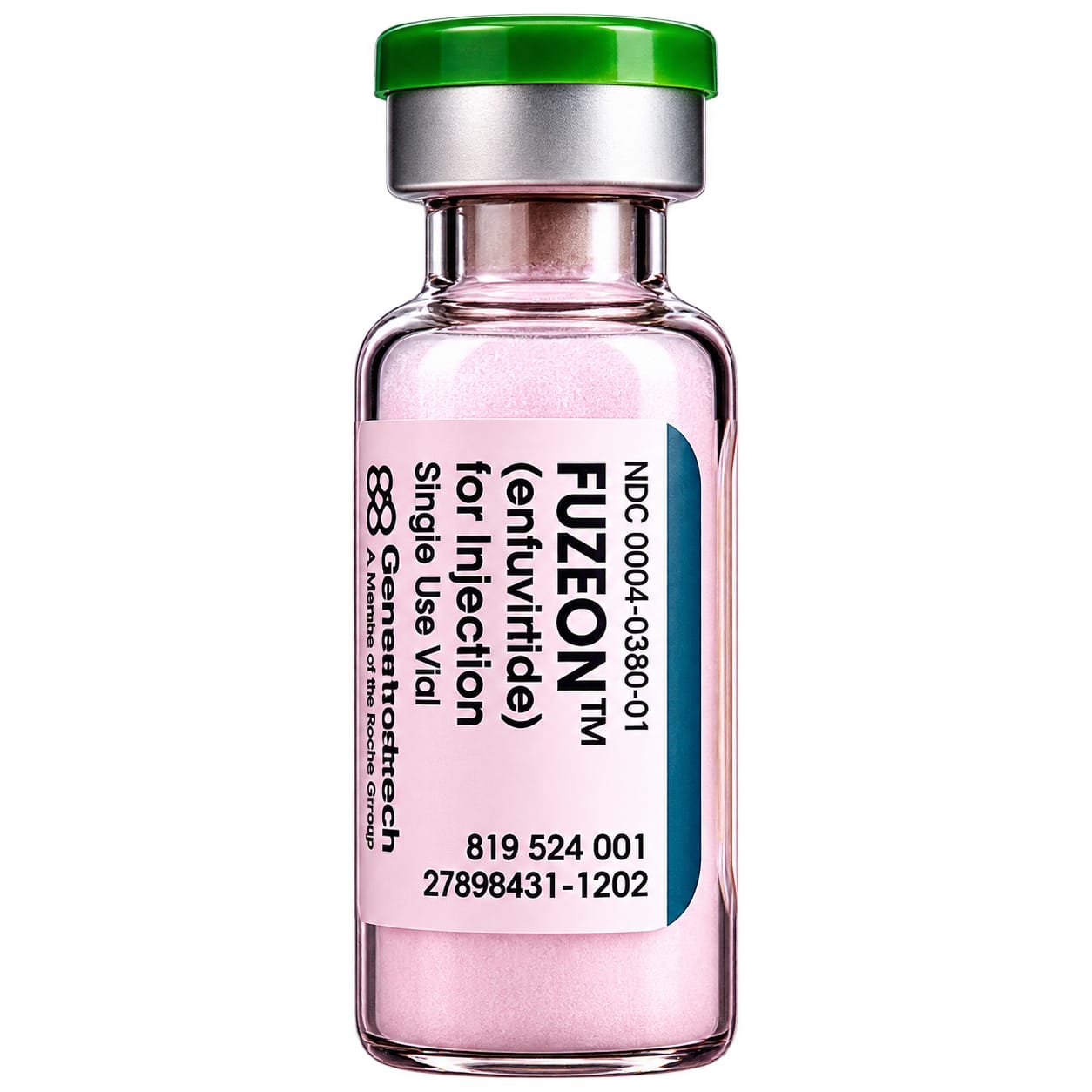
| Forms | Powder and solvent for solution for injection (vial of powder plus vial of water for injection), Powder for solution for injection (vial of powder only, for use with separately supplied water for injection) |
Quick overview
Fuzeon Injection contains enfuvirtide, an HIV-1 fusion inhibitor used to treat HIV-1 infection in people who have already tried other antiretroviral medicines. It comes as a powder that is mixed with water and injected just under the skin, and it must always be used together with other antiretroviral medicines. Fuzeon works by blocking HIV from entering and infecting immune cells, helping to reduce viral levels and support the immune system.
What is Fuzeon Injection
Fuzeon is a prescription antiviral medicine that contains enfuvirtide, a fusion inhibitor used to treat HIV-1 infection. It comes as a powder that is mixed with water and injected just under the skin.
Fuzeon Injection uses
- Treatment of HIV-1 infection in people who have already tried other antiretroviral medicines
- Used together with other antiretroviral medicines when prior treatment has failed or could not be tolerated
Benefits of Fuzeon Injection
- Helps reduce the amount of HIV in the blood when combined with other anti-HIV medicines
- Helps increase CD4 (T-cell) counts, supporting the immune system
- Can help control HIV infection as part of a combination regimen
How Fuzeon Injection works
Fuzeon works by blocking HIV from entering and infecting the body's immune cells (CD4 or T-cells). It stops the virus from attaching to and fusing with the cell's outer membrane, so the virus cannot get inside the cell to multiply.
Fuzeon Injection dosage
Always use Fuzeon exactly as your doctor has told you. Fuzeon must always be used together with other antiretroviral medicines, never alone. It is given as an injection just under the skin (subcutaneous), not into a vein or muscle, and can be used with or without food.
It is best to inject at the same time each day, spacing the two daily doses evenly apart (for example, morning and evening). Each injection should be given at a different site than the previous injection, and never into a spot that still has a reaction from an earlier dose. Do not inject into moles, scar tissue, bruises, or the navel.
If a dose is missed, take it as soon as you remember, but if it is close to the time of the next dose, skip the missed dose and continue your regular schedule; never double up doses. Keep taking Fuzeon until your doctor tells you to stop, since stopping or skipping doses may allow the virus to become resistant to the medicine. Patients should be shown how to prepare and inject Fuzeon by a healthcare professional before using it for the first time.
Use exactly as prescribed by your doctor or pharmacist.
Available forms and strengths
- Powder and solvent for solution for injection (vial of powder plus vial of water for injection)
- Powder for solution for injection (vial of powder only, for use with separately supplied water for injection)
Side effects of Fuzeon Injection
Common
- Injection site reactions (pain, redness, swelling, itching, hardened skin or bumps, bruising)
- Diarrhoea
- Nausea
- Fatigue/weakness
- Pain and numbness in hands, feet, or legs
- Weight loss
- Decreased appetite
- Sinusitis
- Flu or flu-like symptoms
- Ear infection
- Swollen glands (lymph nodes)
- Conjunctivitis (eye inflammation)
- Nasal congestion
- Dry skin, eczema, acne, redness of skin
- Muscle pain
- Kidney stones
- Anxiety, irritability, nightmares
- Dizziness, tremor, trouble concentrating
- Pancreatitis
- Heartburn (gastro-oesophageal reflux)
- Increased blood fat levels (triglycerides)
- Blood in urine
- Diabetes
Serious
- Allergic (hypersensitivity) reactions: rash, fever, chills, nausea and vomiting, low blood pressure, sweating or shaking — can recur if treatment is restarted
- Pneumonia (cough with fever, fast breathing, shortness of breath)
- Infection at the injection site, including abscess or cellulitis
- Immune reconstitution inflammatory syndrome — inflammation from hidden past infections soon after starting treatment
- Autoimmune disorders (such as Graves' disease or Guillain-Barré syndrome), which can occur months after starting treatment
- Osteonecrosis (bone tissue damage from loss of blood supply) — joint stiffness, aches and pains, especially hip, knee, or shoulder
- Severe liver problems, especially in people with hepatitis B or C
- Build-up of protein (amyloid) under the skin at injection sites, causing lumps
Warnings and precautions
- Fuzeon must always be used in combination with other antiretroviral medicines, not on its own.
- Fuzeon does not cure HIV and does not reduce the risk of passing HIV to others through sex or blood contact — you must continue using protective measures.
- People treated with Fuzeon have had higher rates of pneumonia in clinical trials, so you should watch for signs like cough, fever, or trouble breathing.
- Allergic reactions can occur and may come back if the medicine is restarted after such a reaction, so you should stop the medicine and get medical help right away if symptoms occur.
- Never share or reuse needles, and never inject into moles, scar tissue, bruises, or the navel.
- Using Fuzeon in people who do not have HIV may cause a false positive result on certain HIV antibody tests.
- There isn't enough research on using Fuzeon during pregnancy. It should only be used if your doctor decides the benefit outweighs the possible risk to the baby.
- Mothers taking Fuzeon should not breastfeed, because of the risk of passing HIV to the baby and possible unknown effects on the infant.
- No dose change is generally needed for kidney problems, including those on dialysis, but Fuzeon should be used carefully in people with moderate to severe kidney impairment since there is limited experience.
- Fuzeon has not been specifically studied in people with significant liver problems, and people with chronic hepatitis B or C are at higher risk of serious liver side effects while on antiretroviral therapy.
- Alcohol consumption is listed as one of several possible risk factors for a bone condition called osteonecrosis in patients on combination antiretroviral therapy.
- Fuzeon hasn't been specifically tested for effects on driving or using machines. If you feel dizzy while using it, do not drive or operate machinery.
Storage
- Keep out of the sight and reach of children
- Keep the vial in the outer carton to protect from light
- Unopened Fuzeon powder does not need refrigeration before mixing
- Once mixed with water, use the solution immediately if possible
- If not used immediately, store the mixed solution in a refrigerator (2°C–8°C) and use within 24 hours
- Let refrigerated mixed solution come to room temperature before injecting
- Do not use if you see particles in the powder, in the mixed solution, or in the water for injection, or if the water looks cloudy
- Do not use after the expiry date shown on the label
- Dispose of unused medicine and used needles/syringes according to local requirements or as instructed by your healthcare provider
When to see a doctor
- Get medical help right away if you have signs of an allergic reaction, such as rash, fever, chills, nausea or vomiting, or feeling faint.
- Contact your doctor right away if you develop a cough with fever, fast breathing, or shortness of breath, which could mean pneumonia.
- Tell your doctor if you notice signs of infection at an injection site, such as drainage, increasing heat, swelling, redness, or pain.
- Seek medical advice if you develop joint stiffness, aches and pains (especially hip, knee, or shoulder), or difficulty moving, as these can be signs of a bone problem.
- Tell your doctor immediately if you notice any symptoms of infection appearing soon after starting treatment, as this could be an inflammatory reaction as your immune system recovers.
Alternatives
- Dolutegravir-based regimens
- Bictegravir-based regimens
- Darunavir-based regimens
Watch the video
FAQs
What is Fuzeon Injection used for?
Fuzeon is used to treat HIV-1 infection in people who have already tried other antiretroviral medicines. It is always used together with other antiretroviral medicines when prior treatment has failed or could not be tolerated.
How does Fuzeon Injection work?
Fuzeon works by blocking HIV from entering and infecting the body's immune cells (CD4 or T-cells). It stops the virus from attaching to and fusing with the cell's outer membrane, so it cannot get inside the cell to multiply.
How is Fuzeon Injection given?
Fuzeon is given as an injection just under the skin (subcutaneous), not into a vein or muscle, and can be used with or without food. It is best injected at the same time each day, with the two daily doses spaced evenly apart, and each injection given at a different site than the previous one.
What are the common side effects of Fuzeon Injection?
Common side effects include injection site reactions, diarrhoea, nausea, fatigue, pain and numbness in hands or feet, weight loss, decreased appetite, sinusitis, flu-like symptoms, and skin reactions, among others.
Can Fuzeon Injection be used during pregnancy or breastfeeding?
There isn't enough research on using Fuzeon during pregnancy, so it should only be used if the doctor decides the benefit outweighs the possible risk. Mothers taking Fuzeon should not breastfeed due to the risk of passing HIV to the baby.
General information, not medical advice
Your prescriber and the leaflet in your pack know your situation. This page does not.
- Follow your prescriber and the leaflet
- Don't start, stop, or change a dose on your own
- Doses and warnings differ by country and product
Sources
Video
Related medicines

Injectafer Injection: Uses, Dosage, Side Effects, Precautions and Alternates
Iron products
Injectafer (ferric carboxymaltose) treats iron deficiency anemia and heart failure-related iron deficiency via IV. Learn uses, dosage, side effects, and

Gliclazide Tablet: Uses, Dosage, Side Effects, Precautions and Alternates
Sulfonylurea (hypoglycemic/antidiabetic agent)
Gliclazide Tablet is a sulfonylurea for type 2 diabetes that boosts insulin release. Learn about dosage, side effects, warnings, and precautions.