
Safety
General information, not medical advice
Your prescriber and the leaflet in your pack know your situation. This page does not.
- Follow your prescriber and the leaflet
- Don't start, stop, or change a dose on your own
- Doses and warnings differ by country and product
Fycompa Tablet: Uses, Dosage, Side Effects, Precautions and Alternates
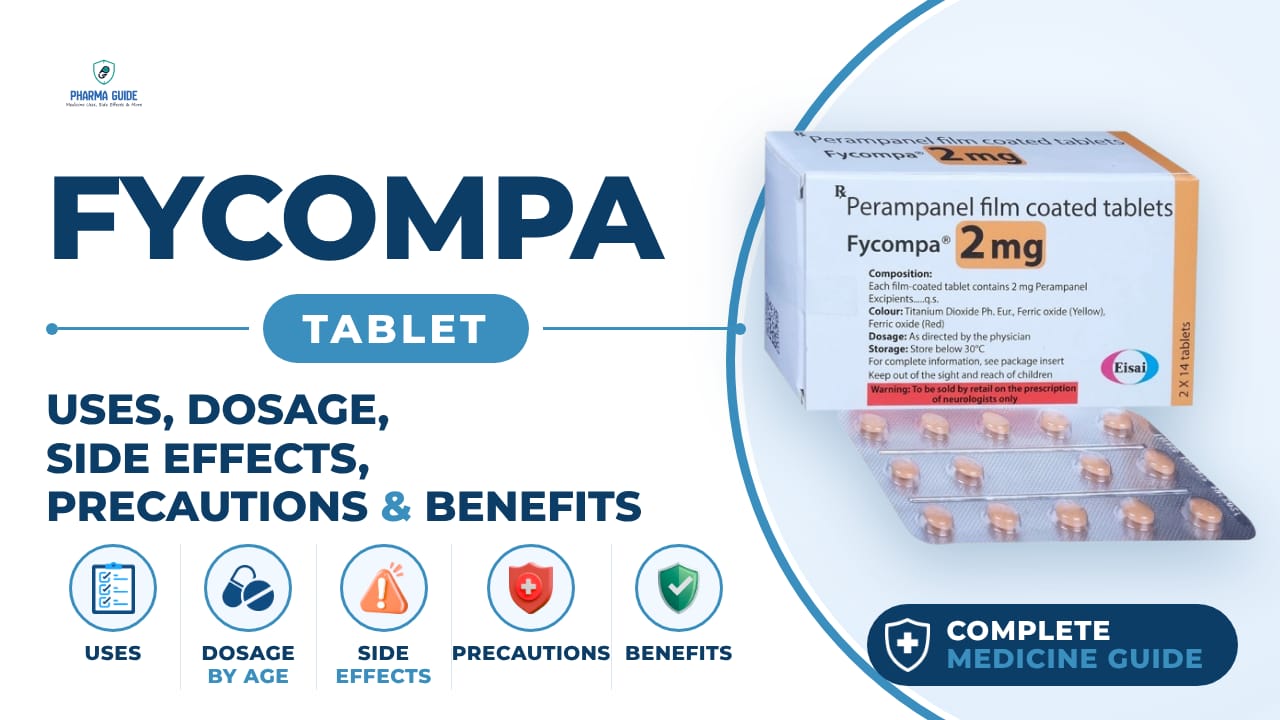
| Generic name | Perampanel |
|---|---|
| Drug class | AMPA receptor antagonist (anti-epileptic medicine) |
| Forms | Film-coated tablets (2 mg, 4 mg, 6 mg, 8 mg, 10 mg, 12 mg), Oral suspension (liquid) |
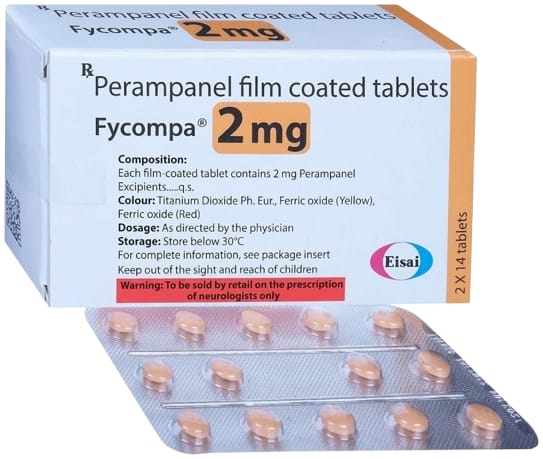
Quick overview
Fycompa Tablet contains the active ingredient perampanel, an AMPA receptor antagonist used as an add-on anti-epileptic medicine. It is used together with other medicines to treat partial-onset seizures and primary generalized tonic-clonic seizures. Fycompa is thought to work by blocking the brain chemical glutamate, which helps trigger and sustain seizures.
What is Fycompa Tablet
Fycompa is a prescription anti-seizure medicine. It contains the active ingredient perampanel and is used along with other medicines to treat certain types of epilepsy.
Fycompa Tablet uses
- Treats partial-onset (focal) seizures, with or without seizures that spread to the whole brain, in people 4 years and older (12 years and older in US labeling)
- Treats primary generalized tonic-clonic seizures in people 7 years and older (12 years and older in US labeling)
- Used as an add-on therapy together with other anti-epileptic medicines
Benefits of Fycompa Tablet
- Helps control partial-onset seizures
- May reduce seizure frequency
- May help control generalized tonic-clonic seizures when used with other medicines
- May improve daily functioning when seizures are better controlled
- Supports ongoing epilepsy management
How Fycompa Tablet works
Fycompa is thought to work by blocking the action of a brain chemical called glutamate, which normally helps trigger and keep seizures going. By blocking this chemical's effect, Fycompa is believed to help stop seizures from occurring.
Fycompa Tablet dosage
Take Fycompa at about the same time each day before going to bed. It can be taken with or without food, but it should always be taken the same way each time (for example, always with food or always without food). Swallow tablets whole with a full glass of water; do not chew, crush, or split the tablet because it has no break line and cannot be split accurately.
If using the oral suspension, shake it for at least 5 seconds before every use, and measure it using the provided oral syringe and bottle adaptor; do not use a household teaspoon or tablespoon.
Continue taking the medicine for as long as your doctor tells you. Do not stop or change the dose without checking with your doctor, since your doctor may need to lower the dose slowly to avoid seizures returning or worsening.
If you miss a dose, wait and take the next dose at the usual time; if it is almost time for the next dose, skip the missed one. Do not take a double dose. If you miss more than one day of doses, contact your doctor for instructions.
Dosing in children under 12 years old is based on age and weight, and the starting dose is lower than in adults.
| Age group | Dose |
|---|---|
| Under 18 years | Not recommended* |
| 18–64 years | 2 mg, once/day |
| 65+ years | 2 mg, once/day |
Available forms and strengths
- Film-coated tablets (2 mg, 4 mg, 6 mg, 8 mg, 10 mg, 12 mg)
- Oral suspension (liquid)
Side effects of Fycompa Tablet
Common
- Dizziness
- Sleepiness (somnolence)
- Headache
- Feeling tired (fatigue)
- Irritability
- Nausea and vomiting
- Weight gain
- Vertigo (spinning sensation)
- Problems walking normally or with coordination
- Bruising
- Abdominal pain
- Anxiety
- Back pain
- Increased or decreased appetite
Serious
- Falls, which can cause serious injuries such as head injury or bone fracture, especially in elderly patients
- Serious or life-threatening psychiatric and behavioral changes including aggression, hostility, anger, irritability, and homicidal ideation or threats
- Suicidal thoughts or behavior
- Severe dizziness, trouble walking, loss of balance or coordination, slow speech, blurred or double vision
- Confusion, hallucinations, memory problems, or feeling disoriented
- Serious allergic reaction, which may include skin rash, hives, fever, swollen glands, swelling of the face/lips/tongue, difficulty breathing, or signs affecting the liver, kidneys, heart, or blood cells (DRESS syndrome)
- Increase in seizure frequency if the medicine is stopped suddenly
Warnings and precautions
- Fycompa can cause serious or life-threatening mental and behavioral changes, including aggression, hostility, anger, irritability, and thoughts or threats of hurting others. Tell your doctor right away if you or your child notice any changes in mood, behavior, or personality that are unusual, especially when starting treatment or after a dose change.
- Like other seizure medicines, Fycompa may cause suicidal thoughts or actions in a small number of people (about 1 in 500). Watch for new or worsening depression, anxiety, agitation, trouble sleeping, or thoughts of suicide, and contact a doctor right away if these occur.
- Do not stop taking Fycompa suddenly without talking to your doctor, as this can cause seizures to come back more often or become worse.
- Fycompa can increase the risk of falls, which may lead to serious injuries such as head injury or broken bones. This risk may be higher in elderly patients.
- Fycompa is a controlled substance because it can be misused or lead to dependence. Keep it in a safe place, and never give it to anyone else.
- Fycompa may make certain hormonal birth control, such as those containing levonorgestrel, less effective. Use an additional non-hormonal method of contraception while taking Fycompa and for one month after stopping.
- Tell your doctor if you are pregnant or planning to become pregnant, as it isn't known whether Fycompa could harm an unborn baby. Do not stop taking seizure medicine during pregnancy without medical advice, since having a seizure during pregnancy could harm both mother and baby.
- It isn't known whether Fycompa passes into breast milk. Talk to your doctor about the best way to feed your baby, and your doctor will help you decide between breastfeeding and taking Fycompa.
- Tell your doctor if you have kidney problems. Fycompa is not recommended for people with severe kidney impairment or those on dialysis, and may need slower dose increases in people with moderate kidney problems.
- Tell your doctor if you have liver problems. Lower maximum doses are used in mild and moderate liver impairment, and Fycompa is not recommended in severe liver impairment.
- Avoid drinking alcohol while taking Fycompa, as it can make side effects like dizziness and sleepiness worse and can also worsen mood, increasing anger, confusion, and depression.
- Do not drive or operate machinery until you know how Fycompa affects you, since it can cause dizziness or sleepiness, especially when you first start treatment.
Storage
- Keep in the original container and keep out of reach of children
- Keep in a cool, dry place where the temperature stays below 30°C; do not freeze the oral suspension
- Do not store in the bathroom or near a sink, in the car, or on window sills
- If any oral suspension is left in the bottle more than 90 days after it was first opened, it should not be used
- Take any unwanted or expired medicine to a pharmacy for safe disposal; do not use after the expiry date or if the packaging is damaged or shows signs of tampering
When to see a doctor
- Get emergency medical help right away if you have signs of a severe allergic reaction, such as hives, difficulty breathing, or swelling of the face, lips, tongue, or throat.
- Call your doctor straight away or go to the nearest hospital emergency department if you have severe dizziness or spinning sensations, trouble walking or loss of balance, extreme weakness or tiredness, an accidental fall, or memory problems, confusion, or hallucinations.
- Contact a doctor immediately if you or your child have thoughts of harming yourself or ending your life.
- Seek medical help if you develop a serious reaction affecting many parts of the body, with symptoms such as skin rash, fever, swollen glands, muscle aches, severe weakness, unusual bruising, or yellowing of the skin or eyes.
- If you think you or your child have taken too much Fycompa, seek urgent medical attention immediately, even if there are no symptoms, by contacting a doctor, your local poison control center, or going to the nearest hospital emergency department.
Alternatives
- Lamotrigine
- Brivaracetam
- Levetiracetam
Watch the video
FAQs
What is Fycompa Tablet used for?
Fycompa is used along with other anti-epileptic medicines to treat partial-onset seizures and primary generalized tonic-clonic seizures.
How does Fycompa Tablet work?
Fycompa is thought to work by blocking the action of a brain chemical called glutamate, which normally helps trigger and keep seizures going, helping to stop seizures from occurring.
How should Fycompa Tablet be taken?
Fycompa should be taken at about the same time each day before bed, with or without food (but consistently the same way each time), and swallowed whole with a full glass of water without chewing, crushing, or splitting.
What are the common side effects of Fycompa Tablet?
Common side effects include dizziness, sleepiness, headache, fatigue, irritability, nausea and vomiting, weight gain, vertigo, problems with coordination, bruising, abdominal pain, anxiety, back pain, and changes in appetite.
Can I drink alcohol while taking Fycompa Tablet?
No, alcohol should be avoided while taking Fycompa as it can worsen side effects like dizziness and sleepiness and can also worsen mood, increasing anger, confusion, and depression.
General information, not medical advice
Your prescriber and the leaflet in your pack know your situation. This page does not.
- Follow your prescriber and the leaflet
- Don't start, stop, or change a dose on your own
- Doses and warnings differ by country and product
Sources
Video
Related medicines

Injectafer Injection: Uses, Dosage, Side Effects, Precautions and Alternates
Iron products
Injectafer (ferric carboxymaltose) treats iron deficiency anemia and heart failure-related iron deficiency via IV. Learn uses, dosage, side effects, and

Gliclazide Tablet: Uses, Dosage, Side Effects, Precautions and Alternates
Sulfonylurea (hypoglycemic/antidiabetic agent)
Gliclazide Tablet is a sulfonylurea for type 2 diabetes that boosts insulin release. Learn about dosage, side effects, warnings, and precautions.