
Safety
General information, not medical advice
Your prescriber and the leaflet in your pack know your situation. This page does not.
- Follow your prescriber and the leaflet
- Don't start, stop, or change a dose on your own
- Doses and warnings differ by country and product
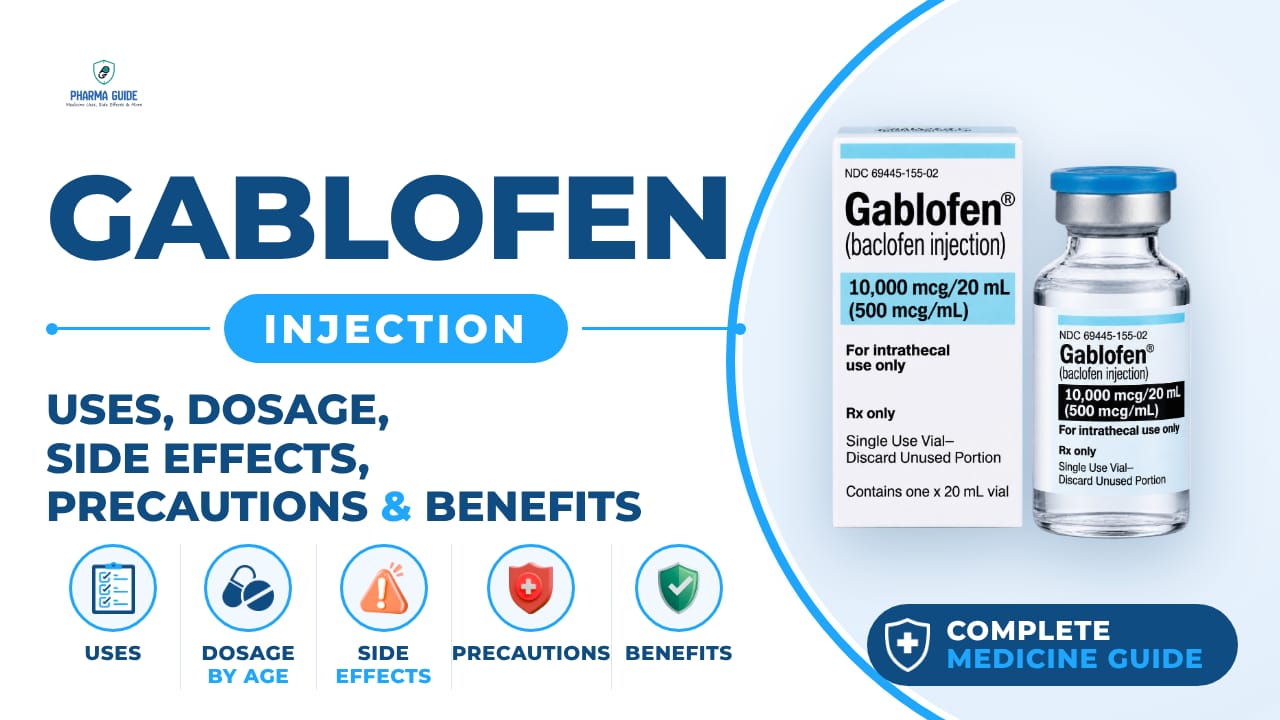
Gablofen Injection: Uses, Dosage, Side Effects, Precautions and Alternates
| Generic name | baclofen |
|---|---|
| Drug class | Skeletal muscle relaxant / antispastic agent (GABA-ergic agonist) |
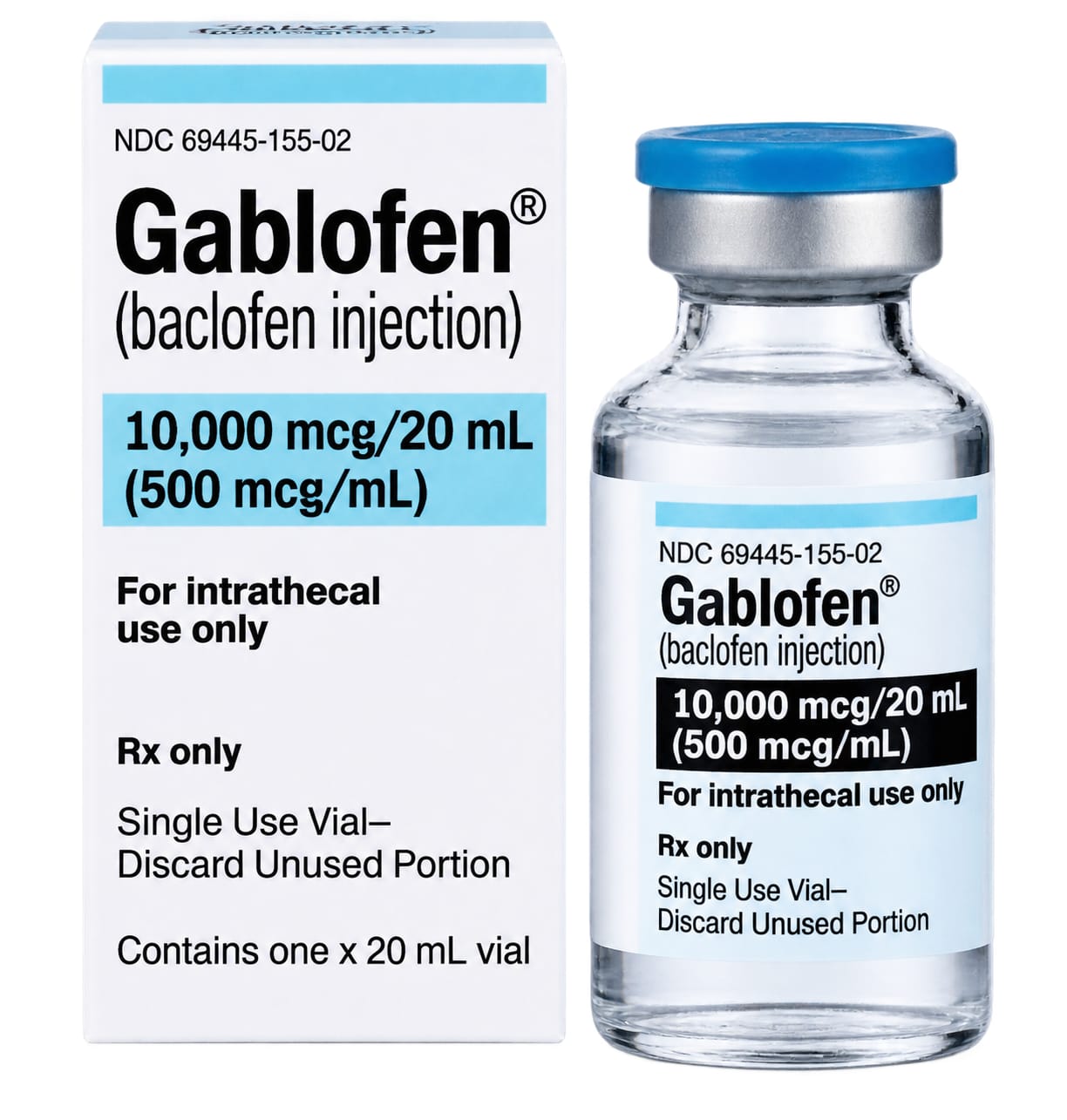
| Forms | Injection solution (for intrathecal use only), available in single-dose syringes and vials |
Quick overview
Gablofen Injection (baclofen) is a skeletal muscle relaxant and antispastic agent given only as an intrathecal injection using a computerized, portable infusion pump. It is used to manage severe spasticity of spinal cord or cerebral origin in adults and children age 4 and older. It works by calming overactive nerve signals in the spinal cord. Gablofen must never be stopped suddenly and must only be administered by a trained healthcare provider.
What is Gablofen Injection
Gablofen is a muscle relaxer and antispastic medicine given as an injection into the fluid around the spinal cord (intrathecal injection) using a computerized, portable infusion pump.
Gablofen Injection uses
- Management of severe spasticity, a movement disorder often caused by multiple sclerosis, cerebral palsy, spinal cord injury, brain trauma, or stroke, in adults and children age 4 and older
Benefits of Gablofen Injection
- Helps reduce severe muscle tightness and spasms in people with spasticity of spinal cord or cerebral origin
How Gablofen Injection works
Baclofen calms overactive nerve signals in the spinal cord that cause muscle tightness. It is similar to a natural calming brain chemical called GABA and works by reducing the release of certain signals between nerves, which relaxes the muscles.
Gablofen Injection dosage
Gablofen is given only as an injection into the space around the spinal cord (intrathecal), using a computerized, portable infusion pump to control how much medicine you receive. It must never be injected into a vein, muscle, under the skin, or into the epidural space. It is given by a doctor, nurse, or other trained healthcare provider — you will not be injecting this yourself.
It may be used for a long period of time, with the doctor occasionally adjusting the dose or the pump's flow rate. Because dosing and pump programming are handled by a healthcare professional, you are not likely to miss a dose on your own. Never stop this medicine suddenly; your doctor will need to slowly reduce the amount before stopping it completely. Pay close attention to any alarms from your infusion pump, and contact your doctor right away if a scheduled pump refill is missed so it can be rescheduled before the pump runs out of medicine.
| Age group | Dose |
|---|---|
| Under 4 years | Not recommended |
| 4–11 years | Individualized by specialist; children under 12 generally require lower doses |
| 12–17 years | Individualized; specialist titration required |
| 18–64 years | Individualized; maintenance commonly 90–800 mcg/day, depending on the type of spasticity |
| 65+ years | Individualized; specialist supervision required |
Available forms and strengths
- Injection solution (for intrathecal use only), available in single-dose syringes and vials
Side effects of Gablofen Injection
Common
- Drowsiness/sleepiness
- Dizziness
- Weakness, tired feeling
- Agitation
- Low blood pressure
- Headache
- Confusion
- Sleep problems (insomnia)
- Nausea, vomiting
- Constipation
- Increased urinary frequency or urinary retention
- Low muscle tone
- Chills
Serious
- Signs of an allergic reaction: hives, difficulty breathing, swelling of face, lips, tongue, or throat
- Seizures (convulsions)
- Hallucinations
- Uneven or irregular heartbeat
- Severe dizziness
- Vision changes, sudden vision loss, blurred vision, tunnel vision, eye pain or swelling, or seeing halos around lights
- Fast, irregular, or pounding heartbeats; fluttering in the chest; shortness of breath; sudden dizziness or passing out
- Severe headache, confusion, slurred speech, arm or leg weakness, trouble walking, loss of coordination, feeling unsteady, very stiff muscles, high fever, profuse sweating, or tremors
- Numbness or tingling of the skin
- Difficulty urinating
- Rash, itching
Warnings and precautions
- This medicine may harm an unborn baby. There isn't enough information on the risks of using Gablofen during pregnancy in humans, so tell your doctor if you are pregnant or plan to become pregnant.
- It isn't known for certain whether Gablofen passes into breast milk or could harm a nursing baby, though baclofen taken by mouth does appear in breast milk. Talk to your doctor before breastfeeding while using this medicine.
- Tell your doctor if you have kidney disease before receiving this medicine, since you may need a dose adjustment or special monitoring.
- Avoid drinking alcohol while using Gablofen, as it can increase some of the side effects, including drowsiness.
- Gablofen can cause side effects such as drowsiness that may impair your thinking or reactions. Be careful if you drive or do anything that requires you to be awake and alert.
- Never stop using Gablofen suddenly. Stopping it suddenly, for any reason, can cause serious problems including high fever, confusion, severe muscle stiffness, organ failure, and death.
- Early signs that the medicine is being withdrawn too suddenly may include worsening muscle tightness, itching, and tingling in the arms or legs. If this happens, or if the pump seems to be malfunctioning, get to a hospital right away.
- Sudden withdrawal most often happens because of a problem with the catheter or pump, or because the pump wasn't refilled on schedule. Pay attention to any pump alarms, and contact your doctor immediately if you miss a scheduled refill.
- This medicine must only be given by the intrathecal route. It must never be given into a vein, muscle, under the skin, or into the epidural space.
- Refilling the pump incorrectly, especially injecting directly into the catheter access port instead of the refill port, can cause a life-threatening overdose. Only trained, qualified staff should refill the pump.
- Patients with a history of psychotic disorders, schizophrenia, or confusional states should be treated carefully and watched closely, because this medicine can make those conditions worse.
- Use with caution if you have a history of autonomic dysreflexia, since painful stimulation or sudden withdrawal of this medicine may trigger an episode.
- Avoid using other medicines that cause sleepiness, such as cold medicine, pain medication, other muscle relaxers, or medicines for seizures, depression, or anxiety, since they can add to the sleepiness caused by Gablofen.
Storage
- Store Gablofen at room temperature away from moisture and heat.
- Store between 20°C and 25°C (68°F and 77°F).
- Do not store above 30°C (86°F).
- Does not require refrigeration.
- Do not freeze.
- Do not heat sterilize.
- Discard any unused portion.
When to see a doctor
- Get emergency medical help right away if you have signs of an allergic reaction, such as hives, difficulty breathing, or swelling of the face, lips, tongue, or throat.
- Call your doctor right away if you have a seizure, confusion, hallucinations, or an uneven heartbeat.
- Seek emergency medical attention if you think you have received too much of this medicine, or if your infusion pump does not seem to be working properly. Signs of too much medicine include drowsiness, lightheadedness, dizziness, extreme sleepiness, slow or shallow breathing, seizures, very loose muscles, and loss of consciousness that can progress to coma.
- Get medical help right away for serious eye symptoms such as sudden vision loss, blurred vision, tunnel vision, eye pain or swelling, or seeing halos around lights.
- Get medical help right away for serious heart symptoms such as a fast, irregular, or pounding heartbeat, fluttering in the chest, shortness of breath, or sudden dizziness, lightheadedness, or passing out.
- Get medical help right away for a severe headache, confusion, slurred speech, arm or leg weakness, trouble walking, loss of coordination, feeling unsteady, very stiff muscles, high fever, heavy sweating, or tremors — these may be signs of dangerous withdrawal.
Alternatives
- Lioresal
- Fleqsuvy
- Ozobax
- Lyvispah
- Ozobax DS
Watch the video
FAQs
What is Gablofen Injection used for?
It is used to manage severe spasticity of spinal cord or cerebral origin, often caused by multiple sclerosis, cerebral palsy, spinal cord injury, brain trauma, or stroke, in adults and children age 4 and older.
How is Gablofen Injection given?
It is given only as an intrathecal injection into the fluid around the spinal cord, using a computerized, portable infusion pump controlled by a trained healthcare provider. It must never be injected into a vein, muscle, under the skin, or into the epidural space.
Can I stop using Gablofen suddenly?
No, Gablofen must never be stopped suddenly. Sudden stopping can cause serious problems including high fever, confusion, severe muscle stiffness, organ failure, and death, so the dose must be slowly reduced by your doctor.
What are the common side effects of Gablofen Injection?
Common side effects include drowsiness, dizziness, weakness, agitation, low blood pressure, headache, confusion, insomnia, nausea, vomiting, constipation, urinary changes, low muscle tone, and chills.
What should I do if I miss a scheduled pump refill for Gablofen?
Contact your doctor right away if a scheduled pump refill is missed so it can be rescheduled before the pump runs out of medicine, since this can lead to dangerous withdrawal.
General information, not medical advice
Your prescriber and the leaflet in your pack know your situation. This page does not.
- Follow your prescriber and the leaflet
- Don't start, stop, or change a dose on your own
- Doses and warnings differ by country and product
Sources
Video
Related medicines

Injectafer Injection: Uses, Dosage, Side Effects, Precautions and Alternates
Iron products
Injectafer (ferric carboxymaltose) treats iron deficiency anemia and heart failure-related iron deficiency via IV. Learn uses, dosage, side effects, and

Gliclazide Tablet: Uses, Dosage, Side Effects, Precautions and Alternates
Sulfonylurea (hypoglycemic/antidiabetic agent)
Gliclazide Tablet is a sulfonylurea for type 2 diabetes that boosts insulin release. Learn about dosage, side effects, warnings, and precautions.