
Safety
General information, not medical advice
Your prescriber and the leaflet in your pack know your situation. This page does not.
- Follow your prescriber and the leaflet
- Don't start, stop, or change a dose on your own
- Doses and warnings differ by country and product
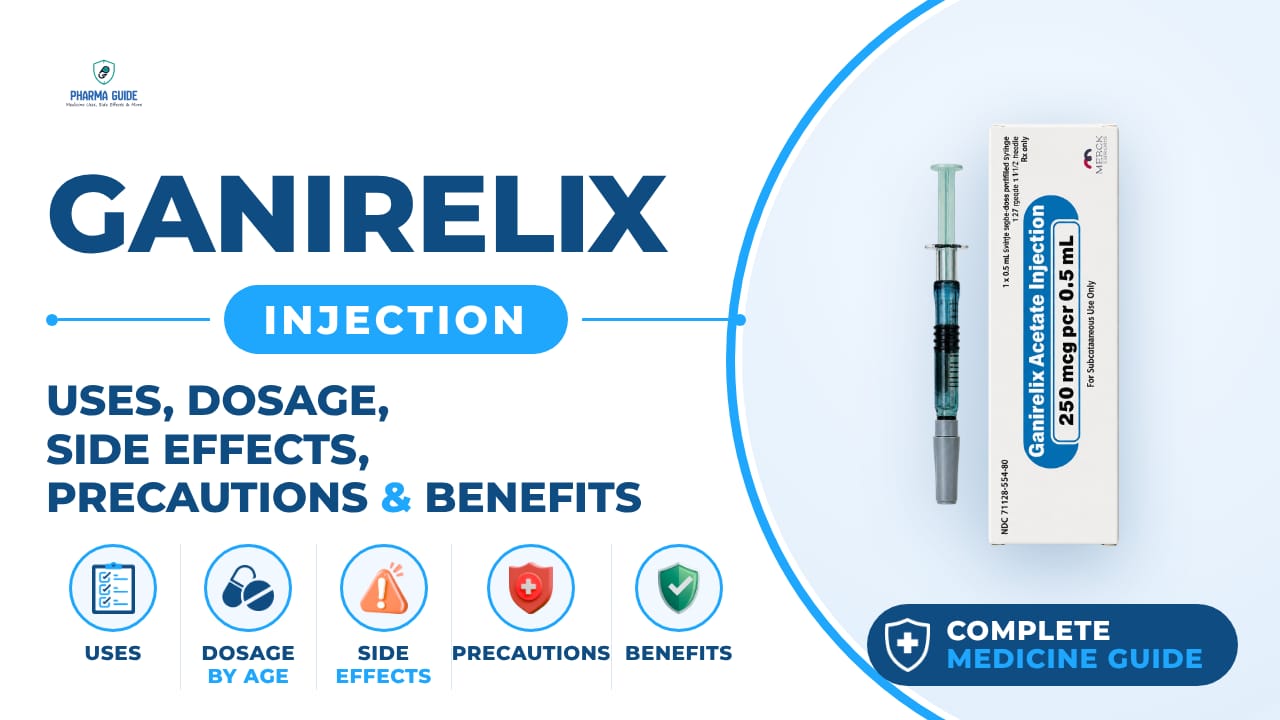
Ganirelix Injection: Uses, Dosage, Side Effects, Precautions and Alternates
| Generic name | ganirelix, ganirelix acetate |
|---|---|
| Drug class | Gonadotropin-releasing hormone (GnRH) antagonist |
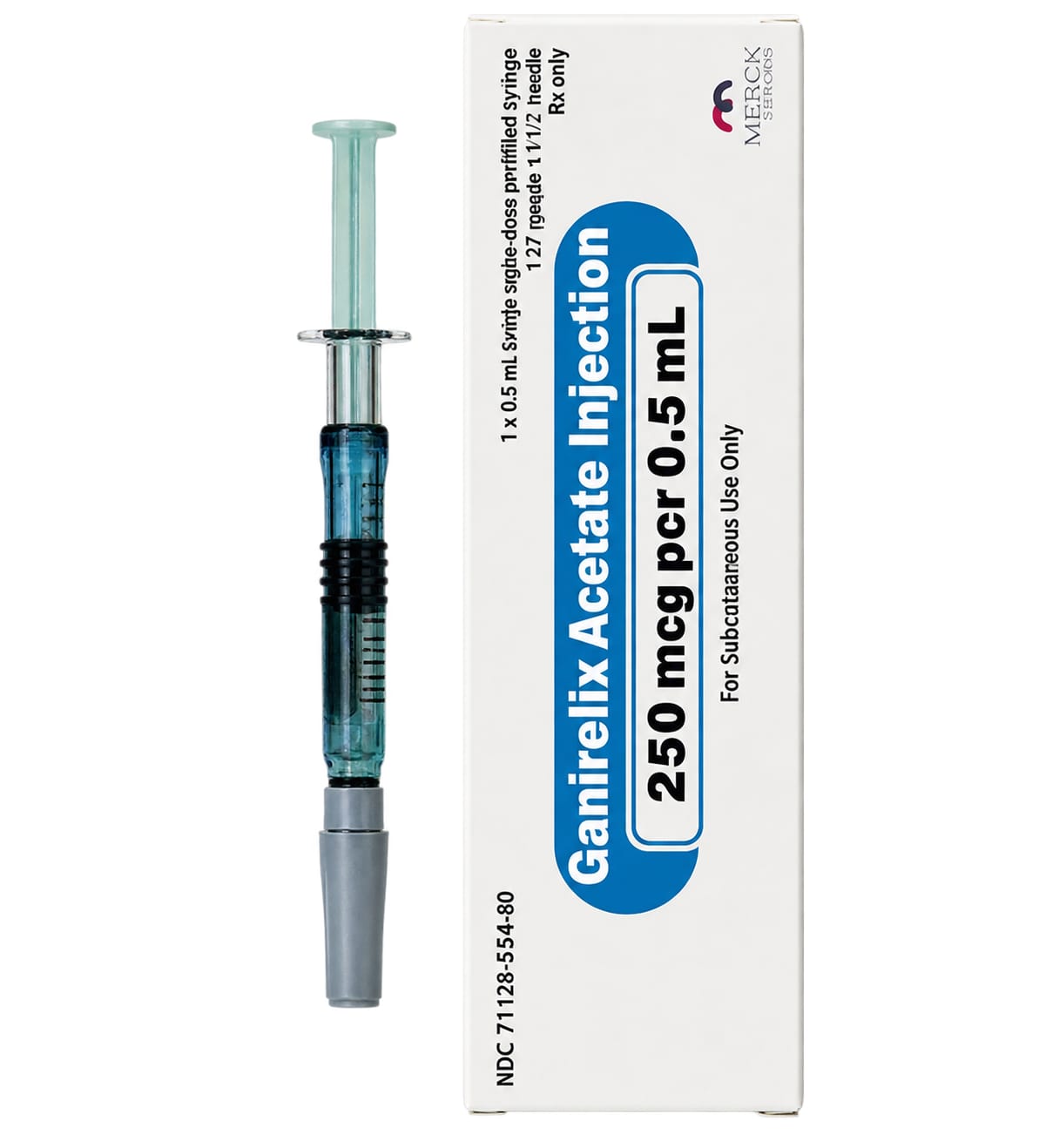
| Forms | Solution for injection (prefilled syringe) |
Quick overview
Ganirelix Injection (ganirelix, ganirelix acetate) is a GnRH antagonist given as a shot under the skin during fertility treatment. It is used to prevent premature LH surges or early ovulation in women undergoing controlled ovarian hyperstimulation, often as part of IVF cycles. It is typically given once daily at a dose of 250 micrograms during ovarian stimulation. It is used together with other fertility medicines and is not indicated for children, men, or routine use in older adults.
What is Ganirelix Injection
Ganirelix is an injectable prescription medicine used during fertility treatment. It belongs to a group of medicines called GnRH antagonists (or GnRH blockers) and is given as a shot under the skin.
Ganirelix Injection uses
- Prevents premature luteinizing hormone (LH) surges or ovulation in women undergoing controlled ovarian hyperstimulation as part of fertility treatment
- May help reduce the need for follicle-stimulating hormone (FSH), which is also needed for ovulation
- Used with other medicines to treat infertility in women
- Used to delay the ovaries from releasing eggs too early during in vitro fertilization (IVF) cycles
Benefits of Ganirelix Injection
- Helps prevent a premature LH surge during fertility treatment
- Helps stop early ovulation before eggs are ready for retrieval
- Supports better control of ovarian stimulation cycles during IVF or similar treatments
- Helps fertility specialists time the trigger injection and egg retrieval more accurately
- Allows follicles to continue developing until they reach the desired maturity
How Ganirelix Injection works
Ganirelix blocks a hormone called GnRH, which normally signals the body to release luteinizing hormone (LH). LH tells the body to ovulate, so by blocking it, ganirelix delays ovulation. This lets your doctor control when you ovulate so that fertility treatment steps, like egg retrieval, are timed correctly.
Ganirelix Injection dosage
Ganirelix is given as a shot under the skin of the stomach or thigh. A nurse or trained health professional may give this medicine, or you may be taught to give it to yourself at home. Follow the patient instructions in the package carefully for how to prepare the injection, use disposable syringes, and store them. Use at regular intervals and do not use it more often than directed. Prepare an injection only when you are ready to give it.
Do not reuse a needle or syringe; each prefilled syringe should be thrown away after one use, even if medicine remains inside. Wash your hands with soap and water before injecting, and wipe the injection site with an alcohol swab first. Inject at least 2 inches away from the belly button if using the stomach area, or use the upper thigh, and change the injection site each time.
Use is not recommended for children. Talk with your care team about use of this medicine in children, as special care may be needed.
| Age group | Dose |
|---|---|
| Children <12 years | Not indicated; safety and effectiveness not established |
| Adolescents 12–17 years | Not indicated for routine fertility treatment |
| Adult women – IVF/ART | 250 micrograms (0.25 mg) subcutaneously once daily during controlled ovarian stimulation |
| Adult men | Not indicated |
| Older adults | Not routinely indicated; safety and effectiveness not established |
Available forms and strengths
Solution for injection (prefilled syringe)
Side effects of Ganirelix Injection
Common
- Headache
- Pain, redness, discoloration, or swelling at the injection site
- Nausea
- Stomach or pelvic pain
- Bloating
- Diarrhea
- Vaginal bleeding
Serious
- Signs of ovarian hyperstimulation syndrome (OHSS): severe stomach or pelvic pain, bloating, severe nausea or vomiting, diarrhea, rapid weight gain, little or no urination, trouble breathing, rapid heart rate, or feeling short of breath (especially when lying down)
- Severe allergic reaction: hives, skin rash, itching, swelling of the face, eyelids, lips, tongue, throat, hands, legs, feet, or sex organs, trouble breathing or wheezing, trouble swallowing or throat tightness, dizziness or fainting, racing heart, fever or general ill feeling, swollen lymph nodes, joint pain, stomach cramps
- Chest tightness, cough, or difficulty swallowing
- Unusual tiredness or weakness
- Heavy non-menstrual vaginal bleeding
- Miscarriage (pregnancy loss)
Warnings and precautions
- This medicine may cause serious allergic reactions, including anaphylaxis and swelling of the face, lips, tongue, or throat, which can be life-threatening and need immediate medical attention.
- Do not use this medicine if you are allergic to latex, since the needle cover of the prefilled syringe may contain dry natural rubber (a form of latex).
- This medicine can cause ovarian hyperstimulation syndrome (OHSS), a condition where the ovaries become swollen and painful and may leak fluid, which can sometimes be serious.
- Even though this medicine is used as part of a program to help you get pregnant, taking it while you are already pregnant can harm your unborn baby. Follow your doctor's instructions carefully about birth control or pregnancy testing during treatment.
- Your doctor will need to check your progress often with regular visits, ultrasounds, and blood hormone tests to make sure the medicine is working properly and to check for unwanted effects.
- Do not use this medicine if you are pregnant or think you might be pregnant, because it may cause birth defects or harm to an unborn baby.
- Your doctor may want you to have a pregnancy test before you start treatment. If you become pregnant while using this medicine, tell your doctor right away.
- It is not known if this medicine passes into breast milk, and you should not breastfeed while using it. Tell your healthcare provider if you are breastfeeding or plan to breastfeed.
- Tell your care team if you have kidney disease or liver disease before starting this medicine.
- It isn't known whether drinking alcohol affects this medicine. Follow your doctor's instructions about any restrictions on food, beverages, or activity while using it.
Storage
- Store at 20–25°C (68–77°F) at controlled room temperature.
- Keep the prefilled syringe in its original packaging until ready for use.
- Protect from light and excessive heat.
- Do not freeze or expose the injection to extreme temperatures.
- Inspect before use; do not use if the solution is cloudy, discolored, or contains particles.
- Keep securely stored and out of reach of children.
When to see a doctor
- Call your doctor right away if you notice a rash, itching, hoarseness, large hive-like swelling of the face, eyelids, lips, tongue, throat, hands, legs, feet, or sex organs, trouble breathing, trouble swallowing, or any swelling of your hands, face, or mouth.
- Stop using this medicine and tell your healthcare provider right away if you have severe stomach pain or swelling, trouble breathing, severe nausea or vomiting, rapid weight gain, or are urinating much less than usual — these can be signs of ovarian hyperstimulation syndrome.
- If you have any reason to think you are pregnant, stop taking this medication right away and contact your care team.
- If you think you have taken too much of this medicine, contact a poison control center or go to an emergency room right away.
Alternatives
- Leuprolide
- Orgalutran
- Fyremadel
- Cetrotide
Watch the video
FAQs
What is Ganirelix Injection used for?
It is used during fertility treatment to prevent premature LH surges or early ovulation in women undergoing controlled ovarian hyperstimulation, often as part of IVF cycles.
How is Ganirelix Injection given?
It is given as a shot under the skin of the stomach or thigh, typically once daily at a dose of 250 micrograms during ovarian stimulation. It can be given by a healthcare professional or self-administered at home following package instructions.
What are the common side effects of Ganirelix Injection?
Common side effects include headache, pain or redness at the injection site, nausea, stomach or pelvic pain, bloating, diarrhea, and vaginal bleeding.
What serious risks are associated with Ganirelix Injection?
Serious risks include ovarian hyperstimulation syndrome (OHSS), severe allergic reactions, heavy non-menstrual vaginal bleeding, and miscarriage.
Can Ganirelix Injection be used during pregnancy?
No, it should not be used if you are pregnant or think you might be pregnant, as it may harm the unborn baby. A pregnancy test may be required before starting treatment.
General information, not medical advice
Your prescriber and the leaflet in your pack know your situation. This page does not.
- Follow your prescriber and the leaflet
- Don't start, stop, or change a dose on your own
- Doses and warnings differ by country and product
Sources
Video
Related medicines

Injectafer Injection: Uses, Dosage, Side Effects, Precautions and Alternates
Iron products
Injectafer (ferric carboxymaltose) treats iron deficiency anemia and heart failure-related iron deficiency via IV. Learn uses, dosage, side effects, and

Gliclazide Tablet: Uses, Dosage, Side Effects, Precautions and Alternates
Sulfonylurea (hypoglycemic/antidiabetic agent)
Gliclazide Tablet is a sulfonylurea for type 2 diabetes that boosts insulin release. Learn about dosage, side effects, warnings, and precautions.